DIY zip tie projects share one property: they use the tie as a reusable mechanical part rather than as a fastener, so the failure that matters is not the bundle coming loose but the tie breaking at the head under a load it was never rated for. Some of these projects work well and some are more clever than sound, and the difference is usually whether the load runs along the strap or across the head. This tag gathers the four guides on the site that cover the practical end of it, from snow chains to lengthening a tie to a safe training pair of cuffs.
What the guides here answer
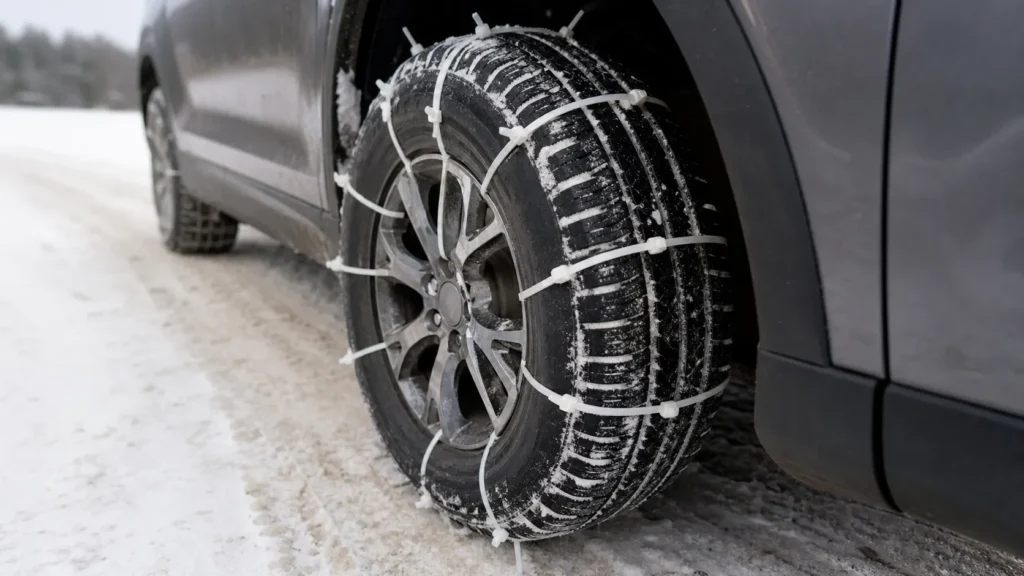
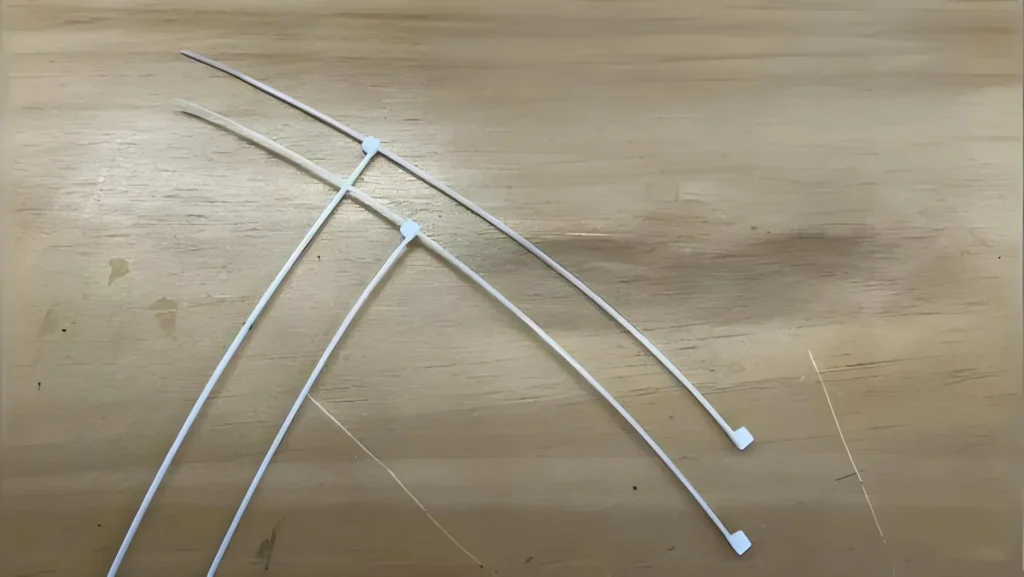
How to make zip tie snow chains is the best-known version: ties threaded through the wheel and around the tyre as a traction aid, and the guide is honest about the speed and distance limits. How to make zip ties longer covers joining two ties, which works and has a right way to do it. 13 clever zip tie uses is the household set, and how to make cable ties handcuffs is the training version, with the safety rules that go with it.
Load along the strap, not across the head
A tie is strong in line with the strap and weak in every other direction, because the head is a moulded cavity with the pawl inside it. Hang a load from the head and the pawl is levered open; pull along the strap and the load runs into the same geometry that holds the bundle. Most DIY failures are a load applied across the head, which is why a tie that holds a bundle of cable easily will snap holding a bag of the same weight.
Joining two ties properly
Two ties joined tail to tail by pushing one tail through the other's head works, but the joint is the weak point and it sits inside the loop rather than outside it. Join them so the second head is loaded in line with the first, keep the joint away from any edge, and treat the result as half the rated strength of the weaker tie, not the sum of both. For anything that has to hold, a single long tie is the right answer and the join is a workaround.
Specification reference
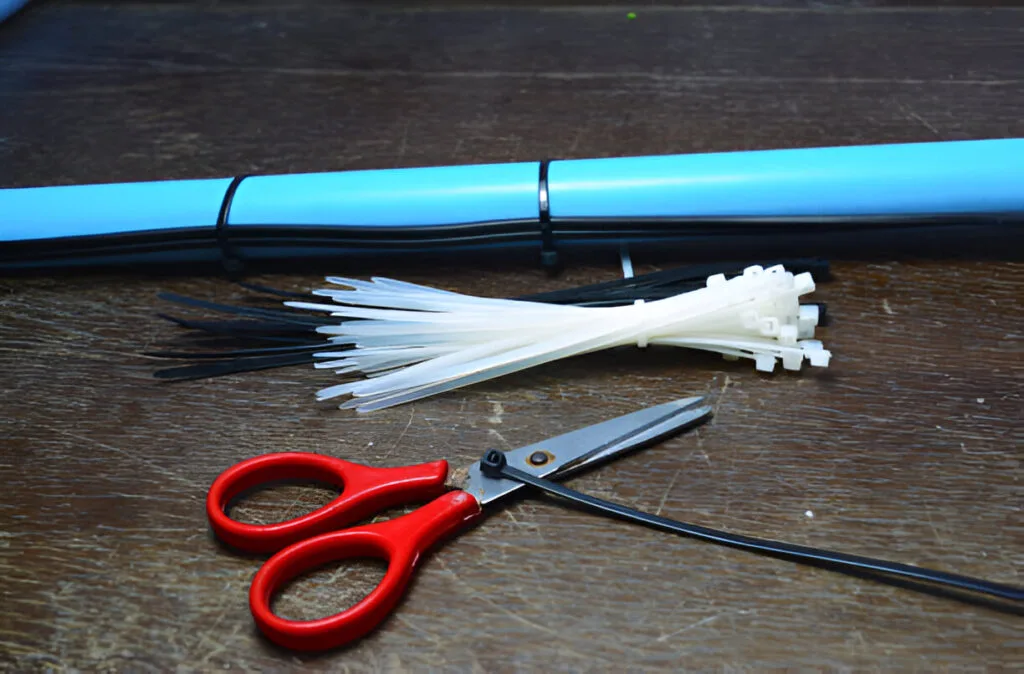
For the snow chain version specifically, wide black ties hold up to cold and abrasion better than narrow ones. Widths and lengths are listed on the snow cable ties product page.
Do zip tie snow chains actually work?
As a short-distance, low-speed traction aid on snow, yes. They are not a substitute for chains: they wear through quickly on cleared tarmac and are not rated for speed.
How do you join two zip ties together?
Feed the tail of one through the head of the other and pull it closed, with both heads in line. The joint halves the strength, so use it only where a single tie is too short rather than where it is too weak.
What is the strongest DIY use of a cable tie?
Anything where the load runs along the strap, such as a loop through a fixing point, rather than a load hung from the head.



 EN
 AR
 ES
 PT
 FR
 RU
 DE
 KO
 JA
 IT
 NL
 TR