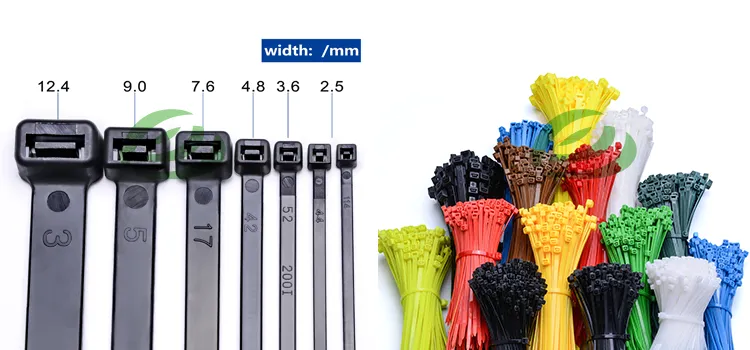
Cable Tie Size Chart

Cable tie size chart exists because a tie is sold by two numbers and used by a third. The part number carries width and length; the job needs the maximum bundle diameter the tie can close around and the tensile load it can hold, and neither of those is printed on the bag. The chart below is the reference table from the site's own size guide, reduced to one representative row per width family. Read it from the bundle backwards: diameter decides length, load decides width, and the part number is the last thing you write down.

What the guide here answers

Cable ties sizes — a complete guide is the full table, with every length in each width family, the maximum bundle diameter for each part number and the minimum loop tensile in both pounds and kilograms. It is the page to open when a specific part number has to be checked rather than a family chosen.

The chart

Width (mm)Length range (mm)Max bundle dia. (mm)Min loop tensile
2.5100–20022–508 kg / 18 lb
3.6100–40022–11018 kg / 40 lb
4.8100–55022–17522 kg / 50 lb
7.6200–65050–19545 kg / 100 lb
9.0400–1200105–34575 kg / 175 lb
12.0400105100 kg / 230 lb

How to read it

Find the bundle diameter in the third column and take the narrowest width that covers it, then the shortest length in that family that reaches around it. Width is the strength axis, so a 4.8 mm tie at 300 mm and a 7.6 mm tie at 300 mm are the same length and not the same product: the second holds more and costs more. Where the diameter sits at the top of a range, step up a family rather than stretching the length, because a tie closed at its maximum diameter has no tail left to grip and the head is loaded at its worst angle. The tensile column is a minimum loop figure for the closed tie, not the breaking load of the strap on its own.

Specification reference

The full part-number table, with every length in each family, sits on the standard cable ties product page and in the size guide linked above. Where a drawing specifies a maximum bundle diameter, quote from the part-number table rather than from the family range.

What size cable tie do I need for a 50 mm bundle?

A 3.6 mm tie at 200 mm reaches it, and a 4.8 mm tie at 200 mm holds it better. Take the wider of the two unless the tie is only positioning a light cable.

Does a longer cable tie hold more weight?

No. Length only decides how large a bundle the tie can close around; the load is carried by the width and by the head. A long narrow tie is the weakest combination in the range.

How do I convert the tensile figure to a safe working load?

The published number is a minimum loop tensile under test conditions, so it is a ceiling rather than a working load. Leave a substantial margin for vibration, temperature and a hand-tensioned installation.

Cable Ties Sizes — A Complete Guide

Cable Ties Sizes — A Complete Guide

Meta Description Learn about common cable ties sizes (length, width, thickness, and tensile strength) and select the appropriate cable tie model by measuring the bundle diameter. This article provides a straightforward size comparison chart, recommended scenarios, installation tips, and frequently asked questions to help you choose the right zip tie for home, computer room, and […]

Read More