How to remove zip tie is the question that follows every permanent fixing, and the answer depends on whether the tie has to survive. A self-locking tie that has to come off for good is cut; one that has to come off intact is released by lifting the pawl from inside the head, which is possible but needs the right tool and a steady hand. This tag gathers the guides on both routes plus the failure modes: what happens when a tie is broken by force, which tools damage the cable underneath, and how to release a tie that has been over-tightened against a bundle.
What the guides here answer
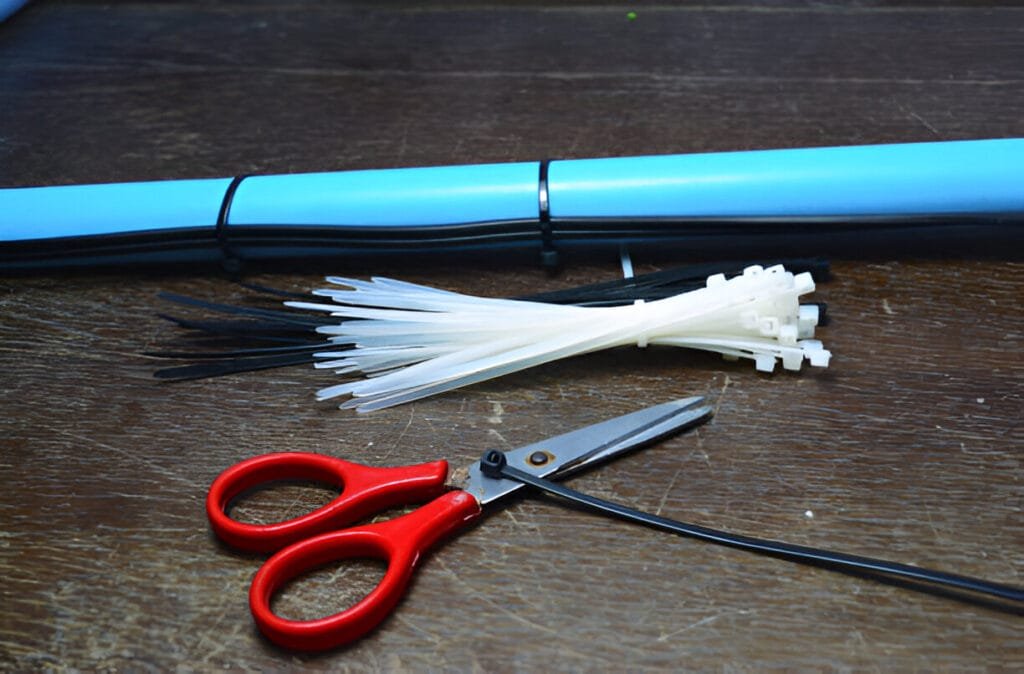
How to remove cable tie is the general method, covering the cut and the release side by side. How to remove cable ties safely and efficiently deals with volume, which is a different problem: dozens of ties on a harness, and a technique that does not nick the insulation on the way through. How to break a self-locking plastic zip tie safely covers the last resort, when neither a cutter nor a release is available and the tie has to be defeated without damaging what it holds.
The cut, and what it damages
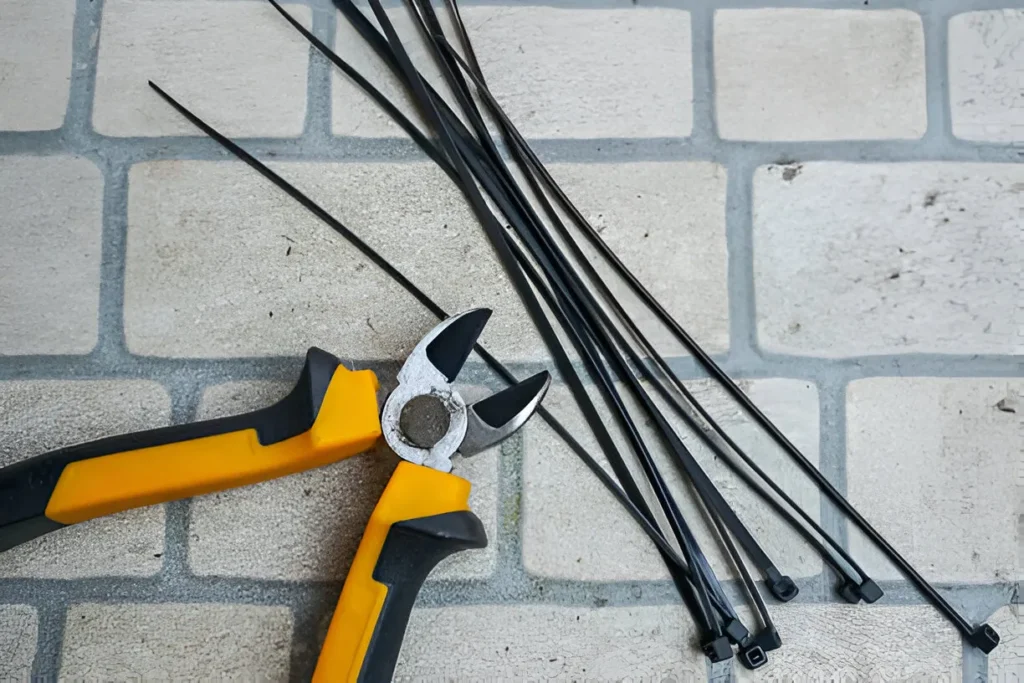
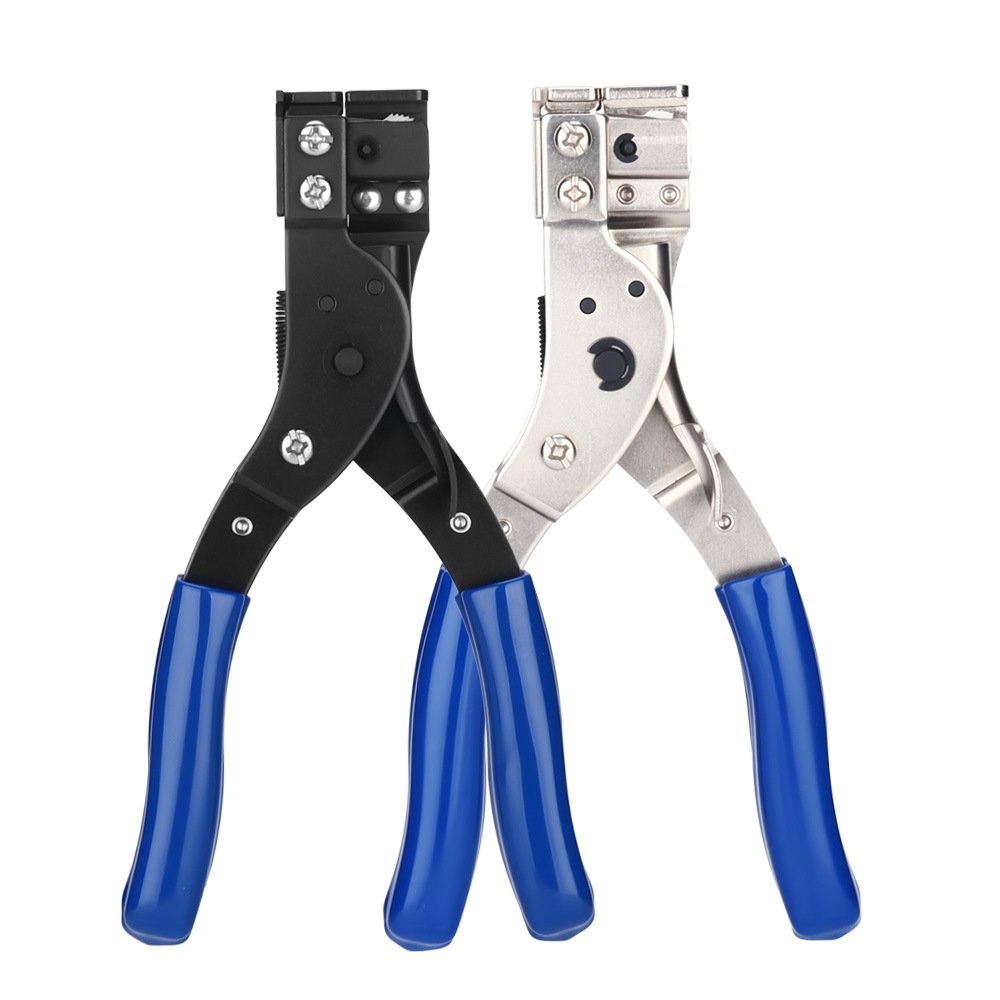
Flush cutters or a strap cutter, held flat against the head and closed in one movement, remove a tie without leaving a spike. The common error is a knife blade drawn along the strap: it cuts the tie only after it has scored whatever is underneath, and on a cable bundle that means the sheath. On a tie pulled tight against a soft cable, the strap is under tension and will spring as it parts, so the cut is made on the side away from the cable and the free end is held.
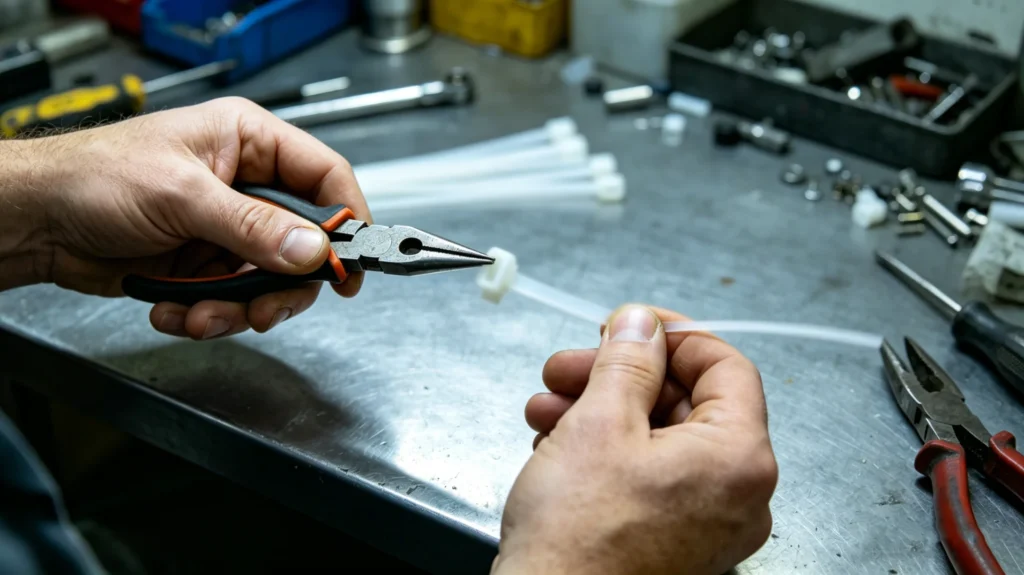
Releasing a tie without cutting it
The pawl can be lifted from inside the head with a thin probe: a small flat screwdriver, a feeler gauge or the tip of a cable tie. The probe goes in beside the strap at the exit end of the head, under the tongue, and is levered gently while the strap is pulled back. It works on most self-locking ties and it is the only way to keep a tie that has to be reused.
Specification reference
If the tie has to come off and go back on repeatedly, a releasable construction is the better answer than a technique. The tab-release versions are listed on the releasable cable ties product page.
Can you remove a zip tie without cutting it?
Yes, if the head has an open slot. Slide a thin probe under the pawl beside the strap, lift it, and pull the strap back through. Ties with a sealed head cannot be released this way.
What is the safest tool for cutting a zip tie?
Flush cutters, because the jaw closes flat and leaves no spike. Side cutters work but leave a sharp corner, and a knife is the wrong tool wherever there is a cable underneath.
Why does a zip tie get tighter after it is installed?
Nylon creeps under sustained load, and the ratchet takes up the slack as it does. A tie closed on a soft or settling bundle will be tighter a day later than it was at installation.

 EN
 AR
 ES
 PT
 FR
 RU
 DE
 KO
 JA
 IT
 NL
 TR