High temperature cable ties are ties specified for service above the 85 °C ceiling of standard PA66 nylon, using either a heat-stabilised nylon grade or a metal strap. The temperature at which a standard nylon tie stops holding is lower than most installers expect, and the failure is gradual rather than sudden.
Temperature ranges by material
The ceiling is a property of the polymer, not of the design, so the material choice is the whole decision.
Material
Service temperature
Note
Stainless steel
−80 °C to +500 °C
No polymer to degrade; also salt and chemical resistant
Nylon PA66
−40 °C to +85 °C
Standard grade; softens above 85 °C
Coloured PA66
0 °C to +85 °C
Coloured 450 mm series rating
Polypropylene
−10 °C to +80 °C
Lowest ceiling of the common materials
What happens between 85 °C and failure
Nylon does not fail at a single temperature. As it approaches and passes 85 °C the polymer softens, the pawl loses the hardness it needs to bite the strap ridges, and clamping force falls away. The tie does not snap; it loosens, the bundle shifts, and the damage shows up elsewhere as chafed insulation or a rattling route. That slow failure is why high-temperature routes are specified by temperature rating rather than by visual condition.
Specifying the route, not the tie
The temperature that matters is the one at the tie, not the one in the room. A tie near a motor housing, a manifold or a lamp sees radiant heat well above ambient, and a tie inside an enclosure can sit hotter than the equipment it holds. Measure at the fixing point, allow for the equipment's own rise, and choose the material from that figure with a margin rather than at the limit.
Above 85 °C for standard PA66. The failure is a loss of clamping force rather than a break, so the bundle starts moving before anyone notices the tie has failed.
Can I use nylon ties near a heat source?
Only within the rating at the tie itself. Radiant heat from a housing can put a tie well above ambient, so measure at the fixing point or step to a metal tie.
Are stainless ties the answer above 85 °C?
They are the safe answer where temperature is the only constraint. Where the strap will touch a cable jacket, use a coated stainless tie so the edge does not score the insulation.
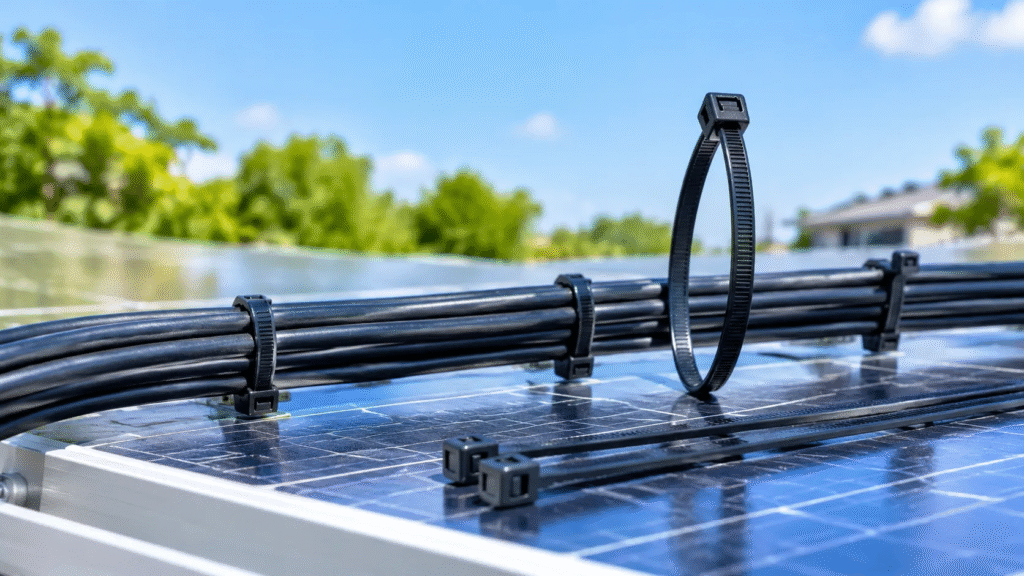
Nothing compromises a 25-year solar array faster than a snapped, brittle fastener. Yet on rooftop after rooftop, standard ties bake in the sun, crack under wind load, and leave high-voltage DC cables rubbing directly against sharp aluminum rails. Understanding how to choose the right cable ties for solar PV installations: UV, load and support spacing […]
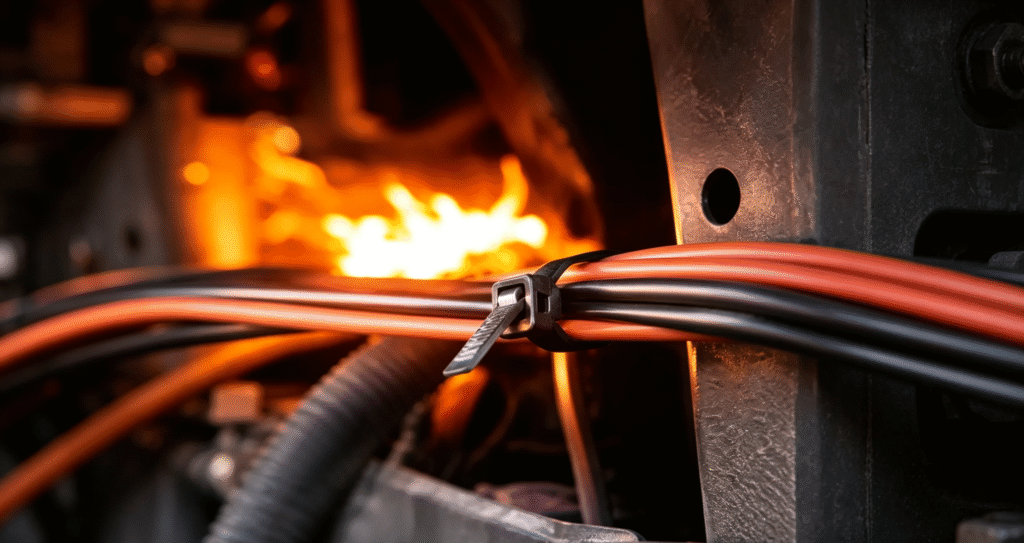
Ever wondered if that plastic fastener under your car hood or inside an electrical panel is about to melt? If you’re asking, “can zip ties withstand heat?“—the short answer is yes, but using the wrong one can quickly lead to brittle snaps, melted plastic, or costly equipment failures. The truth is, while standard nylon ties […]
At What Temperature Do Zip Ties Melt? Standard polymer zip ties begin to melt at 255°C (491°F), while high-performance metallic ties can withstand extreme thermal environments up to 1370°C (2498°F). However, physical melting is the ultimate point of complete destruction. Structural degradation, loss of tensile strength, and locking failure occur long before a tie reaches […]
Where to Buy Nylon Zip Ties Finding the right nylon zip ties requires balancing convenience with specific project requirements. Whether you are managing home theater cables or securing industrial equipment, sourcing from reputable suppliers ensures you receive high-quality nylon cable ties with reliable tensile strength. Top Online Retailers and Marketplaces For maximum variety and competitive […]
1. Introduction: Why care about zip tie heat resistance? High temp zip ties, also known as high temp cable ties, are commonly used bundling tools in industrial and outdoor high temperature environments. In high temperature working environments such as automotive engine compartments and outdoor solar panels, standard nylon zip ties tend to soften, break, or […]
This guide provides an in-depth analysis of heat resistant cable ties: revealing the material properties, temperature limits, and core applications in industries like automotive, aerospace, and high-temperature environments. It will help you efficiently and safely manage cables in high-heat scenarios. Introduction Among various cable ties, heat resistant cable ties are highly regarded for their excellent […]
We use cookies to enhance your browsing experience, serve personalised ads or content, and analyse our traffic. By clicking "Accept All", you consent to our use of cookies.
Looking For High Quality Nylon Cable Ties At A Great Price?
Order now to experience cost-effective cable tie products that provide convenience and protection for your work and life.




 EN
 AR
 ES
 PT
 FR
 RU
 DE
 KO
 JA
 IT
 NL
 TR