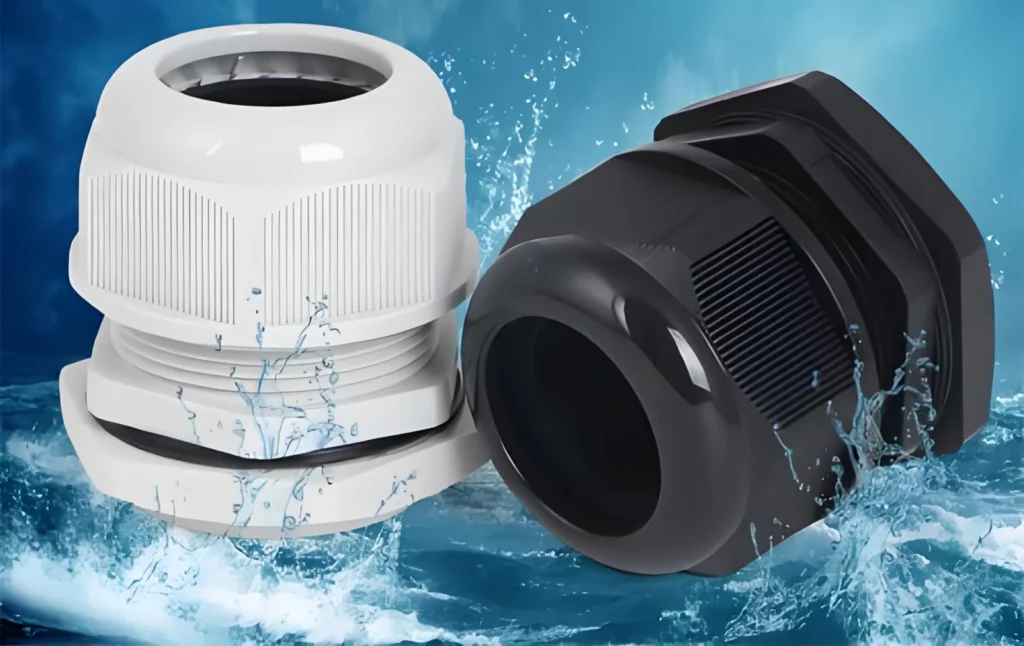
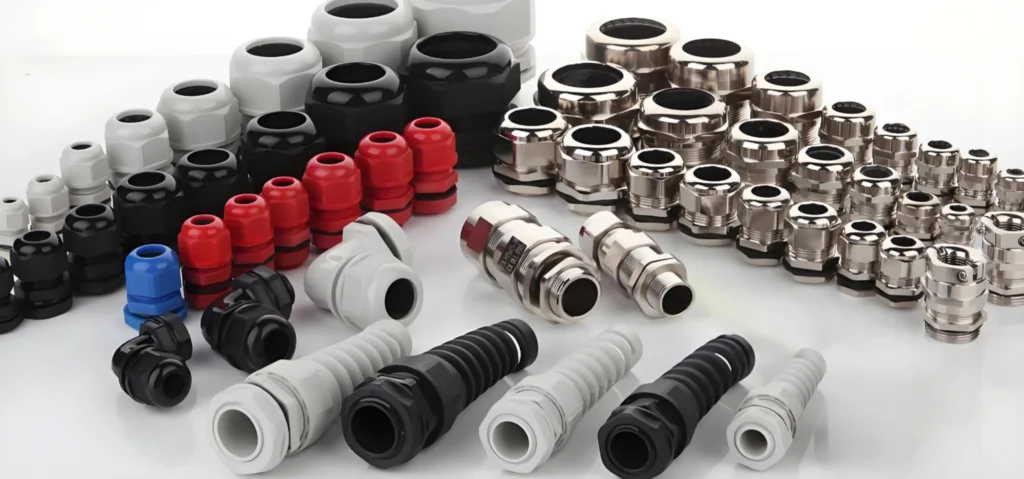
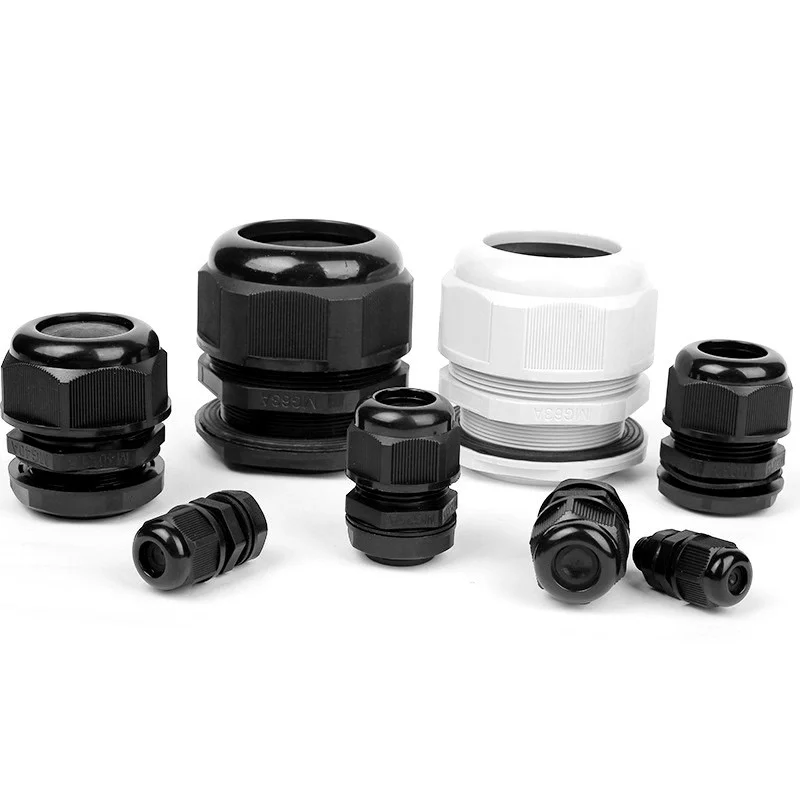
PG cable glands are cable entry fittings with a PG (Panzergewinde) thread, used to pass a cable through an enclosure wall while sealing against dust and water and providing strain relief. PG is the older German thread standard; the range runs from PG-7 for small signal cable to PG-16 and beyond for power cable.
How to read a PG size
The PG number is not the cable diameter and not the hole diameter. It is a thread size designation, so the useful numbers on a datasheet are the cable outside diameter range the gland accepts and the thread outside diameter it requires in the enclosure.
PG size
Cable OD range
Thread OD
Thread length
Nut across flats
PG-7
3–6.5 mm
12.5 mm
9 mm
18 / 16 mm
PG-9
4–8 mm
15.2 mm
10 mm
22 / 19 mm
PG-11
5–10 mm
18.6 mm
9 mm
24 / 22 mm
PG-13.5
6–11 mm
20.4 mm
10 mm
27 / 24 mm
PG-16
10–13 mm
22.5 mm
10 mm
29 / 27 mm
Sealing and strain relief
A gland seals on two surfaces: an O-ring or sealing washer against the enclosure wall, and a compression insert around the cable jacket. The protection rating follows from both being correct. The plastic PG glands in this range are rated IP6X for dust tightness, with the water figure set by the insert and the installation rather than by the body alone.
PG against metric
PG is a parallel thread to DIN 40430 with a 1.27 mm pitch across most sizes, and it does not interchange with the EN 60423 metric thread or the tapered NPT thread. A PG gland dropped into a metric hole will start, feel close, and leak; the correct move on a new enclosure is to specify the thread it was tapped for, and on an old one to keep buying PG rather than adapt.
Two figures: the cable outside diameter, which sets the gland, and the thread diameter already in the enclosure, which confirms it. If the cable falls between two ranges, take the gland whose range includes it at the lower end.
Is PG being phased out?
It is being replaced by metric in new equipment, but it is far from gone: a large installed base of European machinery is tapped PG, and those enclosures still need PG glands.
Can I fit a metric gland into a PG hole?
Not properly. The thread pitch and profile differ, so a metric gland will engage a PG hole only partially and will not seal. Use a PG gland or re-tap the enclosure.
Ever wondered how high-stakes electrical systems stay completely sealed, secure, and protected against extreme environments? If you’ve ever asked what is a cable gland, you’re looking at the unsung hero of safe industrial wiring. Whether you need rock-solid strain relief, watertight ingress protection, or help navigating Metric, PG, and NPT thread types, choosing the right […]
Are you tired of dealing with short circuits and ruined electronics because a seal failed? Knowing how waterproof are cable glands—and how to choose the right one—can be the difference between a flawless electrical system and a costly, water-logged disaster. In this guide, we are diving deep into the world of waterproof cable glands, decoding […]
Understanding Cable Gland Threads: Metric (M), PG, and NPT Selecting the correct cable gland size requires a clear understanding of the thread standards used globally. Cable glands secure and protect electrical cables where they enter enclosures, and their threads must perfectly match the junction box or equipment port to ensure a safe, secure, and sealed […]
Understanding Cable Glands and Thread Standards What is a Cable Gland and How Does it Work? An electrical cable gland is a mechanical cable entry device designed to secure, terminate, and protect electrical cables where they enter an enclosure or equipment housing. Operating as a critical sealing point, a nylon cable gland or plastic cable […]
We use cookies to enhance your browsing experience, serve personalised ads or content, and analyse our traffic. By clicking "Accept All", you consent to our use of cookies.
Looking For High Quality Nylon Cable Ties At A Great Price?
Order now to experience cost-effective cable tie products that provide convenience and protection for your work and life.


 EN
 AR
 ES
 PT
 FR
 RU
 DE
 KO
 JA
 IT
 NL
 TR