Ever found yourself reaching for a zip tie, only to realize it’s a few inches too short for the job?
It’s a frustrating moment, whether you’re managing a chaotic bundle of cords or tackling a weekend DIY project. But before you throw it away or make a frantic run to the hardware store, there’s a simple, brilliant trick you need to know.
You can actually connect multiple zip ties together to create the exact length you need.
In this quick guide, you’re going to learn exactly how to make zip ties longer, step by step, without sacrificing your sanity.
Let’s dive right in.
Understanding the Concept of Connecting Zip Ties
How Do Zip Ties Lock Together?
Zip ties, or cable ties, operate on a simple yet highly effective ratchet-and-pawl mechanism. Inside the head (the locking cube), there is a flexible internal pawl or tooth. When the smooth, tapered tail is inserted into the head, it slides over the tracks or ridges molded into the strap.
One-Way Direction: The ridges are angled to allow the tail to move forward easily but lock instantly when pulled backward.
The “Click” Sound: This distinct sound indicates the pawl is successfully engaging with the ridges, preventing the tie from slipping open.
Understanding this mechanism is key to learning how to make zip ties longer. By leveraging the head of one tie and the tail of another, you can daisy-chain them indefinitely to fit larger diameters.
Why You Might Need to Make a Zip Tie Longer
You will frequently encounter situations where a standard-length cable tie falls just short of what you need to secure. Instead of abandoning the project or making an emergency trip to the hardware store, connecting zip ties together solves the problem instantly.
Bundling Large Objects: Standard ties often fail to wrap around thick PVC pipes, large tree branches, or heavy-duty automotive hose bundles.
Emergency Fixes: When securing bulky cargo or setting up temporary outdoor structures, a single tie is rarely long enough.
Cost Efficiency: Utilizing existing inventory by joining two smaller ties saves money and reduces waste, allowing you to adapt to any project scale on demand.
Preparation: Selecting the Right Zip Ties for Extensions
Matching Width and Tensile Strength
When you need to know how to make zip ties longer, success starts with choosing the right pieces. You must match the zip tie width and cable tie tensile strength of the ties you plan to connect. Trying to feed a wide tail into a narrow locking head will not work, and using a thin tie to extend a thick one creates a weak link. For heavy-duty tasks, ensure both ties share the same heavy-duty rating so the extended chain can handle the load without snapping.
Ensuring Consistency in Material and Quality
Mixing different brands or material grades can lead to premature failure. For outdoor projects, always use consistent, UV-stabilized ties to prevent weather damage. You can check out our insights on how long UV-protected cable ties last outside to understand how material quality impacts durability. Using identical, high-quality ties from the same batch ensures the locking teeth mesh perfectly, providing a reliable and secure extension.
Step-by-Step Guide: How to Connect Zip Ties to Make Them Longer
If you find yourself with a cable tie that is too short for the job, you can easily daisy-chain multiple ties together. Follow these exact steps to achieve the perfect length without losing structural integrity.
Step 1: Inserting the Tail into the Locking Mechanism
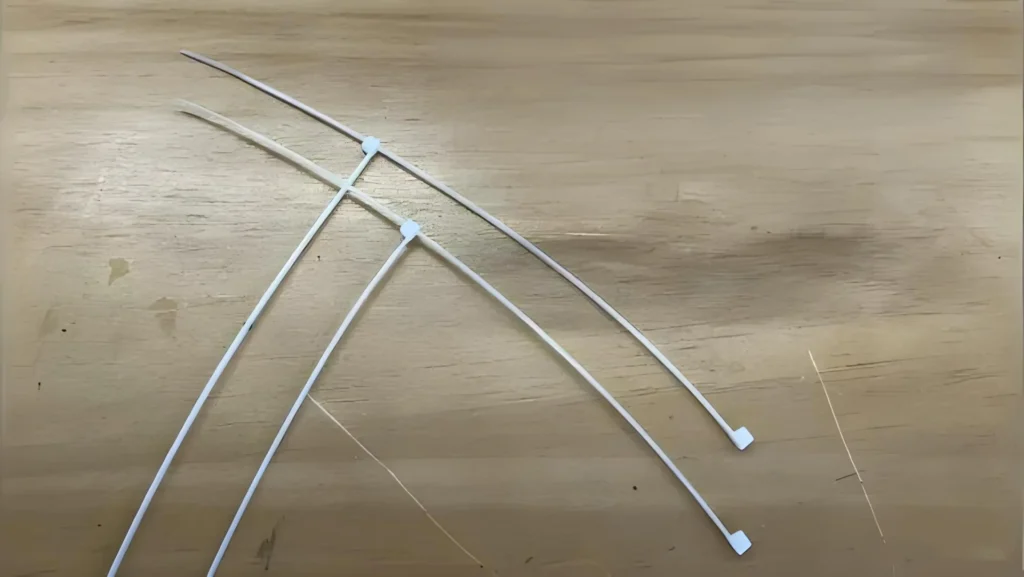
Take your first zip tie and a second companion tie. Take the pointed tail of the first tie and slide it into the locking head (the mechanism block) of the second tie.
Crucial check: Make sure the ridges (teeth) on the tail face the correct direction to engage the locking tab inside the head.
You should hear a distinct clicking sound as you push it through.
Step 2: Adjusting the First Tie to Your Desired Length
Do not pull the tail all the way through yet. To maximize your total reach, you only need to insert the tail far enough to fully engage the locking teeth.
Pull the tail through about 1 to 2 inches past the locking head.
This ensures the connection is completely locked while leaving the rest of the tie’s body free to extend your overall working loop.
Step 3: Repeating the Process for Extra Length
If connecting two zip ties still does not give you enough slack, you can repeat this chain reaction as many times as needed.
Take a third zip tie and feed the tail of the second tie into its locking mechanism.
Keep adding ties back-to-back until the combined length comfortably fits around your bundle or project area.
For bundled setups exposed to elements, choosing durable outdoor tie wraps for this process ensures the connections will not degrade quickly under UV exposure.
Step 4: Tightening and Securing the Connection
Once you have reached your target length, loop the final tail into the very first locking head to close the circle.
Pull tightly: Tug on each connection point to verify that the teeth are firmly locked and won’t slip under tension.
Trim the excess: Use flush cutters or heavy-duty scissors to snip off the protruding tails. Cutting them flush prevents sharp plastic edges from catching on wires or scratching your hands later.
Important Safety Precautions and Reminders
Understanding Reduced Tensile Strength in Connected Ties
When you need to how to make zip ties longer, chaining them together is a quick and effective workaround. However, you must understand that connecting zip ties together alters their original mechanical limits.
The Weakest Link Principle: An extended tie is only as strong as its weakest joint. Each added locking head introduces a new potential failure point.
Zip Tie Strength Loss: Chaining multiple ties can reduce the overall cable tie tensile strength by up to 50%.
Load Management: Never use interconnected ties for heavy-duty overhead lifting, securing critical automotive parts, or supporting high-voltage lines.
For high-stress applications, it is always safer to use single, heavy duty zip ties designed for the specific load rather than relying on a chain of smaller links.
Avoiding Over-Tightening and Structural Failures
Achieving the perfect tension requires a balance between security and material stress. Over-tightening a linked chain often leads to immediate or delayed structural failure.
Plastic Stress: Pulling the tail too hard stresses the locking pawl inside the head, causing the plastic to whiten and crack.
Surface Damage: Excessive tension can cut into the jackets of bundled cables or damage soft hoses. For sensitive setups, using specialized releasable cable ties allows you to adjust the tension safely without wasting material.
Environmental Factors: Temperature fluctuations cause plastic to expand and contract. Leave a tiny amount of slack to accommodate these changes, especially when bundling outdoor wiring.
Risk Factor
Potential Outcome
Prevention Method
Over-tightening
Snapped locking pawl / Cut cables
Pull until snug, do not force the tail
Mismatched Widths
Slippage at the joint
Match the exact cable tie width across all pieces
UV Exposure
Brittleness and sudden snapping
Use black, UV-stabilized ties for outdoor extensions
Practical Applications for Extended Zip Ties
Connecting zip ties to extend their length is a game-changer when standard sizes fall short. Instead of running to the store for specialty fasteners, you can easily daisy-chain your existing inventory to handle larger bundling tasks around the home, yard, or job site.
DIY Home and Garden Organization
In the yard and around the house, extended zip ties offer a quick, weatherproof solution for securing large or awkwardly shaped items. They are perfect for bundling bulky seasonal items or managing outdoor setups.
Securing Patio Gear: Fasten outdoor furniture covers or pool equipment securely against high winds.
Plant Support: Strap thick tree branches or heavy tomato vines to large privacy stakes without damaging the plant.
Holiday Decorating: Wrap festive lights and heavy garlands around thick porch pillars or staircase railings.
For outdoor projects exposed to the elements, using heavy-duty cable tie self-locking designs ensures the extended straps won’t slip or degrade under constant tension.
Heavy-Duty Cable and Cord Management
Managing thick bundles of wires requires robust solutions. When dealing with thick trunk cables or extensive routing setups, standard ties rarely wrap all the way around. Linking multiple ties together bridges that gap instantly.
Server Racks & Entertainment Centers: Gather dozens of thick HDMI, power, and ethernet cables into one neat, centralized channel.
Workshop Tool Cord Organization: Bundle thick extension cords and heavy-duty power tool cables for clean storage.
Industrial Routing: Secure conduits and thick flexible piping to structural supports safely.
Application
Benefit of Extended Ties
Recommended Setup
Thick Cable Runs
Encircles large diameters without buying specialty sizes
While daisy-chaining smaller ties works great in a pinch, it is not always the best permanent solution for heavy-duty or long-term projects. If you want a cleaner look and maximum holding power without the weak points of multiple joints, consider these professional alternatives.
Buying Extra-Long Industrial Cable Ties
The most reliable alternative to connecting multiple zip ties is simply using a single, continuous tie designed for large bundles. Investing in extra-long industrial cable ties ensures you maintain maximum zip tie strength and uniform cable tie tensile strength across the entire loop.
Pros: Maximum weight capacity, no slipping joints, clean professional finish.
Best For: Heavy construction, outdoor installations, and high-tension bundling.
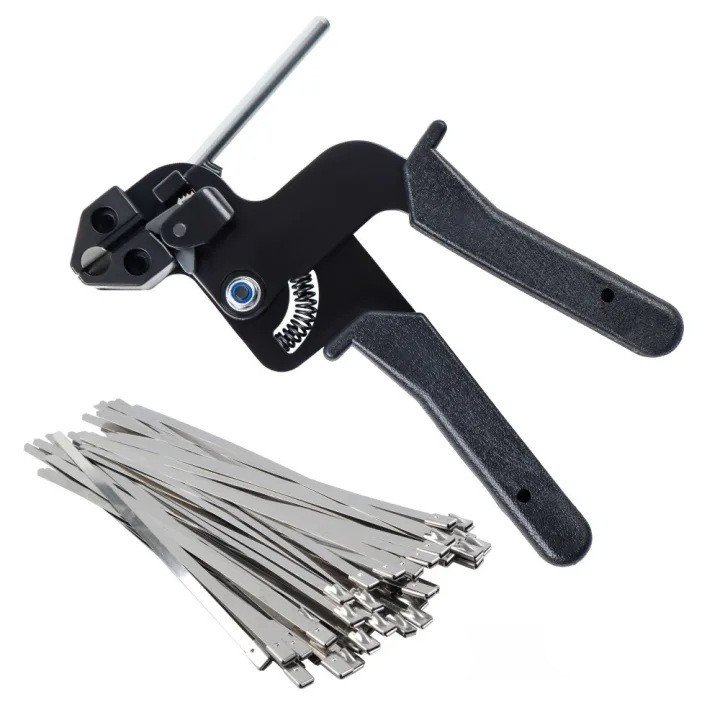
Pro Tip: If your project requires extreme durability, weather resistance, or heat tolerance, upgrading to heavy duty stainless steel cable zip ties provides an unbreakable hold that plastic ties simply cannot match.
Using Reusable Hook-and-Loop Straps
For projects where cables need to be constantly added, removed, or adjusted, hook-and-loop fabric straps are a smart, waste-free alternative to standard nylon ties.
Adjustable & Reusable: Easily alter the loop size without cutting and wasting plastic.
Cable Protection: The soft fabric material prevents friction damage to delicate data cords.
Best For: Home theater setups, PC cable management, and temporary studio wiring.
Nylon cable tie, as a common and indispensable tool, have penetrated into every aspect of our lives. In the fast-paced modern society, we may rarely pay attention to this small but powerful tool. However, it plays an irreplaceable role in many situations. The emergence of nylon cable ties not only brings convenience, but also solves […]
What Is Heat Shrinking Tubes and How Does It Work? A heat shrinking tube (also known as a polymer sleeve) is an expandable plastic tube engineered to insulate, protect, and bundle wires, cables, and electrical components. When exposed to a heat source, the tubing shrinks radially to fit tightly around underlying components, creating a protective […]
We use cookies to enhance your browsing experience, serve personalised ads or content, and analyse our traffic. By clicking "Accept All", you consent to our use of cookies.
Looking For High Quality Nylon Cable Ties At A Great Price?
Order now to experience cost-effective cable tie products that provide convenience and protection for your work and life.



 EN
EN  AR
AR  ES
ES  PT
PT  FR
FR  RU
RU  DE
DE  KO
KO  JA
JA  IT
IT