Zip tie heat rating is the number that decides whether a nylon tie survives an application. A standard nylon 6/6 tie is rated for continuous service well below the temperature at which the material melts, because the limit is not melting but softening: the polymer loses stiffness, the pawl stops gripping and the strap creeps under load long before anything visibly changes. This tag holds the guide that explains the difference, and the material choices that raise the ceiling.
What the guide here answers
Will cable ties melt works through the heat behaviour of the common tie materials: where standard nylon 6/6 sits, what changes with heat-stabilised grades, where polypropylene fits and at what point stainless steel becomes the only answer. It also separates short-term excursion from continuous service, which is the distinction that most heat-related failures come down to.
Softening, not melting, is the failure
Nylon 6/6 softens gradually as it warms, and the first thing to go is the grip: the pawl teeth deform and the strap begins to creep back through the head, so the loop loosens without ever breaking. By the time a tie looks heat-damaged it has usually already failed mechanically. This is why a heat rating is quoted as a continuous service temperature with a derating for load, and why a tie that holds at ambient can let go in a warm enclosure holding the same bundle.
Raising the ceiling
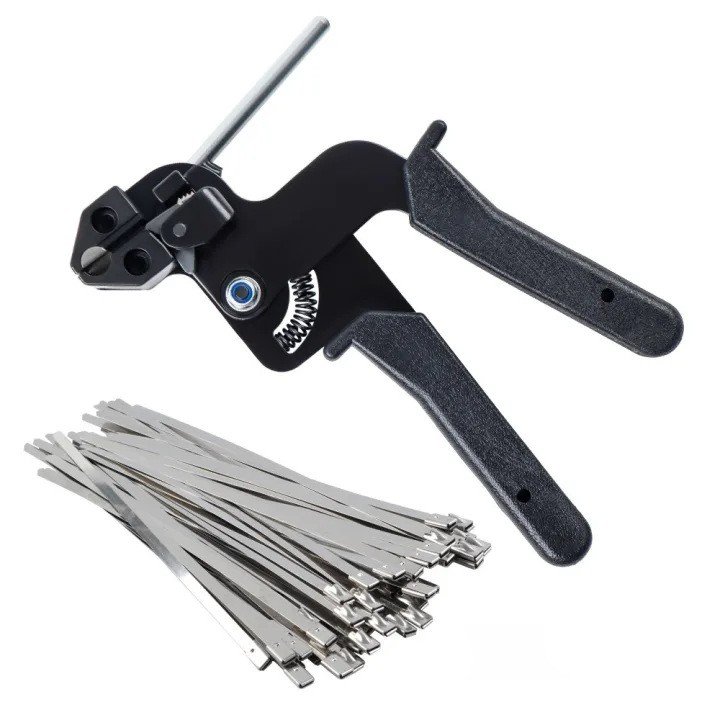
Heat-stabilised nylon ties extend the continuous range modestly and are the standard answer for enclosures, engine bays and plant rooms. Polypropylene ties suit chemical exposure but not heat. Beyond the nylon family the answer is stainless steel, which has no softening problem in the range that concerns cable work, and coated stainless where the bare strap would damage the sheath. Short excursions are survivable at higher figures than continuous service, but only if the tie is not carrying its full rated load at the time.
Specification reference
Continuous service temperature, material grade and tensile rating for each heat-rated product are listed on the heat resistant cable ties product page. The service temperature and the melting point are different figures, and the one that matters is the first.
At what temperature do zip ties melt?
Nylon 6/6 melts in the region of 250 °C, but the useful limit is far lower. The tie stops holding once the material softens enough for the pawl to lose grip, which happens well below melting.
Are heat-resistant zip ties worth it?
Where the tie sits in a warm enclosure or near a heat source, yes: the stabilised grade holds its grip longer and creeps less than the standard one. In ambient conditions there is no benefit.
What can replace nylon where it is too hot?
Stainless steel ties, bare or coated. They are the only common tie construction without a softening limit inside the range that concerns electrical and industrial cable work.


 EN
 AR
 ES
 PT
 FR
 RU
 DE
 KO
 JA
 IT
 NL
 TR