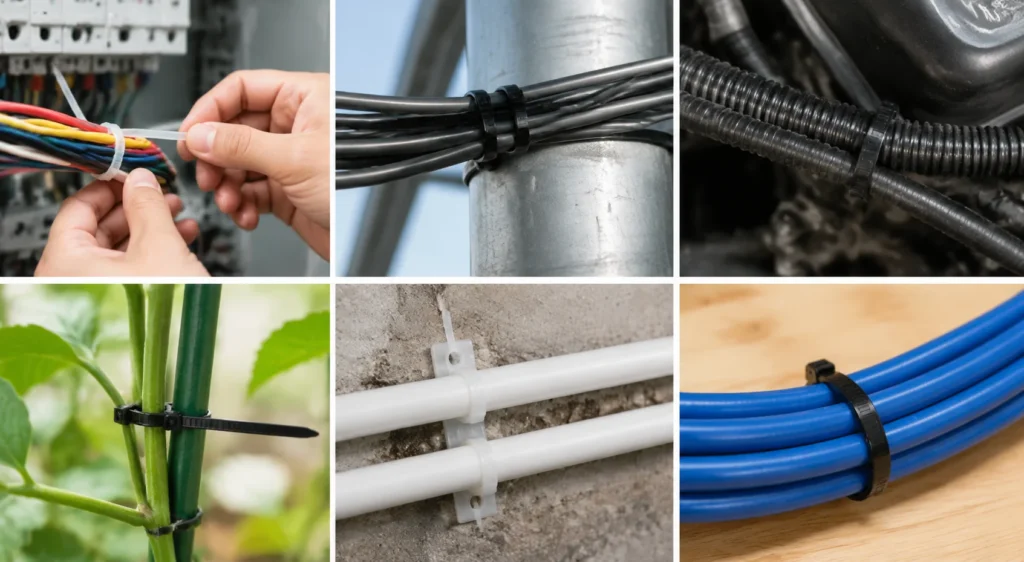
How do cable ties work comes down to one part: a flexible tongue inside the head that lets the serrated strap pass one way and grips it on the way back. Everything else about the tie follows from that ratchet, including why it cannot be undone, why it holds tighter under load and why the head is the part that fails first. This tag holds the three guides that explain the mechanism, the history behind it, and the technique for closing a tie so that it holds without over-tightening.
What the guides here answer
How do nylon self-locking cable ties work is the mechanism explained part by part: the strap, the teeth, the pawl and the head. How to tie cable ties turns the mechanism into technique, covering how far to pull, when to stop and what a correctly tensioned tie looks like. Who invented zip ties follows the same idea from its first patent to the disposable tie in a cable installer's pouch.
The ratchet, in one paragraph
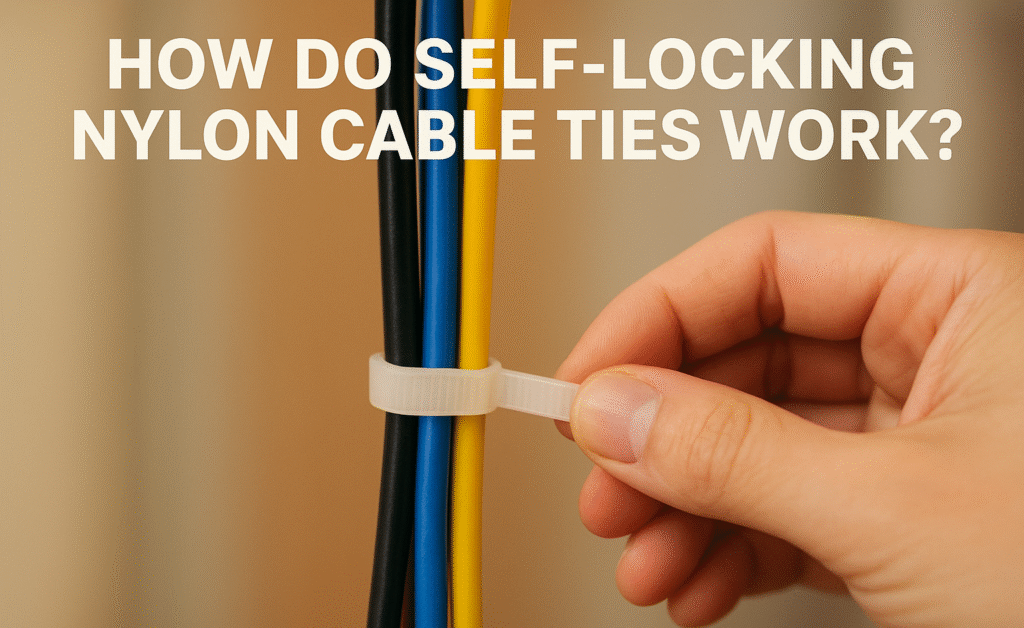
The strap is moulded with a row of angled teeth on one face. The head contains a matching tongue that flexes as a tooth rides over it and springs back into the gap behind the tooth, so forward motion is free and backward motion is blocked. This is why the tie is described as self-locking: the lock is a property of the geometry, not of a separate catch that could be opened.
What limits the hold
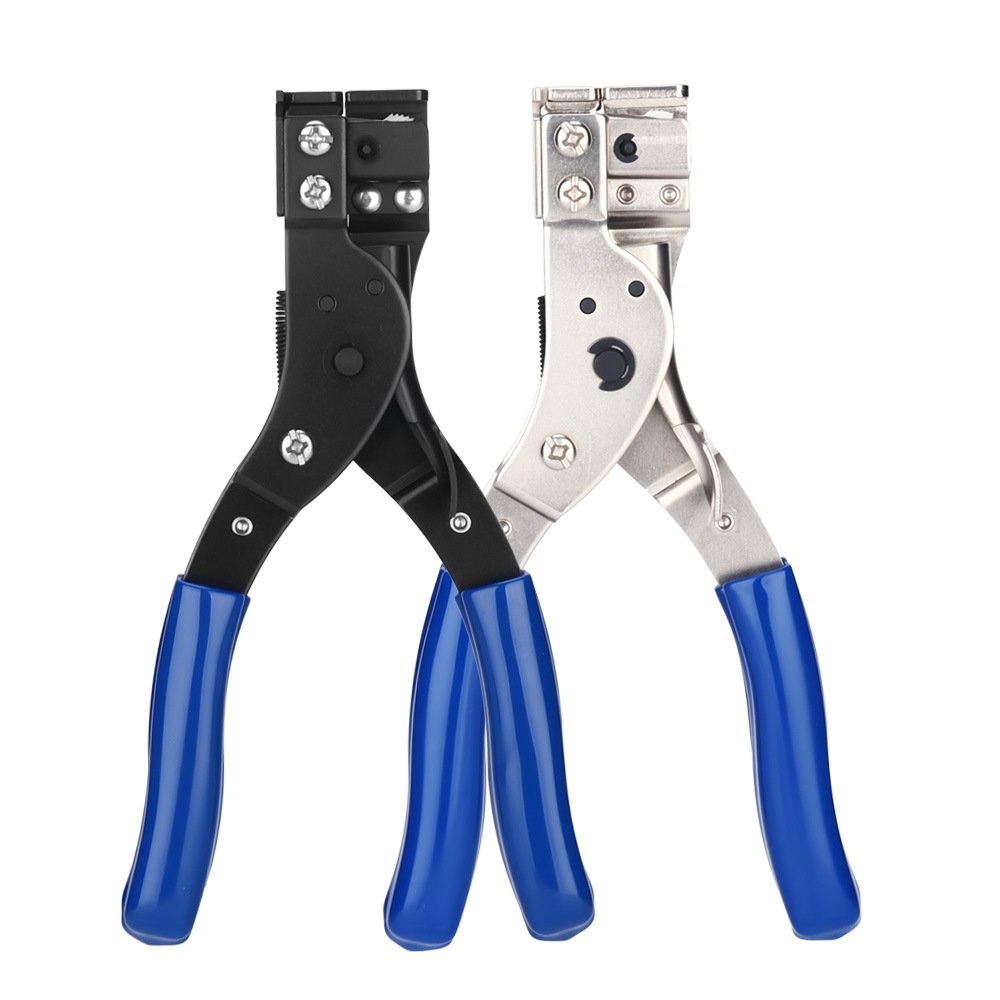
The loop holds until the weakest of three things gives: the tongue shears, the strap breaks at the head, or the teeth strip out of the pawl. In practice the head is the failure point, which is why a tie rated at a given tensile figure fails at the head rather than in the middle of the strap. Tension matters as much as rating: a tie pulled hard by hand or by a gun pre-loads the head and gives away part of the margin before the bundle has taken any load, while a tie left loose lets the bundle shift and saw at the strap edge.
Specification reference
Width, length and tensile rating for each size in the range are listed on the standard cable ties product page. The rated figure is a loop tensile, so it describes the whole closed tie, not the strap on its own.
Why can't a cable tie be undone?
Because the pawl sits inside a sealed head with no access from outside, and the teeth are angled to allow one direction only. There is nothing to press, lift or turn, so the only ways out are cutting the strap or releasing the tongue from inside the head.
What makes a cable tie hold tighter under load?
The angle of the teeth. A pull on the strap drives the teeth deeper into the tongue rather than sliding them out, so the loop resists more firmly the harder it is loaded, up to the point where the head shears.
Do all cable ties lock the same way?
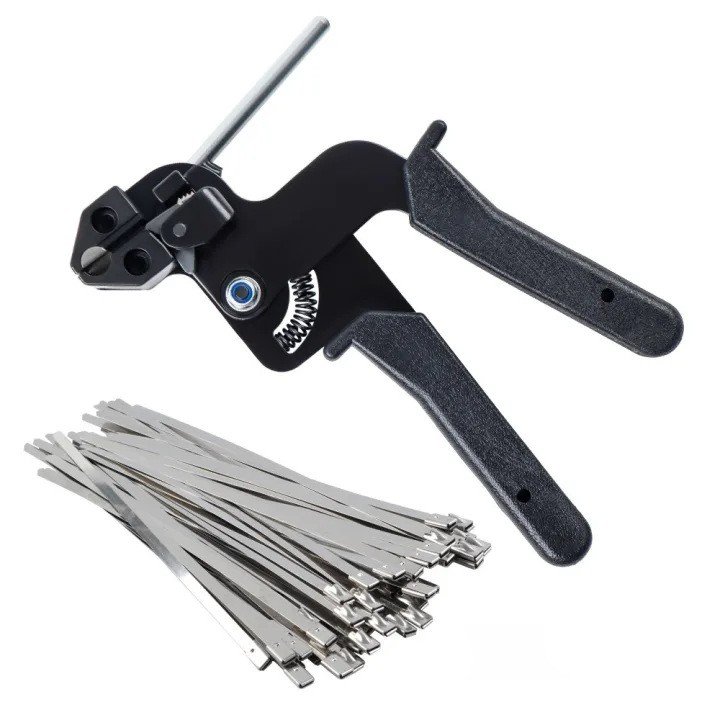
No. The self-locking tie is one family; releasable ties add a tab that lifts the tongue, and stainless steel ties use a ball or a roller in a slotted head. The self-locking nylon tie is the one that cannot be reopened.


 EN
 AR
 ES
 PT
 FR
 RU
 DE
 KO
 JA
 IT
 NL
 TR