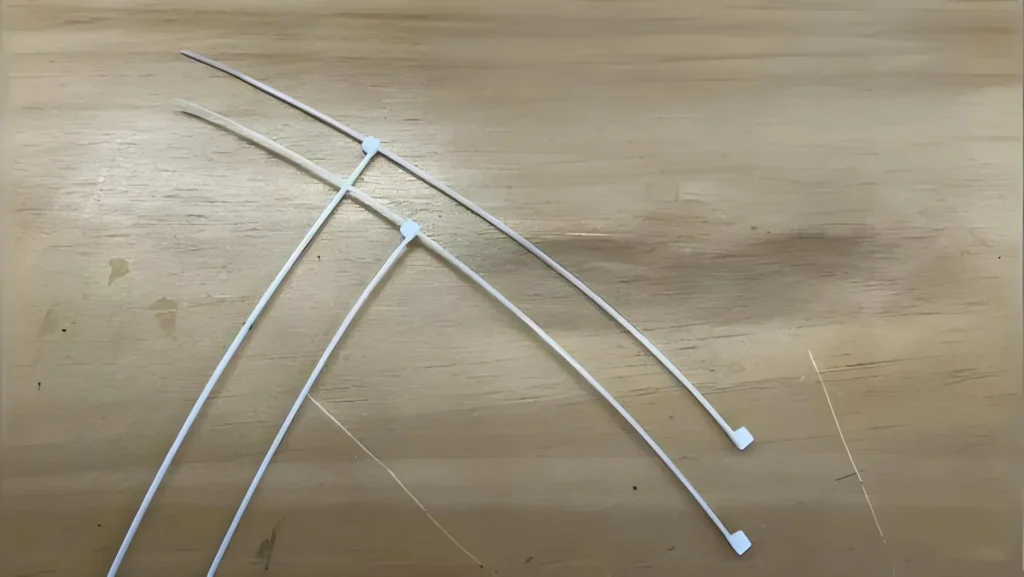
How to Connect Zip Ties

Connecting two zip ties into one longer run is a normal field fix, and the method chosen decides how much strength survives. There are three practical ways: threading one tail into the head of the second, interlocking two heads, and using a tie as a splice through both heads. All three work, none of them restores the full rated strength of a single tie, and the loss is concentrated at the joint rather than spread across the run. The basic operation itself is on the how to use zip ties page.

The three methods and how each behaves

Tail-into-head is the strongest of the three: close the first tie loosely, feed its tail through the head of the second and close the second around the bundle, so the joint is a head gripping a strap rather than two straps bearing on each other. Head-to-head interlocking works where the two ties meet at a right angle and is the weakest, because the load bears on the head mouldings. A splice tie threaded through both heads is the most controllable and is what to use where the run has to stay in line, at the cost of a third component.

What it costs in strength

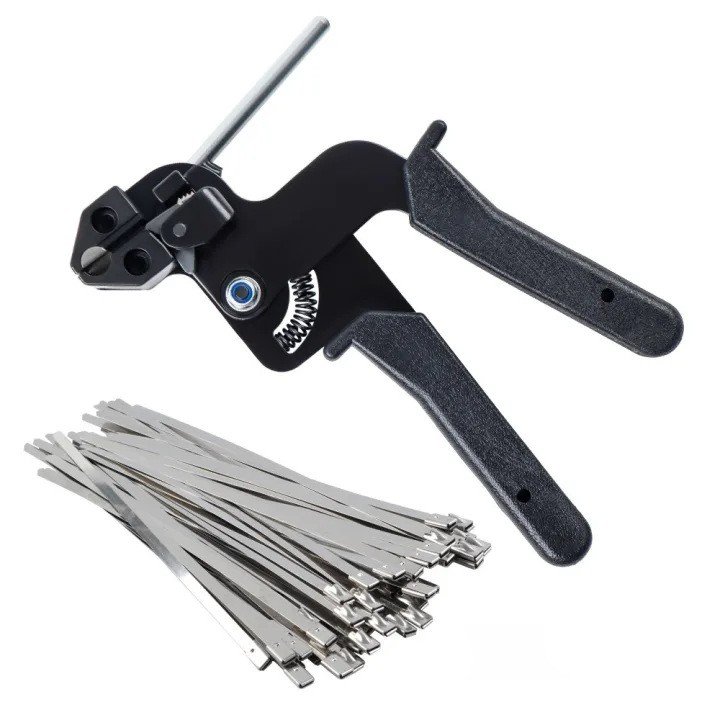
A joined run is limited by the joint, not by the straps, and the joint should be treated as roughly half the rating of the tie it is made from. That means a joined run is acceptable for positioning, bundling and light restraint, and is not acceptable for anything overhead, lifting, or exposed to repeated shock. Where the length is genuinely needed under load, the correct answer is a longer single tie or a stainless strap cut to length, not a splice.

How do you join two zip ties together?

Feed the tail of the first through the head of the second and close the second around the bundle. This keeps one head gripping one strap and is the strongest of the three methods.

How much strength do you lose at the joint?

Treat the joint as about half the rating of the tie. The load concentrates at the head rather than distributing along the strap.

Is a joined tie safe overhead?

No. Use a single tie of the correct length or a cut-to-length stainless strap. A spliced joint can creep and release under sustained load.

How to Make Zip Ties Longer Step by Step Guide

How to Make Zip Ties Longer Step by Step Guide

Ever found yourself reaching for a zip tie, only to realize it’s a few inches too short for the job? It’s a frustrating moment, whether you’re managing a chaotic bundle of cords or tackling a weekend DIY project. But before you throw it away or make a frantic run to the hardware store, there’s a […]

Read More