SS hose clamps are the stainless steel band clamps that seal a flexible hose onto a rigid spigot by winding a screw that draws the band tighter. The band material is the whole specification: a stainless band resists corrosion where a zinc-plated one rusts through, and the grade decides whether that resistance survives salt, chlorine or a hot engine bay. This tag holds the site's guide to removing and refitting metal clamps on hose.
What the guide here answers
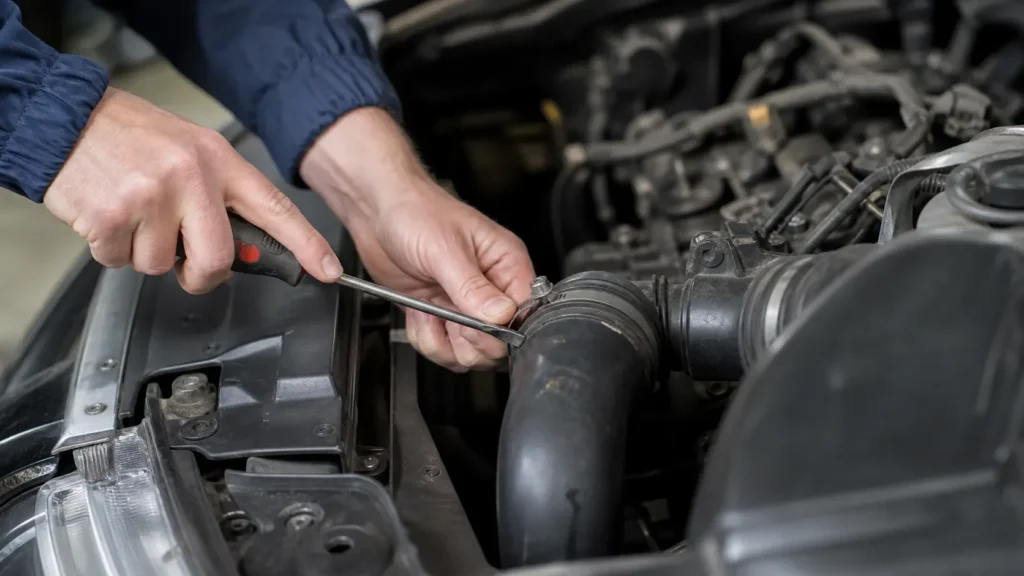
How to remove metal clamp for hose: tips and methods covers the practical side: which driver the screw head needs, how to free a screw that has seized into the band, how to cut a band that will not release without scoring the spigot, and how to refit so the band does not bite the hose. That last point is where most leaks start.
Band, thickness and range
Three figures decide whether a clamp works. The clamping range has to bracket the outside diameter of the hose over the spigot, not the hose on its own. The band width sets how much of the hose is covered: a wide band spreads the load and seals better on soft hose, a narrow band concentrates it and suits a hard reinforced hose in a tight space. The band thickness is what resists strip-out when the screw is tightened, and a thin band deforms before it reaches the torque the joint needs.
304 or 316
Both are austenitic stainless steels and both resist rust far better than a plated band. The 316 grade adds molybdenum, which is what holds up against chlorides: salt spray, seawater, pool and process water, and washdown in food or marine environments. For a dry indoor run, 304 is enough. For anything that sees salt or chlorine, 316 is the specification rather than an upgrade.
Specification reference
Size range, band width, thickness and band length are listed on the stainless steel hose clamps product page.
What size hose clamp do I need?
Measure the outside diameter of the hose where it sits over the spigot, then choose a clamp whose range brackets that figure with room to tighten. Measuring the hose off the fitting gives a size that is too small.
Will a stainless clamp still rust?
A 304 band can show surface staining in salt or chloride exposure, and a 316 band resists it. Neither grade rusts through in the way a plated band does, but grade still has to match the environment.
How tight should a hose clamp be?
Tight enough to stop the joint weeping and no tighter than the hose can take. Over-tightening cuts the hose wall under the band, which produces a leak that appears later and further along the hose.

 EN
 AR
 ES
 PT
 FR
 RU
 DE
 KO
 JA
 IT
 NL
 TR