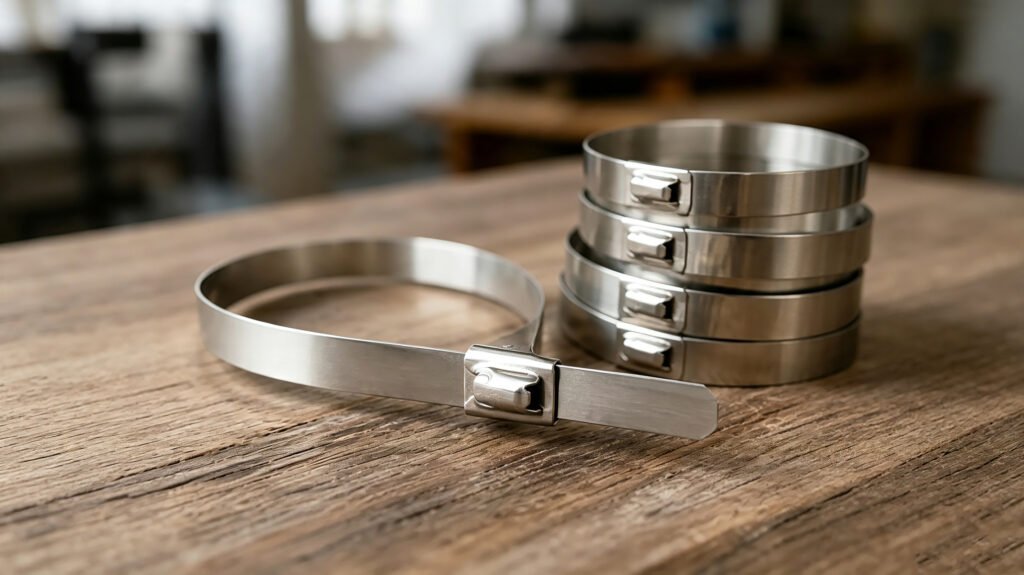
304 stainless steel cable ties are the grade to reach for when nylon is the wrong material rather than the wrong size: outdoors in sun, near heat, in chemical exposure, or where the tie has to outlast the installation by a decade. Grade 304 is the general-purpose austenitic stainless, and it covers most of what cable ties are asked to do. This tag gathers the three guides that deal with it: how a ball-lock stainless tie works, the wider stainless tie selection, and the 304 against 316 decision that has to be made before a purchase order goes out.
What the guides here answer
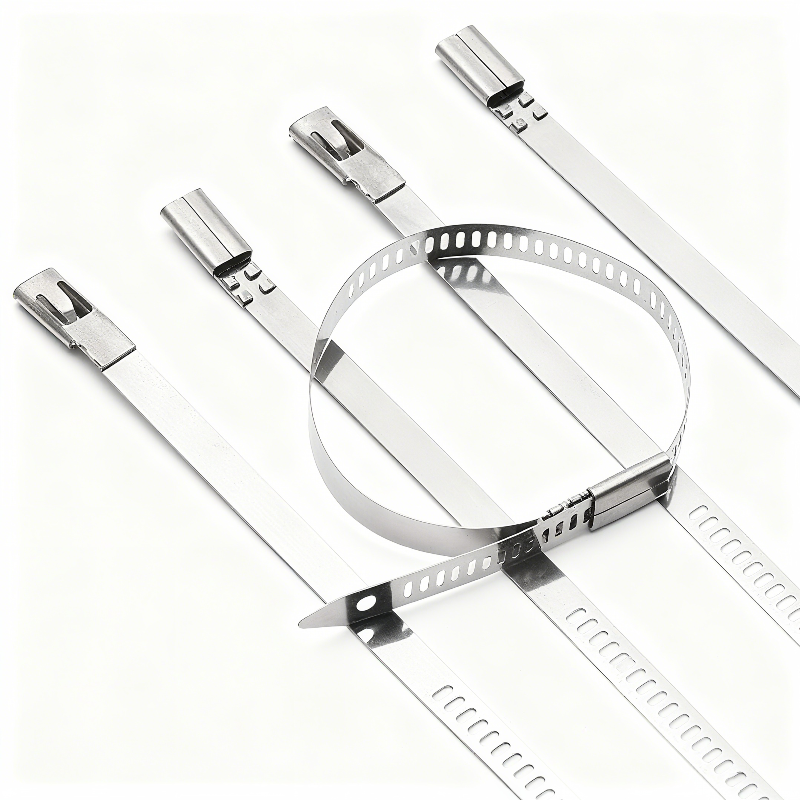
How do stainless steel zip ties work covers the mechanism, which is a ball or roller in a slotted head rather than a nylon pawl, and the installation method that goes with it. SS cable tie guide sets out the types, strength classes and industrial applications across the family. 304 vs 316 stainless steel is the grade comparison, and it is the guide to read before specifying either.
What 304 does well, and where it stops
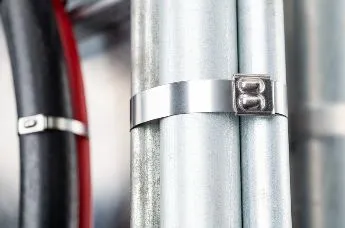
304 resists atmospheric corrosion, most fresh water, and the general run of industrial and food-adjacent environments, and it keeps its strength at temperatures where nylon has already softened far past use. It is the default grade for outdoor bundling, signage, fencing and marine-adjacent work that stays out of continuous salt immersion.
Installing one without damaging the cable
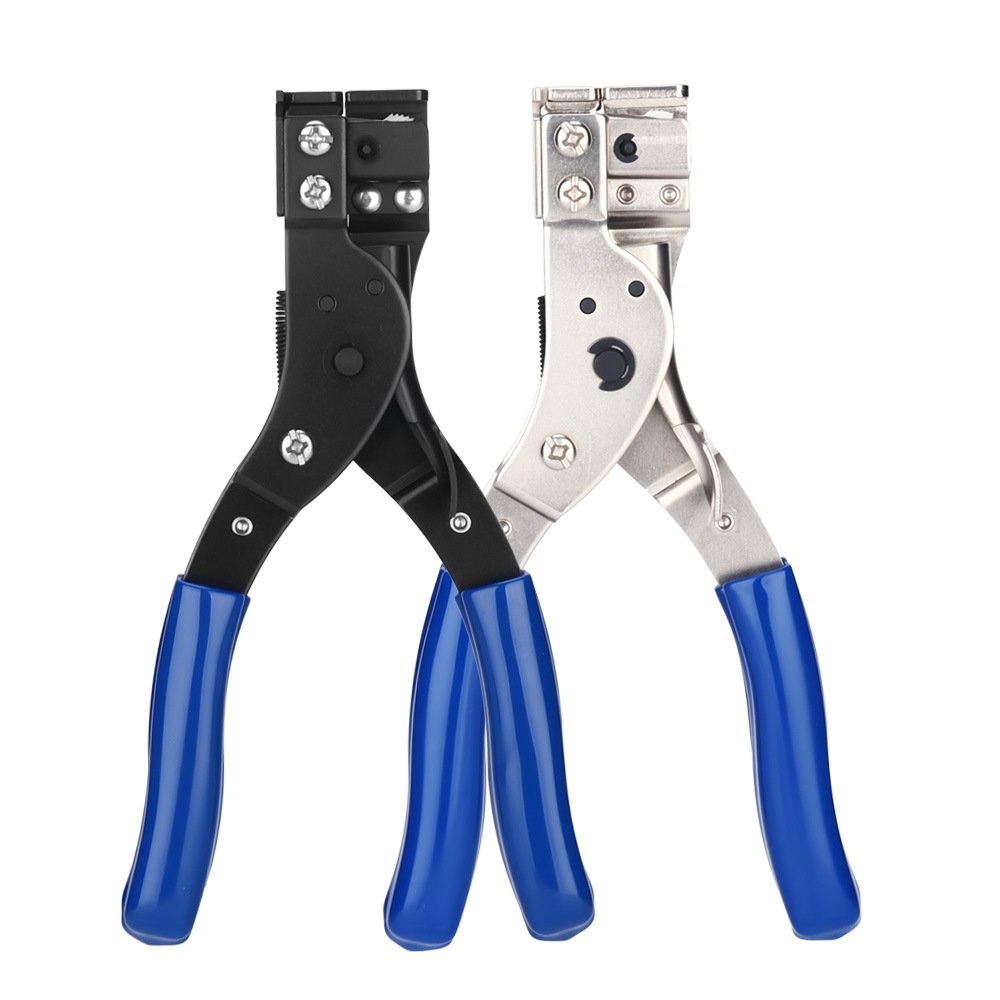
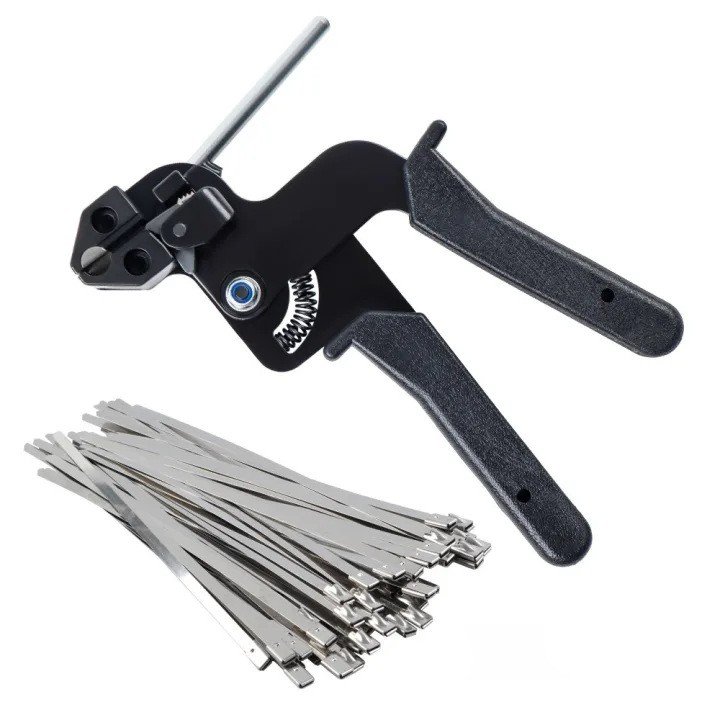
A stainless tie is closed with a tensioning tool that pulls the strap through the head and cuts the tail flush; done by hand, the tail is left long and sharp, and it is the tail rather than the strap that cuts insulation and fingers later. The strap is also stiffer than nylon, so it does not conform to a soft or irregular bundle and will crush it unless a protective sleeve or a coated tie is used.
Specification reference
Strap width, length and the ball-lock head dimensions across the range are listed on the stainless cable ties product page. Where a specification names a grade, confirm it against the product data rather than against the product name.
Is 304 stainless steel good enough for outdoor cable ties?
For most outdoor work, yes. It handles rain, sun and temperature. It is not the grade for continuous salt spray or chloride-rich atmospheres, where pitting appears and 316 is the correct specification.
What is the difference between 304 and 316 cable ties?
316 adds molybdenum, which raises resistance to chlorides. The two look identical and are often listed under the same product name, so the grade has to be confirmed from the data sheet.
Can 304 ties be reused?
The ball-lock head can be released with a thin tool and the strap reinserted, and the tie will hold again, though the strap retains a set from the first installation. Ties intended for repeated opening are usually specified as releasable rather than reused by technique.

 EN
 AR
 ES
 PT
 FR
 RU
 DE
 KO
 JA
 IT
 NL
 TR