316 stainless steel cable ties are the grade specified when 304 would pit. The difference is molybdenum, added at roughly two to three percent, which raises resistance to chlorides: salt spray, salt water, de-icing chemicals, bleach and the chloride-bearing process fluids found in food and chemical plant. The two grades look identical and are frequently sold under the same product name, so the grade has to be confirmed from the data sheet rather than from the listing. Grade selection is set out in the 304 vs 316 comparison.
What the molybdenum actually changes
304 and 316 share the same austenitic structure and the same mechanical behaviour, so strength, temperature range and installation method are unchanged. What changes is the resistance to localised corrosion: in a chloride environment 304 develops pits that grow into crevices, and a pit in a loaded strap is a crack starter. 316 resists that initiation, which is why it holds up where 304 shows rust bloom within a season.
Where 316 is required rather than preferred
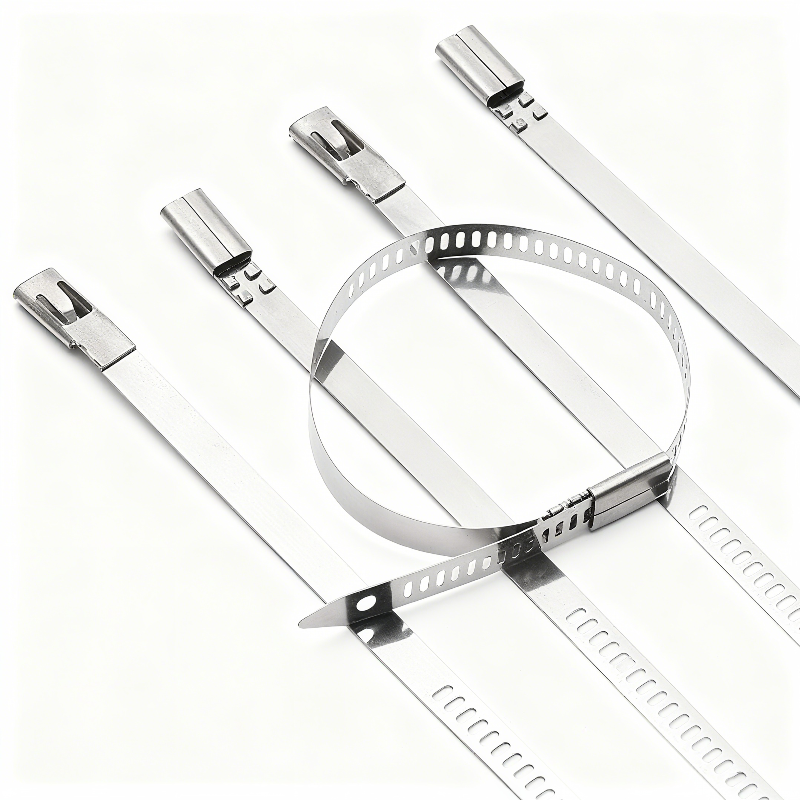
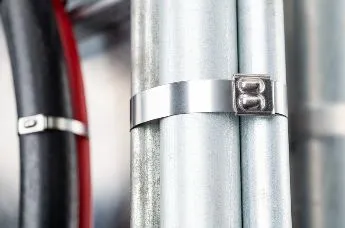
Coastal and offshore installations, marine engine rooms and deck hardware, water treatment and pool plant, food processing with chloride sanitisers, and any outdoor assembly that will be inspected and found wanting if it rusts. Inland, sheltered and non-chloride work, 304 is the economic choice and there is no service benefit in paying for 316. The straps and heads are on the stainless cable ties product page.
Is 316 worth the extra cost?
Where chlorides are present, yes — 304 will pit and the replacement cost exceeds the difference. Inland and indoors, 304 gives the same service life.
Can you tell 304 from 316 by looking?
No. Both are bright austenitic stainless with the same finish. Identification needs the data sheet, a mill certificate, or a chemical test.
Are 316 ties suitable for marine use?
For deck, rigging and engine-room bundling, yes. They are not a substitute for a certified lifting component where the assembly carries a person or a load above.


 EN
 AR
 ES
 PT
 FR
 RU
 DE
 KO
 JA
 IT
 NL
 TR