
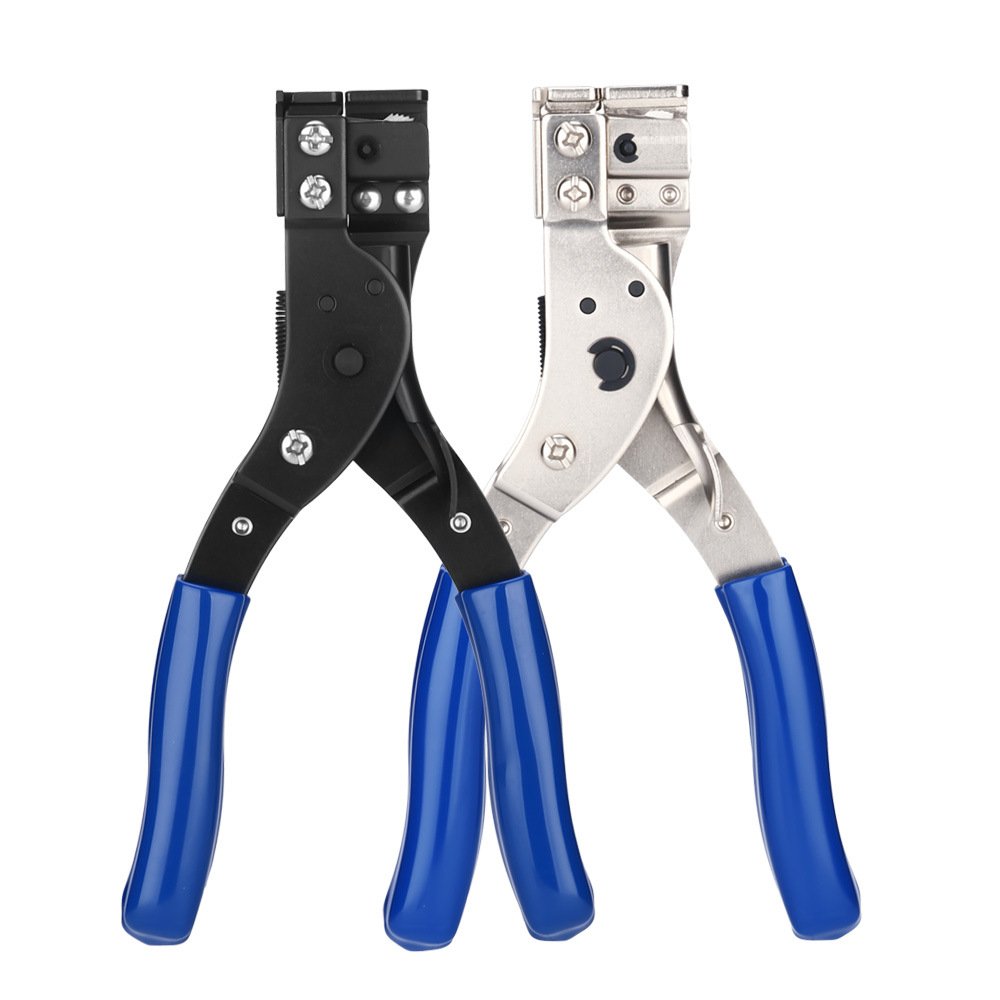
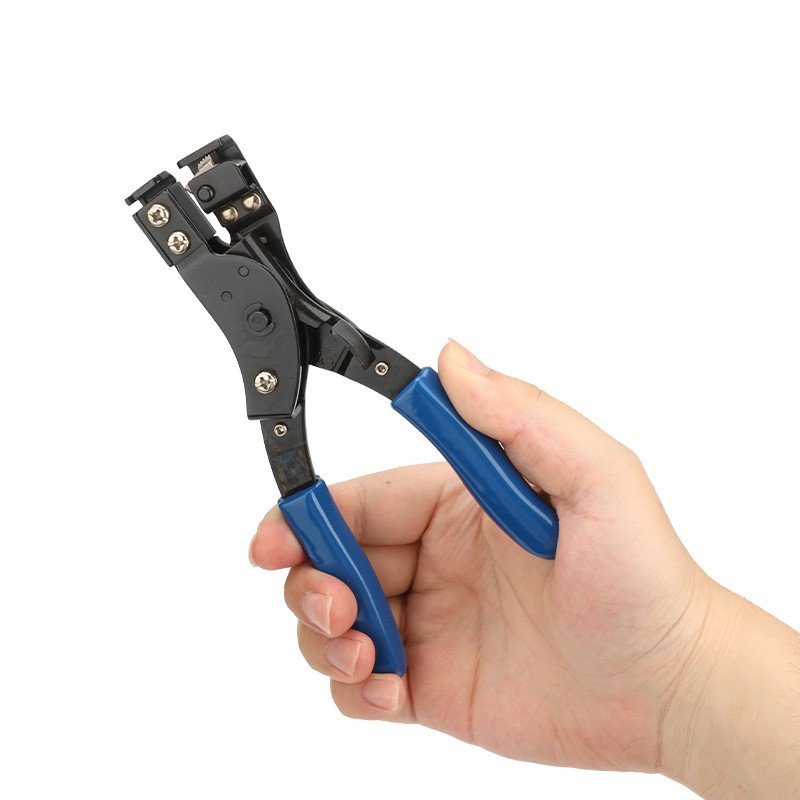
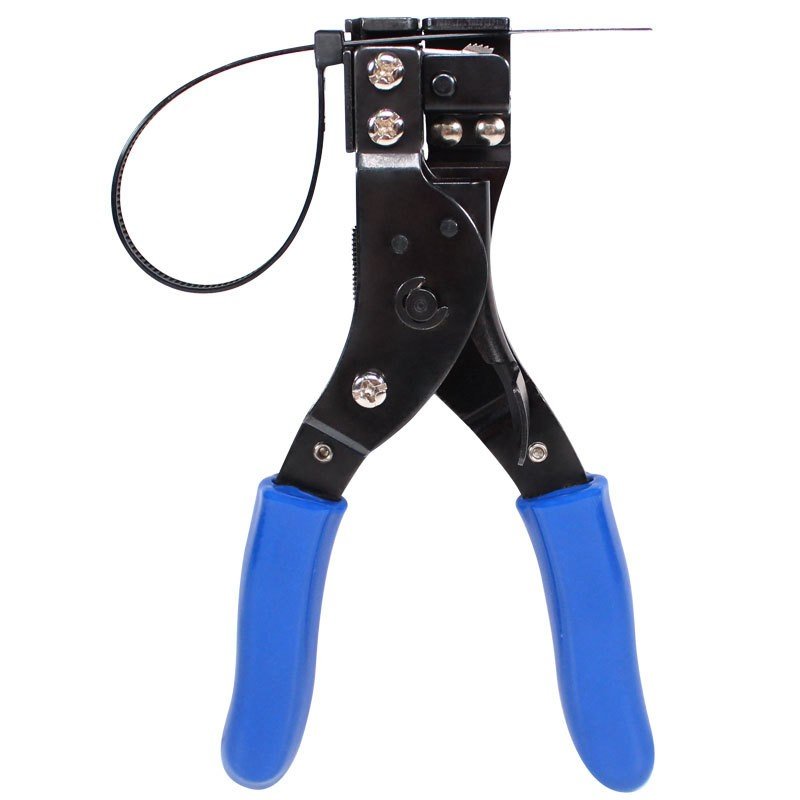
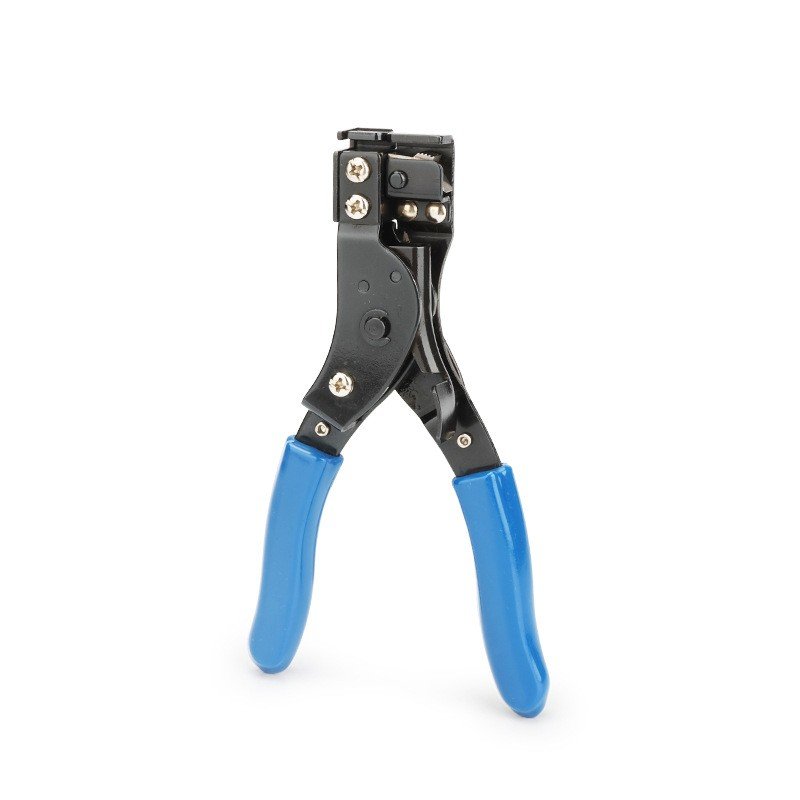


What is a Manual Nylon Cable Tie Plier?
A manual nylon cable tie plier is a professional hand tool designed to streamline cable management by tensioning and trimming plastic cable ties in one continuous workflow. Engineered for production lines, electrical installations, and panel building, tools like our Nylon Cable Tie Tool eliminate uneven hand tightening and leave a safe, clean finish on every harness.
| Feature | Standard Specification |
| Applicable Tie Material | Nylon / Polyamide plastic cable ties |
| Supported Tie Width | 2.4 mm – 12 mm |
| Operation Type | Manual tensioning and manual cut-off |
| Manufacturing Standards | ISO9001 certified, CE, RoHS |
How Cable Tie Tensioning Tools Work
A manual cable tie tension tool operates through a synchronized gripping, ratcheting, and shearing mechanism:
- Engagement: The loose tail of an applied zip tie is inserted into the front guide nozzle of the plier.
- Tensioning: Squeezing the primary handle drives an internal gripping jaw backward, pulling the tie tight around the wire bundle with uniform force.
- Cut-Off: Once proper bundle tension is achieved, operating the integrated cut-off lever drives a precision ground steel blade directly against the tie head.
- Flush Ejection: The blade slices the excess strap flush, completely removing sharp, protruding edges that cause injury or snag insulation.
Key Benefits of Using Nylon Cable Tie Pliers
- Flush, Burr-Free Cutting: Eliminates jagged cut-offs associated with diagonal cutters, ensuring compliance with industrial safety codes.
- Consistent Clamping Tension: Provides uniform compression across entire cable runs without over-tightening or damaging internal conductors.
- Operator Fatigue Reduction: High-leverage handle geometry minimizes hand strain during repetitive, high-volume bundling tasks.
- Rapid Cycle Times: Combines tightening and trimming into a single hand position, speeding up installation throughput across switchgear, automotive, and panel assemblies.
Common Applications and Use Cases
At WANDU, we manufacture our cable tie pliers to handle demanding production lines and harsh field installations. Whether you are assembling complex wire harnesses or routing plant infrastructure, using a dedicated zip tie tool ensures consistent tension and leaves a completely flush cut that protects both wiring and technician hands.
Electrical and Industrial Wire Bundling
Control panels, switchgears, and industrial machinery require orderly cable management to prevent electrical faults and simplify maintenance.
- Switchboard Assembly: Technicians use our manual cable tie pliers to cinch plastic cable tie bundles tightly inside crowded enclosures without crushing delicate insulation.
- Cabinet Organization: Pair your tie tools with electrical cable clips for structured wire routing to keep power and signal cables neatly separated along enclosure walls.
- Safety Compliance: Flush cutting eliminates jagged tail ends, safeguarding field technicians from hand injuries during routine maintenance.
Automotive and Aerospace Cable Management
Vehicle harnesses and aerospace systems face constant vibration, thermal expansion, and tight clearance constraints. Loose ties lead to chafing and harness wear, while overtightened ties can damage internal conductors.
- Engine Bays & Chassis: A manual zip tie gun applies uniform clamping force to ensure harnesses stay firmly anchored to vehicle framing under high-vibration conditions.
- Commercial Transport: For heavy-duty transport, marine, or mining equipment where extreme conditions require metallic alternatives to standard plastic ties, mastering how to tighten stainless steel cable ties with dedicated steel tensioners ensures maximum hold under high-heat environments.
- Airframe Harnessing: Uniform tensioning prevents movement while keeping total assembly weight low and organized across long fuselage runs.
HVAC and Light Duty Fastening Solutions
In commercial and residential contracting, speed and ease of use keep labor costs down. HVAC crews and low-voltage installers rely on ergonomic cable tie pliers to work efficiently overhead and in tight spaces.
- Flexible Ducting & Insulation: Fasten lightweight thermal wraps and flexible ducts securely without tearing the outer jacket.
- Low-Voltage Systems: Bundle network cabling, security camera feeds, and thermostat wires with exact tension to avoid signal attenuation.
- Reduced Hand Strain: Our lightweight tools reduce grip fatigue, allowing contractors to secure hundreds of fasteners per shift with clean, one-squeeze cutoff action.
How to Choose the Right Manual Cable Tie Tool
Selecting the right cable tie pliers depends on your production volume, tie materials, and bundle dimensions. Using mismatched tools slows down your assembly line and causes hand fatigue or incomplete cut-offs. We design our manual cable tie tools to provide consistent tensioning and flush cuts across diverse industrial cable management setups.
Material Compatibility and Tie Width Requirements
The first step is matching the tool mechanism to your specific tie composition and dimensions:
- Standard Nylon Cable Ties: Require precise tension control to avoid snapping the plastic strap. Our nylon cable tie plier is engineered specifically for standard plastic ties, delivering clean, flush cuts without sharp edges. When sourcing ties for production, working with a reliable nylon cable tie manufacturer ensures that your strap dimensions match tool tolerances perfectly.
Ergonomics and Daily Usage Volume
Daily cycle rates determine whether your operations need a compact manual tensioner or an ergonomic zip tie gun:
- Low-to-Medium Volume Work: Compact manual cable tie pliers like the offer straightforward operation, direct tactile feedback, and convenient portability for maintenance toolkits.
- High-Volume Repetitive Assembly: Extended shifts require tools with contoured grip handles, optimized lever ratios, and reduced handle spans. Minimizing grip force protects operators from repetitive strain injuries (RSI) while maintaining consistent bundling speed.
Budget and Tool Durability
Low-cost retail pliers wear down quickly under industrial duty cycles. Investing in professional-grade tools provides clear operational advantages:
- Solid Construction: We build our tools using industrial-grade metal housings and heat-treated cutting blades that resist dulling, mechanical wear, and job-site drops.
- Certified Quality Standards: Every unit is manufactured under an ISO9001 certified management system, undergoes 100% pre-shipment functional inspection, and complies with CE, RoHS, and REACH standards.
- B2B OEM/ODM Flexibility: Sourcing directly from us gives you factory-direct pricing and customizable branding options, including laser-marked logos (MOQ: 100 pcs) and custom handle colors or packaging (MOQ: 500 pcs) tailored to your brand portfolio.
How to Use and Maintain Manual Nylon Cable Tie Pliers
Operating manual nylon cable tie pliers properly ensures consistent bundling tension and extends the working life of your tool. Designed for standard plastic ties ranging from 2.4 mm to 12 mm in width, these hand tools streamline repetitive fastening on assembly lines, control panels, and field installations.
Step-by-Step Operating Guide
Using a manual cable tie plier is straightforward, delivering flush cuts without sharp burrs that could damage adjacent wiring or injure technicians.
- Pre-Fasten the Tie: Loop your plastic cable tie around the wire harness or bundle, threading the tail through the locking head until it holds loosely in place.
- Engage the Tool: Slide the exposed tail of the tie into the front nose slot of the pliers until the tool rests flush against the tie head.
- Apply Tension: Squeeze the main handle repeatedly to cinch the tie securely around the bundle to your required firmness.
- Cut the Excess Tail: Actuate the manual cut-off lever to cleanly slice off the tail flush with the tie head.
For additional operational safety recommendations and techniques across various fastening setups, review our guide on how to use a zip tie gun.
Maintenance and Blade Replacement Tips
Routine care keeps your cable tie tensioning tool operating smoothly through demanding production shifts:
- Clear Debris Daily: Nylon shavings and shop dust can settle into the cutting channel. Blow out the nose mechanism with compressed air at the end of each shift to prevent jamming.
- Lubricate Pivot Points: Apply a drop of light machine oil to the main pivot pins, ratchet joints, and return springs once a month to reduce mechanical friction.
- Inspect the Cutting Edge: If the tool begins leaving jagged edges or requires excessive squeeze force to cut, the internal blade has dulled.
- Replace Worn Blades Promptly: Remove the blade retention screw located near the nose housing, slide out the dull blade, seat the genuine replacement blade squarely in the guide track, and re-tighten the screw firmly before resuming work.
- Dry Storage: Keep tools stored in dry tool racks or moisture-controlled storage boxes to prevent corrosion on moving internal components.
 EN
EN  AR
AR  ES
ES  PT
PT  FR
FR  RU
RU  DE
DE  KO
KO  JA
JA  IT
IT