How to use zip ties is a short procedure with a long list of ways to get it wrong, and nearly all of them come down to tension and tail. A tie installed correctly holds its rated load for years; the same tie pulled hard by hand is pre-loaded at the head before the bundle has taken any weight, and the margin is gone before the job starts. This tag gathers the two guides on the site that cover installation and the uses that follow from it.
What the guides here answer
How to use cable zip ties is the installation method end to end: choosing the size, looping, threading, tensioning by hand, trimming, and the checks that catch a bad tie before it is buried in a loom. 13 clever zip tie uses covers what the same tie is used for once the cable is dressed.
The five steps, and where they go wrong
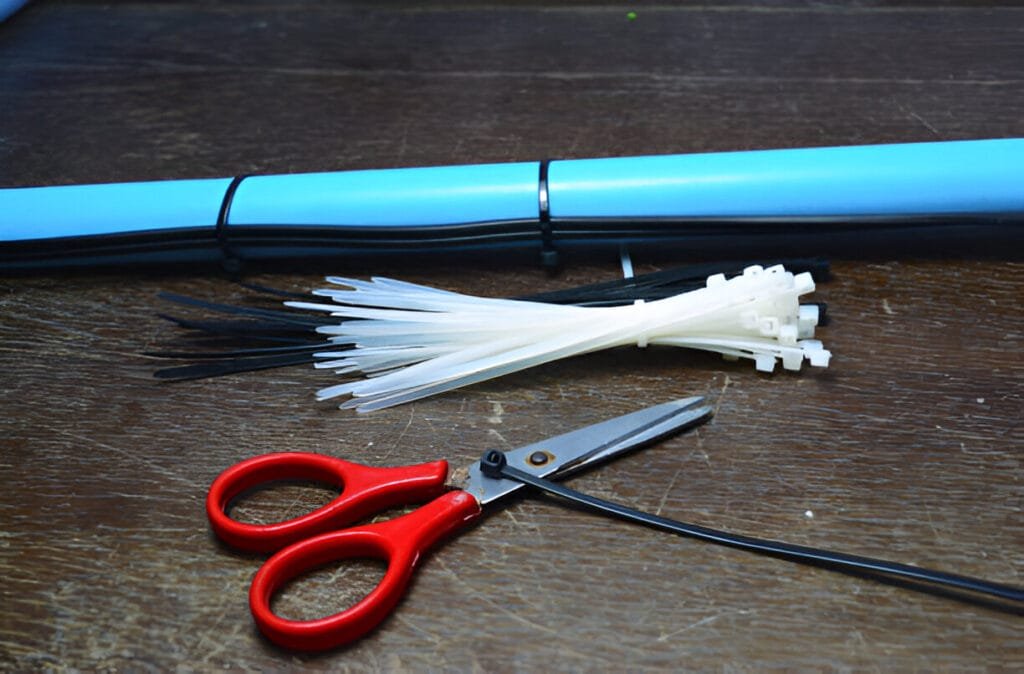
Choose the tie by bundle diameter and load, not by what is in the drawer. Loop it with the ratchet face out, so the teeth engage the pawl rather than the cable. Thread the tail through the head and pull by hand until the strap is snug against the bundle, not until it stops moving. Trim the tail flush with the head, because a tail left long is a spike waiting for a finger, and one trimmed too short leaves the head proud. Then check that the bundle cannot rotate inside the loop, which is the only test that matters.
Tension, and why feel is a bad guide
Hand tension varies with the person and with the day, and the rated figure assumes a correctly tensioned loop. Over-tensioning compresses the sheath and pre-loads the head; under-tensioning lets the bundle move, and movement saws the strap against the head until it cuts through. On a soft or foam-insulated cable the correct tension is lower than instinct suggests, and on a bundle of several cables it is lower again, because the bundle settles and the tie takes up the slack by itself.
Specification reference
Width, length and loop tensile for the standard family are listed on the standard cable ties product page. The loop tensile is a property of the closed tie, so it already includes the head, which is where the failure happens.
How tight should a zip tie be?
Snug against the bundle with the sheath undeformed and the bundle unable to rotate. If the cable surface shows a flat under the strap, it is too tight.
Should the tail be cut?
Yes, flush with the head. A long tail is sharp, catches on other cables and on hands, and on a loom it is a snag point during the next pull.
How do you use a zip tie on a single cable?
Loop it around the cable and the fixing point together, or use a mount with a slot. A tie closed around a single cable with nothing to hold it will simply slide along the sheath.

 EN
 AR
 ES
 PT
 FR
 RU
 DE
 KO
 JA
 IT
 NL
 TR