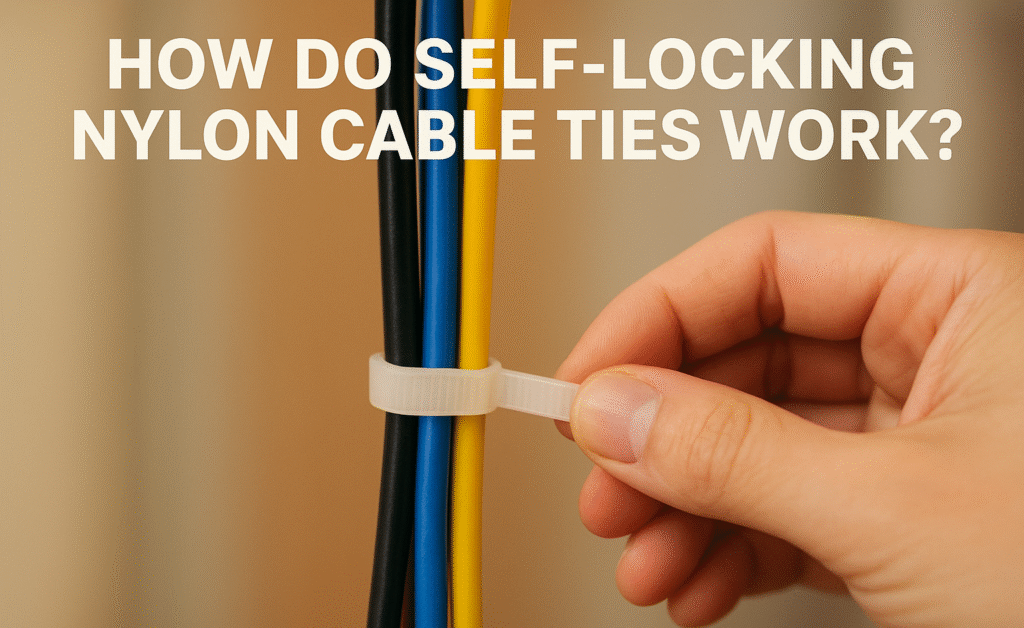
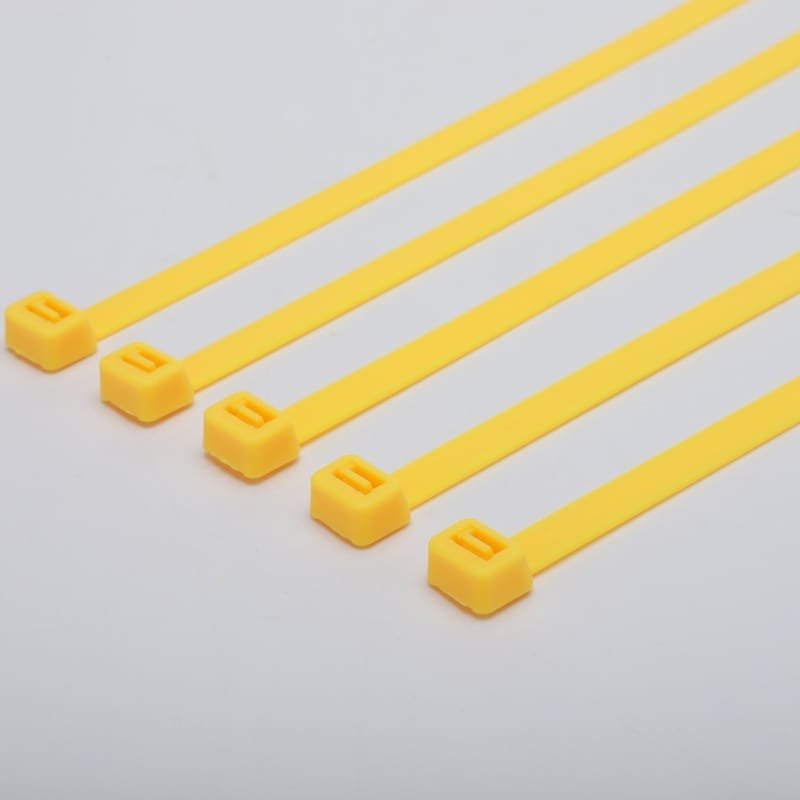
Self-locking cable ties are one-piece ties in which a moulded pawl inside the head engages angled ridges on the strap, allowing the tie to be pulled tight in one direction and locking it against release. There is no separate buckle and no second component, which is what makes them cheap, fast to install and impossible to reopen without cutting.
Why width decides holding force
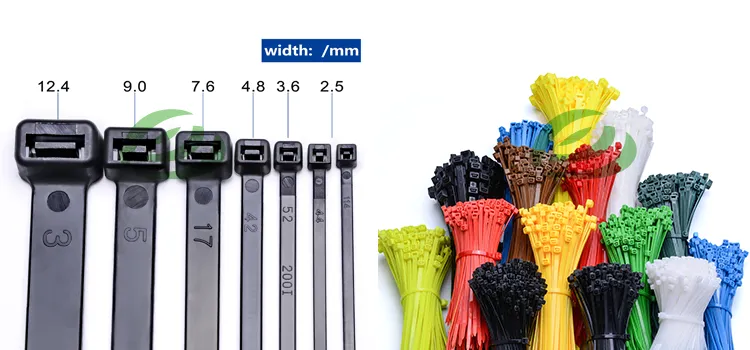
The pawl is only as strong as the strap it grips. A wider strap spreads the load across more ridges and resists stretching, so tensile strength rises with width rather than with length. Length only decides how large a bundle the tie can reach. This is the single most useful rule when substituting one size for another.
Strap width
Min. tensile strength
Typical bundle
2.5 mm
18 lbs / 8 kg
Up to 22 mm, light harness work
3.6 mm
40 lbs / 18 kg
Up to 50 mm, general cable routing
4.8 mm
50 lbs / 22 kg
Up to 82 mm, commercial wiring
7.6 mm
100 lbs / 45 kg
Up to 118 mm, heavy cable and hose
9.0 mm
175 lbs / 75 kg
Up to 130 mm, structural bundling
What self-locking means in practice
A self-locking tie is permanent by design. Once the pawl engages, pulling the strap harder increases the grip; the only way to release it is to cut it, or to lift the pawl from inside the head with a thin probe. That is why it is the default for production wiring and the wrong choice for anything that will be opened again, where a releasable tie with a release tab belongs.
Tensioning without a tool
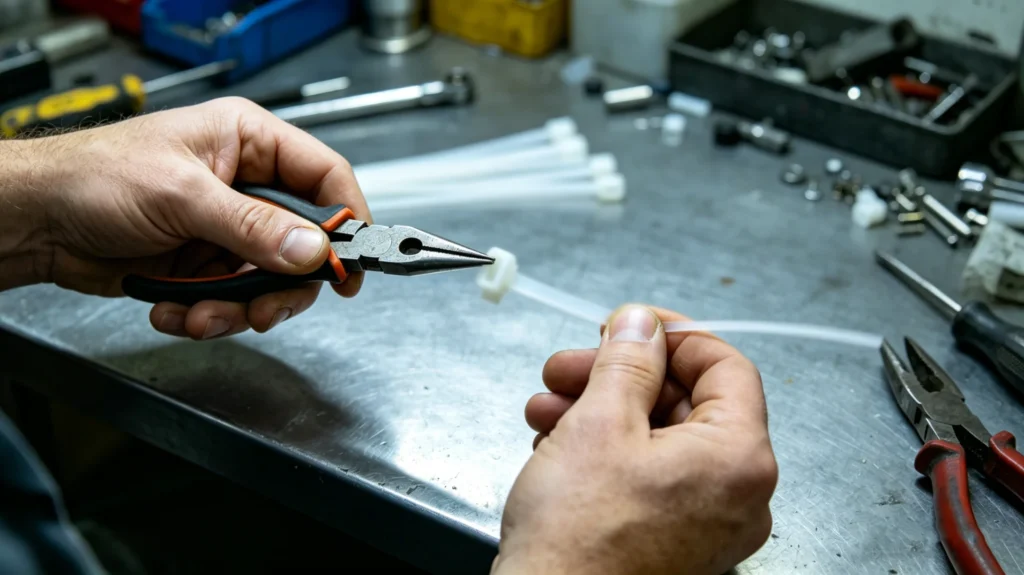
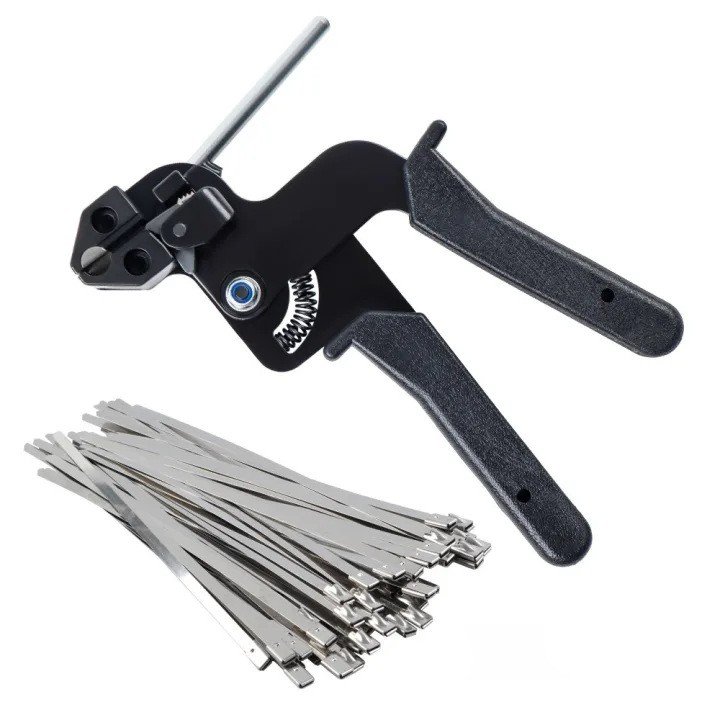
Hand tension is judged by the tail: pull until the loop closes on the bundle and the strap stops moving, then stop. Overshooting by hand pre-loads the head and gives away part of the margin before the bundle takes any load, while stopping short lets the bundle shift and saw at the strap edge. Production work uses a tensioning gun for the same reason: it repeats the same figure every time.
Only by defeating the pawl. A thin probe slid under the tongue from the exit side of the head will release most ties, but the strap is usually marked where the pawl bit and the tie is no longer reliable.
What is the difference between self-locking and releasable?
A self-locking tie has no release mechanism and is permanent. A releasable tie carries a small tab that lifts the pawl, so the same tie can be opened and re-closed many times.
Why does a self-locking tie get tighter over time?
Nylon creeps under sustained load and the ratchet takes up the slack as it does. A tie closed on a settling bundle will be tighter a day later than it was at installation.
Understanding Self-Locking Plastic Zip Ties Whether you are securing wires in a server room or organizing cables at home, the plastic zip tie is an essential tool. Made predominantly from durable nylon, these fasteners offer incredible tensile strength and reliability. Understanding how these self locking zip ties function is the first step to mastering how […]
In modern industrial production, electronic equipment assembly, home organization, and even aerospace fields, plastic self locking zip ties, as an efficient and convenient fastening tool, have long become indispensable basic consumables. With extremely simple operation, reliable fixing performance, and wide environmental adaptability, they have completely changed the complexity and inefficiency of traditional bundling methods. This […]
Introduction Nylon self locking cable tie, also known as self locking zip ties, is a practical tool widely used in both daily life and industrial environments. Whether organizing household appliance wires or managing cables in large industrial equipment, it plays a crucial role. With the continuous progress of industrial technology, nylon self locking cable ties […]
Meta Description Learn about common cable ties sizes (length, width, thickness, and tensile strength) and select the appropriate cable tie model by measuring the bundle diameter. This article provides a straightforward size comparison chart, recommended scenarios, installation tips, and frequently asked questions to help you choose the right zip tie for home, computer room, and […]
Table of contents 1. Introduction 2. What are polypropylene cable ties? 3. Key properties of polypropylene (PP) cable ties 4. Polypropylene vs. Nylon Cable Ties: Core Comparison 5. Typical Application Scenarios and Industry Use Cases 6. Technical Parameters at a Glance (Common Specifications) 7. FAQ 8. Conclusion and next steps 1. Introduction This article serves […]
Introduction Whether you’re organizing cables in an office, securing plants in the garden, or marking safety hazards on a worksite, yellow zip tie deliver both high visibility and reliable performance. Designed to streamline identification and fastening tasks, these versatile tools stand out in maintenance, gardening, medical, and industrial applications alike. What Are Yellow Zip Tie? […]
We use cookies to enhance your browsing experience, serve personalised ads or content, and analyse our traffic. By clicking "Accept All", you consent to our use of cookies.
Looking For High Quality Nylon Cable Ties At A Great Price?
Order now to experience cost-effective cable tie products that provide convenience and protection for your work and life.


 EN
 AR
 ES
 PT
 FR
 RU
 DE
 KO
 JA
 IT
 NL
 TR