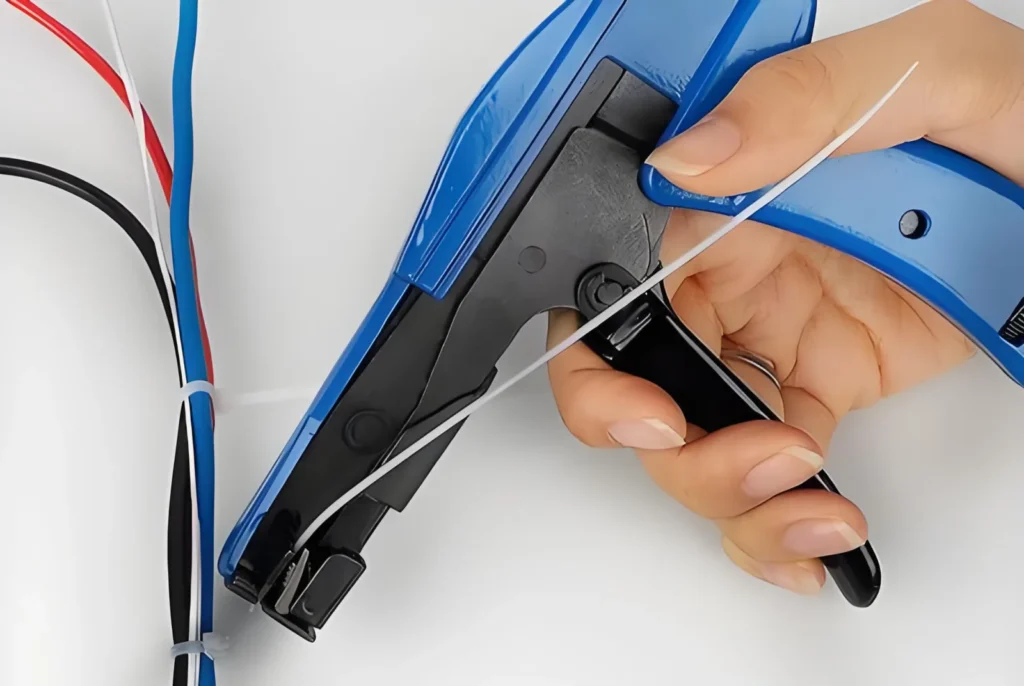
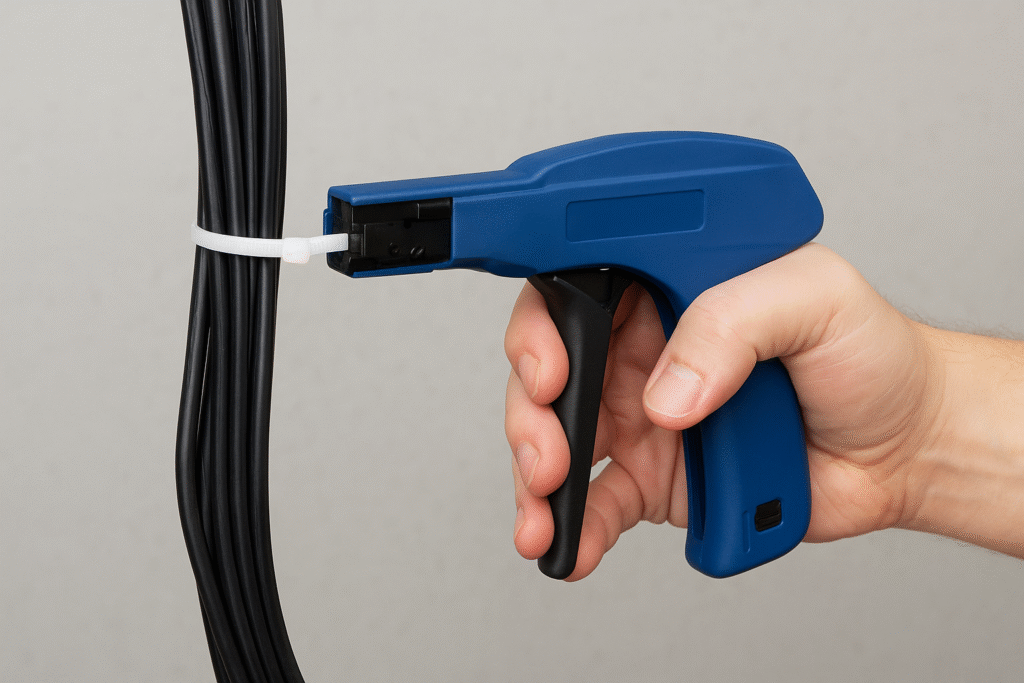
An automatic cable tie gun does three things a hand cannot: it pulls the strap to a repeatable tension, it cuts the tail flush in the same stroke, and it does it at a rate that makes a few thousand ties a day possible. The automation is in the tensioning and trimming, not in the looping, which is why the operator still feeds the tie. What the gun changes is consistency: every tie on a harness comes out at the same tension, which is the difference between a loom that passes inspection and one that has to be reworked. This tag gathers the two guides on the mechanism and on using one.
What the guides here answer
How does a cable tie gun work explains the mechanism: the pull, the tension setting, the cut, and what the adjustment actually controls. How to use a zip tie gun is the operating guide, covering the types, the tension dial, and the safety points around the cut-off tail.
Manual, pneumatic and automatic
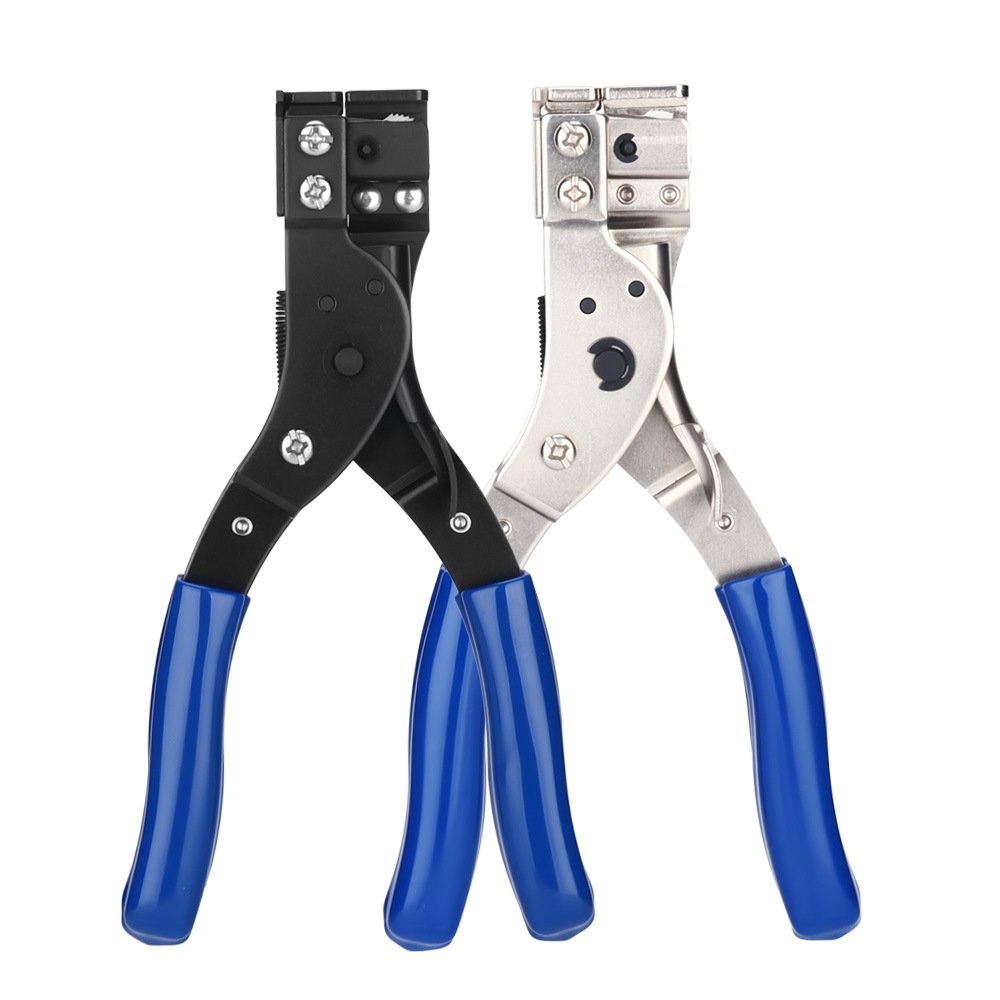
A manual gun is a lever tool that pulls and cuts, and it is the default for site work because it needs nothing but a hand. A pneumatic or electric gun does the same job under power and is chosen where the volume justifies it, because the operator's grip is the limiting factor over a shift. The fully automatic machine is a different category again: it feeds, tensions and cuts without an operator holding a tie, and it belongs in a production line rather than on a bench. The right choice is set by how many ties a day, not by how good the tool is.
What the tension setting is really doing
It sets how much of the rated tensile is used up before the cut. Set too high and the tie is pre-loaded at the head before the bundle takes any load, which is where the margin goes; set too low and the bundle moves and saws at the strap. The correct setting is found on a sample bundle and then left alone, and it is checked again whenever the tie size changes, because the same dial position is not the same tension on a different width.
Specification reference
Tension range, tie sizes accepted and the cut-off mechanism for each tool are listed on the automatic cable tie machine product page, with the hand-held versions alongside.
Is a cable tie gun worth it?
Above a few hundred ties a day, yes: the consistency and the flush cut pay for the tool. Below that, a manual tensioning tool does the same job more slowly.
What tension should a cable tie gun be set to?
Enough to hold the bundle without compressing it, set on a sample and then left. The dial position is a starting point, not a calibration, and it changes with tie width.
Can a cable tie gun be used on stainless steel ties?
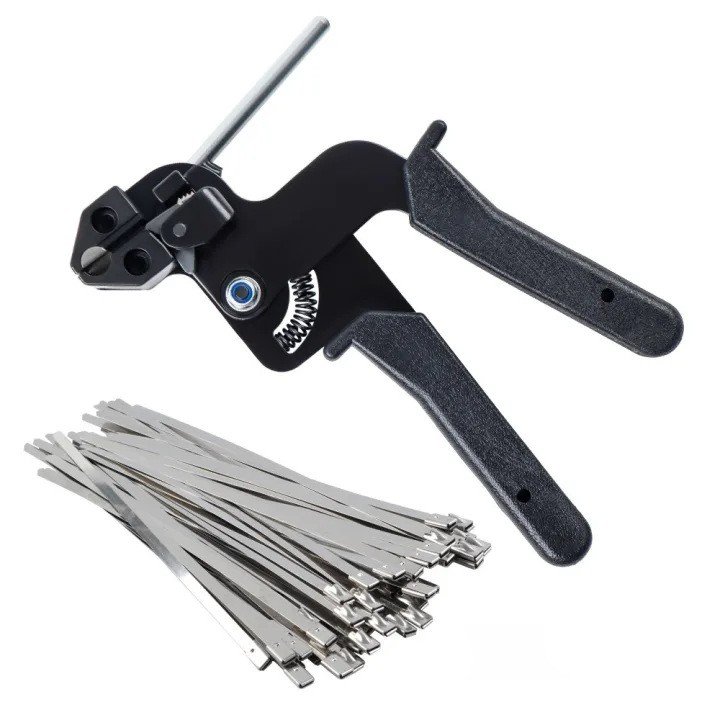
Stainless ties need a tool with a metal-rated pull and cut. A gun built for nylon will not tension a steel strap and will usually damage the head trying.

 EN
 AR
 ES
 PT
 FR
 RU
 DE
 KO
 JA
 IT
 NL
 TR