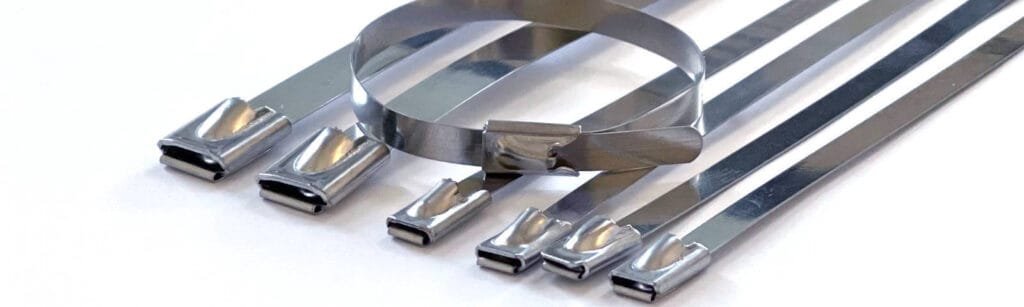
Metal tie wire is the metal-strap branch of the tie family: a stainless steel band with a locking head, used where nylon cannot go because of heat, load, sharp edges or a service life measured in decades. It behaves differently enough from a plastic tie that the technique does not transfer, and the failure modes are different too: a metal tie does not creep, it cuts, and it does not go brittle, it work-hardens and snaps. This tag gathers the four guides on the site that cover metal ties: how to use them, how to cut them, why they beat nylon, and how to choose between the two on data rather than habit.
What the guides here answer
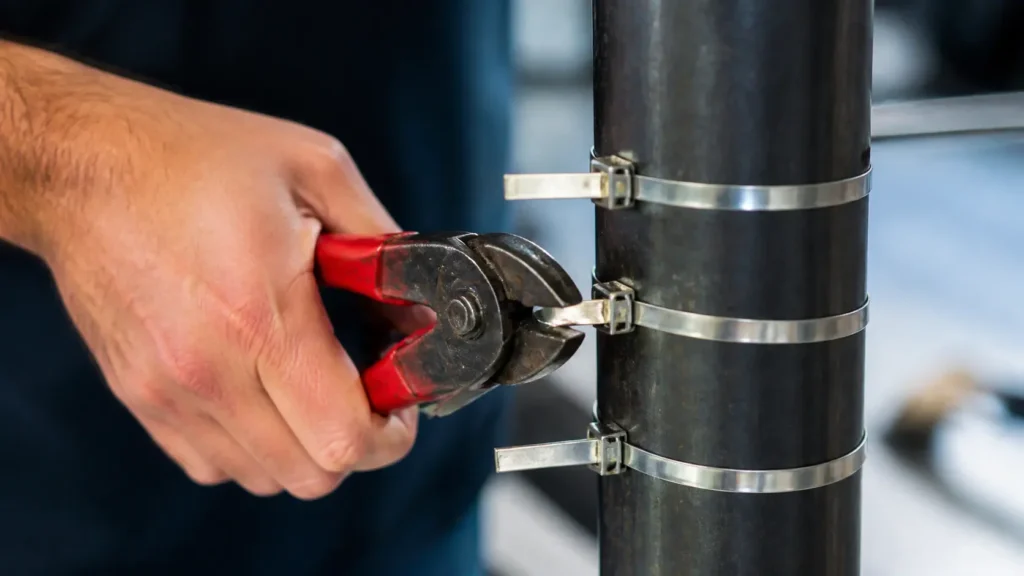
How to use metal zip ties is the installation method, from threading the head to trimming the tail. How to cut metal zip ties safely covers the part that injures people: the cut tail. Why choose metal cable ties over nylon is the case for the material, and metal or nylon, a data-driven guide sets the two against each other on load, temperature and environment.
Why the technique is different
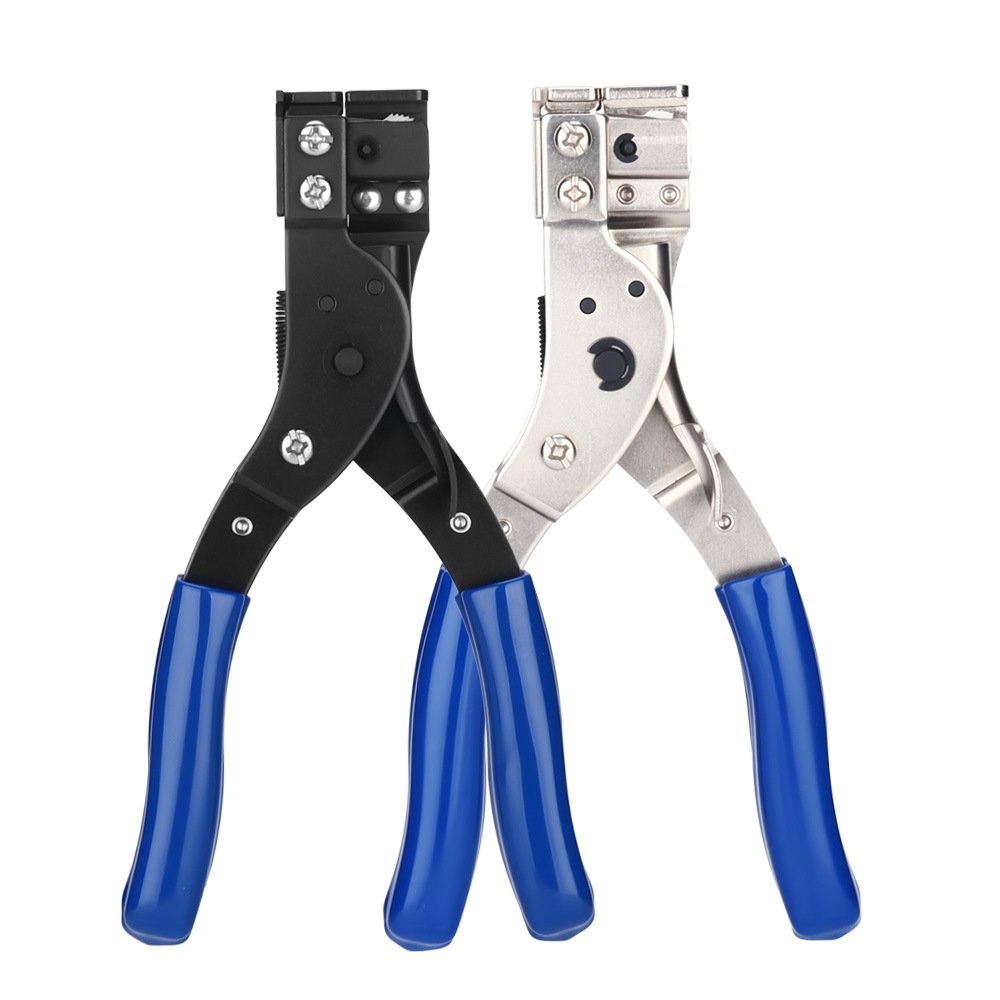
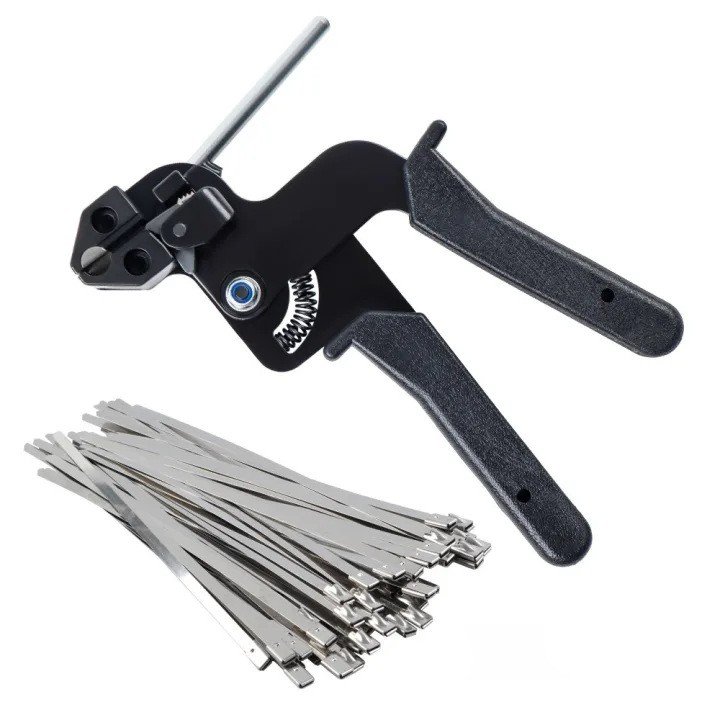
A nylon tie is pulled by hand until it feels right; a metal tie has to be tensioned with a tool, because the ball-lock head needs the strap drawn through under load before it grips, and hand tension leaves the loop loose enough to slide. The strap is also stiff, so it does not conform to a soft bundle and will crush or score it unless a coated tie or a protective sleeve is used. And the tail has to be cut flush rather than twisted off, because a metal tail springs and leaves an edge that cuts.
Where metal is the only answer
Above the working range of nylon, which softening removes from contention long before melting. In chemical and solvent exposure, where the polymer swells or dissolves. In UV and weather over a long service life, where stabilised nylon is still a consumable. And on sharp or hot substrates, where a nylon strap would be cut by the thing it is tying, which includes most duct, mesh and formwork work on a construction site.
Specification reference
Strap width, length and head dimensions for the metal family are listed on the stainless cable ties product page. Where a bare strap would damage a sheath, the coated version is listed alongside it.
What is metal tie wire used for?
Bundling where nylon fails: high temperature, chemical exposure, heavy load, sharp edges, or an installation that has to last years outdoors. It is common in construction, marine and industrial cable work.
Is metal tie wire reusable?
The ball-lock head can be released with a thin tool and the strap reinserted, but the strap keeps its curve and the lock is less certain the second time. It is not designed for repeated opening.
Can metal zip ties damage cable?
Yes, at the edges: a bare metal strap under tension will score a sheath, and a cut tail will cut insulation and fingers. Use a coated tie on cable, and cut the tail flush.



 EN
 AR
 ES
 PT
 FR
 RU
 DE
 KO
 JA
 IT
 NL
 TR