3. Key properties of polypropylene (PP) cable ties
4. Polypropylene vs. Nylon Cable Ties: Core Comparison
5. Typical Application Scenarios and Industry Use Cases
6. Technical Parameters at a Glance (Common Specifications)
7. FAQ
8. Conclusion and next steps
1. Introduction
This article serves as a reference guide for purchasing managers and technical engineers. It provides an in-depth analysis of the material performance indicators of polypropylene cable ties , compares the mechanical strength and special properties of competing materials such as nylon 66, and analyzes various application scenarios.
2. What are polypropylene cable ties?
self-locking cable ties made primarily from polypropylene . Compared to commonly used nylon cable ties ( made from nylon 6 or nylon 66 ) , polypropylene zip ties offer advantages in chemical resistance , floatability , and environmental recyclability .
Chemical corrosion resistance : Chemical resistant cable ties have good resistance to most acids, alkalis and solvents, and are suitable for strong acid, alkali or corrosive environments such as chemical industry , metallurgy , pesticide or laboratory .
Low water absorption: Compared with nylon , PP material hardly absorbs water. Its tensile strength remains stable in a humid environment, making it very suitable for use in underwater environments.
Floatability: PP material has a low density and can float on water or oil, making it suitable for marine applications such as foreign body detection in the nuclear power industry and water operations.
Environmental friendliness : PP material recycling systems and processes are relatively mature, with a higher recycling rate than nylon. The main products after combustion are carbon dioxide and water, making it more environmentally friendly.
Dynamic temperature range : The dynamic operating temperature range is typically approximately 0 °C to +80°C.
Tensile Strength : PP cable ties generally have lower tensile strength than nylon (e.g., Nylon 6.6) under the same specifications and conditions , so choose carefully when extremely high tensile strength is required. However, for underwater environments, polypropylene tying twine (non-hydroscopic) is preferred.
4. polypropylene vs nylon (Nylon 6 / 6.6) cable ties
Comparison item
Polypropylene
Nylon 6
Nylon 6.6
Water absorption rate
non-absorbent
High
low
Chemical resistance
High
medium
medium
tensile strength
low
medium
High
UV resistance
low
low
medium
Application scenarios
Chemical engineering, marine (buoyancy)
Indoor ordinary bundling
Outdoor use (modified nylon 66 UV)
5. Application scenarios and industry use cases
Chemical industry and sewage treatment plants: Resistant to chemical corrosion, easy to use in pipelines or equipment with corrosive media . Compared with ordinary nylon cable ties, Using chemical resistant cable ties will significantly reduce maintenance costs.
Nuclear power plants: Polypropylene zip ties float, allowing for rapid detection and removal of plastic foreign matter. Bright orange is recommended for quick identification.
Marine engineering: Its buoyancy and non-water-absorbing properties make it very suitable for bundling objects above water or fixing underwater cables.
6. Technical Parameters
It tems
Common range
Explanation
width
2.5mm/3.6mm/4.8mm/7.6mm/9mm /12mm
Standard width, custom molding also available
length
80mm ~ 1200mm
The diameter and length of the bundled wires are positively correlated.
tensile strength
6kgs~80kgs
Thickness, width, and material determine the final tensile strength.
Dynamic temperature resistance
About 0°C~ +80°C
Extremely low or high temperatures are not suitable for use.
color
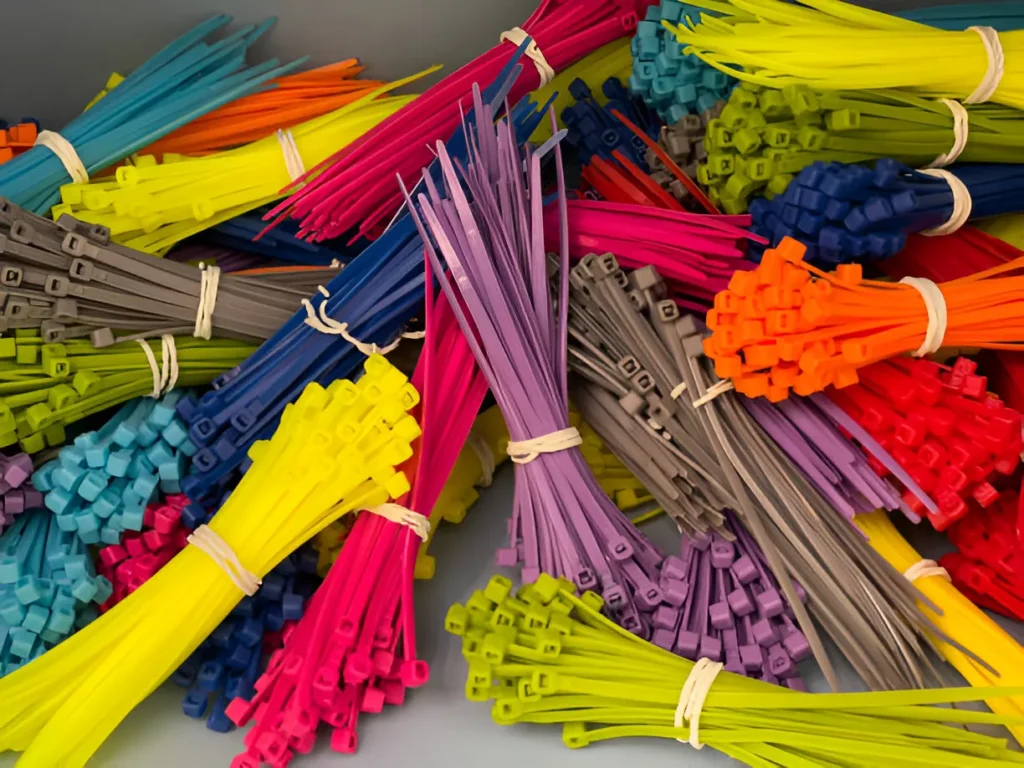
White, black, orange
Other colors can also be customized, subject to minimum order quantity.
7. FAQ
Q1: polypropylene cable ties uv resistant?
A1: Generally, products made of PP material do not have UV resistance and weather resistance, and require customized UV modified materials.
Q2: Will the PP cable ties float?
A2: Because PP material density is less than water, it can generally float on water. Of course, it should be noted that some modified PP materials do not have this property.
Q3: Polypropylene vs. nylon cable ties, which one should I choose ?
A3: It depends on the different usage scenarios. For underwater and corrosive environments, choose PP material . If good tensile strength or weather resistance is required for outdoor use, choose Nylon 66UV modified material cable ties .
8. Conclusion and next steps
Polypropylene cable ties offer significant advantages in chemical resistance, buoyancy, and recyclability, making them the preferred cable ties for chemical, nuclear power , and marine applications . However, in applications requiring high tensile strength or long-term outdoor use , a trade-off or modified formulation is necessary.
Have you ever struggled with organizing and identifying various cables and wires?Colored cable ties offer a simple yet effective solution to this common problem.By using different colors for specific categories or purposes, colored zip ties can significantly improve organization, efficiency, and safety in both professional and personal settings. Discover how color-coding your cable management can […]
Introduction to Zip Ties What is a Zip Tie? A zip tie—also universally known as a cable tie, tie wrap, or hose tie—is a robust, one-piece fastener designed to securely bundle cables, wires, and hoses. Operating on a simple yet highly effective ratcheting mechanism, the strap features a series of integrated triangular teeth that engage […]
We use cookies to enhance your browsing experience, serve personalised ads or content, and analyse our traffic. By clicking "Accept All", you consent to our use of cookies.
Looking For High Quality Nylon Cable Ties At A Great Price?
Order now to experience cost-effective cable tie products that provide convenience and protection for your work and life.



 EN
EN  AR
AR  ES
ES  PT
PT  FR
FR  RU
RU  DE
DE  KO
KO  JA
JA  IT
IT  NL
NL