Whether you are securing wires in a server room or organizing cables at home, the plastic zip tie is an essential tool. Made predominantly from durable nylon, these fasteners offer incredible tensile strength and reliability. Understanding how these self locking zip ties function is the first step to mastering how to manipulate, remove, or even bypass them without causing damage to the secured items.
How the Locking Mechanism Works
The genius of self locking cable ties lies in their simple yet highly effective ratchet-and-pawl design. When you examine a standard zip tie, you will notice two main components:
The Strap: Covered with evenly spaced, angled teeth (or ridges) along one side.
The Head: Contains a small, flexible plastic tab called the pawl.
As you insert the tapered end of the strap into the head, the pawl rides over the angled teeth. Because of the angle, the strap can easily glide forward. However, the moment you try to pull it backward, the pawl drops into the groove between the teeth, locking the strap firmly in place. This one-way friction mechanism is exactly what makes a self-locking plastic zip tie so secure.
Differences Between Single-Use and Reusable Ties
Not all nylon plastic cable ties are created equal. Depending on your project requirements, you may encounter both traditional single-use designs and purpose-built reusable variants. Understanding the structural differences is crucial when attempting a safe removal.
Feature
Standard Single-Use Zip Ties
Reusable Zip Ties
Locking Tab
Concealed and flush within the head
Extended, visible trigger tab
Release Method
Requires a shim or removal tool
Simply press the external trigger
Primary Use
Permanent bundling, security seals
Temporary holds, frequent modifications
Cost
Highly economical in bulk
Slightly higher upfront cost
Standard plastic ties for cables are engineered to stay closed forever, requiring specific techniques to disengage the internal locking tab. Conversely, reusable tie wraps feature an integrated release mechanism—usually a small lever on the head—that allows you to easily depress the pawl and slide the strap freely in either direction.
Tools Needed to Undo a Zip Tie Without Cutting
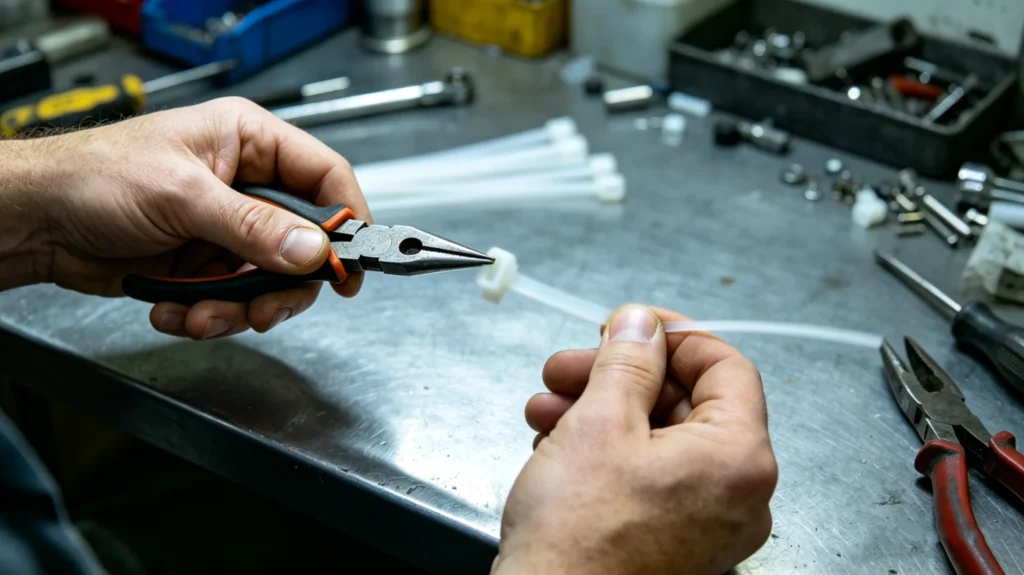
When you need to remove a zip tie but want to save it for later, cutting isn’t your only option. You do not necessarily need a specialized zip tie removal tool. By understanding the locking mechanism of self locking cable ties, I can show you how to open them using common household items. The goal is to press down the small locking pawl inside the head so the strap can slide back out.
Using a Safety Pin or Needle
For small to medium ties, a safety pin or a thick sewing needle works perfectly. These items are thin enough to fit into the tight space of the locking head.
Slide the pin between the ribbed strap and the locking tab.
Press down firmly to disengage the teeth.
Pull the strap gently out of the housing.
Using a Small Flathead Screwdriver
If you are dealing with standard plastic zip ties, a micro flathead screwdriver—like the ones used for eyeglass repair—is highly effective. The flat edge provides excellent leverage to push down the locking mechanism without damaging the plastic teeth. Insert the flathead straight into the head, apply downward pressure on the tab, and pull the strap free.
Using Your Fingernails for Larger Ties
Heavy-duty nylon plastic cable ties often feature larger locking heads. If the gap is wide enough, you can actually use your own fingernails to remove cable ties.
Wedge your thumbnail directly onto the locking tab.
Push down to release the grip on the strap.
Slide the tail out while maintaining pressure with your nail.
This method requires a bit of dexterity but is the fastest way to remove a tie when you have absolutely no tools available.
Step-by-Step Guide to Opening a Plastic Zip Tie
When figuring out how to break a selflocking plastic zip tie without actually snapping or cutting it, the secret always lies in the head of the tie. I find that approaching this with a bit of patience is much more effective than brute force. Here is the straightforward process to release the grip of a standard tie so you can use it again.
Step 1: Locate the Locking Tab
Every standard zip tie has a small square head. Inside this head is a tiny, flexible pawl or tab that catches the ridges on the strap. Take a close look at the head of your plastic cable ties to spot where this small plastic piece rests directly against the grooved track. Recognizing this point of friction is the first crucial step to safely remove cable ties.
Step 2: Depress the Locking Mechanism
To release the grip, you need to disengage that tab. Take your makeshift zip tie removal tool—whether that is a safety pin, a sewing needle, or a precision flathead screwdriver—and carefully wedge the tip between the locking tab and the strap.
Slide it in horizontally: Aim directly for the gap where the teeth meet the tab.
Apply firm pressure: Push down and slightly away from the strap to bend the tab back. This action immediately disengages the self locking cable ties’ mechanism.
Step 3: Carefully Pull the Strap Out
While keeping the locking tab firmly pressed down with your tool, use your other hand to grab the tail end of the strap.
Maintain tool pressure: Ensure the tool stays securely wedged; if it slips, the tab will snap right back into the grooves.
Reverse the strap: Slowly pull the strap backward out of the head.
Ease it out: If you feel resistance, push the pin slightly deeper to ensure the teeth are fully cleared.
Once the strap is completely backed out, you have successfully undone the fastening, essentially turning a permanent fastener into a removable zip tie.
Emergency Methods: How to Break Free from Zip Ties
Knowing how to break a selflocking plastic zip tie during an emergency situation can be a vital skill. Whether you are dealing with standard plastic cable ties or improvised restraints, escaping requires technique rather than just raw strength. Here is how you can break free when you do not have a zip tie removal tool handy.
Breaking the Zip Tie Using Body Leverage
You can snap most plastic zip ties by applying sudden, forceful pressure against the locking mechanism.
Position your hands: Raise your bound hands high above your head.
The downward strike: Bring your arms down swiftly and forcefully toward your stomach.
Flare your elbows: As your hands hit your stomach area, aggressively pull your elbows apart. This motion puts intense outward pressure on the lock, often causing it to break instantly. This method is highly effective against improvised tie wrap handcuffs.
Slipping Out of the Zip Tie
If the self locking cable ties are not ratcheted down to the absolute tightest notch, slipping out is a viable option.
Lubricate: Use water, sweat, or any available liquid to reduce friction on your wrists.
Rotate: Twist your wrists so the thinnest part of your forearm aligns with the opening.
Wiggle and pull: Use your teeth to pull one side while twisting your hand out of the loop.
Shimming the Zip Tie Lock
If you cannot use brute force or slip out, you can shim the lock to remove the zip tie.
Find a shim: Look for anything thin and rigid—a Bobby pin, the tip of a shoelace, or a stiff piece of plastic.
Insert into the lock: Slide the shim right between the toothed strap and the locking tab.
Disengage: Press down to flatten the tab, releasing the teeth, and pull the strap out.
Reusing Zip Ties and Alternatives
Is It Safe to Reuse Standard Zip Ties?
Once you successfully figure out how to break a selflocking plastic zip tie or remove cable ties without cutting them, you might be tempted to use them again. Technically, you can reuse them, but I always recommend doing so with caution.
Bending the internal locking pawl backwards puts stress on the plastic mechanism. Every time you manipulate that tiny tab, you weaken its holding strength.
Lightweight tasks: If you are just bundling loose wires on your desk, reusing a standard tie is usually fine.
Heavy-duty or critical loads: Never reuse a standard zip tie for heavy items, automotive repairs, or securing structural elements.
Outdoor use: If your application is outdoors, a weakened reused tie will fail even faster under the sun. In these cases, it is much safer to grab fresh weather-resistant cable ties instead of risking a broken bundle.
Choosing Purpose-Built Reusable Cable Ties
If you find yourself constantly needing to undo and adjust your bundles, standard single-use ties are simply the wrong tool for the job. Instead, you should switch to purpose-built reusable wire ties.
These removable zip ties are manufactured with an extended trigger mechanism. You just press the tab with your thumb, and the strap slides right out—no needles or screwdrivers required.
Temporary setups: Reusable tie wraps are perfect for temporary event setups, IT server rooms, and constantly changing workspaces.
Plant care: They are highly popular in agriculture. For example, using green cable ties for gardening allows you to loosen the strap as your plants grow without strangling the stems.
Eco-friendly and cost-effective: Removable tie wraps might cost a few cents more upfront, but they drastically reduce plastic waste and save you money in the long run since you never have to cut them off and throw them away.
What is PVC Tape? PVC tape is a high-performance adhesive solution manufactured from Polyvinyl Chloride, specifically designed for insulation, protection, and bundling in electrical and industrial environments. In the field of wiring accessories, it serves as a critical component for maintaining the safety and integrity of cable systems. Whether used as pvc electrical insulation tape […]
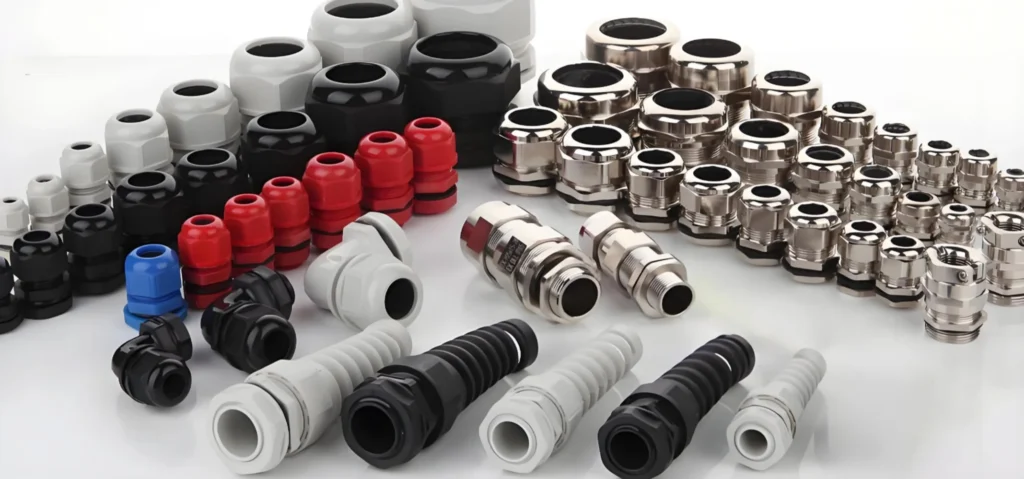
Understanding Cable Gland Threads: Metric (M), PG, and NPT Selecting the correct cable gland size requires a clear understanding of the thread standards used globally. Cable glands secure and protect electrical cables where they enter enclosures, and their threads must perfectly match the junction box or equipment port to ensure a safe, secure, and sealed […]
Introduction Nylon self locking cable tie, also known as self locking zip ties, is a practical tool widely used in both daily life and industrial environments. Whether organizing household appliance wires or managing cables in large industrial equipment, it plays a crucial role. With the continuous progress of industrial technology, nylon self locking cable ties […]
We use cookies to enhance your browsing experience, serve personalised ads or content, and analyse our traffic. By clicking "Accept All", you consent to our use of cookies.
Looking For High Quality Nylon Cable Ties At A Great Price?
Order now to experience cost-effective cable tie products that provide convenience and protection for your work and life.




 EN
EN  AR
AR  ES
ES  PT
PT  FR
FR  RU
RU  DE
DE  KO
KO  JA
JA  IT
IT