


What is a Spiral Cable Gland?
Definition and Working Principle
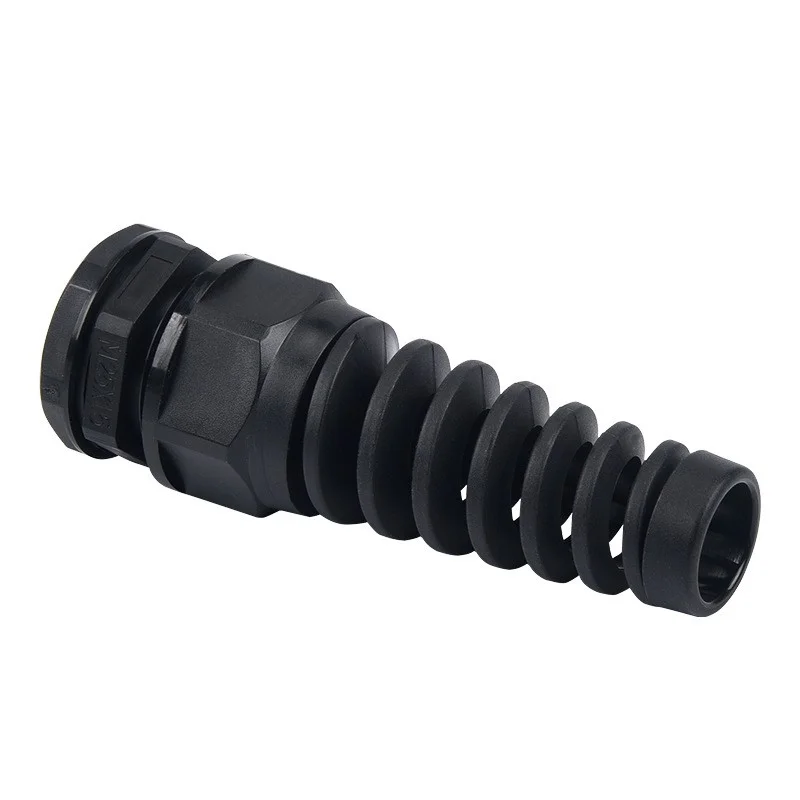
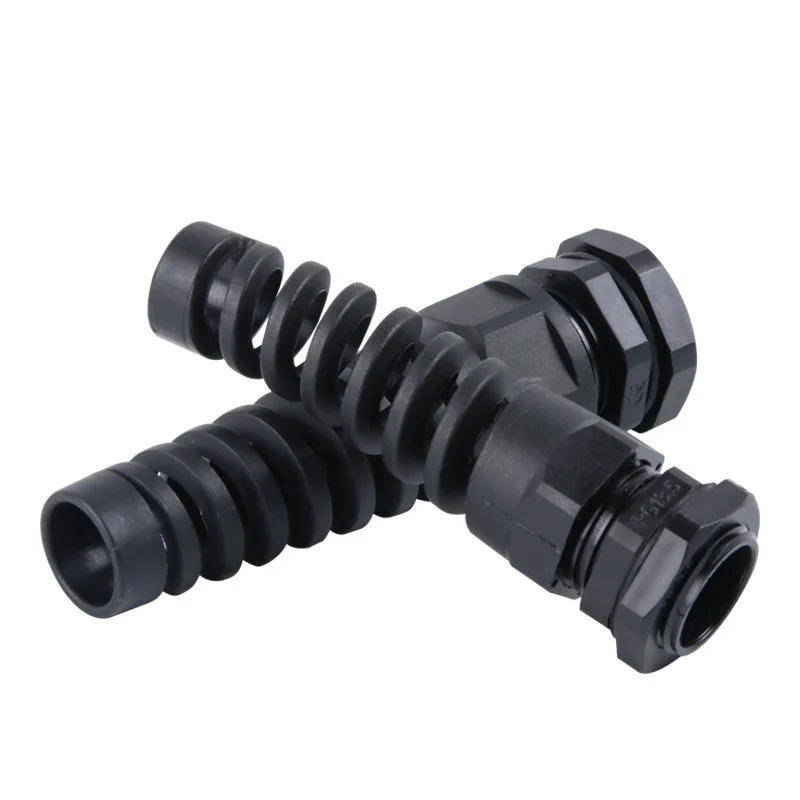
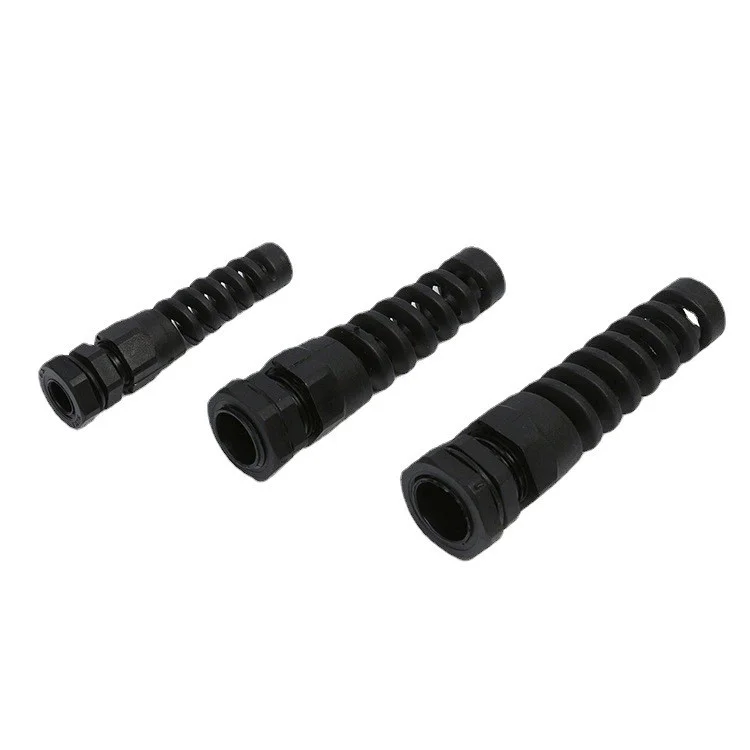
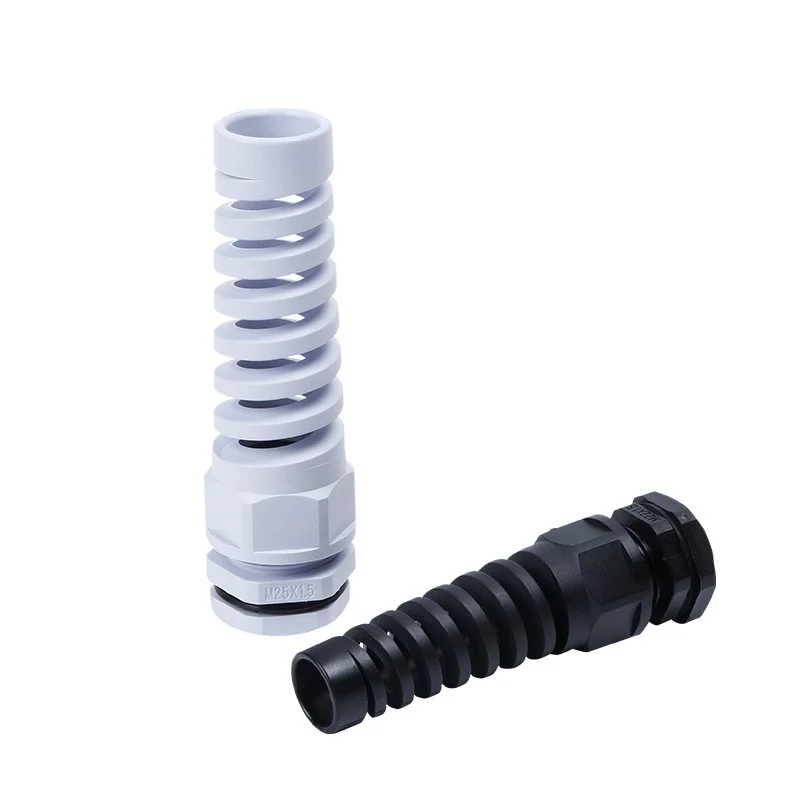
A spiral cable gland (also known as a strain relief flex gland) is a specialized electrical fitting designed to secure, seal, and protect cable entries into enclosures, machinery, and electrical equipment. Unlike standard fittings, it features an extended flexible spiral tail or spring guard that distributes bending stress over a wider radius.
Core Function: Prevents sharp, repeated cable bending at the entry point to eliminate wire fatigue, core snapping, and insulation failure.
- Threaded Body & Locknut: Anchors firmly to the enclosure wall to ensure rigid structural attachment.
- Internal Rubber Seal & Claw: Compresses tightly around the cable jacket to block dust, water, and oil.
- Spiral Flex Guard: Spreads bending force dynamically along the entire length of the spring tail as the cable moves.
Key Differences Between Spiral and Standard Cable Glands
Selecting the right connector depends on whether your cable application involves continuous movement or static placement.
| Feature | Spiral Cable Gland | Standard Cable Gland |
|---|---|---|
| Primary Focus | Maximum flex protection & strain relief | Environmental sealing & static retention |
| Bending Protection | High (Extended spiral prevents sharp kinks) | Low (Sharp edges can cause stress concentration) |
| Ideal Motion Profile | Dynamic, flexible, or handheld equipment | Static panels, fixed junction boxes, and walls |
| Mechanical Lifespan | Extended under repeated cable flexing | Standard (Bending shortens cable service life) |
As a leading wiring accessories manufacturer and supplier, WANDU engineers premium flex cable glands that deliver reliable ingress protection and high-durability strain relief for industrial control systems worldwide.
Key Features and Benefits of Spiral Cable Glands
Superior Strain Relief and Anti-Bending Protection
Cables subjected to continuous motion or sharp bends fail prematurely without proper support. A spiral cable gland features an extended tail guard that distributes bending stress along a wider curve. This prevents sharp kinks at the entry point, protecting internal copper wires from fatigue and breaking.
- Extends Cable Lifespan: Reduces mechanical stress from frequent flexing.
- Prevents Kinking: Spreads bending force evenly along the flexible spiral tail.
- Protects Connections: Eliminates tension on internal terminal blocks.
Vibration Resistance and Mechanical Durability
Equipment in motion generates constant vibration that can loosen standard connections. Built with heavy-duty materials, a spiral cable gland incorporates an integrated locking mechanism and sealing nut that grips tight under intense movement.
| Feature | Advantage | Benefit |
|---|---|---|
| Vibration-Proof Lock | Prevents cap unscrewing | Zero maintenance downtime |
| High Flex Strength | Absorbs mechanical shock | Reliable power delivery |
| Durable Outer Shell | Resists impact and wear | Longer service life in harsh setups |
High IP Protection Against Dust, Water, and Chemicals
Securing your wiring against environmental threats is crucial. High-grade spiral glands feature precision-engineered internal seals that block moisture, debris, and aggressive liquids. To ensure maximum reliability, understanding how waterproof cable glands are with IP ratings helps you choose the right ingress protection level for your specific environment.
- IP68 Ingress Protection: Keeps out fine dust and resists continuous water submersion.
- Chemical Resistance: Shields connections from oil, weak acids, and industrial solvents.
- Weatherproof Performance: Maintains a tight seal under extreme indoor and outdoor temperature shifts.
Common Types and Material Options
Selecting the right flex cable glands depends on the mechanical stress, chemical exposure, and operating temperature of your setup. We manufacture flexible strain-relief solutions across high-performance plastics and heavy-duty metals to match specific industrial environments.
Polyamide Nylon Spiral Cable Glands
Polyamide nylon is the industry standard for lightweight, high-flexibility applications. High-grade plastic formulations provide balanced physical durability, insulation, and cost efficiency.
- Nylon 6 (PA6): Excellent impact resistance and mechanical strength for standard indoor control panels and equipment wiring.
- Nylon 66 (PA66): Enhanced thermal stability and higher mechanical stiffness, ideal for demanding machinery. For demanding industrial setups, understanding the differences between nylon 6 and nylon 66 helps determine which material best withstands heat and mechanical stress over time.
Metallic and Industrial-Grade Variations
When environments involve heavy mechanical impact, extreme temperatures, or aggressive chemicals, metal spiral cable glands offer superior durability.
- Nickel-Plated Brass: Delivers exceptional mechanical strength, corrosion protection, and electromagnetic shielding (EMC) for factory automation.
- Stainless Steel (304 / 316): Built for severe environments, including marine, chemical processing, and outdoor infrastructure requiring maximum rust resistance.
| Material Type | Heat Resistance | Chemical Resistance | Primary Advantage |
|---|---|---|---|
| Polyamide (PA6 / PA66) | -40°C to +100°C | Good (Oils, Alkalis) | Lightweight, non-conductive, cost-effective |
| Nickel-Plated Brass | -40°C to +120°C | Excellent (Solvents, Corrosion) | High mechanical impact resistance & EMC shielding |
| Stainless Steel | -40°C to +140°C | Superior (Acids, Saltwater) | Maximum lifespan in aggressive environments |
Thread Types and Size Configurations
We produce spiral cable glands across all major international thread standards to ensure seamless integration into existing enclosures and junction boxes. To verify precise clamping ranges and panel hole dimensions before installation, consult our detailed cable gland size guide.
- Metric Threads (M12 to M25): The global standard (ISO) featuring a 1.5mm pitch, widely used across European and Asian automation systems.
- PG Threads (PG7 to PG21): The traditional German standard (DIN 40430), still common in specialized machinery and legacy control systems.
- NPT Threads (3/8″ to 3/4″): The American standard tapered thread, providing a self-sealing fit for US industrial enclosures.
Primary Applications and Industry Use Cases
When it comes to protecting flexible wiring systems, a spiral cable gland is the go-to solution across multiple sectors. From high-speed factory floors to rugged field equipment, these fittings keep power and signal lines secure under relentless movement.
Robotics, Automation, and Moving Machinery
Modern industrial automation relies on continuous dynamic motion. Multi-axis robot arms, pick-and-place machines, and automated assembly lines put constant stress on electrical connections.
- Flex Fatigue Prevention: The integrated spiral tail distributes bending forces evenly, preventing copper wire strands from snapping inside the jacket.
- Continuous Duty Protection: Designed to handle millions of flex cycles without compromising seal integrity.
- Streamlined Cable Management: For complex installations requiring neat bundle routing, combining these glands with heavy-duty stainless steel cable ties ensures long-lasting strain relief along entire robot arms and cable tracks.
Handheld Devices and Flexible Power Cables
Portable equipment takes a beating. Handheld power tools, diagnostic instruments, and mobile control pendants are constantly pulled, dropped, and twisted by operators.
- Anti-Kink Performance: Prevents sharp sharp-angle bends right at the enclosure entry point where cords fail most often.
- Ergonomic Safety: Keeps flexible power cords intact, protecting operators from exposed wires and short circuits.
- Compact Footprint: Fits tightly into small control boxes and portable enclosures without adding unnecessary bulk.
Harsh Indoor and Outdoor Environments
Industrial setups don’t always operate in climate-controlled spaces. Whether exposed to washdown chemical sprays indoors or extreme weather outdoors, spiral cable glands maintain a tight environmental seal.
| Environment Challenge | Spiral Cable Gland Solution |
|---|---|
| High Dust & Debris | Tight neoprene seals prevent fine particulates from entering sensitive enclosures. |
| Water Jets & Rain | IP68-rated ratings ensure watertight performance during direct high-pressure hose-downs. |
| Vibration & Shock | Anti-vibration locking nuts keep the fitting tight despite heavy machinery tremors. |
At WANDU, we engineer every strain relief cable gland to deliver rugged durability, seamless strain relief, and dependable ingress protection for demanding international applications.
How to Select the Right Spiral Cable Gland
Choosing the correct spiral cable gland ensures long-term cable protection and system reliability. Here is how to pick the right match for your application.
Matching Cable Diameters and Thread Sizes
Always measure your cable’s outer diameter (OD) before picking a gland. The cable must fall within the clamping range of the sealing insert to form a tight seal.
When choosing threads, you will generally select between Metric and PG types. Understanding the difference between plastic PG and Metric cable gland options helps ensure a proper fit with your enclosure’s pre-drilled holes or knockouts.
| Thread Type | Common Sizes | Typical Applications |
|---|---|---|
| Metric (M) | M12 to M25 | Modern global automation, robotics, and industrial equipment |
| PG | PG7 to PG21 | Legacy machinery, European standard control boxes |
Evaluating Environmental and Ingress Protection Ratings
Check where the cable gland will be installed:
- IP68 Rating: Essential for outdoor gear or equipment subject to washdowns, submersion, and heavy rain.
- IP67 Rating: Suitable for general splash protection and dust-tight indoor environments.
- Chemical & UV Resistance: We recommend polyamide nylon with UV stabilization for harsh sunlight or industrial chemical exposure.
Assessing Bending Frequency and Flex Strength Requirements
For continuous motion applications like robotic arms or handheld devices, select a spiral cable gland with an extended flex spiral.
- High-Flex Applications: Require long, flexible spiral tails that distribute bending stress over a wider area to prevent conductor breakage.
- Static or Occasional Flexing: Standard spiral guards provide sufficient anti-kink protection without taking up excess space.
Frequently Asked Questions (FAQs)
Can Spiral Cable Glands Be Used Outdoors?
Yes, spiral cable glands can definitely be used outdoors, provided you select the right specifications. Outdoor environments subject wiring to harsh UV rays, rain, dirt, and extreme temperature fluctuations. To ensure reliable protection, look for glands crafted from high-grade, UV-resistant materials like nylon polyamide or nickel-plated brass that offer at least an IP68 ingress protection rating.
When you install high-quality outdoor-rated models, such as our range of metric cable glands, you form a watertight seal that blocks moisture and dust from reaching the enclosure. Adding the integrated spiral flex protection ensures that outdoor power cords on moving machinery or portable gear won’t snap or wear down under harsh weather conditions.
How Do You Properly Install a Spiral Cable Gland?
Installing a spiral cable gland correctly ensures complete strain relief and keeps your enclosure fully sealed against the elements. Follow these straightforward steps for a secure setup:
- Prepare the Mounting Hole: Verify that the enclosure entry hole matches your gland’s thread size and pitch. Clean the surface around the entry hole to remove oil or dust.
- Disassemble the Gland: Unscrew the rear spiral dome nut and remove the internal sealing insert and washer.
- Mount to the Enclosure: Insert the gland body through the enclosure hole. Secure it tightly from the inside using a matching locknut, ensuring the O-ring or sealing washer sits flush against the outer wall.
- Feed the Cable: Slide the spiral dome nut, sealing claw, and rubber insert onto your cable, then feed the cable through the gland body into the enclosure.
- Tighten and Seal: Torque the spiral dome nut back onto the gland body. As you tighten it, the internal sealing claw compresses the rubber insert around the cable jacket, creating a waterproof seal while locking the cable in place for optimum strain relief.
 EN
EN  AR
AR  ES
ES  PT
PT  FR
FR  RU
RU  DE
DE  KO
KO  JA
JA  IT
IT  NL
NL  TR
TR