Standard fasteners might work for simple cables, but when you’re securing industrial loads, HVAC ductwork, or heavy machinery, a snapped tie is not an option.
So, what are the heaviest duty zip ties on the market today?
From ultra-rugged 250 lb+ nylon cable ties to virtually indestructible stainless steel zip ties, the real answer comes down to tensile strength, material grade, and environmental durability.
In this guide, you’ll discover the strongest heavy-duty zip ties available, how to calculate the exact load capacity you need, and how to secure your toughest projects with total confidence.
Let’s dive right in.
Understanding Heavy Duty Zip Ties and Tensile Strength Ratings
What Defines a Heavy Duty Zip Tie?
A heavy duty zip tie is engineered for demanding fastening applications where standard ties fail. Unlike light or medium-duty ties designed for simple cord grouping, heavy-duty cable ties feature wider strap bodies, reinforced head designs, and rugged locking pawls.
The primary defining metric is loop tensile strength—the maximum amount of force the tie can withstand before breaking or slipping:
Robust Material Composition: Molded from premium virgin Nylon 6/6 or high-grade stainless steel (304/316) for elevated yield strength.
Reinforced Locking Mechanism: Features an integrated self-locking tooth or a stainless steel barb that resists back-slipping under extreme dynamic tension.
Thicker Profile: Increased cross-sectional thickness prevents stretching, necking, and structural fatigue in high-vibration environments.
Standard vs. Heavy-Duty vs. Ultra Heavy-Duty Tensile Strengths
Tensile strength determines the direct load-bearing capacity of a cable tie. Choosing the correct grade prevents catastrophic fastening failures across industrial setups.
Marine rigging, oil & gas lines, heavy structural bundling
Key Specifications: Length, Width, and Bundle Diameter
Selecting the right heavy-duty zip tie requires balancing three critical physical dimensions to ensure maximum mechanical hold:
Length: Ranges from 8 inches (200 mm) up to 60 inches (1500 mm) or more. Extra length provides the leverage needed to secure massive bundles without chaining ties together.
Width: Heavy-duty variants start at 0.30 inches (7.6 mm) and expand up to 0.75 inches (19 mm) on ultra-grade straps. A wider surface area distributes clamping force evenly, protecting delicate conduits from crushing.
Maximum Bundle Diameter: Determines the maximum perimeter the tie can wrap around while maintaining full engagement in the locking head. Always select a bundle diameter rating at least 15–20% larger than the intended payload diameter for optimal lock engagement.
Types of Heavy Duty Zip Ties
When standard fasteners cannot handle heavy mechanical loads or demanding environments, choosing the right category of heavy duty zip ties makes all the difference. We manufacture and supply several grades tailored to specific load ratings, environmental exposures, and industrial demands.
Heavy Duty Nylon Cable Ties (120 lb – 175 lb)
Our standard heavy duty nylon cable ties are molded from high-grade Polyamide (Nylon 6/6) to handle everyday industrial bundling. With tensile ratings ranging from 120 lbs to 175 lbs, these fasteners provide a dependable grip without adding excessive bulk.
Tensile Rating: 120 lbs to 175 lbs (534 N to 778 N)
Primary Material: Virgin Nylon 6/6
Common Applications: Commercial wiring looms, conduit securing, and HVAC line installations
Key Feature: Deeply grooved serrations and reinforced pawls to eliminate slipping under continuous tension
Extra & Ultra Heavy Duty Cable Ties (250 lb+)
For severe applications that require massive holding force, extra heavy duty zip ties and ultra-grade ties provide the highest tensile strength achievable in polymer fasteners. These wide, thick bands deliver the stability required for heavy-gauge conductors and structural utility bundling. Discover more about tailoring specs to your project through our nylon cable ties multifunctional uses and selection guide.
Tensile Rating: 250 lbs(1,112 N)
Design Profile: Extra-wide strap profile (up to 12mm) to distribute clamping force evenly
Common Applications: Heavy plant machinery, infrastructure cable trays, and municipal utility lines
Key Feature: High impact resistance to withstand mechanical vibration and sudden shock loads
Stainless Steel Ultra Heavy Duty Zip Ties
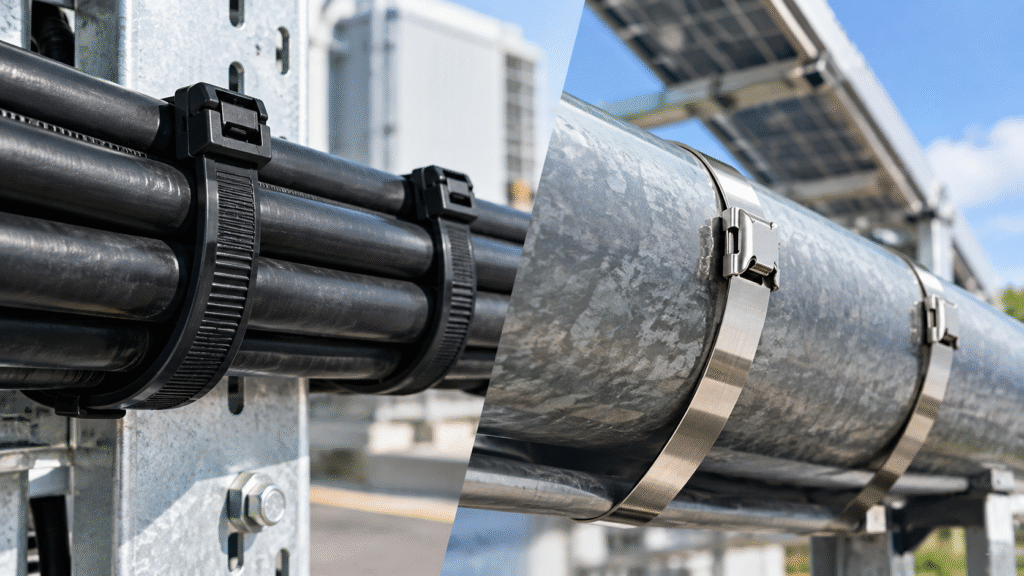
When jobs involve abrasive chemicals, open flame exposure, or extreme physical strain, ultraheavy duty metal zip ties outperform synthetic alternatives. Produced in 304 and 316 marine-grade steel, these fasteners offer tensile strengths exceeding 330 to 900 lbs alongside total fireproofing. Review our breakdown on the difference between nylon and metal zip ties to match the right tie to your specific operating conditions.
Tensile Rating: 330 lbs to over 900 lbs
Material Grades: AISI 304 (general industrial) and AISI 316 (marine and chemical environments)
Temperature Tolerance: Operates smoothly from -80°C to +538°C (-112°F to +1000°F)
Locking Mechanism: Roller-ball self-locking heads for rapid, non-slip fastening on smooth metal piping
UV Resistant and Outdoor Rated Zip Ties
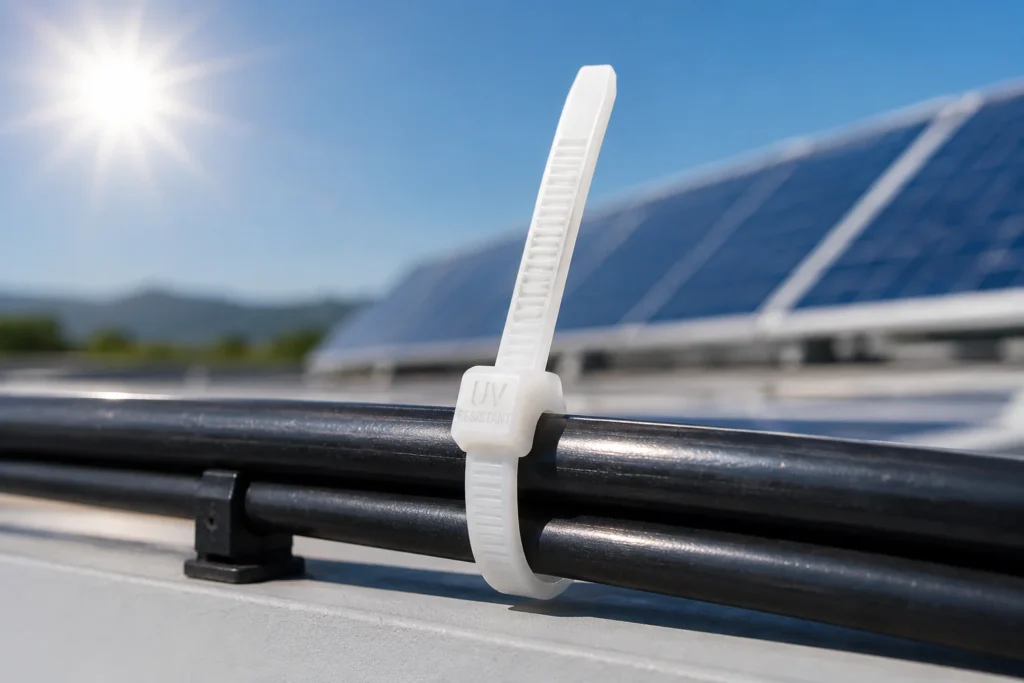
Direct sunlight and weather fluctuations quickly degrade ordinary plastics. Our heavy duty black zip ties for outdoor use are carbon-black-stabilized to block ultraviolet radiation from breaking down polymer chains.
UV Stabilization: Infused with 2% carbon black additive for extended outdoor lifespans
Weather Resistance: Resists embrittlement, moisture absorption, and thermal cycling from freezing winters to scorching summers
Typical Uses: Solar panel array cabling, telecommunication towers, outdoor fencing, and agricultural framing
Key Benefits of Heavy Duty Zip Ties
When managing heavy bundles or securing equipment in demanding environments, standard fasteners simply do not hold up. We engineer our heavy duty zip ties to deliver uncompromising grip, stability, and safety across demanding industrial, commercial, and outdoor settings.
Superior Load Capacity and Durability
Heavy duty cable ties are built with thicker profiles, reinforced ratchet teeth, and rugged locking pawls. This design prevents slipping, snapping, or stretching under continuous load.
High Tensile Strength: Built to handle ratings from 120 lbs up to 250+ lbs for heavy-duty nylon, and significantly higher for stainless steel options.
Impact Resistance: Thick cross-sections absorb mechanical shocks and resist structural fatigue from vibration.
No Bundle Slippage: Deep serrations grip cables and conduits securely without backing out.
Fastener Type
Typical Tensile Strength
Recommended Application
Standard Zip Ties
18 – 50 lbs
Light wire bundling, office electronics
Heavy Duty Cable Ties
120 – 175 lbs
HVAC, conduit support, industrial cabling
Extra Heavy Duty
250+ lbs
Heavy machinery, infrastructure, rigging
Ultra Heavy DutyZipTies(Stainless Steel )
330 – 900+ lbs
Extreme heat, marine, high-corrosion sites
Weather, Chemical, and Temperature Resistance
Harsh environments quickly degrade cheap plastics. Industrial-grade heavy duty black zip ties are infused with carbon black additives for high UV protection, preventing brittleness caused by direct sun exposure.
Furthermore, our ties withstand contact with oils, greases, solvents, and extreme thermal fluctuations. For critical high-temperature installations, understanding heat resistance and material properties helps you select the right nylon blend or metallic alloy to avoid fastener failure under load.
Long-Term Reliability Over Tapes and Straps
Traditional fastening methods like duct tape, metallic wire twists, or fabric straps degrade quickly when exposed to moisture, sun, and friction.
Zero Adhesive Failure: Unlike tape, zip ties do not rely on glues that dry out, turn gummy, or slip in wet conditions.
Consistent Clamping Force: The self-locking mechanism provides a permanent, measurable hold that will not loosen over time.
Clean, Fast Installation: Installs in seconds by hand or with tensioning tools, leaving a clean, low-profile finish without sticky residue.
Common Industrial and Commercial Applications
Heavy duty zip ties handle critical holding, bundling, and routing jobs where standard fasteners fail. When equipment safety and structural integrity are on the line, industrial operations rely on high tensile fasteners to keep installations stable and compliant.
Industrial Cable and Wire Management
Heavy industrial facilities run massive electrical cables that carry significant weight and tension. We deploy heavy duty cable ties across manufacturing plants, data centers, utility grids, and solar farms to organize primary feeds and high-voltage conduit runs.
Conduit and Tray Organization: Keep thick multi-conductor cables neatly grouped inside cable trays and utility racks.
Vibration Dampening: Prevent heavy power cables from shifting or chafing against sharp metal structural beams.
Vertical Drop Support: Hold high-amperage lines firmly in place down utility poles and vertical factory risers without slippage.
Construction, HVAC, and Ductwork Fastening
Job sites demand durable, weather-resistant fasteners that handle rough handling and heavy static loads. Contractors rely on ultra heavy duty cable ties to mount flexible ducting, secure insulation blankets, and fix temporary construction fencing.
For fire-rated environments, marine builds, or mechanical rooms facing extreme temperatures, stainless steel cable ties provide the non-corrosive, non-flammable grip needed to keep rigid ductwork, exhaust pipes, and structural wraps permanently locked.
Automotive and Heavy Machinery Securing
High vibration, fluids, and heat make engine compartments and equipment chassis hostile environments for fastening hardware. Heavy duty wire ties provide secure strain relief for hydraulic hoses, pneumatic tubing, and main power feeds on commercial trucks, agricultural machinery, and earthmovers.
Selecting the correct heavy duty zip ties comes down to matching three core variables to your project: mechanical load, environmental exposure, and installation permanence. Choosing the wrong specification can lead to premature snapping, bundle slippage, or material degradation under stress.
Determining Required Tensile Strength
Cable tie tensile strength indicates the maximum breaking force a tie can withstand before failing. When calculating the required rating for your application, always apply a safety factor of at least 2x to account for dynamic weight shifts, wind loading, or equipment vibration.
Marine rigging, oil & gas lines, heavy structural bundling
Selecting the Proper Material for Your Environment
Tensile rating means very little if the tie material degrades under working conditions. Understanding what is the best material for zip ties in your specific operating environment prevents costly failures:
Standard Nylon 6/6: Ideal for indoor industrial bundling within temperature ranges of -40°F to 185°F (-40°C to 85°C).
UV-Stabilized Black Nylon: Engineered with carbon black additives to resist prolonged ultraviolet degradation. If you need to choose the best outdoor zip ties for solar arrays, telecommunications towers, or agricultural fencing, UV-rated nylon is the baseline standard.
Heat-Stabilized Nylon: Formulated for continuous high-temperature exposure up to 257°F (125°C), common in engine compartments and industrial ovens.
304 & 316 Stainless Steel: Impervious to direct UV exposure, salt spray, harsh chemicals, and extreme temperatures ranging from -112°F to 1000°F (-80°C to 538°C).
Choosing Reusable vs. Self Locking Heavy Duty Zip Ties
The locking mechanism dictates whether the fastening is permanent or serviceable over time.
Self-Locking Zip Ties: Feature an integrated one-way ratchet pawl (or stainless steel locking barb) that permanently grips the serrated strap. These deliver the highest tensile retention, tamper resistance, and vibration proofing for permanent installations.
Heavy Duty Reusable Cable Ties: Built with a release trigger or lever mechanism that disengages the locking pawl without damaging the strap. These are ideal for temporary wire pulls, prototyping, seasonal equipment rigging, and maintenance setups where cables must be added or removed regularly.
Installation and Usage Best Practices
Getting the rated strength out of your heavy duty zip ties depends entirely on how you install them. Even an ultra heavy-duty fastener will fail prematurely if it is under-tensioned, over-torqued, or installed with the wrong tools.
Proper Tensioning and Installation Tools
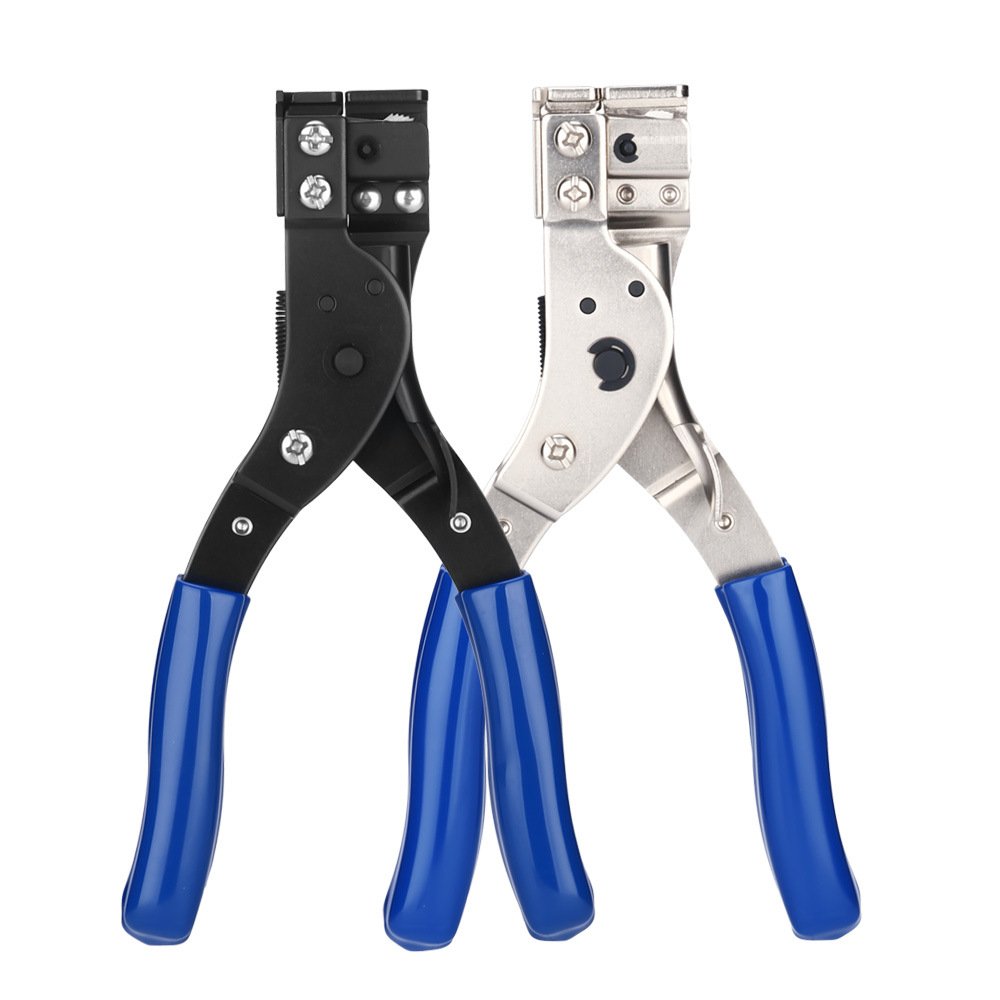
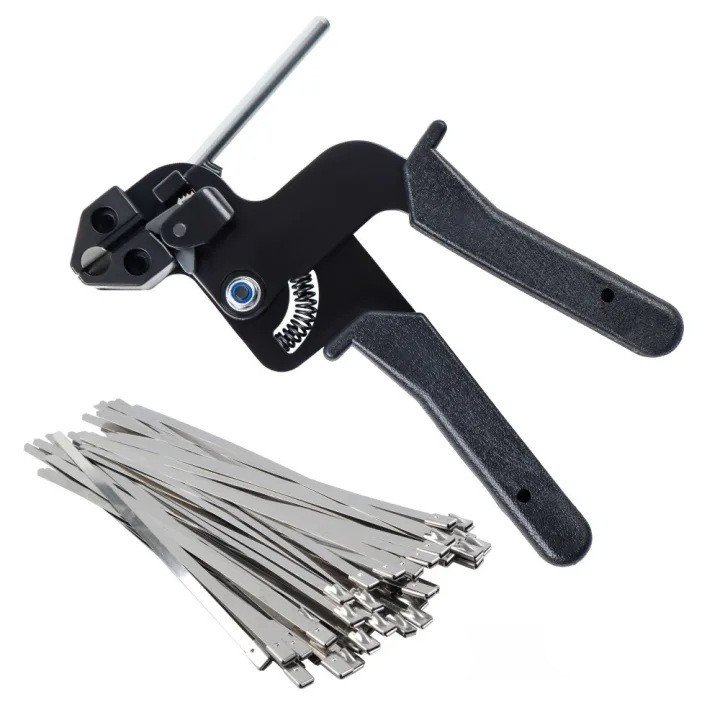
While hand-tightening works for standard tasks, extra heavy duty zip ties and stainless steel variants require dedicated tensioning tools to lock in maximum holding power without damaging the bundle.
Use a Dedicated Tensioning Tool: When securing high-tensile nylon or metal ties, learning how to use a zip tie gun ensures uniform tension and delivers a clean, flush cut at the head.
Prevent Sharp Edges: Standard wire cutters leave behind sharp protruding tails that create snag and laceration hazards on industrial job sites. A professional tie tool trims the excess tail completely flat against the locking head.
Avoid Over-Tensioning: Pulling a cable tie too tight can crush softer cable jackets, hydraulic hoses, or plastic conduit. Adjust your tensioner settings based on the bundle’s rigidity and the tie’s width.
Safety Precautions and Weight Limit Guidelines
Knowing the difference between tensile strength and actual working load is critical for structural safety and compliance.
Parameter
Guideline
Working Load Limit (WLL)
Always apply a 4:1 or 5:1 safety factor. A 250 lb tensile tie should handle a continuous static working load of no more than 50–60 lbs.
Dynamic & Shock Loads
Vibrations from heavy machinery and wind gusts multiply the force exerted on the tie; step up to metal or ultra-grade nylon ties.
Have you ever wondered how are cable ties made? Cable ties, also known as zip ties, are essential tools for organizing and securing wires and cables. From raw material selection to the final packaging, the manufacturing process of cable ties involves several intricate steps. In this blog post, we’ll explore the fascinating journey behind the creation […]
Have you ever used standard white zip ties for an outdoor project, only to watch them snap like twigs a few months later? You’re not alone. It’s a common frustration for contractors and DIYers alike who assume a cable tie is just a cable tie. But when it comes to braving the brutal sun, the […]
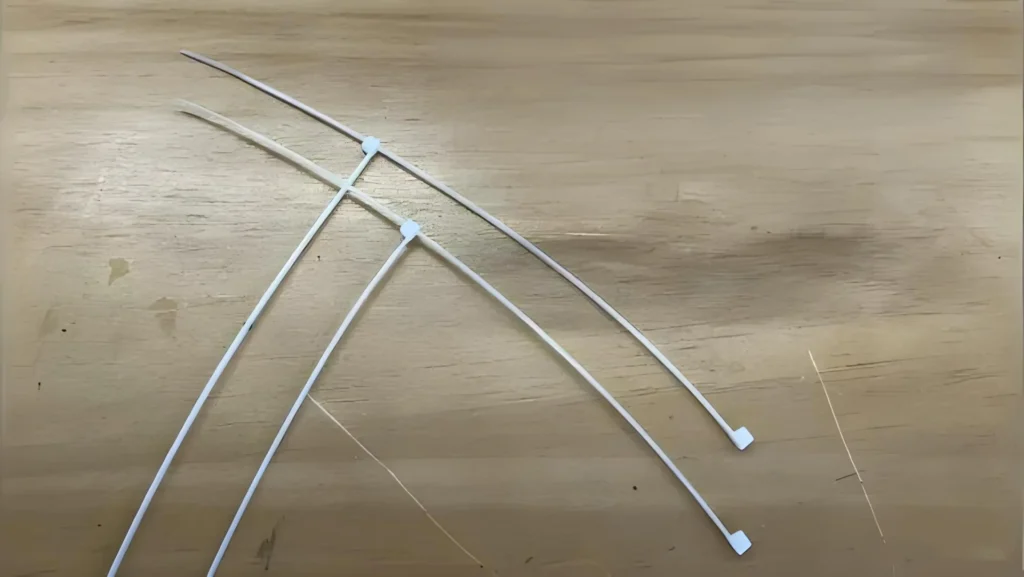
Ever found yourself reaching for a zip tie, only to realize it’s a few inches too short for the job? It’s a frustrating moment, whether you’re managing a chaotic bundle of cords or tackling a weekend DIY project. But before you throw it away or make a frantic run to the hardware store, there’s a […]
We use cookies to enhance your browsing experience, serve personalised ads or content, and analyse our traffic. By clicking "Accept All", you consent to our use of cookies.
Looking For High Quality Nylon Cable Ties At A Great Price?
Order now to experience cost-effective cable tie products that provide convenience and protection for your work and life.


 EN
EN  AR
AR  ES
ES  PT
PT  FR
FR  RU
RU  DE
DE  KO
KO  JA
JA  IT
IT