Zip ties are engineered from high-performance polymers and heavy-duty metals designed to withstand specific environmental stressors. The most common cable tie plastic material is Polyamide 6/6 (Nylon 6/6), widely celebrated for its structural integrity. However, industrial demands require a broader range of cable tie materials. Depending on the application, manufacturers utilize advanced formulations including polypropylene, fluoropolymers, and premium stainless steel grades like 304 and 316. Selecting the right zip tie material directly impacts the fastener’s flexibility, durability, and resistance to external elements.
How Material Composition Affects Tensile Strength
The molecular structure of the chosen cable ties material dictates its ultimate cable tie tensile strength.
Nylon 6/6: Features crystalline polymer chains that deliver high zip tie strength, allowing standard ties to easily support loads from 18 to 250 pounds.
Polypropylene: Offers lower tensile strength but excels in high-chemical environments where plastics typically degrade.
Stainless Steel: Provides the ultimate high strength cable ties capability, frequently exceeding 350 pounds of loop tensile strength without stretching or slipping.
Material thickness, locking mechanism design, and polymer purity all work together to determine the maximum weight capacity before failure.
Why Material Selection Matters for Performance
Choosing the incorrect tie wrap material leads to premature failure, snapping, or brittle degradation under stress. Ambient temperature, UV exposure, chemical contact, and mechanical vibration all demand specific material properties.
Material Type
Primary Benefit
Best Used For
Nylon 6/6
Balanced strength & flexibility
General bundling, indoor wiring
Polypropylene
Chemical & acid resistance
Chemical processing, labs
Stainless Steel
Extreme heat & lifespan
Heavy industry, marine, outdoor
Understanding these cable tie material specification profiles ensures you deploy heavy duty zip ties that maintain a secure hold throughout their intended lifespan, protecting infrastructure and reducing maintenance costs.
Nylon Zip Ties: The Industry Standard
When it comes to the go-to zip tie material, nylon is the undisputed king. It balances cost, strength, and ease of use perfectly, making it the default choice for both quick fixes and professional installations worldwide.
Key Features of Nylon 6/6
Most standard plastic cable ties are made from Nylon 6/6 (PA66). This specific cable tie plastic material is highly valued for its optimum mechanical strength, rigidity, and heat resistance.
Feature
Specification / Rating
Material Composition
polyamide 6.6 (PA66)
Working Temperature Range
-40°C to 85°C (-40°F to 185°F)
Flammability Rating
UL 94 V-2
Water Absorption
2.5% at 50% relative humidity
Advantages of Nylon Cable Ties
Choosing nylon cable zip ties offers distinct advantages for everyday bundling needs:
High Tensile Strength: Delivers reliable zip tie strength that prevents slipping under load.
Cost-Effective: Extremely affordable for bulk use compared to specialty plastics or metals.
Flexibility: Easily snakes through tight spaces and bends around uneven bundles without snapping.
Low Friction: Features a smooth design for effortless pulling and quick installation.
Common Uses for Standard Nylon Ties
Standard nylon ties are incredibly versatile, making them a staple across various industries:
Home and Office: Organizing computer cables, entertainment center wires, and everyday clutter.
Electrical Wiring: Bundling wire harnesses and securing cables inside control panels.
Commercial Display: Setting up temporary signage, event banners, and retail displays.
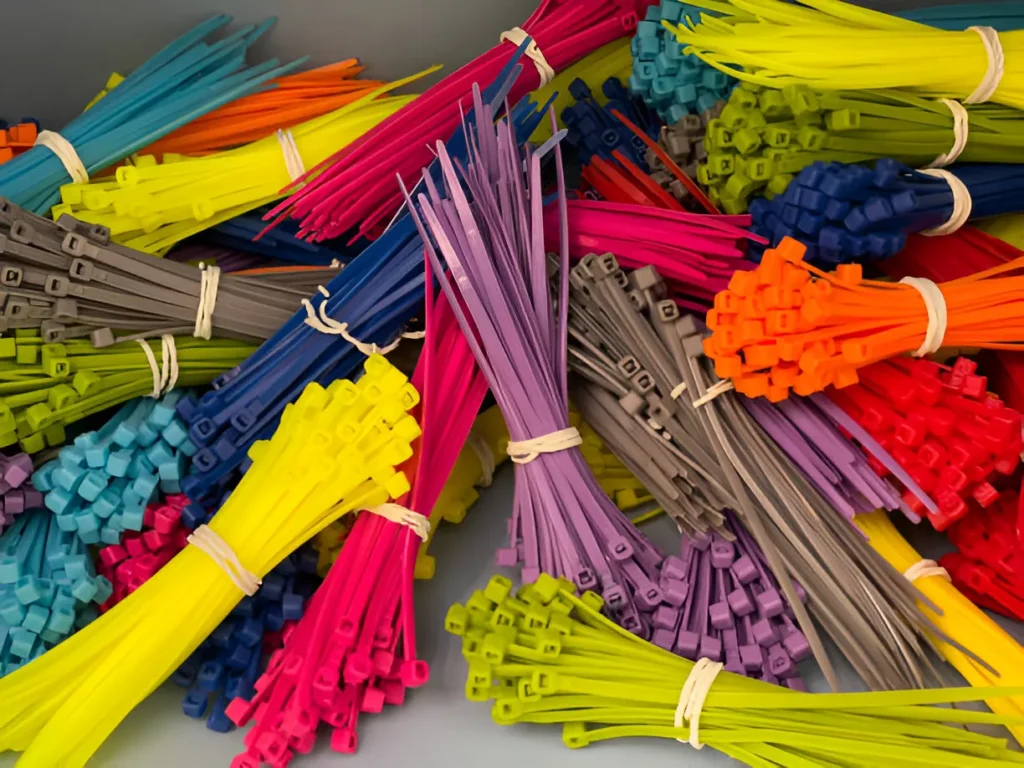
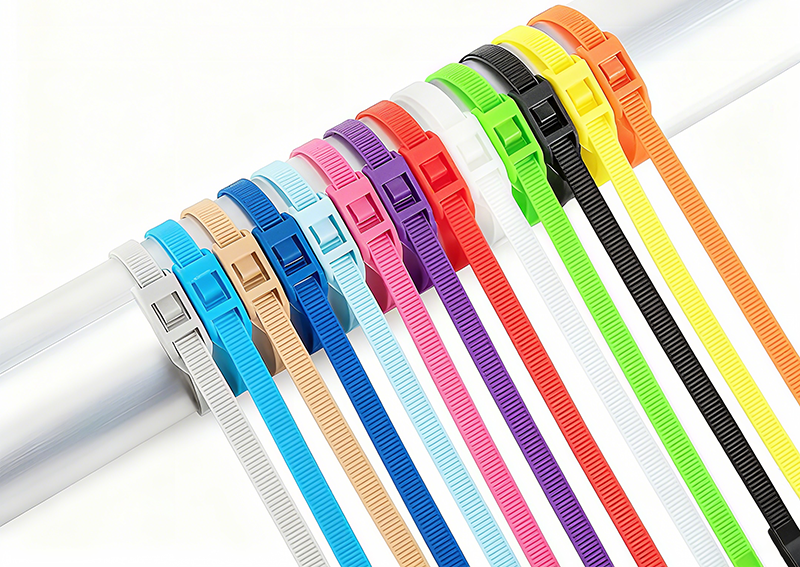
Packaging: Sealing bags, securing inventory tags, and managing light-duty shipping bundles. For color-coded organization in these settings, many facilities utilize colored wire ties to quickly identify specific batches or cable runs.
Metal and Stainless Steel Zip Ties: Ultimate Durability
Key Features of Stainless Steel Ties
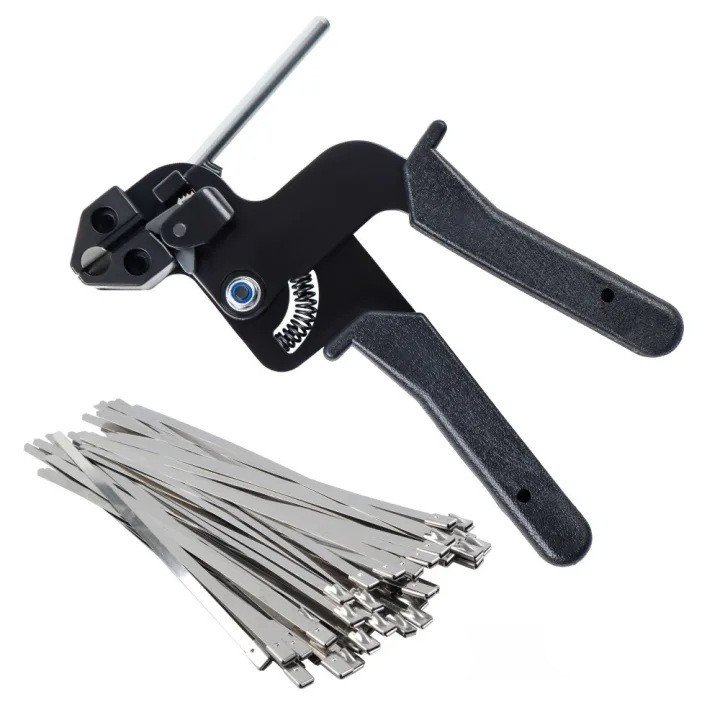
When plastic fails, stainless steel zip ties step up. Built primarily from high-grade 304 or 316 stainless steel, these metallic fasteners offer unmatched resistance to extreme environments. They feature a unique ball-bearing locking mechanism that grips the strap tightly, ensuring they never slip or back out once tensioned.
Unlike standard plastic ties, metal cable ties are completely immune to UV radiation, harsh weathering, and chemical exposure, making them a permanent fastening solution.
Feature
304 Stainless Steel
316 Stainless Steel
Corrosion Resistance
High (Standard outdoor use)
Maximum (Marine & chemical use)
Magnetic
Weakly Magnetic
Non-Magnetic
Common Use
Manufacturing, signs, automotive
Shipbuilding, oil rigs, chemical plants
Advantages of Metal Zip Ties over Plastic
Plastic ties degrade over time, but metal ties are engineered to last for decades. They provide critical upgrades in three main areas:
Extreme Temperature Tolerance: Metal zip ties handle temperatures ranging from -112°F to over 1000°F (-80°C to 538°C), far exceeding the melting point of nylon.
Zero Moisture Absorption: Nylon ties can become brittle in bone-dry air or weak in high humidity. Stainless steel stays perfectly stable regardless of moisture levels.
Flame and Fire Proof: They will not catch fire, emit toxic smoke, or melt during a fire breakdown, keeping critical lines secure during emergencies.
High-Strength and Heavy-Duty Applications
These high strength zip ties are the default choice for heavy-duty industrial environments. They secure heavy cables, pipes, and shielding in automotive exhaust systems, solar panel arrays, and aerospace wiring.
For applications requiring massive weight capacities, heavy duty cable ties made of steel easily support loads well over 300 lbs without stretching. If you need to secure rugged infrastructure or industrial lines, choosing the right different types of zip ties ensures your installation withstands severe physical stress without breaking.
Specialty and Eco-Friendly Zip Tie Materials
While nylon and metal handle the bulk of everyday fastening tasks, specific environments demand tailored properties. Standard plastics fail when exposed to harsh chemicals, intense solar radiation, or strict sustainability mandates. Choosing a specialized zip tie material ensures long-term reliability where standard ties degrade.
Polypropylene for Chemical Resistance
Polypropylene zip ties are the definitive choice for chemically corrosive environments. Unlike nylon, which absorbs water and degrades in the presence of acids, polypropylene is highly resistant to chemical solvents, bases, and organic salts.
Best For: Chemical processing plants, marine environments, and laboratory equipment management.
Tensile Strength: Lower than Nylon 6/6, meaning they are selected strictly for environmental endurance rather than raw weight capacity.
UV-Stabilized Plastics for Outdoor Use
Standard plastic cable ties become brittle and snap within months under direct sunlight due to ultraviolet radiation. To prevent this failure, carbon black and other chemical stabilizers are cross-linked into the polymer chain.
Using uv stabilized cable ties extends the operational lifespan outdoors to over a decade. These ties resist UV-induced oxidation, preventing the cracking and chalking that destroys standard ties. They are an absolute requirement for securing infrastructure exposed to constant weather elements.
Reusable and Recyclable Alternatives
Modern industrial mandates heavily emphasize waste reduction, driving the adoption of specialty zip ties designed for release and reuse.
Trigger-Release Ties: Feature a extended tab on the locking head. Pressing the tab releases the ratchet, allowing the tie to be removed and reused hundreds of times without structural damage.
Recyclable Materials: Manufactured from specific polymer grades that integrate into standard industrial recycling streams, reducing the environmental footprint of temporary installations.
Primary Application: Temporary staging, prototyping, and facilities management where wiring configurations change frequently.
Nylon vs. Metal Zip Ties: Key Differences
Choosing the right cable tie material comes down to matching your specific environment with the right level of durability. While plastic cable ties handle everyday bundling, extreme conditions demand a tougher solution.
Temperature and Environmental Conditions
Nylon and metal react differently to environmental stress. Standard nylon cable zip ties perform beautifully in everyday environments but can degrade under prolonged UV exposure or extreme weather. When conditions get harsh, upgrading to metal cable ties ensures your breakdown-free performance. Stainless steel resists chemical corrosion, intense radiation, and severe weathering that would easily brittle plastic.
Feature
Nylon 6/6 Zip Ties
Stainless Steel Zip Ties
Minimum Temp
-40°F (-40°C)
-112°F (-80°C)
Maximum Temp
185°F (85°C)
1000°F (538°C)
UV Resistance
Moderate (Requires stabilizers)
Excellent (Immune to UV)
Chemical Resistance
Good (Resists oils and greases)
Outstanding (Resists acids and salts)
Strength Requirements and Weight Capacity
The tie wrap material directly dictates its heavy duty capabilities. For basic bundling, standard nylon offers plenty of zip tie strength. However, for industrial, high-load, or structural support, heavy duty cable ties made of stainless steel provide unmatched mechanical security.
Nylon Cable Tie Tensile Strength: Typically ranges from 18 lbs to 250 lbs. They offer excellent flexibility for tight spaces but can stretch or snap under extreme loads.
Stainless Steel Cable Tie Tensile Strength: Easily exceeds 100 lbs to over 450 lbs. These high strength zip ties do not stretch, slip, or relax over time, making them the only choice for securing heavy piping or thick industrial cables.
Budget and Cost-Effectiveness
Balancing upfront costs against the lifespan of the tie wrap material is key to managing your project budget.
Nylon Ties: Extremely budget-friendly and cost-effective for high-volume, everyday applications. They keep installation costs low for indoor projects, temporary setups, and standard wiring jobs.
Metal Ties: Require a higher initial investment but deliver a much lower total cost of ownership in harsh environments. Because stainless steel eliminates the need for frequent replacements, it saves significant maintenance and labor costs over time.
How to Choose the Best Zip Tie Material for Your Application
Choosing the right cable tie material comes down to your specific environment. Matching the zip tie material to the job ensures your bundles stay secure and prevents premature snapping.
Best Materials for Construction and Industrial Sites
Construction zones demand extreme cable tie tensile strength to handle heavy loads, rough handling, and abrasive surfaces. For standard bundling, heavy-duty nylon 6/6 provides the impact resistance needed on-site. However, for harsh industrial environments involving sharp edges or heavy machinery, upgrading to high-strength zip ties made of stainless steel is the best choice to guarantee long-term safety and structural integrity.
Best Materials for Automotive and High-Heat Environments
Under-the-hood applications subject plastic cable ties to intense thermal stress and fluid exposure. Standard nylon degrades quickly under these conditions. For automotive wiring and high-heat areas, heat-stabilized nylon 6/6 or specialized continuous-use fluoropolymers are essential, as they withstand continuous temperatures up to 257°F (125°C) without losing their grip.
Best Materials for Outdoor and Solar Installations
Outdoor setups face constant exposure to weather and solar radiation, which destroys standard plastics. For solar panels and outdoor infrastructure, always use uv stabilized cable ties. Carbon black additives in black cable ties shield the polymer from ultraviolet rays, preventing the material from becoming brittle and cracking in the sun.
Best Materials for Home and PC Cable Management
Indoor projects, desk setups, and PC builds don’t need to withstand extreme weather or high heat. Standard nylon cable zip ties are the ideal budget-friendly solution here. They offer plenty of flexibility for tight spaces behind monitors or inside computer cases, keeping your cords organized without unnecessary expenses.
Quick Reference: Material Selection Guide
Application
Recommended Zip Tie Material
Key Benefit
Construction & Industrial
Stainless Steel / Heavy-Duty Nylon
Maximum tensile strength & abrasion resistance
Automotive & High-Heat
Heat-Stabilized Nylon 6/6
Resists thermal degradation and fluids
Outdoor & Solar
UV-Stabilized Nylon / Polypropylene
Prevents UV cracking and weather damage
Home & PC Management
Standard Nylon 6/6
Cost-effective, flexible, and easy to route
Frequently Asked Questions About Zip Tie Materials
Are stainless steel zip ties better than nylon?
“Better” depends entirely on your environment. Stainless steel ties offer unmatched performance for extreme temperatures, fire safety, and heavy industrial loads. However, standard nylon cable ties are much more cost-effective, flexible, and easier to install for everyday bundling. For specialized setups requiring thermal protection, you can also consider heat resistant tie wraps as a middle-ground solution.
Do black zip ties resist UV light better than clear ones?
Yes, black zip ties generally resist UV light much better than clear ones, provided they are manufactured with specific additives. Standard clear nylon degrades quickly under sunlight. Carbon black is added to outdoor-grade zip ties to absorb ultraviolet light, protecting the plastic cable ties from becoming brittle and snapping under the sun.
How should zip ties be stored to maintain material strength?
Nylon is a hygroscopic material, meaning it absorbs and loses moisture. To maintain optimal zip tie strength and prevent them from becoming brittle, follow these storage rules:
Keep them sealed: Store ties in their original sealed plastic bags until ready for use.
Cool, dark storage: Keep them out of direct sunlight and away from heating vents.
Add moisture if dry: If a pack dries out, adding a few drops of water to the bag can help restore the nylon cable tie plastic flexibility.
Have you ever struggled with organizing and identifying various cables and wires?Colored cable ties offer a simple yet effective solution to this common problem.By using different colors for specific categories or purposes, colored zip ties can significantly improve organization, efficiency, and safety in both professional and personal settings. Discover how color-coding your cable management can […]
In global industrial scenarios such as electronic manufacturing, communication base stations, and automotive assembly, low profile zip ties have become key components for solving the challenges of precise cable fixation and space optimization, thanks to their core advantage of a flat design. Compared to regular cable ties, low profile cable ties effectively avoid scratching damage […]
Are you looking for a reliable and long-lasting solution for cable management? Stainless steel cable ties offer superior strength and durability compared to plastic alternatives. In this blog post, we’ll guide you through the process of using and tightening ss cable tie effectively. Discover the best practices and techniques to ensure secure cable bundling in […]
We use cookies to enhance your browsing experience, serve personalised ads or content, and analyse our traffic. By clicking "Accept All", you consent to our use of cookies.
Looking For High Quality Nylon Cable Ties At A Great Price?
Order now to experience cost-effective cable tie products that provide convenience and protection for your work and life.



 EN
EN  AR
AR  ES
ES  PT
PT  FR
FR  RU
RU  DE
DE  KO
KO  JA
JA  IT
IT  NL
NL  TR
TR