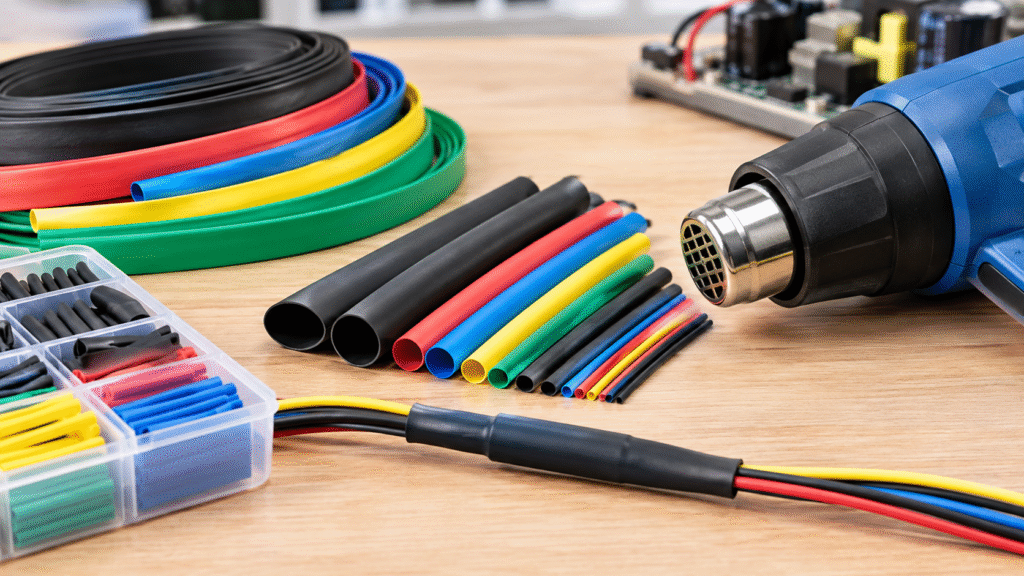
Selecting the correct heat shrink sleeve sizes is essential for creating clean, safe, and long-lasting electrical insulation. As a direct manufacturer and supplier at WANDU, we produce heat shrink cable sleeve sizes ranging from sub-millimeter micro tubing for precision electronics to massive, heavy-duty sleeves designed for industrial busbars and utility cables.
Understanding Standard Heat Shrink Tubing Sizes
Heat shrink tubing sizes are always defined by the inside diameter (ID) of the circular sleeve, not its flat width or outer diameter.
Expanded Inside Diameter (Expanded ID): The minimum internal opening of the tube as supplied from the factory before any heat is applied. This must slide easily over your wire, terminal, or connector.
Recovered Inside Diameter (Recovered ID): The maximum internal opening of the tube after it has been fully heated and allowed to shrink freely. This must be smaller than the underlying substrate to ensure a tight, secure fit.
Imperial vs. Metric Sizing Ranges
Heat shrink tubing dimensions are classified using both imperial fractional inches and metric millimeters across three main categories:
Micro/Miniature Sizes (3/64″ to 1/16″ / ~0.5 mm to 2.0 mm): Ideal for fiber optics, delicate sensors, PCB leads, and micro-electronics.
Standard/Mid-Range Sizes (3/32″ to 1″ / 2.5 mm to 25.4 mm): The industry workhorse sizes used for automotive harnesses, control panels, appliances, and general wire splicing.
Heavy-Duty/Large Sizes (1-1/4″ to 6″+ / 30 mm to 150+ mm): Engineered for high-voltage power cables, battery lugs, conduit sealing, and industrial busbar insulation.
Nominal Size (Inches)
Metric Equivalent (Expanded ID)
Typical Recovered ID (2:1 Ratio)
Primary Application Focus
3/64″
~1.2 mm
0.6 mm
Precision sensors, micro-wiring
1/16″
~1.6 mm
0.8 mm
Small gauge electronic leads
3/32″
~2.4 mm
1.2 mm
Signal wires, component leads
1/8″
~3.2 mm
1.6 mm
Standard AWG wire splices
3/16″
~4.8 mm
2.4 mm
Automotive wire repairs
1/4″
~6.4 mm
3.2 mm
Multi-conductor bundling
3/8″
~9.5 mm
4.8 mm
Cable jacket repair, terminals
1/2″
~12.7 mm
6.4 mm
Grounding straps, battery cables
3/4″
~19.1 mm
9.5 mm
Heavy power cables
1″
~25.4 mm
12.7 mm
Large connectors, wire bundles
1-1/2″ to 2″
~38.1 mm to 50.8 mm
19.0 mm to 25.4 mm
Industrial cables, harness branching
3″ to 6″+
~76.2 mm to 150.0+ mm
38.1 mm to 75.0+ mm
Busbars, large utility conduits
Heat Shrink Sizing by Shrink Ratio
When selecting heat shrink tubing, the shrink ratio dictates both the original expanded inside diameter (ID) and the final recovered inside diameter (ID). Choosing the right ratio ensures the sleeve slides easily over bulky components while still gripping the underlying wire tightly.
2:1 Standard Shrink Ratio: Everyday Wiring Protection
A 2:1 shrink ratio reduces the tube to exactly 50% of its supplied expanded diameter. This is the global industrial standard for single-wall polyolefin tubing.
Typical Size Range: 0.5 mm (3/64″) up to 150 mm (6″) expanded ID.
Best Applications: Straight wire splices, low-voltage electrical insulation, wire bundling, color-coding, and basic mechanical strain relief.
Sizing Rule: Best suited for uniform cables and wire harnesses where connector ends are not significantly thicker than the cable jacket.
3:1 Shrink Ratio: Dual-Wall Sizing for Irregular Splices
A 3:1 dual wall heat shrink shrinks to one-third (33%) of its pre-shrunk size. We manufacture these with an inner hot-melt adhesive layer that melts during recovery to form a watertight seal.
Typical Size Range: 3.0 mm (1/8″) up to 40 mm (1-1/2″) expanded ID.
Best Applications: Automotive harnesses, marine wiring, inline step-down wire transitions, and underground cable joints.
Sizing Advantage: Bridges moderate diameter variations between different AWG wire splices without leaving loose gaps.
4:1 and 6:1 High-Expansion Ratios: Large Connectors and Transitions
High-expansion ratios provide maximum clearance during installation, recovering tightly over drastically smaller cable cores.
4:1 Adhesive Lined Tubing: Shrinks to 25% of its expanded diameter. Ideal for fitting over bulky terminals, multiconductor breakouts, and D-sub connectors without disassembling end fittings.
6:1 Ultra-High Expansion Tubing: Shrinks to approximately 16% of its starting size. Engineered specifically for extreme transitions, such as large battery lug-to-cable joints, heavy-duty industrial harnesses, and irregularly shaped components.
Heat Shrink Tubing Size Chart and AWG Reference
Matching tubing sizes to standard wire gauges ensures clean insulation and a solid mechanical hold. When selecting from our shrink heat tube selection, cross-referencing imperial fractional sizes with metric inside diameters and American Wire Gauge (AWG) standards saves time on the line.
Quick Reference: Imperial, Metric, and AWG Sizing
Here is a standard reference table comparing common expanded inside diameters, metric equivalents, and typical single-conductor AWG wire fits:
Imperial Size (Expanded ID)
Metric Size (Expanded ID)
Common 2:1 Recovered ID
Recommended AWG Wire Range
3/64″
~1.2 mm
0.6 mm
28 – 30 AWG
1/16″
~1.6 mm
0.8 mm
24 – 26 AWG
3/32″
~2.4 mm
1.2 mm
20 – 22 AWG
1/8″
~3.2 mm
1.6 mm
16 – 18 AWG
3/16″
~4.8 mm
2.4 mm
12 – 14 AWG
1/4″
~6.4 mm
3.2 mm
8 – 10 AWG
3/8″
~9.5 mm
4.8 mm
4 – 6 AWG
1/2″
~12.7 mm
6.4 mm
2 – 4 AWG
3/4″
~19.1 mm
9.5 mm
1/0 – 2/0 AWG
1″
~25.4 mm
12.7 mm
3/0 – 4/0 AWG
1-1/2″
~38.1 mm
19.0 mm
Multi-cable harnesses / Large lugs
2″ to 6″+
50.8 mm to 150+ mm
25.4 mm to 75+ mm
Heavy industrial feeders & busbars
Note: Bundled harnesses, thick insulation types (like cross-linked polyolefin or silicone), and solder joints will increase the total outer diameter, so always measure the finished outside diameter of your assembly before sizing.
Recovered Wall Thickness Variations
Beyond diameter, recovered wall thickness determines how well the tubing withstands physical abuse, moisture, and high voltage:
Thin-Wall Tubing: The industry standard for general low-voltage electronics, harness bundling, and light strain relief. Highly flexible and shrinks quickly without adding bulk.
Medium-Wall Tubing: Designed for increased mechanical toughness and outdoor exposure. Commonly used for low-voltage power connections and automotive underbody wiring.
Heavy-Wall Tubing: Features a rigid, robust barrier built for extreme abrasion, direct burial, and harsh industrial environments. Often paired with a factory-applied hot-melt adhesive inner layer to form a waterproof barrier against moisture ingress.
How to Choose and Measure the Right Size Heat Shrink
Choosing the correct heat shrink tubing sizes comes down to getting accurate measurements of your cable assembly and matching them to the right shrink ratio. If the sleeve is too small, it will not slide over your terminals; if it is too large, it will not recover tightly enough to seal or insulate.
Measuring Maximum vs. Minimum Diameters
Before picking your tubing, take two critical caliper measurements: Maximum Diameter (Expanded ID Target): Measure the widest point the tubing must slide over, such as a terminal lug, connector body, or splice junction. Your chosen tubing’s expanded inside diameter must be larger than this dimension. Minimum Diameter (Recovered ID Target): Measure the narrowest section where the tubing must form a tight seal, usually the underlying cable jacket or wire insulation. The fully recovered inside diameter must be smaller than this dimension.
The 80/20 Sizing Rule
To get a tight, reliable fit without overstressing the material, we recommend following the industry-standard 80/20 Rule:
Upper Limit (80% Rule): The object’s largest point should not exceed 80% of the tubing’s minimum expanded ID. This gives you roughly a 20% clearance margin so the sleeve slips on easily.
Lower Limit (20% Rule): The object’s smallest point should be at least 20% larger than the tubing’s maximum fully recovered ID. This guarantees that the tube contracts firmly onto the substrate rather than hanging loose at its physical shrink limit.
Sizing Parameter
Target Measurement
Recommended Tubing Dimension
Connector / Splice (Max OD)
8.0 mm
Expanded ID ≥ 10.0 mm
Cable Jacket (Min OD)
4.0 mm
Recovered ID ≤ 3.2 mm
Ideal Selection
4.0 mm to 8.0 mm range
3:1 Ratio Tubing (9.0 mm / 3.0 mm ID)
Accounting for Longitudinal Shrinkage
Heat shrink tubing contracts along its length as it shrinks in diameter. This effect, known as longitudinal shrinkage, typically causes a 5% to 10% reduction in length for standard single-wall polyolefin tubing, and up to 15% for high-ratio dual-wall tubing.
Always cut your tubing roughly 10% to 15% longer than the target coverage area to prevent exposed wiring at the ends after heating.
Sizing for Adhesive-Lined vs. Single-Wall Tubing
Single-Wall Polyolefin: Best suited for simple electrical insulation, mechanical abrasion resistance, and wire bundling where the diameter transition is uniform.
Dual-Wall (Adhesive-Lined): Contains an inner thermoplastic meltable adhesive layer that flows during heating to create a moisture-proof, environmental seal. When calculating sizes for dual-wall tubing, account for the adhesive layer thickness after recovery to ensure the inner wall fully seals around wire gaps without displacing the sleeve.
Packaging Sizes and Heat Shrink Length Options
When asking what size does heat shrink tubing come in, diameter is only half the equation—length and packaging format determine how efficiently you can use it in production or field repairs. We manufacture and supply heat shrink tubing in several standard packaging formats to fit everything from high-speed manufacturing lines to on-the-go maintenance.
Pre-Cut Tube Lengths
Pre-cut pieces eliminate manual trimming on the assembly line, saving labor time and ensuring uniform insulation every time: Short Cut Pieces (2-inch & 6-inch): Ideal for standard terminal lugs, wire splices, and inline component sealing. 4-Foot Sticks (48 inches / 1.22 m): Standard straight lengths for medium-run projects, busbar insulation, and custom workshop cutting.
Continuous Bulk Spools and Mini-Reels
For automated wire-processing equipment or custom-length cuts, continuous reels minimize material waste: Mini-Reels (25 ft to 100 ft): Compact dispensers designed for field service technicians, maintenance kits, and repair shops. Bulk Industrial Spools (250 ft to 1,000+ ft): High-volume continuous lengths tailored for harness manufacturing, frequently integrated alongside solutions for automotive wiring harness and component fixation.
Multi-Size Assortment Kits
Assortment packs organize pre-cut sleeves into compartmentalized cases for quick identification: Diameter Mix: Includes popular diameters ranging from 1/16″ (1.5 mm) up to 1/2″ (12.7 mm). Color Variety: Mixed bags featuring black, red, blue, yellow, green, and clear for color coding and polarity marking.
Frequently Asked Questions About Heat Shrink Sizes
What size heat shrink do I need for standard 12 AWG or 14 AWG wire?
For single 12 AWG or 14 AWG conductors, standard 3/16″ (4.8 mm) or 1/4″ (6.4 mm) tubing with a 2:1 or 3:1 ratio is ideal. Single wire jacket protection: 3/16″ (4.8 mm) 2:1 single-wall tubing. Inline splices & terminals: 1/4″ (6.4 mm) 3:1 adhesive-lined tubing to bridge the thicker solder/crimp joint down to the wire insulation.
What happens if heat shrink tubing is too big or too small?
Too small: The sleeve will not slide over terminals, connectors, or irregular splice points during assembly, causing split sleeves or stuck components.
Too big: The tube will reach its maximum recovered inside diameter before making full contact with the wire jacket, leaving gaps, loose mechanical hold, and zero moisture sealing.
Can you shrink heat shrink tubing twice if it is too loose?
No. Once heat shrink reaches its maximum recovery diameter, reheating will not make it shrink further. Understanding how heat shrink works comes down to cross-linked polymer memory—the material only recovers to its factory-engineered recovered ID. If the fit remains loose, replace it with a smaller diameter or a higher shrink ratio (such as 3:1 or 4:1).
How do you convert flat-lay width into round diameter?
When sizing large-diameter spools or continuous tubing shipped flat, use the standard flat-width to round diameter formula:
Example: A tube with a flat-lay width of 31.4 mm equals an expanded inside diameter of 20 mm (31.4 × 2 \div 3.1416).
Does heat shrink get shorter in length when it shrinks?
Yes. Alongside radial contraction, all heat shrink experiences longitudinal shrinkage. Standard single-wall polyolefin tubing typically shrinks 5% to 10% in length during recovery, while heavy-wall and dual-wall types may contract up to 15%. When cutting lengths, add an extra 10% margin and follow the right techniques on how to shrink heat shrink sleeves to ensure complete coverage over the splice.
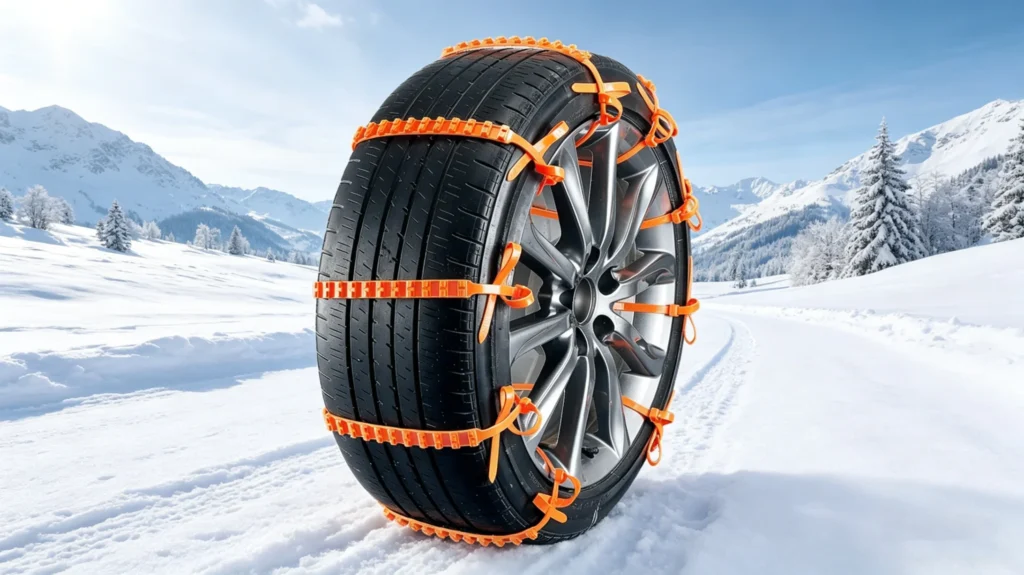
What Are Plastic Zip Tie Snow Chains? Definition and Key Design Features Plastic zip ties for snow chains are temporary, emergency traction devices designed to help vehicles regain grip in slippery conditions. Unlike traditional wraps, these snow tire zip ties consist of individual, heavy-duty plastic straps featuring integrated cleats or anti-skid studs. They are designed […]
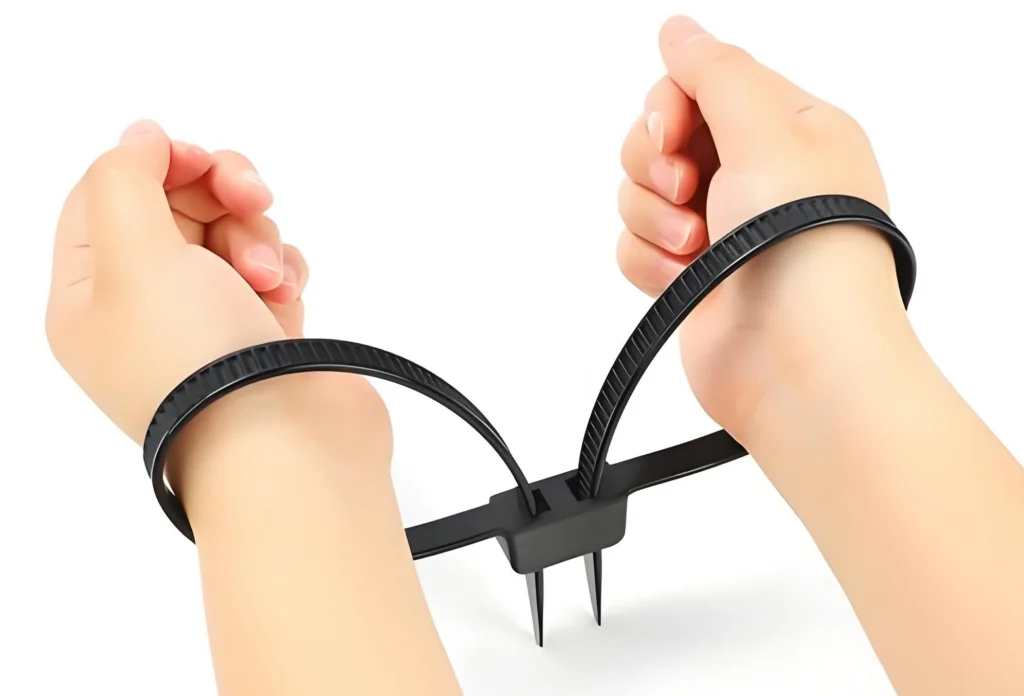
You might already know that industrial cable ties are engineered to be virtually unbreakable… But what happens when you urgently need to know how to safely remove cable tie handcuffs? Whether you are dealing with a survival emergency, removing makeshift restraints, or simply trying to avoid a dangerous injury, knowing the proper escape technique is […]
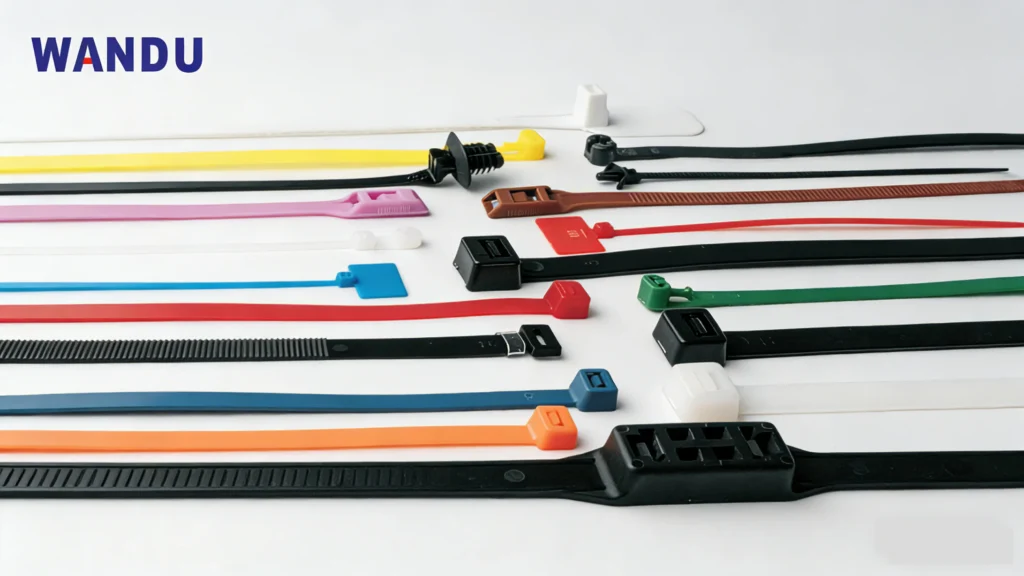
Where to Buy Nylon Zip Ties Finding the right nylon zip ties requires balancing convenience with specific project requirements. Whether you are managing home theater cables or securing industrial equipment, sourcing from reputable suppliers ensures you receive high-quality nylon cable ties with reliable tensile strength. Top Online Retailers and Marketplaces For maximum variety and competitive […]
We use cookies to enhance your browsing experience, serve personalised ads or content, and analyse our traffic. By clicking "Accept All", you consent to our use of cookies.
Looking For High Quality Nylon Cable Ties At A Great Price?
Order now to experience cost-effective cable tie products that provide convenience and protection for your work and life.

 EN
EN  AR
AR  ES
ES  PT
PT  FR
FR  RU
RU  DE
DE  KO
KO  JA
JA  IT
IT