Spiral cable wrap—commonly known as a spiral wrapping band—is an expandable, flexible protective sleeve designed to organize and shield multiple wires into a unified bundle. Engineered from durable polymers such as Polyethylene (PE) and Low-Density Polyethylene (LDPE), this wiring accessory provides an adaptable solution for harnessing cables across industrial machinery, electrical enclosures, and commercial installations.
How Spiral Wrap Works
The continuous spiral-cut profile allows the band to expand and contract smoothly around varying cable bundle diameters. When applied, its natural elastic retention applies uniform grip around the cables, holding them securely without causing mechanical stress.
Expandable Diameter: Stretches across a broad bundling range (e.g., standard sizes like SWB-06 through SWB-30) to accommodate varying wire counts.
Continuous Cable Breakouts: The spiral gaps allow individual wires or sub-harnesses to exit at any point along the entire run without requiring cuts or specialized junction boxes.
Flexible Retention: Delivers secure bundle retention while retaining full flexibility for dynamic cable assemblies and moving joints.
Key Benefits for Cable Management and Protection
Using industrial spiral wrapping bands protects electrical integrity and optimizes wire management across demanding environments:
Abrasion and Edge Protection: Shields wire insulation from friction, sharp sheet metal edges, vibration, and general mechanical wear.
High Reusability: The resilient material permits frequent unwinding and re-wrapping for quick retrofits, line additions, and system maintenance without loss of holding force.
Enhanced Organization: Eliminates messy wire tangles, streamlining inspection, tracing, and routing inside control panels.
Environmental Resistance: Delivers high tensile strength, chemical resistance, and broad operating temperature endurance for industrial applications.
Feature
Spiral Cable Wrap Advantage
Material Flexibility
Expands to fit multi-diameter wire groups effortlessly
Routing Flexibility
Free wire breakout at any interval along the bundle
Maintenance
100% reusable and simple to adjust
Mechanical Defense
Durable barrier against impact, abrasion, and pinching
Common Materials Used for Spiral Cable Wrap
Selecting the right spiral wrap material directly impacts the lifespan, flexibility, and safety of your wire assemblies. At WANDU, we manufacture several distinct material grades to ensure optimal protection across diverse operating environments.
Polyethylene (PE) and Polypropylene (PP)
Polyethylene is the most widely used polymer for general wire bundling and cable protection. Available in low-density polyethylene (LDPE) and high-density variants, polyethylene spiral cable wrap delivers a balance of flexibility, high tensile strength, and cost-efficiency. It works reliably across standard commercial, residential, and panel-building projects. For engineers planning a project layout, understanding what is spiral wrap for cables and how PE performs helps in selecting the ideal wall thickness and diameter.
Key features: High elasticity, lightweight structure, excellent chemical resistance, and smooth breakout routing.
Standard options: Natural/white for indoor setups and UV-resistant black for outdoor installations.
Nylon (Polyamide) for High Wear Resistance
When cable bundles face continuous friction, dynamic movement, or mechanical strain, nylon spiral wrap provides enhanced protection. Polyamide offers exceptional abrasion resistance, making it suitable for robotic arms, automotive harnesses, and heavy automation machinery. It also exhibits self-extinguishing and low-smoke properties for stricter industrial safety standards.
PTFE (Teflon) for High-Temperature Applications
For extreme operating environments, PTFE spiral wrap delivers high heat resistance and broad chemical inertness. It maintains its structural integrity without degrading in high-heat industrial furnaces, engine bays, or chemical processing plants where standard plastic spiral wrap cannot survive.
How to Choose the Right Spiral Wrap
Selecting the correct spiral cable wrap ensures your wire harness stays secure, flexible, and fully protected against mechanical abrasion. Choosing the wrong size leads to loose wires or excessive tension on the insulation, while picking the wrong material compromises durability in demanding environments.
Measuring Bundle Diameter
Before installing plastic spiral wrap, you need an accurate measurement of your cable group:
Gather the Cables: Pull all wires together into a tight, circular cross-section.
Measure Outer Diameter (OD): Use a caliper or a flexible measuring tape around the thickest section of the bundle.
Match the Expansion Range: Choose a spiral wrap size where your bundle diameter falls comfortably within the recommended bundling range.
The table below outlines standard industrial spiral cable wrap sizes to help you match your bundle diameter:
Model / Size
Nominal OD (mm)
Recommended Bundle Range (mm)
Primary Application
SWB-06
6.0
4.0 – 50.0
Small sensor leads, control wiring
SWB-08
8.0
6.0 – 60.0
Office desks, light electrical panels
SWB-10
10.0
7.5 – 60.0
General industrial wire harnesses
SWB-12
12.0
9.0 – 65.0
Automation machinery, cabinet routing
SWB-15
15.0
12.0 – 75.0
Heavy power cable bundles
SWB-19 / SWB-24
19.0 – 24.0
15.0 – 100.0+
Industrial robotics, multi-cable runs
Selecting the Correct Material and Flexibility
Matching the wrap material to your operating environment ensures long-term retention and protection:
Standard Polyethylene (PE / LDPE): The industry standard for indoor control panels, office electronics, and general machinery. Polyethylene spiral wrap delivers optimal elasticity, high tensile strength, and effortless breakout routing.
UV-Resistant Black PE: Ideal for outdoor equipment and open-air industrial enclosures. Just as with learning how to choose the best outdoor zip ties, using UV-stabilized black polyethylene prevents premature embrittlement and cracking caused by prolonged sunlight exposure.
Flexibility vs. Wall Thickness: Standard wall profiles provide continuous flex for dynamic applications like robotic arms or door hinges, while thicker profiles deliver heavy-duty resistance against sharp metal chassis edges.
Step-by-Step Guide: How to Install Spiral Cable Wrap
Learning how to use spiral cable wrap properly ensures your wire harnesses stay organized, protected from abrasion, and clean in any setup. Follow these practical steps to install spiral wrap quickly and securely.
Step 1: Gather and Organize Your Cables
Start by laying out all the wires and cables you intend to bundle. Straighten them out to eliminate tangles, twists, and uneven slack. Aligning your cables parallel to one another ensures a uniform bundle diameter along the entire run. If you are managing a large or heavy wire group, you can temporarily secure the bundle at intervals—understanding what’s the difference between cable ties and zip ties can help you choose a quick holding strap before you begin your permanent wrap.
Step 2: Measure and Cut the Spiral Wrap to Length
Measure the length of the cable section you need to protect. Keep in mind that as the spiral wrap expands over a thicker bundle, its overall length slightly decreases due to the expanded pitch.
Measure the run: Determine the total span from the starting point to the termination point.
Add extra allowance: Add roughly 5% to 10% to your measured length for large-diameter harnesses.
Make a clean cut: Use scissors, utility shears, or a cutting tool to make a clean, straight cut across the plastic spiral wrap tubing.
Step 3: Begin Wrapping Around the Cable Bundle
Anchor the top edge of the spiral wrapping band at your starting point:
Open the leading spiral loop and slip it over the grouped cables.
Hold the starting end firmly against the bundle with one hand.
With your other hand, wind the spiral band clockwise around the wires.
Advance forward along the harness, keeping the tension snug so the wrap hugs the bundle firmly without sliding.
Step 4: Create Cable Breakouts Where Needed
One of the primary advantages of polyethylene spiral cable wrap is the ability to route individual wires out of the main run without cutting the wrap:
Identify the exact location where a secondary wire or connector needs to branch off.
Guide the specific wire out through the natural opening between two spiral coils.
Continue wrapping the remaining wires along the main trunk.
Step 5: Secure and Finish the Ends
Wind the spiral wrap all the way to the end of the wire bundle. Ensure the final coil sits flat and flush against the harness to prevent snagging during movement or routine maintenance. Once completed, your cables will have durable, flexible protection against mechanical wear while maintaining an organized, professional appearance.
Pro Tips for Effective Spiral Cable Wrapping
Getting a clean, professional finish with spiral wrap cable comes down to tension and technique. When installed properly, your cable harness remains fully protected, highly organized, and ready for long-term industrial or commercial use.
Maintaining Proper Tension and Spacing
The pitch—or the spacing between each spiral turn—controls both bundle flexibility and protective coverage:
Keep Spacing Consistent: Maintain an even gap between spirals across the entire bundle. A tighter wrap provides maximum resistance against abrasion, while wider gaps offer higher flexibility around tight corners.
Avoid Over-Stretching: Pull the plastic spiral wire wrap firmly enough to grip the wires without over-stretching the material, which can reduce elastic retention.
Allow for Heat Dissipation: When bundling power-carrying lines, leave slight spacing between turns to prevent heat buildup, much like assessing heat resistance and material properties in enclosed electrical assemblies.
Reusing and Adjusting Spiral Wrap for Cable Changes
A primary benefit of our polyethylene spiral wrap is its full reusability, making modifications simple and cost-effective:
Fast Retrofitting: To add or remove a wire, simply unwind the spiral section by hand to the required point, update the line, and twist it back over the bundle.
Strong Shape Memory: High-quality spiral wrapping bands retain their shape and clamping force after repeated installation and removal cycles.
Zero-Waste Cable Management: Unlike standard ties that must be cut and thrown away during maintenance, spiral wrap can be removed completely and reused across different projects.
Common Applications for Spiral Cable Wrap
Knowing how to use spiral cable wrap across different environments helps you protect critical lines and streamline routine maintenance. From high-density commercial setups to rugged manufacturing floors, flexible spiral wrap for wires provides dependable abrasion resistance and easy routing.
Home and Office Electronics Management
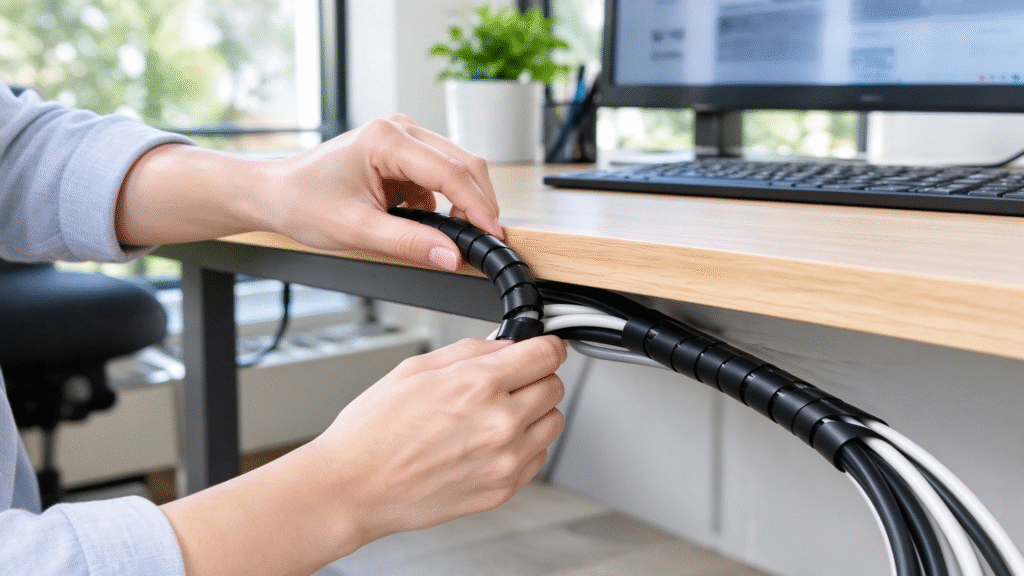
In office workstations, server racks, and studio desks, loose cables quickly create clutter and increase tripping hazards. Applying a plastic spiral cable wrap bundles power cables, monitor leads, and network lines into one clean harness.
Clean Routing: Keeps multiple power cords neatly grouped while allowing individual lines to exit right at the device.
Surface Anchoring: You can easily combine spiral-wrapped bundles with electrical cable clips to secure cables along baseboards or underneath work surfaces.
Tangle Prevention: Stops excess slack from tangling behind PC towers and audio-visual equipment.
Automotive, Robotics, and E-Bike Wiring
Mobile and articulated systems experience constant vibration, flexing, and mechanical friction. Using industrial-grade spiral wrapping bands prevents wire insulation from rubbing against sharp chassis edges or dynamic pivot points.
Robotic Arms: Protects moving sensor cables and pneumatic tubing without restricting range of motion.
Automotive Harnesses: Routes primary harnesses through engine bays and undercarriages while enabling breakout connections for lighting and sensors. For maximum stability, we often recommend pairing spiral wrap with nylon cable ties to optimize automotive wiring harness mounting points along structural frames.
E-Bikes and Scooters: Consolidates throttle, brake, and display wires along the handlebars and frame, delivering a clean profile that resists weather exposure.
Industrial Machinery and Electrical Enclosures
Inside automated machinery and control cabinets, technicians must keep high-voltage power feeds and low-voltage signal lines cleanly routed yet accessible.
Control Panels & PLC Cabinets: Groups jumper wires and terminal runs between DIN rails and door panels, accommodating repeated door swinging without pinching wires.
Factory Automation Lines: Shields industrial cables from friction, oils, and general workshop wear across conveyor belts and CNC equipment.
Rapid Retrofitting: Allows maintenance crews to quickly insert diagnostic lines or replace faulty leads through the spiral gaps without tearing down the entire wire run.
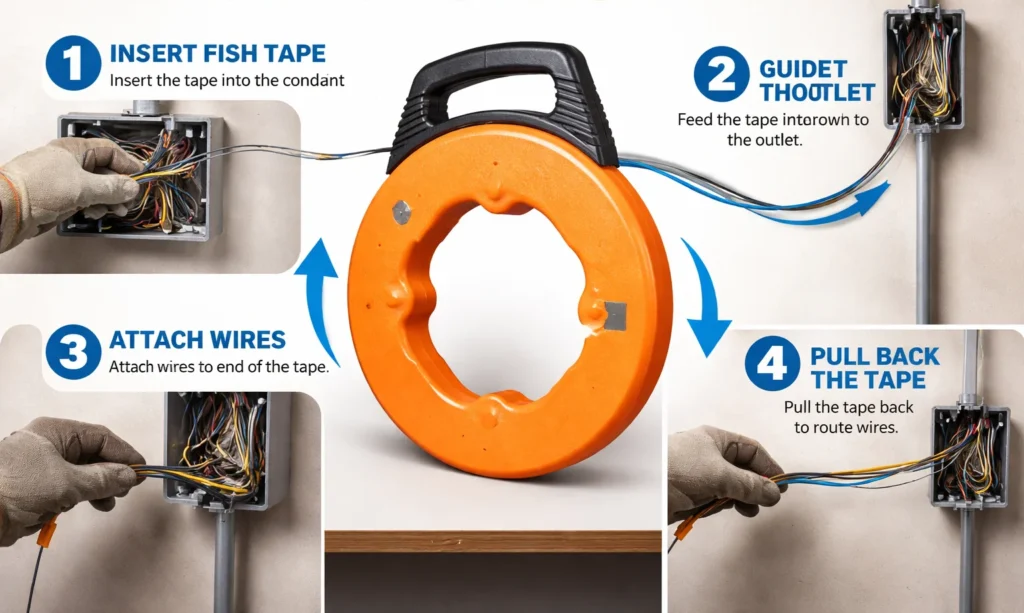
Ultimate Guide: How to Use Fish Tape for Industrial Wiring What is a Fish Tape? A fish tape is an essential electrician’s tool used to route new wiring through walls, electrical conduit, and tight spaces. Understanding how to use fish tape properly ensures safe electrical connections and stable conductivity in industrial and commercial projects. How […]
Introduction to Zip Ties What is a Zip Tie? A zip tie—also universally known as a cable tie, tie wrap, or hose tie—is a robust, one-piece fastener designed to securely bundle cables, wires, and hoses. Operating on a simple yet highly effective ratcheting mechanism, the strap features a series of integrated triangular teeth that engage […]
Understanding Police Zip Ties (Flex-Cuffs) Modern law enforcement agencies rely heavily on specialized plastic zip tie handcuffs—commonly known in the security industry as flex-cuffs—as a crucial alternative to conventional metal restraints. Designed specifically for tactical efficiency and rapid deployment, these high-tensile nylon restraints provide essential operational advantages over traditional steel equipment. How Plastic Zip Ties […]
We use cookies to enhance your browsing experience, serve personalised ads or content, and analyse our traffic. By clicking "Accept All", you consent to our use of cookies.
Looking For High Quality Nylon Cable Ties At A Great Price?
Order now to experience cost-effective cable tie products that provide convenience and protection for your work and life.



 EN
EN  AR
AR  ES
ES  PT
PT  FR
FR  RU
RU  DE
DE  KO
KO  JA
JA  IT
IT  NL
NL