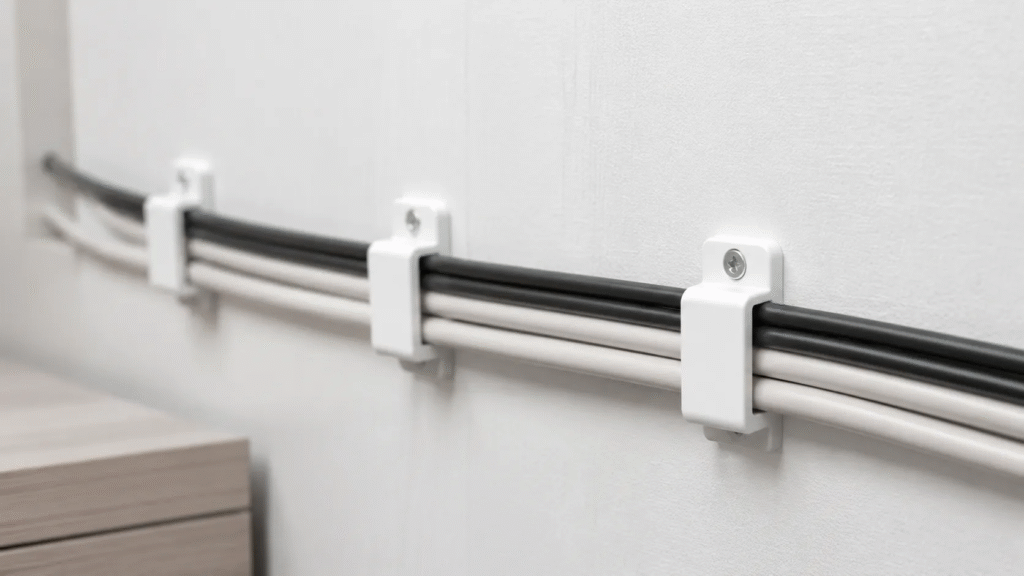
An electrical cable clip is a heavy-duty fastener engineered to anchor, route, and organize wires against fixed surfaces such as walls, joists, equipment chassis, or desks. Manufactured from high-grade materials like durable plastic and steel, these fasteners prevent sagging, reduce tension on connection terminals, and eliminate hazards across commercial, industrial, and residential electrical installations. WANDU delivers precision-engineered cable wire clips built to satisfy demanding global standards for wire management and safety.
The Working Mechanism: How Cable Clips Secure Wires
Cable clips utilize mechanical tension, physical enclosure, or surface adhesion to lock conductors firmly in place without pinching or damaging outer insulation.
Securing Mechanism
Fastening Method
Ideal Surface Application
Mechanical Nail/Screw
Hardened masonry nails or drive screws
Concrete, brick, wood, studs
Pressure-Sensitive Adhesive
High-tack adhesive backing
Smooth metal, glass, plastic, painted walls
Snap-Lock / Spring Clamp
Integrated locking latch or metal spring force
Panel edges, frame channels, solar racks
Key Benefits of Using Cable Clips for Wire Management
Hazard Mitigation: Secures loose cables flush against surfaces to eliminate tripping hazards and accidental snagging.
Cable Longevity: Reduces physical abrasion, strain, and flex fatigue on conductors, significantly extending equipment lifespan.
Simplified Maintenance: Creates clean, logical wiring paths for quick identification and rapid system troubleshooting.
Professional Aesthetics: Delivers a tidy, high-grade finish for complex electrical setups and visible cable runs.
Common Types of Cable Clips
Different wiring jobs require specific mechanical holds, mounting styles, and load capacities. We engineer a range of electrical cable clips designed to keep every wire secure, organized, and compliant.
Nail-In and Screw-Mount Cable Clips
Nail-in and screw-mount options provide permanent, high-vibration resistance for masonry, wood, and drywall framing.
Nail-In Clips: Feature a durable plastic cable clip shell pre-fitted with a hardened steel nail, ideal for running baseboard wiring or residential Romex. Master how to use cable clips with nails to prevent wire crushing during installation.
Screw-Mount Clips: Offer superior load capacity for heavy electrical conduits and outdoor distribution lines anchored into concrete or timber.
Self-Adhesive Cable Clips
Self-adhesive cable clips offer drill-free routing on smooth surfaces like aluminum, glass, finished wood, and plastic enclosures.
Peel-and-Stick Backing: Uses high-tack acrylic adhesive foam for rapid deployment without drilling holes.
Surface Versatility: Ideal for indoor electronics and desk setups. Selecting heavy-duty adhesive cable clips ensures strong bonding on clean interior walls without damaging paint.
P-Clips and Heavy-Duty Clamps
P-clips and R-type cable clips fully enclose wiring looms to prevent chafing in intense industrial environments.
Clip Type
Primary Material
Key Features
Best Used For
Standard P-Clip
Steel / Stainless Steel
360° hold, single-bolt mounting
Control panels & engine bays
Cushioned Clamp
Stainless Steel + EPDM
Vibration damping, corrosion resistance
Solar racks & marine wiring
These robust metal electrical cable clips lock down high-voltage runs where standard plastic mounts fail.
EdgeClips and Adjustable Clips
When drilling or adhesives aren’t an option, specialized mounting profiles keep complex bundles tidy.
EdgeClips: Press directly onto metal or plastic panel edges using integrated steel teeth, making them a top choice for automotive frames and solar panel borders.
Adjustable Cable Clips: Feature a ratcheting ladder design that expands or tightens around growing wire bundles, giving you quick access for future cable maintenance.
Key Materials Used in Cable Clips
Selecting the right material for electrical cable clips ensures long-term hold, weather resistance, and safety across different operating environments.
Plastic and Nylon Cable Clips
Non-conductive and lightweight, a plastic cable clip is the standard choice for everyday residential, commercial, and mild outdoor setups. At WANDU, we use high-grade Nylon 66 to manufacture durable cable wire clips that offer reliable flexibility and wear resistance.
High Dielectric Strength: Safely insulates live wiring without risk of electrical conductivity.
Corrosion Resistance: Completely impervious to rust, moisture, and household cleaning chemicals.
UV Stabilization: Formulated for indoor routing and UV-stabilized for long-term light exposure.
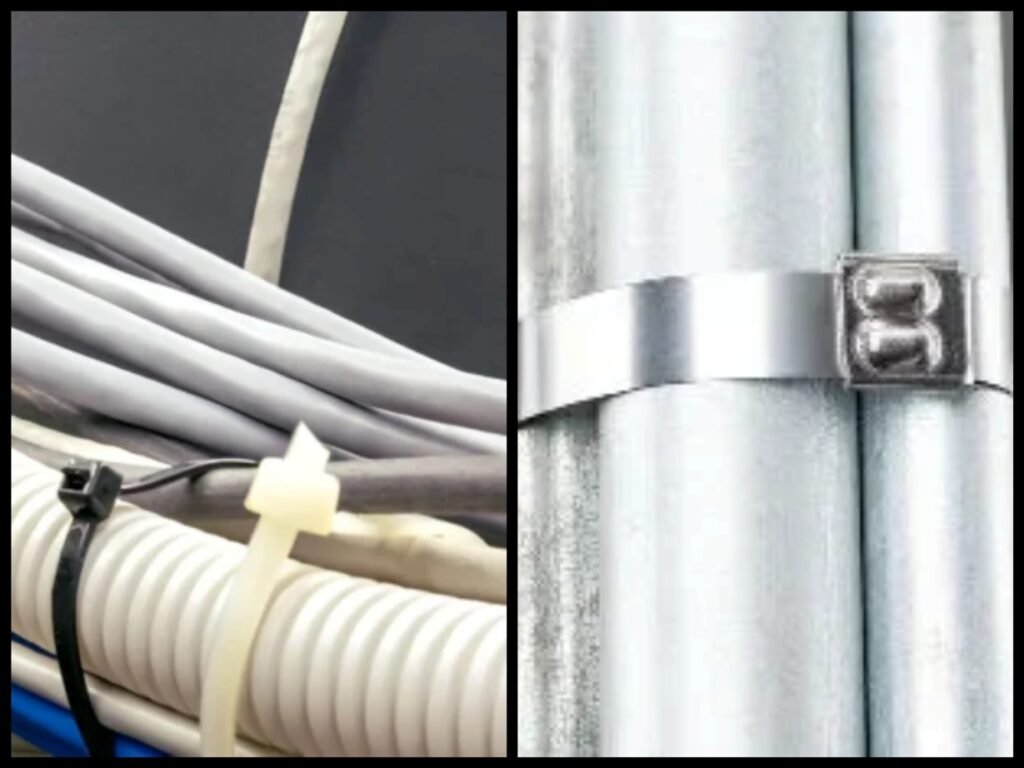
For installations requiring complementary bundling alongside rigid clips, utilizing flexible nylon cable management tools ensures a safe, non-abrasive hold on sensitive wiring networks.
Metal and Stainless Steel Clips
For extreme temperatures, high vibration, and harsh industrial conditions, metal electrical cable clips offer unmatched durability. We engineer stainless steel cable clips (grades 304 and 316) specifically for solar arrays, marine applications, and heavy infrastructure where plastic would degrade.
Extreme Thermal Tolerance: Operates reliably across severe temperature swings from sub-zero cold to extreme industrial heat.
Maximum Tensile Strength: Supports heavy industrial power cables without flexing, sagging, or snapping under load.
Corrosion & Chemical Immunity: Delivers total resistance to saltwater, acids, harsh UV rays, and outdoor weathering.
Every environment presents unique challenges for wire management, from sleek indoor desks to harsh outdoor industrial sites. We design and supply targeted electrical cable clips built to handle specific weight, temperature, and mounting demands.
Home and Office Electronics Management
Indoor spaces require clean aesthetics and damage-free mounting. Keeping power cords, Ethernet lines, and peripheral wires organized prevents trip hazards and maintains a clean workspace.
Workstations & Media Hubs: Self adhesive cable clips stick firmly to smooth wood, glass, and metal, routing power cables behind desks without drilling.
Perimeter Routing: Utilizing adhesive cable clips for wall mounting or a standard plastic cable clip with integrated steel nails keeps long network cables neatly aligned along baseboards.
Dynamic Setups: Adjustable cable clips allow quick wire additions or removals whenever you upgrade your office equipment.
Automotive and Transportation Systems
Vehicular environments demand hardware that withstands constant vibration, fluid exposure, and high engine temperatures.
In high-vibration engine bays and chassis setups, heavy-duty metal cable clips pair with targeted methods to optimize automotive wiring harness and component fixation, keeping critical lines safe from abrasive wear. Rubber-cushioned R type cable clips hold main power harnesses firmly against structural frames while absorbing road shock.
Industrial and Solar Panel Wiring
Outdoor infrastructure and factory floors require maximum durability and weather resistance to prevent costly power downtime.
Solar PV Systems: Outdoor solar arrays utilize high-grade stainless steel cable clips that snap directly onto module frames, securing solar panel wiring without punching holes in the racking.
Factory Machinery: Robust metal electrical cable clips route heavy-gauge power lines along concrete walls and steel beams, protecting cables from mechanical impact and chemical exposure.
How to Choose the Right Cable Clip
Selecting the right electrical cable clips comes down to three main factors: cable dimensions, installation surface, and mechanical load requirements. Choosing the right style keeps wiring secure, compliant, and easy to service over time.
Matching Cable Size, Shape, and Quantity
Always measure the outer diameter (OD) of your wire bundle before purchasing. Using a clip that is too small pinches the conductor insulation, while an oversized clip allows cables to slide and sag.
Round Cables (Coaxial, Power Cords): Standard round nail-in clips or adjustable cable clips provide a tight, uniform fit.
Flat Cables (Ethernet, NM-B Wiring): A flat plastic cable clip profile wraps cleanly around wide jacket profiles without damaging edges.
Multi-Cable Bundles: Adjustable cable clips allow you to route multiple parallel runs through a single mounting anchor without crowding.
Evaluating Mounting Surface and Environment
The mounting surface and ambient exposure dictate whether you should use plastic, steel cable clips, or heavy-duty metal electrical cable clips.
Surface / Location
Recommended Clip Type
Ideal Material
Smooth Drywall / Furniture
Self adhesive cable clips
UV-resistant Nylon / Plastic
Wood Trim / Masonry
Nail-in Cable Clips
Plastic body with steel nail
Sheet Metal / Racks
Metal electrical cable clips
Corrosion-resistant Stainless Steel
Outdoor / Solar Frames
Heavy-Duty Screw Mount Clips
Marine-grade Stainless Steel
For quick, non-destructive indoor setups, adhesive cable clips for wall installations eliminate the need for power tools. For harsh, wet, or extreme-temperature environments, direct-mounted metal cable clips provide permanent retention.
Considering Weight Capacity and Hold Strength
Heavy-gauge power conductors and dense wire runs exert static pull forces. Matching the clip load rating to your application prevents premature detachment.
Light-Duty (< 1 lb / 0.5 kg): Ideal for desk management, home electronics, and network patches using self adhesive cable clips.
Medium-Duty (1–5 lbs / 0.5–2.2 kg): Suitable for residential branch wiring held securely with plastic cable clip fasteners driven into wood studs.
Heavy-Duty (> 5 lbs / 2.2 kg): Requires steel cable clips or metal clamp profiles bolted into structural substrates.
Evaluating pull strength specs—much like reviewing a cable management sizes and strength guide—ensures your installation maintains long-term structural integrity without sagging.
How to Properly Install Cable Clips
Proper installation guarantees your wire management setup remains secure, neat, and safe over the long haul. We recommend following these practical steps to get the strongest hold out of every clip.
Preparing the Mounting Surface for Adhesive Clips
Surface prep is the single most critical step when installing self adhesive cable clips. Without a clean base, the adhesive backing will fail prematurely.
Clean Thoroughly: Wipe the surface with isopropyl alcohol to clear away dust, grease, and moisture. Avoid household cleaners that leave oily residues.
Dry Completely: Allow the mounting area to air dry completely before placing the clip.
Apply Firm Pressure: Press adhesive cable clips for wall or desk applications firmly against the surface for at least 30 seconds.
Allow Cure Time: Wait 24 hours for the adhesive bond to fully set before snapping in heavy wires or applying tension.
Installing Mechanical Fasteners Safely
Mechanical fasteners—such as nail-in, screw-mount, and r type cable clips—provide permanent support for heavy-duty electrical wiring.
Pre-Drill Pilot Holes: When attaching stainless steel cable clips or masonry clips to hardwood, brick, or concrete, always drill a pilot hole first to prevent splitting.
Avoid Over-Tightening: Drive nails or screws in straight until snug. Over-tightening can crush wire insulation or crack a plastic cable clip.
Match Fastener Materials: Use corrosion-resistant screws with metal electrical cable clips to prevent galvanic corrosion in high-moisture environments.
Best Practices for Cable Routing and Tension Control
Smart routing extends the lifespan of both your electrical cable clips and your wiring systems.
Maintain Consistent Spacing: Place clips every 12 to 18 inches along straight runs to prevent sagging and strain.
Leave Room for Expansion: Keep slight slack near tight turns or equipment connection points to avoid tension pulling against terminal blocks.
Combine Accessories for Outdoor Runs: For exposed exterior environments, pair robust steel cable clips with UV-resistant cable ties for outdoor use to secure large bundles along support lines efficiently.
INTRODUCTION: Why Cable Tie Price Matter in 2025 Whether you’re a purchaser, project manager, or individual user, knowing the current cable tie price can help you save money and choose the right product. The price of cable ties is influenced by several factors, such as material, size, packaging requirements, and quantity purchased. In this article, we’ll take you […]
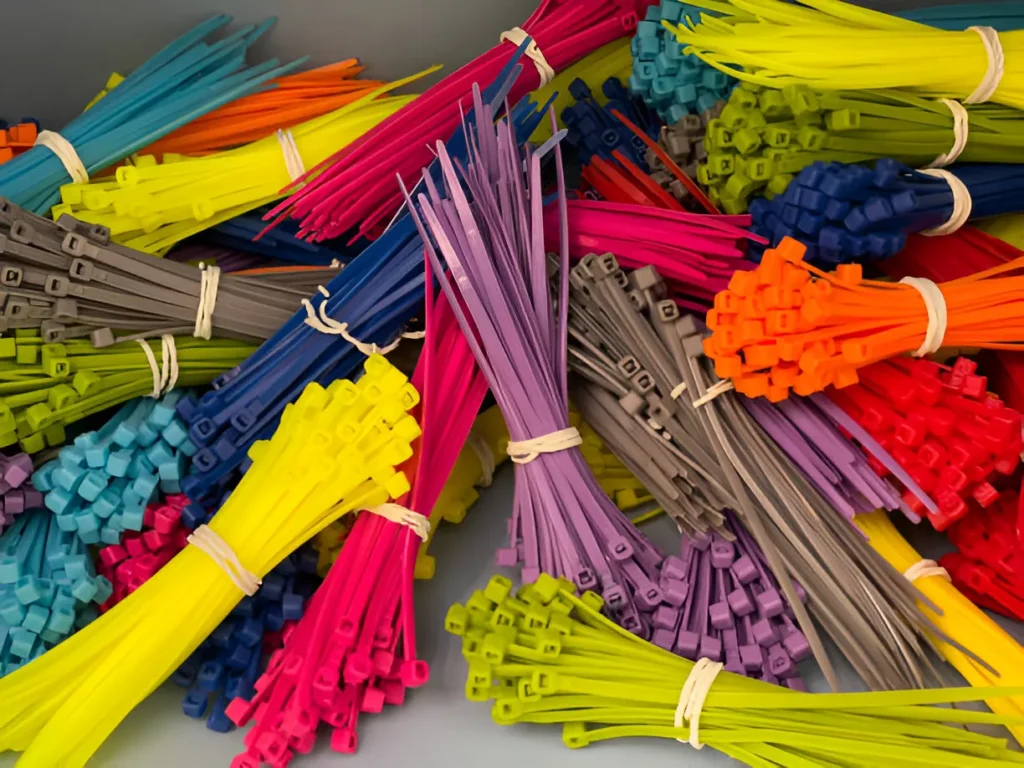
Have you ever struggled with organizing and identifying various cables and wires?Colored cable ties offer a simple yet effective solution to this common problem.By using different colors for specific categories or purposes, colored zip ties can significantly improve organization, efficiency, and safety in both professional and personal settings. Discover how color-coding your cable management can […]
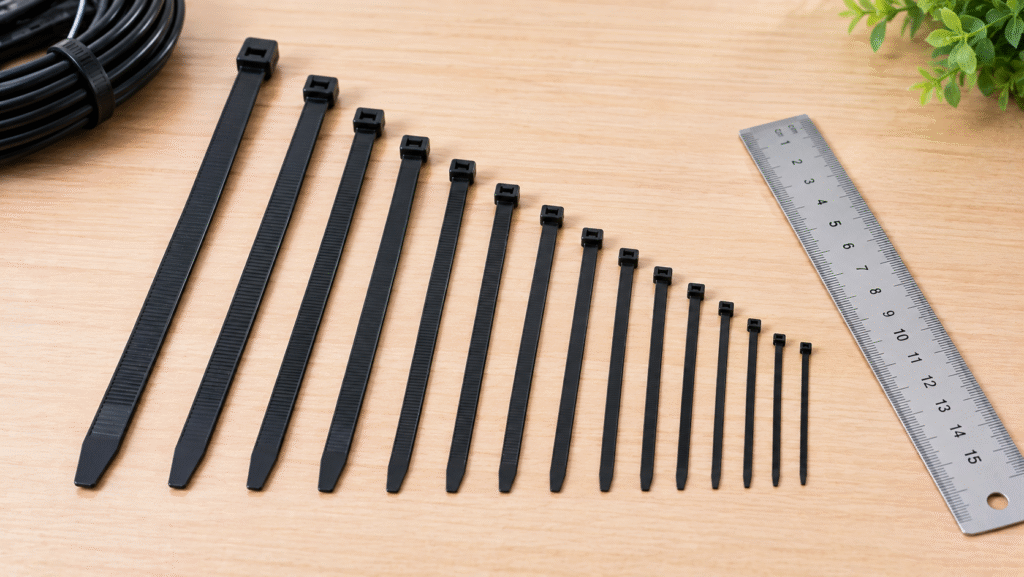
Are All Zip Ties the Same Width? No, zip ties are not all the same width. Cable ties are engineered across a wide dimensional spectrum to handle varying mechanical loads, bundle sizes, and environmental stresses. Widths typically range from 2.5 mm (0.10 inches) for miniature electronics ties up to 12.0 mm (0.47 inches) or wider […]
We use cookies to enhance your browsing experience, serve personalised ads or content, and analyse our traffic. By clicking "Accept All", you consent to our use of cookies.
Looking For High Quality Nylon Cable Ties At A Great Price?
Order now to experience cost-effective cable tie products that provide convenience and protection for your work and life.

 EN
EN  AR
AR  ES
ES  PT
PT  FR
FR  RU
RU  DE
DE  KO
KO  JA
JA  IT
IT  NL
NL  TR
TR