Nylon double loop wire ties—frequently referred to as dual loop cable ties or double loop zip ties—are specialized fastening devices engineered to secure, separate, and route two parallel lines using a single integrated unit. Unlike standard single-strap ties, this configuration creates two distinct holding areas to bundle parallel runs or anchor cabling directly to a structural support without requiring secondary hardware.
At WANDU, we design and manufacture these high-performance wiring accessories to solve complex line-routing challenges across industrial, automotive, and electrical installations worldwide.
Understanding the Dual-Loop Design
The primary innovation of the dual-loop design lies in its ability to manage two bundles simultaneously while maintaining mechanical isolation between them.
Integrated separation: The dual-loop formation acts as a natural standoff, preventing parallel wire lines, hoses or conduits from rubbing against each other.
Dual clamping action: Operators can secure an initial bundle against a frame or support, then anchor a second, independent line within the outer loop.
Reduced installation overhead: Replaces the need to install two separate cable ties or use specialized mounting clips, cutting down assembly steps and clutter.
Vibration resistance: The closed-loop geometry absorbs mechanical movement, ensuring both runs remain stabilized under dynamic operational conditions.
Key Material Properties of Nylon Ties
Industrial-grade double loop cable ties rely on premium Polyamide 66 (PA66) formulation to withstand mechanical stress and environmental exposure.
Property
Specification
Operational benefit
Base polymer
Pure Nylon 66 (PA66)
High yield tensile strength and dimensional stability
Flammability rating
UL94 V-2
Self-extinguishing; minimizes electrical fire hazard
Thermal range
−40 °C to +85 °C (−40 °F to +185 °F)
Maintains grip integrity across extreme cold and engine-bay heat
Chemical resistance
High resistance to oils, greases and salts
Resists degradation in harsh industrial and marine environments
Dielectric strength
Non-conductive electrical insulation
Eliminates short-circuit risk around bare conductors or damaged jackets
By harnessing these engineering properties, PA66 double loop wire ties deliver reliable clamping force, long operational life, and superior line isolation across demanding electrical and mechanical installations.
How Do Double Loop Wire Ties Work?
Understanding how to use nylon double loop wire ties starts with grasping their core mechanical design. Unlike conventional single-strap zip ties, dual loop cable ties allow you to secure two distinct items simultaneously with a single fastener. The design provides a built-in standoff between the two runs, preventing contact, vibration wear, and accidental cross-pinching.
How the Two Loops Share One Locking Head
Our double loop cable ties feature an engineered locking head designed to manage two independent loops using a single integrated pawl system. The sequence runs in three stages.
Primary loop engagement: The tail of the strap wraps around your base bundle or support, threads through the locking head, and engages the internal ratchet teeth.
Secondary loop formation: The remaining length of the strap wraps around the adjacent cable or hose and passes back through the same locking head.
Integrated separation: The locking head comes to rest between the two runs, keeping both bundles firmly positioned without shifting under vibration.
This setup locks both loops securely while eliminating the need to stack multiple single ties on top of each other.
Bundle-Plus-Structure vs Two Parallel Bundles
A major advantage of dual loop cable ties is their versatility across different layout configurations. The two patterns assign different jobs to each loop, and the size calculation differs accordingly.
Configuration
Inner loop holds
Outer loop holds
Typical use
Bundle-plus-structure
The cable bundle
A rigid frame rail, strut, chassis beam or pipe
Suspending a hydraulic hose, pneumatic line or electrical harness along heavy equipment frames
Two parallel bundles
First wire line or fluid tube
Second wire line or fluid tube, at fixed spacing
Running two runs side by side along the same pathway without friction abrasion
In the bundle-plus-structure pattern the tie does structural work, so the outer loop must be sized to the structure. In the parallel pattern the tie only has to hold two bundles apart, and the shared head maintains uniform spacing along the whole run.
Step-by-Step Guide: How to Use Nylon Double Loop Wire Ties
Learning how to use nylon double loop wire ties properly ensures clean routing and protects your lines from rubbing together. Whether you are running parallel cables or mounting a harness against a fixed frame, follow these practical steps for a clean, professional installation.
Step 1: Choose the Correct Size and Tensile Strength
Before installation, match your fastener dimensions to the expected load and bundle diameter. Choosing the right size prevents slippage and structural failure under vibration.
Material check: Ensure high-grade PA66 (Nylon 66) is selected for standard electrical or industrial builds. If your installation involves extreme thermal loads or corrosive chemicals, understanding what is the difference between nylon and metal zip ties will help you decide whether polymer ties or stainless alternatives fit your application best.
Length and width: Common heavy-duty configurations include 500 mm cable tie, 700 mm cable tie, and 900 mm cable tie options, often paired with wide strap profiles such as a 12 mm cable tie or 13 mm cable tie for maximum tensile strength.
Strap length
Strap width
Max bundle dia. per loop
Min. tensile strength
Common application
500 mm / 20″
12 mm
60 mm
230 lbs / 100 kg
Control panel harnesses & light conduit
700 mm / 28″
12 mm
90 mm
230 lbs / 100 kg
Automotive chassis lines & secondary piping
900 mm / 35.5″
13 mm
110 mm
230 lbs / 100 kg
Heavy industrial routing & bulk power lines
The bundle diameter column refers to a single loop. In the bundle-plus-structure pattern the available strap length is split between bundle and structure, so neither loop gets the full figure.
Step 2: Position and Thread the Primary Bundle
Start with the structural anchor or the larger wiring harness.
Wrap the first loop: Route the strap tail around your primary cable group or solid mounting standoff.
Engage the head: Insert the tail through the locking head and pull until the internal ratchet teeth engage.
Pre-tension: Pull the strap snug until the primary bundle is captured securely. Keep the primary loop snug before forming the outer loop — with a shared head, the inner loop cannot be re-adjusted once the outer loop is tensioned.
Step 3: Secure the Secondary Bundle in the Outer Loop
Once your primary harness is seated, use the remaining length to form the second independent loop.
Circle the adjacent line: Pass the strap end around your secondary cable, hydraulic hose, or adjacent tubing.
Feed into the head: Thread the tail back through the same locking head.
Check separation: Verify that the locking head sits between the two loops and physically keeps the two conduits from contacting each other.
Step 4: Tighten and Trim the Excess Strap
Finalize your double loop cable tie installation with proper tension and cutting practices.
Tension both loops: Pull the strap tail to cinch the secondary loop firmly around the run. Ensure both bundles are held securely without pinching wire insulation.
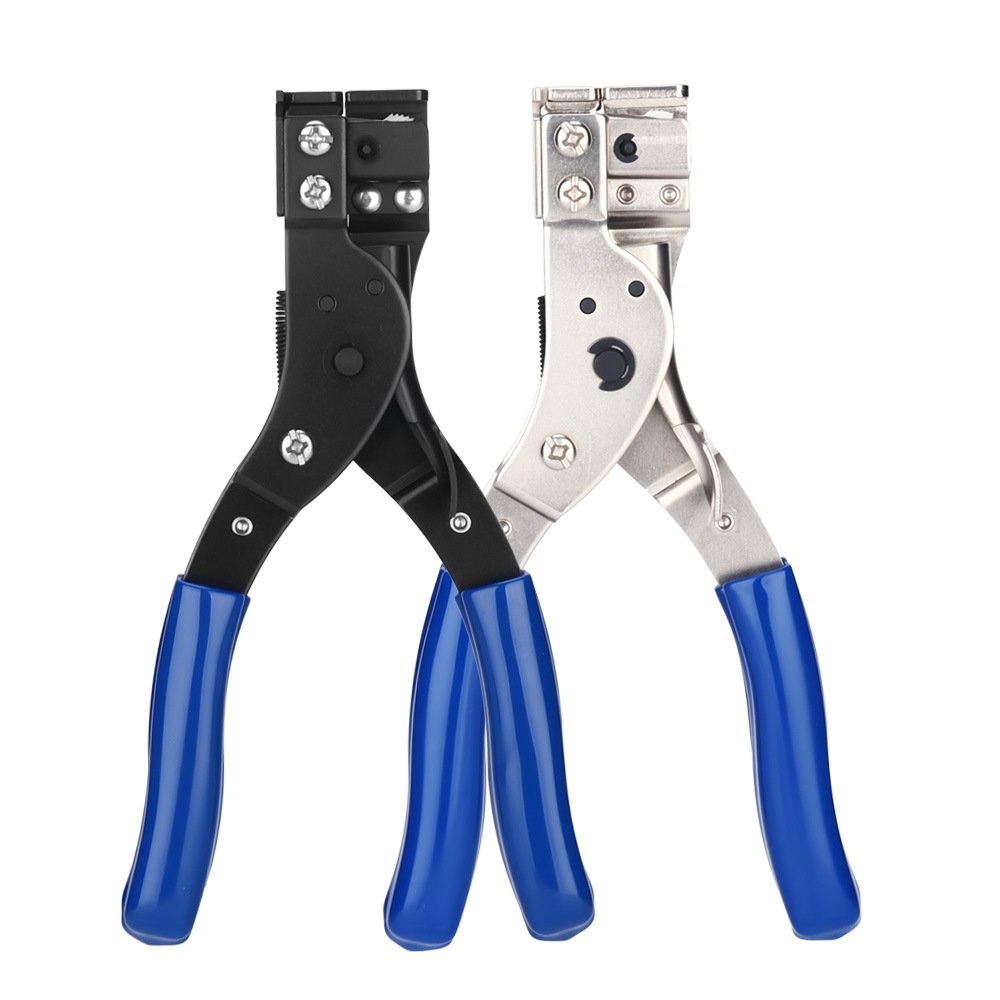
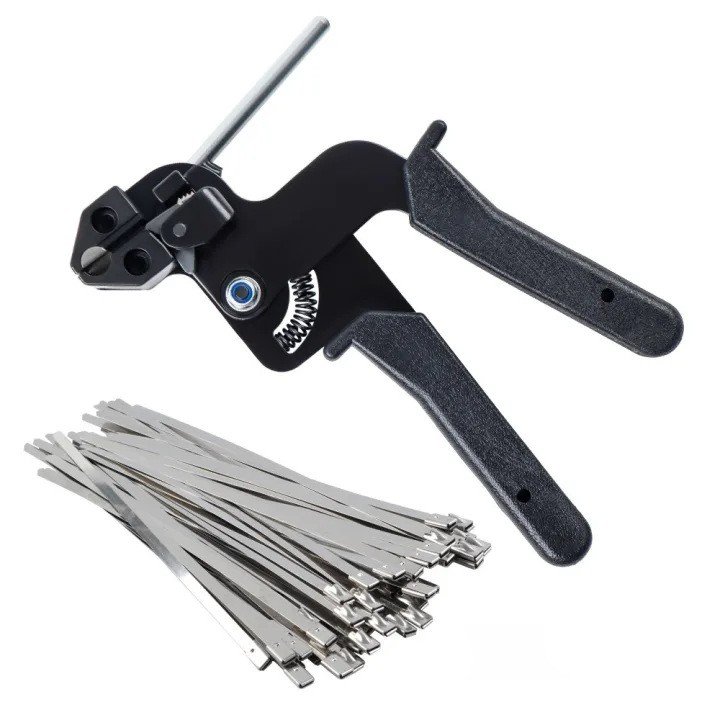
Flush cutting: Use a manual cable tie tensioning tool or flush-cut pliers right against the head. Avoid diagonal wire cutters, which leave jagged nylon edges that can cut technicians during maintenance.
Key Advantages of Using Double Loop Ties
Managing complex wire runs requires fasteners that do more than just pinch lines together. When we look at how to use nylon double loop wire ties efficiently on assembly lines or job sites, the practical benefits go far beyond basic bundling. Standard single-loop fasteners often force installers to stack multiple ties or squeeze delicate lines against rough structural elements. Switching to double loop cable ties solves these field challenges straight away.
Preventing friction and cable abrasion: The head acts as a built-in spacer and the PA66 strap absorbs mechanical movement, so data lines never grind against hydraulic hoses or chassis rails and sheathing is not worn through to bare copper.
Securing two parallel bundles simultaneously: One two-loop tie holds both channels, keeping runs aligned over long distances without uneven sagging or crossed lines.
Saving labor time and reducing clutter: One fastener replaces two conventional ties, lowering fastener consumption and removing daisy-chained ties from tight cabinets.
Preventing Friction and Cable Abrasion
Constant vibration in vehicles, industrial equipment, and outdoor setups causes adjacent lines to rub against each other. Over time, that contact wears through protective sheathing and exposes bare copper. The head acts as a dependable cable tie standoff, so sensitive data lines never grind against rigid hydraulic hoses or rough metal chassis rails.
Securing Two Parallel Bundles Simultaneously
Running dual lines side by side usually requires double the hardware, but a single two-loop cable tie handles both channels with ease. The primary loop can anchor around a structural support strut while the secondary loop locks the working harness into place, keeping runs uniform across long distances.
Choosing proven solutions like our durable nylon cable ties ensures both loops hold their tension without slipping under load.
Saving Labor Time and Reducing Clutter
Efficiency on the shop floor comes down to part counts and installation speed. Using double loop tie wraps streamlines inventory and keeps panel boxes organized: one fastener does the work of two conventional ties, eliminates messy daisy-chained ties inside tight control panels, and lets technicians feed, lock and trim one part instead of managing several.
Common Applications and Uses
Knowing how to use nylon double loop wire ties effectively comes down to understanding where dual-run management matters most. Whenever two lines need to travel the same path without touching or rubbing, double loop cable ties provide a clean, reliable fix across multiple industries.
Automotive and marine harnesses: Primary harness anchored while secondary auxiliary lines run alongside without contact, and fuel or washer lines routed parallel to electrical runs.
Industrial machinery and panels: Power and signal runs held apart inside the same trunking, with new circuits added on retrofit without disassembling existing bundles.
Outdoor piping and agriculture: Drip tubing suspended along trellis wire without crimping flow, heating and sensor cables anchored to steel tubing.
Automotive and Marine Wiring Harnesses
In automotive engine bays and marine hulls, vibration constantly threatens wiring integrity. Dual loop cable ties keep primary harnesses firmly anchored while running secondary auxiliary lines right alongside them. Chassis fastening works seamlessly alongside push mount zip ties to secure dual runs straight along vehicle frames.
Industrial Machinery and Electrical Panels
Inside control cabinets, factory automation equipment, and distribution boards, organization directly impacts safety and maintenance speed. Double loop tie wraps let technicians separate low-voltage communication cables from high-voltage power lines within the same track. Framework organization also complements structured electrical cable clips to keep tight panels neat, serviceable, and code-compliant.
Outdoor Piping and Agricultural Bundling
Agricultural setups and outdoor facilities rely heavily on two-loop cable tie hardware to manage fluid delivery and structural support simultaneously. Drip irrigation lines are suspended directly along high-tensile trellis wire without crimping water flow, greenhouse heating and sensor cables are anchored to structural steel tubing, and parallel runs of hydraulic hoses and pneumatic lines stay organized on heavy field machinery.
Best Practices and Safety Tips
Proper installation ensures that your wire bundles stay secure without risking mechanical failure or conductor fatigue. Here is how we ensure maximum reliability when applying double loop wire ties in demanding environments.
Avoiding over-tightening: Pull snug enough to eliminate movement, but stop before the loop bites into the insulation — crushed jackets cause signal attenuation and, over time, short circuits.
Using a tensioning tool: Preset the pull force and cut the tail flush against the locking head, otherwise jagged nylon edges from side cutters become a cut hazard during maintenance.
Refusing to daisy-chain ties: Choose the correct size from the start rather than linking two shorter ties, which creates an unstable joint with no reliable load rating.
Avoiding Over-Tightening to Protect Wire Insulation
Cinching a tie down too hard is one of the most common mistakes in cable management. Excessive pressure crushes outer cable jackets, causes signal attenuation in data wiring, and can create short circuits over time. When learning how to use nylon double loop wire ties, ensure the locking head rests naturally between the two lines without pinching either side, and inspect the jacketing afterwards. Our practical guide on how to tie cable ties for safety and strength covers how to maintain proper grip while preventing insulation creep.
Using Cable Tie Tensioning Tools for Clean Cuts
Trimming double loop zip ties with standard side cutters often leaves a sharp, jagged edge that poses a cut hazard to technicians working in tight spaces. A dedicated cable tie tensioning tool cuts the tail perfectly flush against the locking head and eliminates dangerous burrs. Tensioning guns also allow you to preset the pull force, delivering identical tension across hundreds of ties without operator fatigue — which matters most on heavy-duty 12 mm or 13 mm ties, where a mechanical tensioner prevents accidental slip-offs that nick adjacent wire sheaths.
Why Tying Two Ties Together Is Not a Load Fix
Daisy-chaining two smaller ties together to span a larger bundle diameter drastically weakens your assembly. Joining ties end-to-end creates an unstable joint, so the assembly has no reliable load rating — the interlocked heads become the weakest point and shear under vibration, with awkward bend angles that fail first under sustained dynamic load. Rather than linking ties, choose the proper size from the start, such as a dedicated 500 mm cable tie, 700 mm cable tie, or 900 mm cable tie designed specifically for your required max bundle diameter and working load.
Frequently Asked Questions
Are Double Loop Ties the Same as Double Head Ties?
While people often use the terms interchangeably, their designs solve different routing challenges.
Feature
Double loop cable ties
Double head cable ties
Locking heads
One central head
Two separate heads on one strap
Loop tension
Both loops tension together with one pull
Each loop tensioned independently
Best for
Two parallel runs at equal tension, or bundle plus structural mounting
Parallel bundles needing different tensions, or a figure-eight layout
Inventory impact
One integrated strap covers both applications
Requires a separate part from the single-head range
Both styles eliminate friction between adjacent lines, but double loop ties streamline inventory by using a single integrated strap. Check our double loop cable ties to see this dual-loop design in detail.
Are Nylon Double Loop Cable Ties Reusable?
Standard nylon double loop zip ties are designed as one-way, permanent fasteners. The internal pawl engages the strap serrations to prevent back-slipping under heavy vibration and dynamic loads.
Standard version (this product): Requires cutting for removal, which guarantees maximum holding strength and prevents accidental release — the correct choice for safety-critical runs, automotive harnesses and permanent installations.
Releasable variant (a separate product): Features an extended pawl tab that can be manually disengaged, for routine maintenance or cable re-routing where the tie is opened repeatedly.
For safety-critical runs, automotive harnesses, and permanent installations, we always recommend single-use, non-releasable ties to prevent tension loss.
Can Double Loop Wire Ties Be Used Outdoors?
Yes, provided you match the material formulation to outdoor exposure conditions.
Standard natural nylon (PA66): Intended primarily for indoor electrical cabinets, climate-controlled machinery and enclosed systems. It carries no UV stabiliser and degrades under direct sunlight.
UV-resistant black nylon (PA66 with carbon black): Engineered for direct sunlight, high UV exposure and outdoor installations; the carbon black stabiliser prevents material embrittlement over time.
Weatherized outdoor grade: For exterior conduits, agricultural piping and outdoor solar arrays, also resisting moisture absorption, road salts, mild acids and wide temperature swings.
Selecting UV-stabilized ties ensures long-term retention when securing exterior conduits, agricultural piping, or outdoor solar arrays.
How Much Weight Can a Double Loop Tie Hold?
The double loop range is rated at 230 lbs (100 kg) minimum tensile strength across all three lengths. Wider industry classifications sit alongside it for comparison.
Tie classification
Approx. width
Min. tensile strength
Typical application
Miniature
2.5 mm – 3.6 mm
18–40 lbs (8–18 kg)
Lightweight wiring harnesses, control lines
Standard
4.8 mm
50 lbs (22 kg)
Commercial electrical wiring, industrial bundling
Heavy-duty
7.6 mm
120 lbs (54 kg)
Industrial hose runs, dual conduit support
Extra heavy-duty
12 mm – 13 mm
175 lbs+ (79 kg+)
Heavy commercial piping, vehicle chassis cables
Double loop range
12 mm – 13 mm
230 lbs (100 kg)
Dual-run routing with structural mounting
About Wandu — Zhejiang Wandu Plastic Co., Ltd. has produced nylon cable ties in Yueqing, Zhejiang, China since 2011. Our ISO 9001 certified factory runs 10 high-speed injection moulding machines and 8 professional cable tie test benches, covering nylon cable ties, stainless steel cable ties, cable clips, cable glands and spiral wrap. Products are CE and RoHS compliant and ship to buyers in 50+ countries. Every technical question below is answered by our own engineering team.
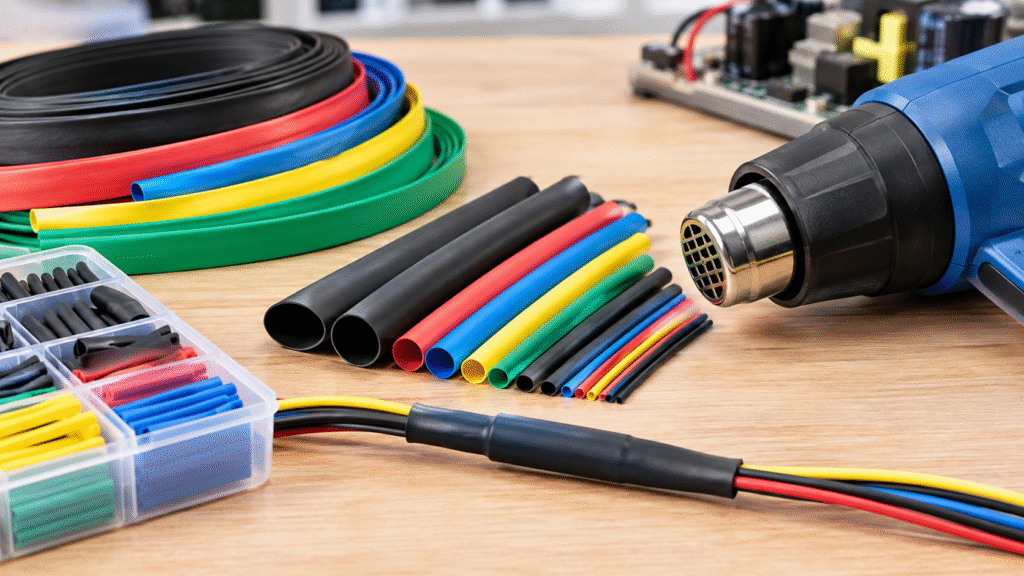
What Size Does Heat Shrink Tubing Come In? Selecting the correct heat shrink sleeve sizes is essential for creating clean, safe, and long-lasting electrical insulation. As a direct manufacturer and supplier at WANDU, we produce heat shrink cable sleeve sizes ranging from sub-millimeter micro tubing for precision electronics to massive, heavy-duty sleeves designed for industrial […]
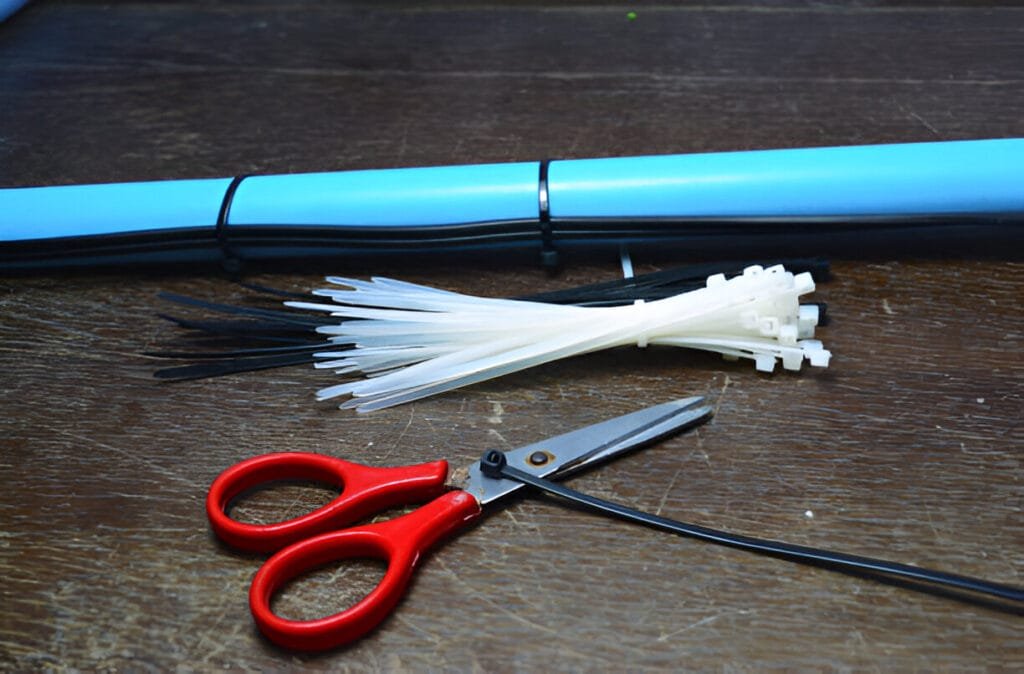
Most people only associate nylon cable ties with industrial wiring jobs. But these affordable, tough, flexible little accessories act as an all-in-one DIY helper for everyday home life. Simple to operate and sturdy enough for dozens of tasks, cable ties resolve common storage, repair, wiring and daily living headaches around the house. If you’re looking […]
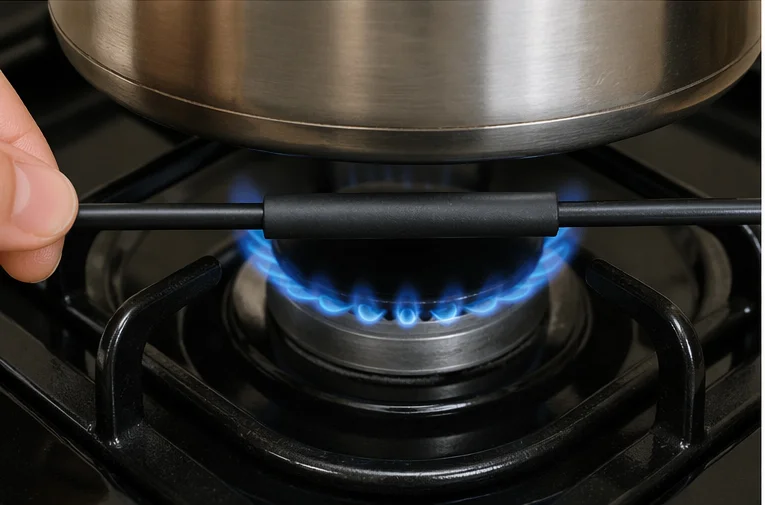
Why You Might Need an Alternative to a Heat Gun While an electric heat gun is the industry standard for activating heat shrink tubing, it is not always the most practical or accessible tool for every scenario. Resourcefulness is key in electrical maintenance, and understanding how to achieve a professional-grade seal with alternative heat sources […]
We use cookies to enhance your browsing experience, serve personalised ads or content, and analyse our traffic. By clicking "Accept All", you consent to our use of cookies.
Looking For High Quality Nylon Cable Ties At A Great Price?
Order now to experience cost-effective cable tie products that provide convenience and protection for your work and life.


 EN
 AR
 ES
 PT
 FR
 RU
 DE
 KO
 JA
 IT
 NL
 TR