Nylon double loop wire ties—frequently referred to as dual loop cable ties or double loop zip ties—are specialized fastening devices engineered to secure, separate, and route two parallel lines using a single integrated unit. Unlike standard single-strap ties, this configuration creates two distinct holding areas to bundle parallel runs or anchor cabling directly to a structural support without requiring secondary hardware.
At WANDU, we design and manufacture these high-performance wiring accessories to solve complex line-routing challenges across industrial, automotive, and electrical installations worldwide.
Understanding the Dual-Loop Design
The primary innovation of the dual-loop design lies in its ability to manage two bundles simultaneously while maintaining mechanical isolation between them.
Integrated separation: The dual-loop formation acts as a natural standoff, preventing parallel wire lines, hoses or conduits from rubbing against each other.
Dual clamping action: Operators can secure an initial bundle against a frame or support, then anchor a second, independent line within the outer loop.
Reduced installation overhead: Replaces the need to install two separate cable ties or use specialized mounting clips, cutting down assembly steps and clutter.
Résistance aux vibrations : The closed-loop geometry absorbs mechanical movement, ensuring both runs remain stabilized under dynamic operational conditions.
Key Material Properties of Nylon Ties
Industrial-grade double loop cable ties rely on premium Polyamide 66 (PA66) formulation to withstand mechanical stress and environmental exposure.
Propriété
Spécification
Operational benefit
Base polymer
Pure Nylon 66 (PA66)
High yield tensile strength and dimensional stability
Flammability rating
UL94 V-2
Self-extinguishing; minimizes electrical fire hazard
Thermal range
−40 °C to +85 °C (−40 °F to +185 °F)
Maintains grip integrity across extreme cold and engine-bay heat
Résistance chimique
High resistance to oils, greases and salts
Resists degradation in harsh industrial and marine environments
Dielectric strength
Non-conductive electrical insulation
Eliminates short-circuit risk around bare conductors or damaged jackets
By harnessing these engineering properties, PA66 double loop wire ties deliver reliable clamping force, long operational life, and superior line isolation across demanding electrical and mechanical installations.
How Do Double Loop Wire Ties Work?
Understanding how to use nylon double loop wire ties starts with grasping their core mechanical design. Unlike conventional single-strap zip ties, dual loop cable ties allow you to secure two distinct items simultaneously with a single fastener. The design provides a built-in standoff between the two runs, preventing contact, vibration wear, and accidental cross-pinching.
How the Two Loops Share One Locking Head
Our double loop cable ties feature an engineered locking head designed to manage two independent loops using a single integrated pawl system. The sequence runs in three stages.
Primary loop engagement: cURL Too many subrequests by single Worker invocation. To configure this limit, refer to https://developers.cloudflare.com/workers/wrangler/configuration/#limits
cURL Too many subrequests by single Worker invocation. To configure this limit, refer to https://developers.cloudflare.com/workers/wrangler/configuration/#limits cURL Too many subrequests by single Worker invocation. To configure this limit, refer to https://developers.cloudflare.com/workers/wrangler/configuration/#limits
Integrated separation: cURL Too many subrequests by single Worker invocation. To configure this limit, refer to https://developers.cloudflare.com/workers/wrangler/configuration/#limits
cURL Too many subrequests by single Worker invocation. To configure this limit, refer to https://developers.cloudflare.com/workers/wrangler/configuration/#limits
cURL Too many subrequests by single Worker invocation. To configure this limit, refer to https://developers.cloudflare.com/workers/wrangler/configuration/#limits
cURL Too many subrequests by single Worker invocation. To configure this limit, refer to https://developers.cloudflare.com/workers/wrangler/configuration/#limits
Configuration
cURL Too many subrequests by single Worker invocation. To configure this limit, refer to https://developers.cloudflare.com/workers/wrangler/configuration/#limits
cURL Too many subrequests by single Worker invocation. To configure this limit, refer to https://developers.cloudflare.com/workers/wrangler/configuration/#limits
cURL Too many subrequests by single Worker invocation. To configure this limit, refer to https://developers.cloudflare.com/workers/wrangler/configuration/#limits
cURL Too many subrequests by single Worker invocation. To configure this limit, refer to https://developers.cloudflare.com/workers/wrangler/configuration/#limits
cURL Too many subrequests by single Worker invocation. To configure this limit, refer to https://developers.cloudflare.com/workers/wrangler/configuration/#limits
cURL Too many subrequests by single Worker invocation. To configure this limit, refer to https://developers.cloudflare.com/workers/wrangler/configuration/#limits
cURL Too many subrequests by single Worker invocation. To configure this limit, refer to https://developers.cloudflare.com/workers/wrangler/configuration/#limits
cURL Too many subrequests by single Worker invocation. To configure this limit, refer to https://developers.cloudflare.com/workers/wrangler/configuration/#limits
cURL Too many subrequests by single Worker invocation. To configure this limit, refer to https://developers.cloudflare.com/workers/wrangler/configuration/#limits
cURL Too many subrequests by single Worker invocation. To configure this limit, refer to https://developers.cloudflare.com/workers/wrangler/configuration/#limits
cURL Too many subrequests by single Worker invocation. To configure this limit, refer to https://developers.cloudflare.com/workers/wrangler/configuration/#limits
cURL Too many subrequests by single Worker invocation. To configure this limit, refer to https://developers.cloudflare.com/workers/wrangler/configuration/#limits
cURL Too many subrequests by single Worker invocation. To configure this limit, refer to https://developers.cloudflare.com/workers/wrangler/configuration/#limits
cURL Too many subrequests by single Worker invocation. To configure this limit, refer to https://developers.cloudflare.com/workers/wrangler/configuration/#limits
cURL Too many subrequests by single Worker invocation. To configure this limit, refer to https://developers.cloudflare.com/workers/wrangler/configuration/#limits
cURL Too many subrequests by single Worker invocation. To configure this limit, refer to https://developers.cloudflare.com/workers/wrangler/configuration/#limits
cURL Too many subrequests by single Worker invocation. To configure this limit, refer to https://developers.cloudflare.com/workers/wrangler/configuration/#limits cURL Too many subrequests by single Worker invocation. To configure this limit, refer to https://developers.cloudflare.com/workers/wrangler/configuration/#limits quelle est la différence entre les serre-câbles en nylon et en métal cURL Too many subrequests by single Worker invocation. To configure this limit, refer to https://developers.cloudflare.com/workers/wrangler/configuration/#limits
cURL Too many subrequests by single Worker invocation. To configure this limit, refer to https://developers.cloudflare.com/workers/wrangler/configuration/#limits cURL Too many subrequests by single Worker invocation. To configure this limit, refer to https://developers.cloudflare.com/workers/wrangler/configuration/#limits
cURL Too many subrequests by single Worker invocation. To configure this limit, refer to https://developers.cloudflare.com/workers/wrangler/configuration/#limits
cURL Too many subrequests by single Worker invocation. To configure this limit, refer to https://developers.cloudflare.com/workers/wrangler/configuration/#limits
cURL Too many subrequests by single Worker invocation. To configure this limit, refer to https://developers.cloudflare.com/workers/wrangler/configuration/#limits
cURL Too many subrequests by single Worker invocation. To configure this limit, refer to https://developers.cloudflare.com/workers/wrangler/configuration/#limits
cURL Too many subrequests by single Worker invocation. To configure this limit, refer to https://developers.cloudflare.com/workers/wrangler/configuration/#limits
cURL Too many subrequests by single Worker invocation. To configure this limit, refer to https://developers.cloudflare.com/workers/wrangler/configuration/#limits
12 mm
60 mm
cURL Too many subrequests by single Worker invocation. To configure this limit, refer to https://developers.cloudflare.com/workers/wrangler/configuration/#limits
cURL Too many subrequests by single Worker invocation. To configure this limit, refer to https://developers.cloudflare.com/workers/wrangler/configuration/#limits
cURL Too many subrequests by single Worker invocation. To configure this limit, refer to https://developers.cloudflare.com/workers/wrangler/configuration/#limits
12 mm
90 mm
cURL Too many subrequests by single Worker invocation. To configure this limit, refer to https://developers.cloudflare.com/workers/wrangler/configuration/#limits
cURL Too many subrequests by single Worker invocation. To configure this limit, refer to https://developers.cloudflare.com/workers/wrangler/configuration/#limits
cURL Too many subrequests by single Worker invocation. To configure this limit, refer to https://developers.cloudflare.com/workers/wrangler/configuration/#limits
cURL Too many subrequests by single Worker invocation. To configure this limit, refer to https://developers.cloudflare.com/workers/wrangler/configuration/#limits
cURL Too many subrequests by single Worker invocation. To configure this limit, refer to https://developers.cloudflare.com/workers/wrangler/configuration/#limits
cURL Too many subrequests by single Worker invocation. To configure this limit, refer to https://developers.cloudflare.com/workers/wrangler/configuration/#limits
cURL Too many subrequests by single Worker invocation. To configure this limit, refer to https://developers.cloudflare.com/workers/wrangler/configuration/#limits
cURL Too many subrequests by single Worker invocation. To configure this limit, refer to https://developers.cloudflare.com/workers/wrangler/configuration/#limits
cURL Too many subrequests by single Worker invocation. To configure this limit, refer to https://developers.cloudflare.com/workers/wrangler/configuration/#limits
cURL Too many subrequests by single Worker invocation. To configure this limit, refer to https://developers.cloudflare.com/workers/wrangler/configuration/#limits
Wrap the first loop: Route the strap tail around your primary cable group or solid mounting standoff.
Engage the head: Insert the tail through the locking head and pull until the internal ratchet teeth engage.
Pre-tension: Pull the strap snug until the primary bundle is captured securely. Keep the primary loop snug before forming the outer loop — with a shared head, the inner loop cannot be re-adjusted once the outer loop is tensioned.
Step 3: Secure the Secondary Bundle in the Outer Loop
Once your primary harness is seated, use the remaining length to form the second independent loop.
Circle the adjacent line: Pass the strap end around your secondary cable, hydraulic hose, or adjacent tubing.
Feed into the head: Thread the tail back through the same locking head.
Check separation: Verify that the locking head sits between the two loops and physically keeps the two conduits from contacting each other.
Step 4: Tighten and Trim the Excess Strap
Finalize your double loop cable tie installation with proper tension and cutting practices.
Tension both loops: Pull the strap tail to cinch the secondary loop firmly around the run. Ensure both bundles are held securely without pinching wire insulation.
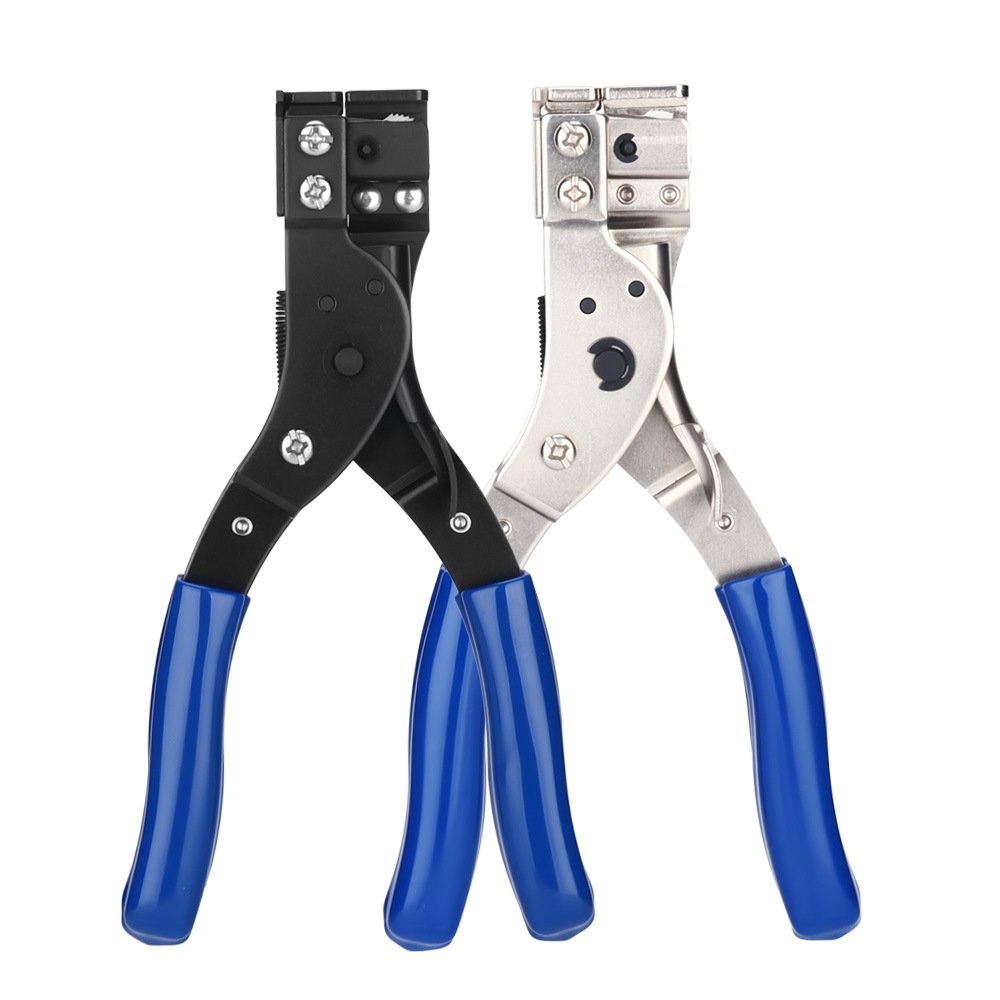
Coupe à ras : Use a manual cable tie tensioning tool or flush-cut pliers right against the head. Avoid diagonal wire cutters, which leave jagged nylon edges that can cut technicians during maintenance.
Key Advantages of Using Double Loop Ties
Managing complex wire runs requires fasteners that do more than just pinch lines together. When we look at how to use nylon double loop wire ties efficiently on assembly lines or job sites, the practical benefits go far beyond basic bundling. Standard single-loop fasteners often force installers to stack multiple ties or squeeze delicate lines against rough structural elements. Switching to attaches de câbles à double boucle solves these field challenges straight away.
Preventing friction and cable abrasion: The head acts as a built-in spacer and the PA66 strap absorbs mechanical movement, so data lines never grind against hydraulic hoses or chassis rails and sheathing is not worn through to bare copper.
Securing two parallel bundles simultaneously: One two-loop tie holds both channels, keeping runs aligned over long distances without uneven sagging or crossed lines.
Saving labor time and reducing clutter: One fastener replaces two conventional ties, lowering fastener consumption and removing daisy-chained ties from tight cabinets.
Preventing Friction and Cable Abrasion
Constant vibration in vehicles, industrial equipment, and outdoor setups causes adjacent lines to rub against each other. Over time, that contact wears through protective sheathing and exposes bare copper. The head acts as a dependable cable tie standoff, so sensitive data lines never grind against rigid hydraulic hoses or rough metal chassis rails.
Securing Two Parallel Bundles Simultaneously
Running dual lines side by side usually requires double the hardware, but a single two-loop cable tie handles both channels with ease. The primary loop can anchor around a structural support strut while the secondary loop locks the working harness into place, keeping runs uniform across long distances.
Choosing proven solutions like our des attaches en nylon durables ensures both loops hold their tension without slipping under load.
Saving Labor Time and Reducing Clutter
cURL Too many subrequests by single Worker invocation. To configure this limit, refer to https://developers.cloudflare.com/workers/wrangler/configuration/#limits
Applications et Utilisations Courantes
cURL Too many subrequests by single Worker invocation. To configure this limit, refer to https://developers.cloudflare.com/workers/wrangler/configuration/#limits
cURL Too many subrequests by single Worker invocation. To configure this limit, refer to https://developers.cloudflare.com/workers/wrangler/configuration/#limits cURL Too many subrequests by single Worker invocation. To configure this limit, refer to https://developers.cloudflare.com/workers/wrangler/configuration/#limits
cURL Too many subrequests by single Worker invocation. To configure this limit, refer to https://developers.cloudflare.com/workers/wrangler/configuration/#limits cURL Too many subrequests by single Worker invocation. To configure this limit, refer to https://developers.cloudflare.com/workers/wrangler/configuration/#limits
cURL Too many subrequests by single Worker invocation. To configure this limit, refer to https://developers.cloudflare.com/workers/wrangler/configuration/#limits cURL Too many subrequests by single Worker invocation. To configure this limit, refer to https://developers.cloudflare.com/workers/wrangler/configuration/#limits
cURL Too many subrequests by single Worker invocation. To configure this limit, refer to https://developers.cloudflare.com/workers/wrangler/configuration/#limits
cURL Too many subrequests by single Worker invocation. To configure this limit, refer to https://developers.cloudflare.com/workers/wrangler/configuration/#limits Attaches rapides à montage par poussée cURL Too many subrequests by single Worker invocation. To configure this limit, refer to https://developers.cloudflare.com/workers/wrangler/configuration/#limits
cURL Too many subrequests by single Worker invocation. To configure this limit, refer to https://developers.cloudflare.com/workers/wrangler/configuration/#limits
cURL Too many subrequests by single Worker invocation. To configure this limit, refer to https://developers.cloudflare.com/workers/wrangler/configuration/#limits clips pour câbles électriques cURL Too many subrequests by single Worker invocation. To configure this limit, refer to https://developers.cloudflare.com/workers/wrangler/configuration/#limits
cURL Too many subrequests by single Worker invocation. To configure this limit, refer to https://developers.cloudflare.com/workers/wrangler/configuration/#limits
cURL Too many subrequests by single Worker invocation. To configure this limit, refer to https://developers.cloudflare.com/workers/wrangler/configuration/#limits
cURL Too many subrequests by single Worker invocation. To configure this limit, refer to https://developers.cloudflare.com/workers/wrangler/configuration/#limits
cURL Too many subrequests by single Worker invocation. To configure this limit, refer to https://developers.cloudflare.com/workers/wrangler/configuration/#limits
cURL Too many subrequests by single Worker invocation. To configure this limit, refer to https://developers.cloudflare.com/workers/wrangler/configuration/#limits cURL Too many subrequests by single Worker invocation. To configure this limit, refer to https://developers.cloudflare.com/workers/wrangler/configuration/#limits
Utilisation d'un outil de tension : cURL Too many subrequests by single Worker invocation. To configure this limit, refer to https://developers.cloudflare.com/workers/wrangler/configuration/#limits
cURL Too many subrequests by single Worker invocation. To configure this limit, refer to https://developers.cloudflare.com/workers/wrangler/configuration/#limits cURL Too many subrequests by single Worker invocation. To configure this limit, refer to https://developers.cloudflare.com/workers/wrangler/configuration/#limits
cURL Too many subrequests by single Worker invocation. To configure this limit, refer to https://developers.cloudflare.com/workers/wrangler/configuration/#limits
cURL Too many subrequests by single Worker invocation. To configure this limit, refer to https://developers.cloudflare.com/workers/wrangler/configuration/#limits comment attacher des serre-câbles pour la sécurité et la résistance cURL Too many subrequests by single Worker invocation. To configure this limit, refer to https://developers.cloudflare.com/workers/wrangler/configuration/#limits
cURL Too many subrequests by single Worker invocation. To configure this limit, refer to https://developers.cloudflare.com/workers/wrangler/configuration/#limits
cURL Too many subrequests by single Worker invocation. To configure this limit, refer to https://developers.cloudflare.com/workers/wrangler/configuration/#limits outil de tension pour attaches de câble cURL Too many subrequests by single Worker invocation. To configure this limit, refer to https://developers.cloudflare.com/workers/wrangler/configuration/#limits
cURL Too many subrequests by single Worker invocation. To configure this limit, refer to https://developers.cloudflare.com/workers/wrangler/configuration/#limits
cURL Too many subrequests by single Worker invocation. To configure this limit, refer to https://developers.cloudflare.com/workers/wrangler/configuration/#limits
Questions Fréquemment Posées
cURL Too many subrequests by single Worker invocation. To configure this limit, refer to https://developers.cloudflare.com/workers/wrangler/configuration/#limits
cURL Too many subrequests by single Worker invocation. To configure this limit, refer to https://developers.cloudflare.com/workers/wrangler/configuration/#limits
Caractéristique
cURL Too many subrequests by single Worker invocation. To configure this limit, refer to https://developers.cloudflare.com/workers/wrangler/configuration/#limits
cURL Too many subrequests by single Worker invocation. To configure this limit, refer to https://developers.cloudflare.com/workers/wrangler/configuration/#limits
cURL Too many subrequests by single Worker invocation. To configure this limit, refer to https://developers.cloudflare.com/workers/wrangler/configuration/#limits
cURL Too many subrequests by single Worker invocation. To configure this limit, refer to https://developers.cloudflare.com/workers/wrangler/configuration/#limits
cURL Too many subrequests by single Worker invocation. To configure this limit, refer to https://developers.cloudflare.com/workers/wrangler/configuration/#limits
cURL Too many subrequests by single Worker invocation. To configure this limit, refer to https://developers.cloudflare.com/workers/wrangler/configuration/#limits
cURL Too many subrequests by single Worker invocation. To configure this limit, refer to https://developers.cloudflare.com/workers/wrangler/configuration/#limits
cURL Too many subrequests by single Worker invocation. To configure this limit, refer to https://developers.cloudflare.com/workers/wrangler/configuration/#limits
cURL Too many subrequests by single Worker invocation. To configure this limit, refer to https://developers.cloudflare.com/workers/wrangler/configuration/#limits
cURL Too many subrequests by single Worker invocation. To configure this limit, refer to https://developers.cloudflare.com/workers/wrangler/configuration/#limits
cURL Too many subrequests by single Worker invocation. To configure this limit, refer to https://developers.cloudflare.com/workers/wrangler/configuration/#limits
cURL Too many subrequests by single Worker invocation. To configure this limit, refer to https://developers.cloudflare.com/workers/wrangler/configuration/#limits
One integrated strap covers both applications
Requires a separate part from the single-head range
Both styles eliminate friction between adjacent lines, but double loop ties streamline inventory by using a single integrated strap. Check our double loop cable ties to see this dual-loop design in detail.
Are Nylon Double Loop Cable Ties Reusable?
Standard nylon double loop zip ties are designed as one-way, permanent fasteners. The internal pawl engages the strap serrations to prevent back-slipping under heavy vibration and dynamic loads.
Standard version (this product): Requires cutting for removal, which guarantees maximum holding strength and prevents accidental release — the correct choice for safety-critical runs, automotive harnesses and permanent installations.
Releasable variant (a separate product): Features an extended pawl tab that can be manually disengaged, for routine maintenance or cable re-routing where the tie is opened repeatedly.
For safety-critical runs, automotive harnesses, and permanent installations, we always recommend single-use, non-releasable ties to prevent tension loss.
Can Double Loop Wire Ties Be Used Outdoors?
Yes, provided you match the material formulation to outdoor exposure conditions.
Standard natural nylon (PA66): Intended primarily for indoor electrical cabinets, climate-controlled machinery and enclosed systems. It carries no UV stabiliser and degrades under direct sunlight.
UV-resistant black nylon (PA66 with carbon black): Engineered for direct sunlight, high UV exposure and outdoor installations; the carbon black stabiliser prevents material embrittlement over time.
Weatherized outdoor grade: For exterior conduits, agricultural piping and outdoor solar arrays, also resisting moisture absorption, road salts, mild acids and wide temperature swings.
Selecting UV-stabilized ties ensures long-term retention when securing exterior conduits, agricultural piping, or outdoor solar arrays.
How Much Weight Can a Double Loop Tie Hold?
The double loop range is rated at 230 lbs (100 kg) minimum tensile strength across all three lengths. Wider industry classifications sit alongside it for comparison.
Tie classification
Approx. width
cURL Too many subrequests by single Worker invocation. To configure this limit, refer to https://developers.cloudflare.com/workers/wrangler/configuration/#limits
À propos de Wandu — Zhejiang Wandu Plastic Co., Ltd. has produced nylon cable ties in Yueqing, Zhejiang, China since 2011. Our ISO 9001 certified factory runs 10 high-speed injection moulding machines and 8 professional cable tie test benches, covering nylon cable ties, stainless steel cable ties, cable clips, cable glands and spiral wrap. Products are CE and RoHS compliant and ship to buyers in 50+ countries. Every technical question below is answered by our own engineering team.
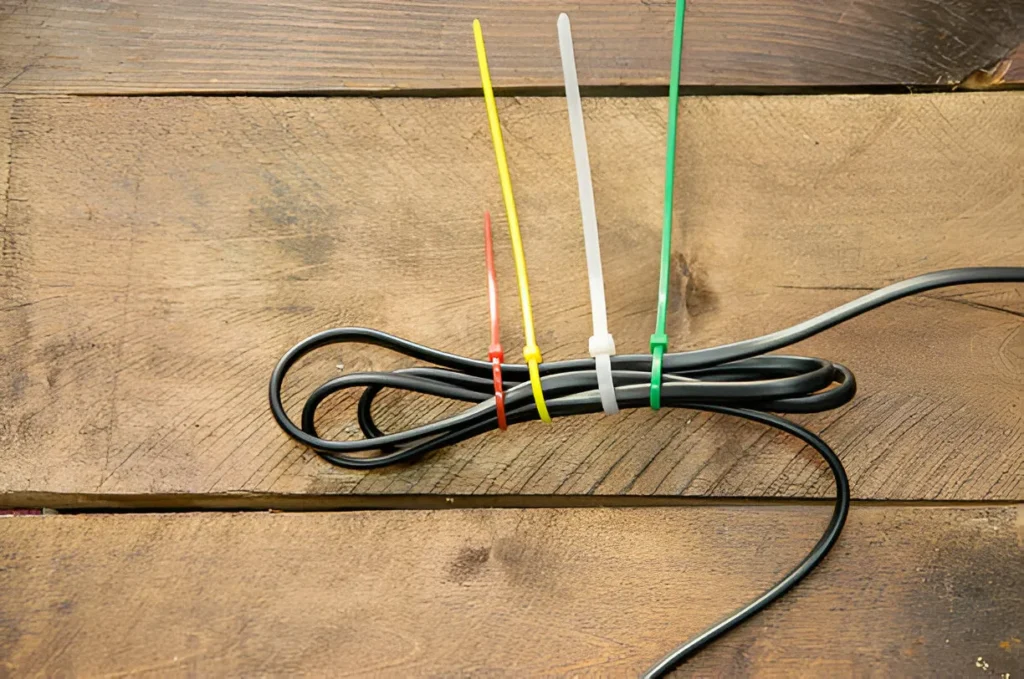
Les tailles des attaches de câble varient largement pour répondre à des exigences diverses. Des attaches compactes conçues pour des espaces restreints aux plus longues adaptées à des projets plus importants, wanducn.com propose une vaste gamme d'options. Ces attaches sont disponibles en longueurs allant de 10 cm à 150 cm et offrent des résistances à la traction allant jusqu'à 350 livres, ce qui en fait des outils polyvalents […]
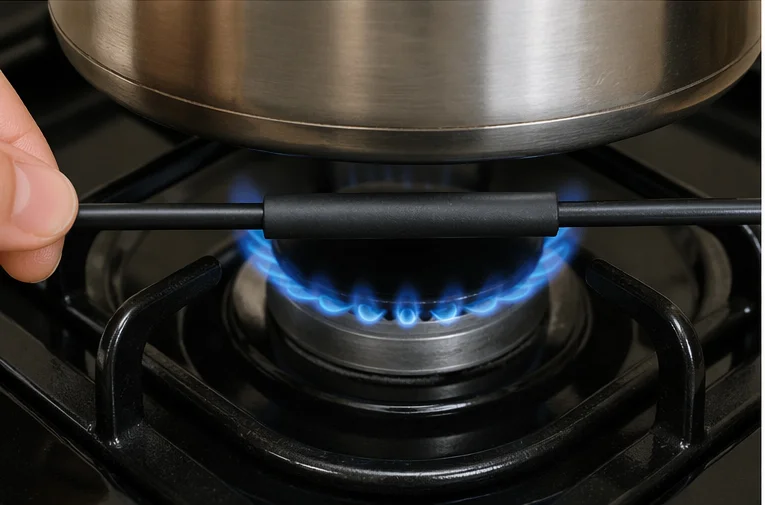
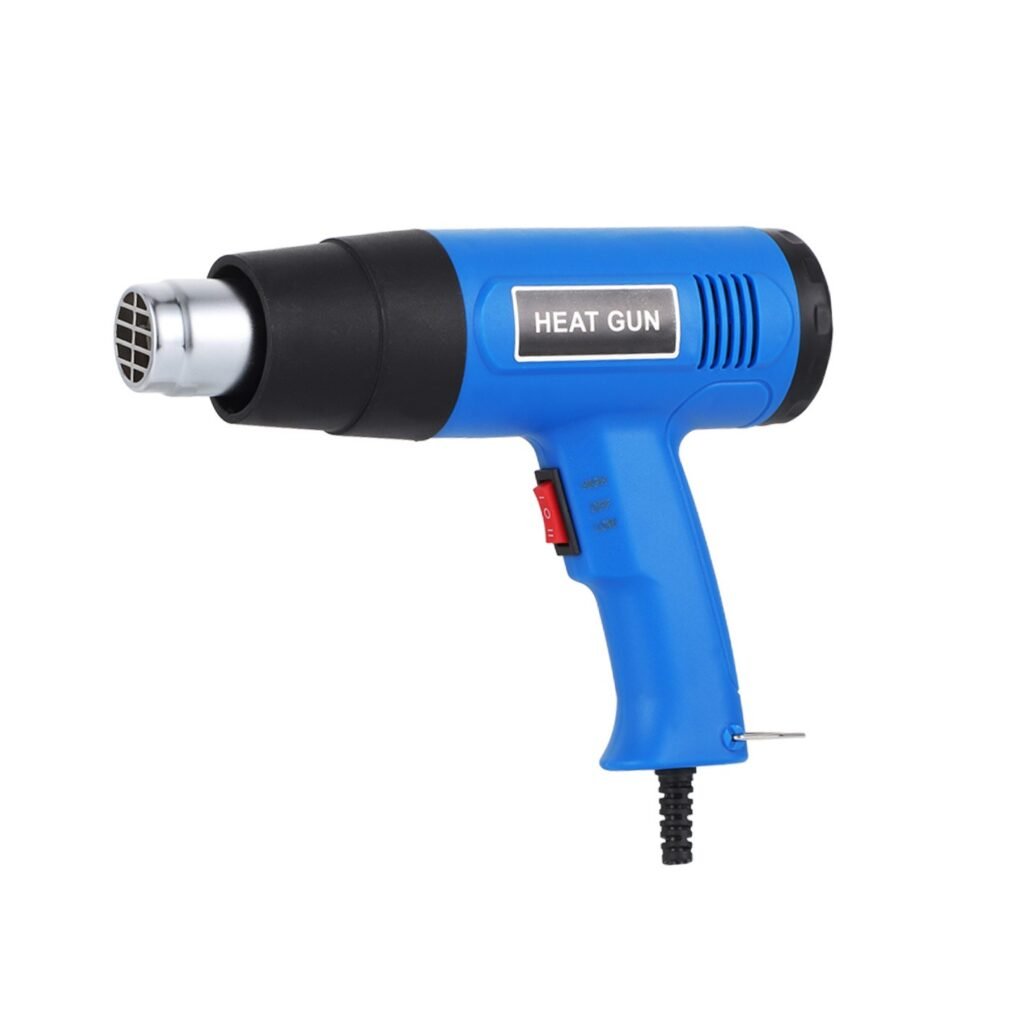
Pourquoi vous pourriez avoir besoin d'une alternative à un pistolet à chaleur Bien qu'un pistolet à chaleur électrique soit la norme de l'industrie pour activer les tubes thermorétractables, ce n'est pas toujours l'outil le plus pratique ou accessible pour chaque scénario. La débrouillardise est essentielle dans la maintenance électrique, et comprendre comment obtenir un joint de qualité professionnelle avec des sources de chaleur alternatives […]
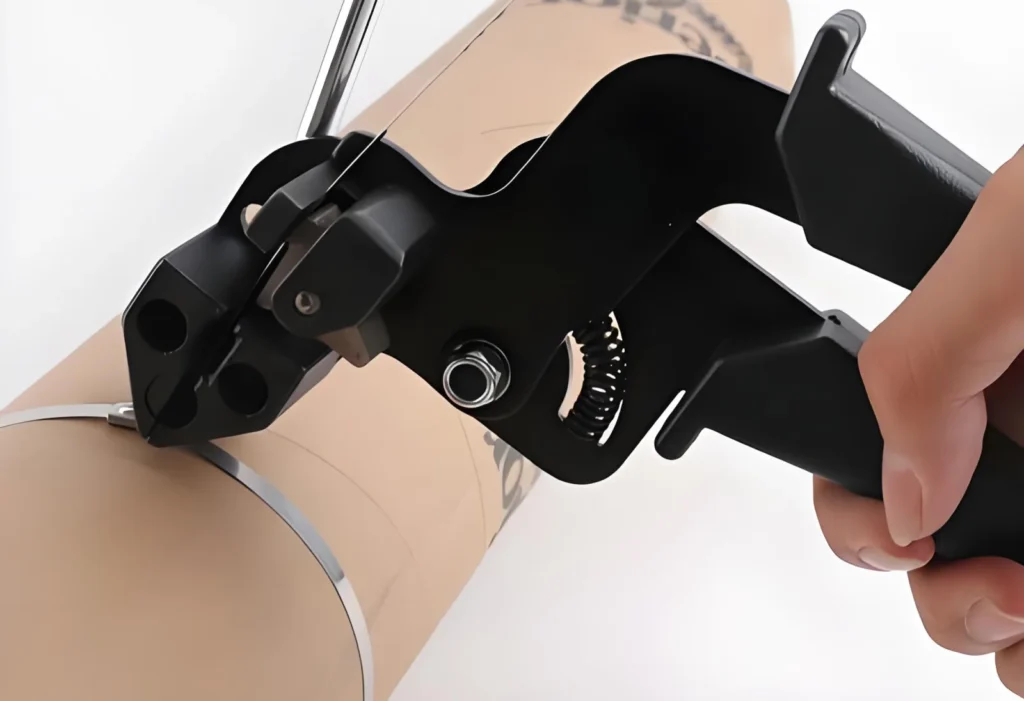
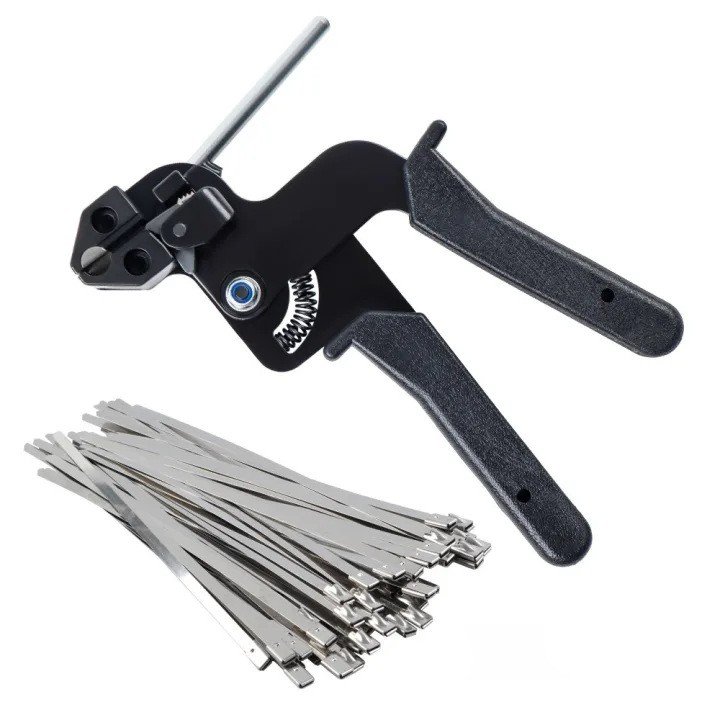
Qu'est-ce que les attaches métalliques et comment fonctionnent-elles ? Un aperçu des attaches en acier inoxydable Lorsque les attaches en nylon standard ne suffisent pas dans des conditions extrêmes, les attaches en acier inoxydable interviennent comme la solution ultime de fixation robuste. Fabriquées principalement en acier inoxydable de haute qualité 304 ou 316, ces attaches métalliques offrent une résistance inégalée […]
Nous répondrons à votre demande dans les 24 heures
Nous valorisons votre vie privée
Nous utilisons des cookies pour améliorer votre expérience de navigation, servir des publicités ou du contenu personnalisé, et analyser notre trafic. En cliquant sur "Accepter tout", vous consentez à notre utilisation des cookies.
Vous cherchez des attaches en nylon de haute qualité à un excellent prix ?
Commandez maintenant pour découvrir des produits d'attaches qui offrent commodité et protection pour votre travail et votre vie.


 FR
 EN
 AR
 ES
 PT
 RU
 DE
 KO
 JA
 IT
 NL
 TR