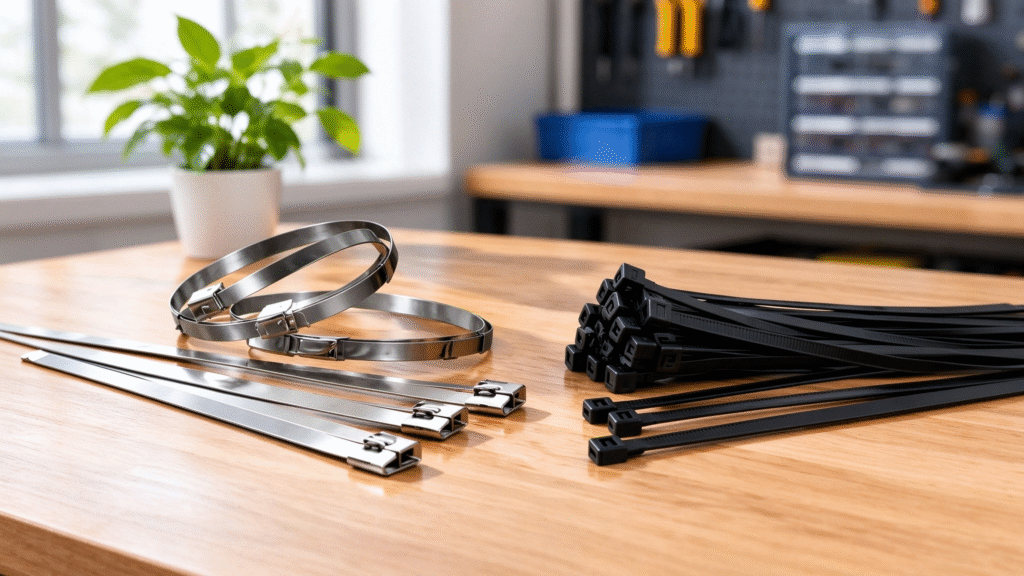
Not all zip ties are created equal. Fasteners vary extensively in chemical composition, locking design, structural width, and mechanical load limits. Selecting between polymer and metallic fasteners depends entirely on environmental exposure, mechanical stress, and application demands.
What Are Plastic Zip Ties?
Plastic cable ties, commonly known as nylon cable ties, are versatile fasteners manufactured through precision injection molding using Polyamide. Featuring an integrated ratchet pawl mechanism and serrated strap, these fasteners provide a lightweight, non-conductive, and self-locking solution for organizing wires, harnessing cables, and securing light-to-medium loads.
Key characteristics include: Flexible installation: Smooth edges protect wire insulation during routing. Electrical insulation: Naturally non-conductive for control panels and standard enclosures. Standard configurations: Available in releasable, mountable head, push mount, marker, and double-locking variations.
What Are Metal Zip Ties?
Metal zip ties—primarily stainless steel cable ties—are heavy-duty mechanical fasteners engineered for harsh operating environments. Built to endure conditions that degrade polymers, they typically feature an internal ball-lock or ladder-style locking mechanism that grips high-tensile steel straps under extreme tension.
Key characteristics include: High mechanical strength: Capable of holding heavy industrial bundles without stretching or snapping. Extreme resistance: Impervious to fire, radiation, continuous UV radiation, and aggressive chemicals. Specialized profiles: Offered as uncoated stainless steel ties, coated metal ties (polyester, PVC, or epoxy), and heavy-duty strapping bands.
Material Composition and Construction
The fundamental difference between these two fastening systems lies in raw material integrity and mechanical engineering:
Feature
Plastic (Nylon) Zip Ties
Metal (Stainless Steel) Zip Ties
Primary Material
100% Virgin Nylon (UL 94V-2 rated)
High-grade stainless steel (SS201, SS304, SS316)
Locking Mechanism
Integrated one-piece nylon pawl and ratchet teeth
High-hardness rolling ball-lock or ladder-rung interlock
While virgin nylon provides optimal flexibility and cost-effective bundling for general electrical installations, stainless steel construction delivers the structural rigidity and environmental immunity required for critical industrial infrastructure.
Key Performance Differences: Metal vs. Plastic Zip Ties
Choosing between nylon and stainless steel fasteners comes down to how well each material handles physical stress and environmental exposure. Understanding the core difference between nylon and metal zip ties ensures you select the correct tie width and material for your specific operational load.
Tensile Strength and Load Capacity
Width is the primary driver of loop tensile strength in any cable tie:
Plastic Cable Ties: Standard widths range from miniature 2.5mm up to heavy-duty 9.0mm, providing holding power between 18 lbs (8 kg) and 175 lbs (79 kg). They are perfect for lightweight bundling and flexible cable runs.
Stainless Steel Cable Ties: Available in standard 4.6mm, heavy-duty 7.9mm, and wide 12mm to 19mm bands. These metal ties deliver tensile ratings starting at 180 lbs and exceeding 900 lbs (400 kg), preventing mechanical failure under extreme weight.
Extreme Temperature and Fire Resistance
Temperature limits define where each fastener can safely operate:
Nylon: Standard virgin nylon operates reliably from -40°C to +85°C, with specialized heat-stabilized versions reaching +120°C. For critical thermal installations, understanding cable tie heat resistance helps avoid premature melting and line dropouts.
Stainless Steel: Uncoated SS304 and SS316 ties endure continuous temperatures from -80°C up to +538°C without losing structural integrity, making them completely fireproof. Coated metal ties generally operate between -40°C and +150°C.
UV, Weather, and Chemical Resistance
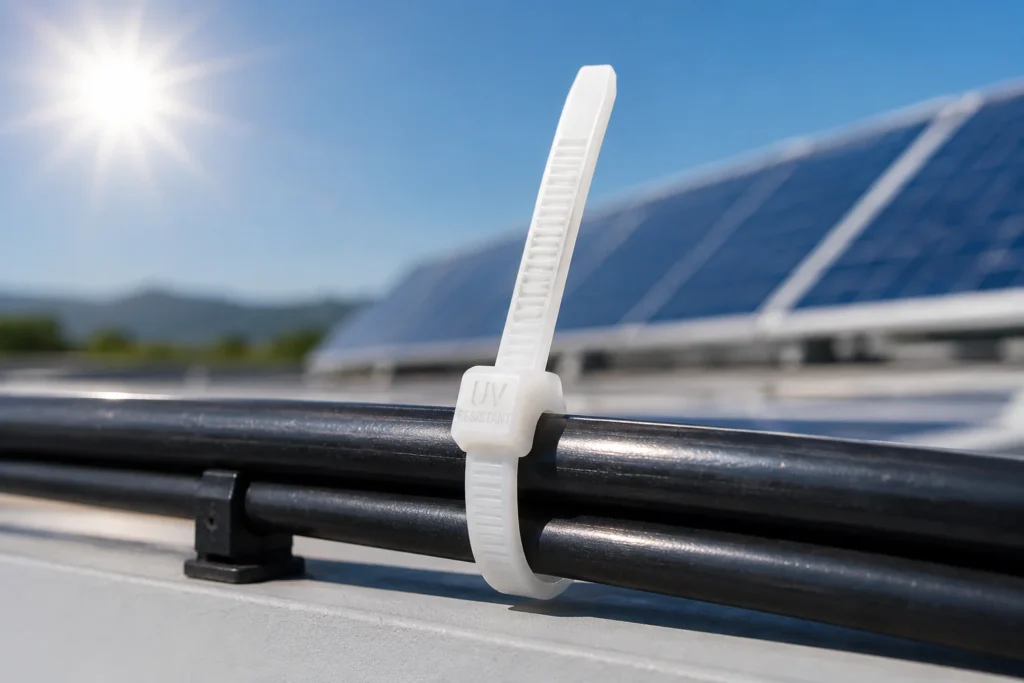
Plastic Cable Zip Ties: Standard natural nylon degrades and becomes brittle under direct sunlight. UV-stabilized black nylon extends outdoor lifespan, but prolonged exposure to harsh acids or solvents will still break down the polymer chains over time.
SS Cable Ties: Stainless steel is naturally impervious to UV radiation, moisture, and high radiation levels. Marine-grade SS316 provides superior protection against salt spray, aggressive chemicals, and industrial washdowns.
Cost-Effectiveness and Long-Term Durability
While standard wire ties plastic offer the lowest upfront cost for indoor panels and light-duty bundling, they require regular replacement in harsh environments. Stainless steel metal cable ties require a higher initial investment but deliver a zero-maintenance, permanent fastening solution that eliminates downtime.
Performance Metric
Standard Nylon Cable Tie
Stainless Steel (SS304 / SS316) Tie
Available Widths
2.5mm to 12mm
4.6mm to 19mm
Tensile Strength
18 lbs – 250 lbs (8 kg – 114 kg)
180 lbs – 900 lbs (80 kg – 400 kg)
Operating Temperature
-40°C to +85°C (Heat-stabilized: +120°C)
-80°C to +538°C (Uncoated)
UV & Weather Resistance
Moderate (Requires UV-stabilizers)
Complete immunity to UV and weathering
Flammability Rating
UL 94V-2 (Self-extinguishing)
Non-flammable / Fireproof
Best Application
Control panels, indoor routing, light loads
Marine, solar, industrial, high-load runs
When Are Metal Zip Ties Better Than Plastic?
Not all fasteners are built for the same demands. While standard plastic fasteners work well for basic bundling, choosing between metal and plastic often comes down to load limits, environmental stress, and tie width. When your installation faces extreme mechanical weight, harsh weather, or high heat, stainless steel cable ties clearly outperform standard nylon alternatives.
High-Stress and Heavy Duty Applications
In operations where safety and structural integrity cannot fail, metal ties provide superior mechanical holding power.
Higher Tensile Load: A heavy-duty stainless steel tie (such as 7.9mm or 12mm width) holds loads exceeding 100 kg to over 200 kg, preventing the stretching and loop fatigue common in polymer ties.
No Creep or Material Yield: Under constant high-stress tension, plastic stretches over time. Stainless steel maintains its exact grip without loosening or yielding.
Vibration Resistance: Heavy equipment, mining setups, and industrial machinery create constant vibration that can snap brittle plastic pawls. Ball-lock metal mechanisms stay firmly locked.
Harsh Outdoor and Marine Environments
Outdoor exposure breaks down standard polymers rapidly through solar degradation and salt attack. Stainless steel metal cable ties solve these vulnerabilities entirely:
100% UV Immunity: Uncoated and epoxy-coated metal ties are completely impervious to solar UV radiation, eliminating the cracking associated with prolonged sun exposure.
Marine-Grade Salt Spray Protection: Grade SS316 stainless steel provides exceptional resistance to chlorides, making it the industry standard for offshore oil rigs, shipyards, and coastal infrastructure.
Chemical and Acid Resistance: Metal ties do not degrade when exposed to harsh industrial solvents, oils, greases, or acidic washdowns.
Industrial, Solar, and Automotive Projects
Modern utility and manufacturing projects require materials certified for decades of maintenance-free service.
Solar PV Farms: Solar panel wiring must endure 20 to 25 years of relentless sun and thermal cycling. Metal ties eliminate the recurring maintenance costs of replacing degraded plastic wraps.
High-Temperature Automotive Zones: In engine bays, exhaust systems, and turbocharger piping, temperatures easily exceed the limits of heat-stabilized plastic. Uncoated stainless steel handles temperatures up to +538°C without melting.
Underhood Harness Fixation: While specialized nylon cable ties optimize automotive wiring harness routing inside passenger cabins, high-heat and undercarriage zones require the strength of coated metal ties to prevent abrasion and thermal failure.
When Should You Use Plastic Zip Ties?
While stainless steel handles brutal environments, standard plastic cable zip ties remain the undisputed standard for light-to-medium everyday applications. When your project demands electrical insulation, flexibility, and quick hand-installation without the risk of cutting into soft cable jackets, high-grade plastic tie wraps are the most practical solution.
Everyday Household and Office Cable Management
For organizing desk setups, home entertainment systems, and indoor electrical enclosures, non-conductive wire ties plastic fasteners are essential. We manufacture our plastic ties using 100% virgin nylon, providing a smooth finish that bundles delicate data lines, audio-video cords, and power lines without pinching or causing signal degradation.
Safe for wiring: Non-conductive polymer construction eliminates electrical shorting risks in control panels and patch bays.
Flexible routing: Bends smoothly around tight corners and compact conduit spaces.
Optimized specifications: Check our nylon cable ties selection guide to match standard 2.5mm to 4.8mm widths with your required bundle diameters.
Temporary or Light Duty Fastening
Whenever you need fast bundling, packaging, or temporary staging on job sites, a plastic cable tie provides reliable holding power without excessive installation overhead.
Tool-free installation: The integrated self-locking nylon pawl allows rapid manual cinching and locking.
Releasable options: Specialty releasable designs let you add or remove cables during ongoing maintenance without cutting the tie.
Snag-free handling: Rounded edges prevent injury to installers and damage to adjacent equipment.
Budget-Sensitive and Color-Coded Organization
For high-volume manufacturing lines and large-scale facility installations, plastic fasteners offer significant cost efficiency per thousand units compared to metal alternatives.
Low unit cost: Economical pricing makes plastic ties ideal for bulk consumer packaging, retail bundling, and high-volume wiring harnesses.
Visual identification: Available in multiple color variations for instant wire identification, phased circuit separation, and inventory tagging.
Certified safety: Built to UL 94V-2 flammability ratings and RoHS compliance for strict commercial quality standards.
Types of Metal Zip Ties and How to Choose
Not all metal zip ties deliver the same performance. Selecting the right metal tie requires matching the steel grade, coating style, and locking design to the specific environmental hazards and mechanical demands of the project.
Grade 304 vs. Grade 316 Stainless Steel
We manufacture metal ties primarily in SS304 and SS316 grades. The key difference lies in chemical composition and resistance to severe environmental corrosion. When deciding between 304 vs 316 stainless steel cable ties, evaluate the direct exposure to chlorides, saltwater, or industrial chemicals.
Feature
Grade 304 Stainless Steel
Grade 316 Stainless Steel (Marine Grade)
Corrosion Resistance
Excellent for general outdoor and industrial use
Superior resistance against saltwater, chlorides, and acids
Molybdenum Content
None (18/8 Chromium-Nickel balance)
2–3% added Molybdenum for pitting resistance
Typical Applications
Solar racking, automotive exhaust, plant machinery
Marine vessels, offshore rigs, chemical processing plants
Coated vs. Uncoated Metal Ties
Coating provides an added layer of physical and electrical protection:
Uncoated Stainless Steel Ties: Built for extreme temperature ranges (-80°C to +538°C) and direct flame resistance. Best for high-heat automotive, boiler, and heavy structural strapping.
Coated Metal Ties (PVC, Epoxy, or Polyester): Provide electrical insulation, prevent sharp metal edges from cutting soft cable jackets, and eliminate galvanic corrosion between dissimilar metals. Rated for operating temperatures up to +150°C.
Ball Lock vs. Ladder Type Locking Mechanisms
The internal locking style determines how the tie fastens and holds under vibration:
Ball Lock Stainless Steel Cable Ties: Feature an internal rolling ball mechanism that grips the strap at any point along its length. This self-locking design provides rapid installation, stepless tensioning, and loop tensile ratings from 100 lbs up to 450 lbs.
Stainless Steel Ladder Cable Ties: Utilize a punched ladder-style strap that locks firmly into a flat head. This profile provides maximum flexibility for flat cable runs, prevents slippage on flexible conduits, and maintains a clean, low-profile fit in tight spaces.
Installation and Handling Best Practices
Installing plastic vs. metal fasteners requires different handling techniques to ensure bundle security and workplace safety. While standard nylon ties can often be pulled by hand, stainless steel cable ties require specific practices to achieve rated tensile loads without damaging cable jackets.
Using Specialized Metal Zip Tie Tensioning Tools
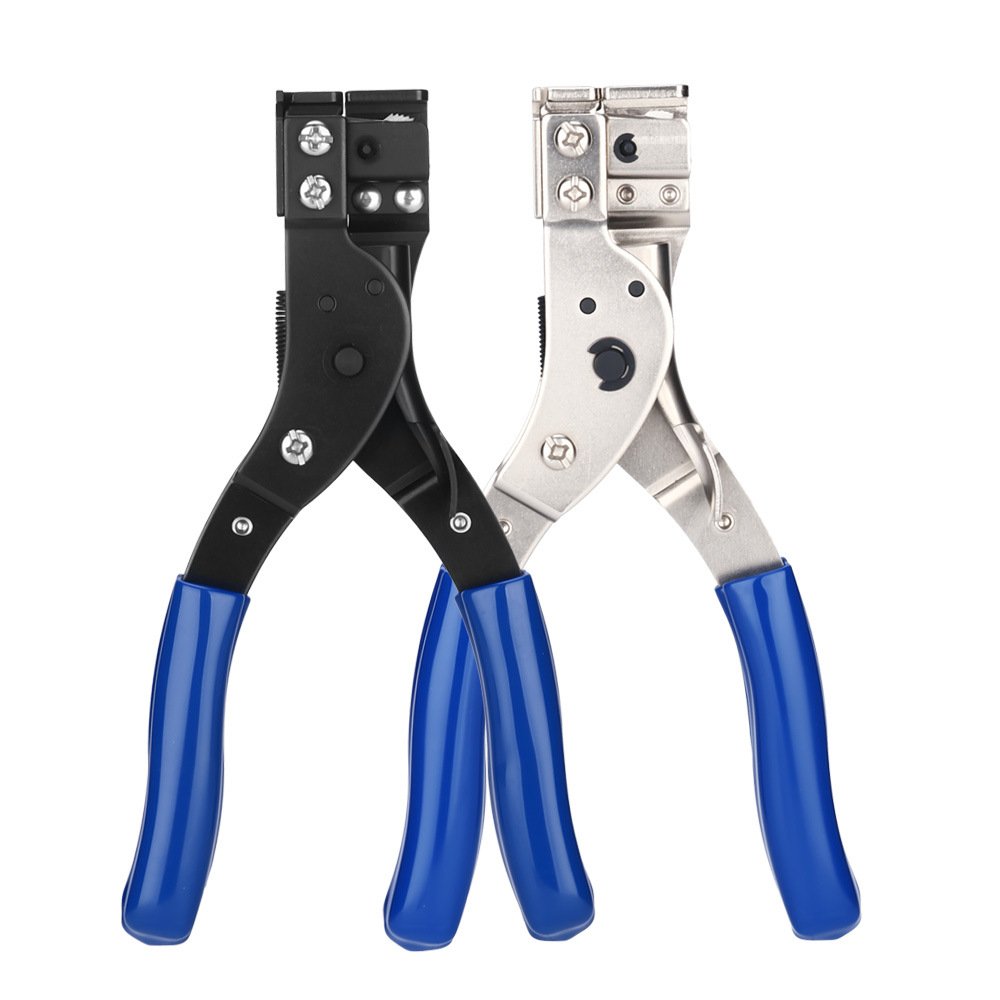
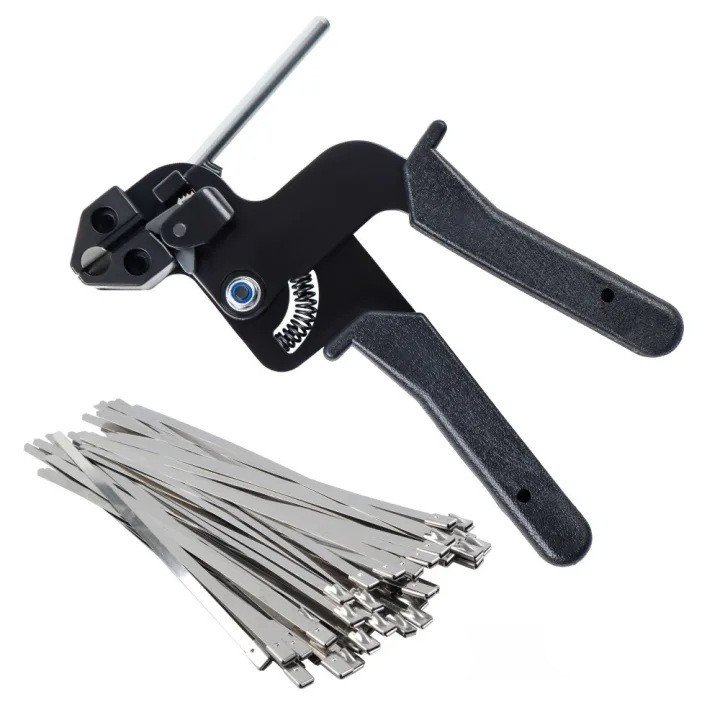
For heavy-duty applications and industrial cable runs, manual pulling rarely achieves the necessary holding force. We recommend utilizing dedicated installation equipment. Mastering how to use a zip tie gun ensures your metal fasteners perform to their exact engineering ratings.
Consistent Clamping Force: A manual or pneumatic tensioning tool applies uniform force across every tie, preventing loose bundles or over-tightening.
Automatic Flush Cutting: Quality tensioning tools cut the excess tail flush against the locking head, eliminating dangerously sharp tail ends.
Workflow Efficiency: Using dedicated tools drastically reduces assembly time in high-volume solar panel installations, industrial piping setups, and automotive harness assemblies.
Safety Precautions for Cutting and Tightening
Working with stainless steel bands involves rigid edges that demand strict safety protocols. Follow our proven guide to tying cable ties for safety and strength to maintain a secure and hazard-free workspace:
Wear Cut-Resistant Gloves: Bare metal edges can cause lacerations during manual handling and pulling.
Avoid Standard Diagonal Pliers: Using standard wire snips on metal ties often leaves jagged, razor-sharp spurs. Always use flush-cutting shear tools designed for steel bands.
Prevent Cable Sheath Damage: Do not over-tension narrow metal bands over soft insulation. When securing sensitive high-voltage or data lines, use coated metal ties or broader band widths to distribute mechanical pressure safely.
Conclusion: Are Metal Zip Ties Better for Your Project?
Not all zip ties are the same. While both metal and plastic fasteners serve the primary purpose of bundling and routing cables, their performance relies heavily on material composition, width, and environmental resistance. Standard plastic cable zip ties provide flexibility and non-conductive safety for general installations, whereas stainless steel cable ties deliver unmatched tensile strength and endurance against extreme conditions.
Key Takeaways: Metal vs. Plastic
Material and Durability: Virgin nylon cable ties work well for general-purpose, indoor, and moderate outdoor bundling. Stainless steel options (SS304 and SS316) offer total immunity to UV radiation, harsh chemicals, fire, and extreme thermal ranges (-80°C to +538°C).
Width and Load Capacity: Width directly determines tensile strength across all tie types. Standard 4.8mm plastic ties hold moderate loads, while heavy-duty stainless steel bands ranging from 7.9mm to 19mm easily support loads exceeding 900 lbs.
Environmental Exposure: If you are learning how to choose the best outdoor zip ties, metal fasteners always outperform plastic under direct sunlight, marine salt spray, and extreme heat.
Cost vs. Performance: Plastic ties are cost-effective for high-volume electrical work. Metal ties require a higher initial investment but eliminate failure risks and replacement labor in critical industrial infrastructure.
How to Make the Final Decision
Choosing between metal and plastic comes down to three operational factors: load weight, working environment, and longevity requirements.
Choose Plastic Cable Ties If: You need non-conductive wire management for residential panels, standard commercial routing, temporary setups, or color-coded circuit identification.
Choose Metal (Stainless Steel) Ties If: You require permanent fastening for solar arrays, automotive exhaust setups, offshore marine rigs, heavy industrial pipelines, or high-vibration machinery.
At WANDU, we manufacture both certified nylon ties and industrial-grade stainless steel cable management systems to strict CE and ISO9001 standards. If you are sourcing at scale and want to know how to choose the right nylon cable tie manufacturer or need custom-width metal ties, connect with our engineering team for factory-direct specifications and wholesale support.
What Are Metal Cable Ties and How Do They Work? Metal zip ties are the ultimate fastening solution for demanding industrial and outdoor environments. Built to withstand extreme temperatures, harsh chemicals, and heavy loads, these durable fasteners provide permanent, reliable bundling where traditional plastic alternatives simply fail. Understanding how to use metal cable ties effectively […]
Have you ever used standard white zip ties for an outdoor project, only to watch them snap like twigs a few months later? You’re not alone. It’s a common frustration for contractors and DIYers alike who assume a cable tie is just a cable tie. But when it comes to braving the brutal sun, the […]
We use cookies to enhance your browsing experience, serve personalised ads or content, and analyse our traffic. By clicking "Accept All", you consent to our use of cookies.
Looking For High Quality Nylon Cable Ties At A Great Price?
Order now to experience cost-effective cable tie products that provide convenience and protection for your work and life.


 EN
EN  AR
AR  ES
ES  PT
PT  FR
FR  RU
RU  DE
DE  KO
KO  JA
JA  IT
IT  NL
NL