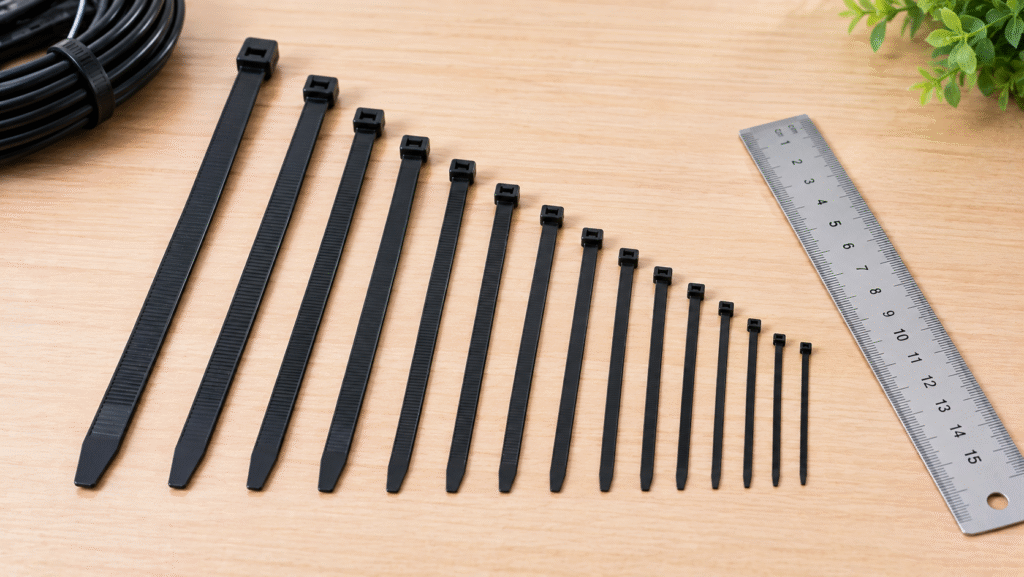
No, zip ties are not all the same width. Cable ties are engineered across a wide dimensional spectrum to handle varying mechanical loads, bundle sizes, and environmental stresses. Widths typically range from 2.5 mm (0.10 inches) for miniature electronics ties up to 12.0 mm (0.47 inches) or wider for extra heavy-duty industrial fasteners.
Assuming all zip ties share a universal width is a common misconception that often leads to mechanical failure or installation inefficiencies.
Understanding Zip Tie Dimensions
When evaluating cable tie dimensions, three distinct measurements define the physical profile:
Width: The horizontal span across the strap. This is the primary indicator of load rating and locking head size.
Length: The total span from the locking pawl to the tip (ranging from 60 mm to over 1500 mm), which determines the maximum bundle diameter.
Thickness: The vertical cross-section of the strap, engineered alongside width to ensure flexibility without sacrificing shear resistance.
While length dictates how large of a bundle you can wrap, zip tie width and thickness determine whether the fastener can mechanically support the bundle’s weight and tension.
Why Zip Tie Width Matters
Selecting the correct cable tie width is critical for operational safety, longevity, and structural integrity:
Load Support: Wider ties distribute tension across a broader surface area, preventing structural stretching or snapping under dynamic stress.
Jacket Protection: Narrow ties can pinch or cut into soft insulation (such as fiber optics or high-voltage wiring) when tensioned. Wider ties provide better surface pressure distribution.
Mounting Clearance: Mounting holes, cable clips, wiring ducts, and panel cutouts are designed around standard cable tie widths. An improperly sized tie will fail to feed through fixed installation channels.
Material & Cost Optimization: Using an oversized tie wastes material and budget, while an undersized tie risks catastrophic bundle failure.
The Direct Link Between Width and Tensile Strength
The loop tensile strength of a zip tie is directly governed by its strap width and cross-sectional volume. Molded from high-grade raw materials such as 100% Virgin Nylon 66, the tensile capacity increases proportionally as the strap widens:
2.5 mm Width (Miniature): Rated for 18 lbs (8 kg) tensile strength; designed for precision electronics and lightweight wire harness management.
3.6 mm Width (Intermediate): Rated for 40 lbs (18 kg) tensile strength; standard for general-purpose automotive and panel routing.
4.8 mm Width (Standard): Rated for 50 lbs (22 kg) tensile strength; the universal standard for commercial electrical work.
7.6 mm – 9.0 mm Width (Heavy-Duty): Rated for 120 – 175 lbs (55 – 79 kg) tensile strength; ideal for heavy cable trays, construction, and HVAC ducting.
12.0 mm Width (Extra Heavy-Duty): Rated for 250+ lbs (114+ kg) tensile strength; built for extreme infrastructure, rigging, and severe-duty utility applications.
Standard Zip Tie Widths and Strength Categories
Zip ties are engineered into standardized width brackets. Because loop tensile strength depends on the cross-sectional area of the strap and the locking pawl, cable tie width vs tensile strength is the primary metric for selecting the right fastener. At WANDU, we manufacture our virgin Nylon 66 ties across standard industrial width classes to match precise load demands without wasting material.
Strength Category
Standard Width (mm)
Standard Width (in)
Tensile Strength Rating
Typical Application
Miniature
2.5 mm
0.10 in
18 lbs (8 kg)
Electronics, PCB routing, tight spaces
Intermediate
3.6 mm
0.14 in
40 lbs (18 kg)
Appliance wiring, light harnesses
Standard
4.8 mm
0.19 in
50 lbs (22 kg)
General electrical, maintenance, automotive
Heavy-Duty
7.6 mm – 9.0 mm
0.30 – 0.35 in
120 – 175 lbs (55 – 79 kg)
Construction, conduit, industrial machinery
Extra Heavy-Duty
12.0 mm
0.47 in
250+lbs (114kg)
Utility infrastructure, heavy commercial piping
Miniature Zip Ties (18 lbs Tensile Strength)
Miniature ties measure approximately 2.5 mm (0.10 in) in width. Engineered for tight spaces, these narrow zip ties provide an 18-pound (8 kg) loop tensile strength. Key characteristics include:
High flexibility: Bends easily around delicate fiber optic cables and compact circuit board assemblies.
Low insertion force: Designed for high-speed manual assembly without damaging fragile wire insulation.
Minimal footprint: Compact locking head fits into crowded electronic chassis.
Intermediate Zip Ties (40 lbs Tensile Strength)
Intermediate cable ties feature a 3.6 mm (0.14 in) width and an upgraded tensile rating of 40 lbs (18 kg). They provide structural stability where miniature ties are too light and standard ties are too bulky. This width is frequently adapted into specialized fastening designs, such as engineered push mount zip ties, enabling direct chassis attachment in automotive wiring harnesses and control cabinets.
Standard Zip Ties (50 lbs Tensile Strength)
The 4.8 mm zip ties (0.19 in) represent the universal industry benchmark. A 50 lb (22 kg) tensile strength handles the vast majority of commercial, industrial, and electrical bundling tasks. Key benefits of standard width ties include:
Reliable load capacity: Handles standard conduit, industrial wire looms, and structural bundling.
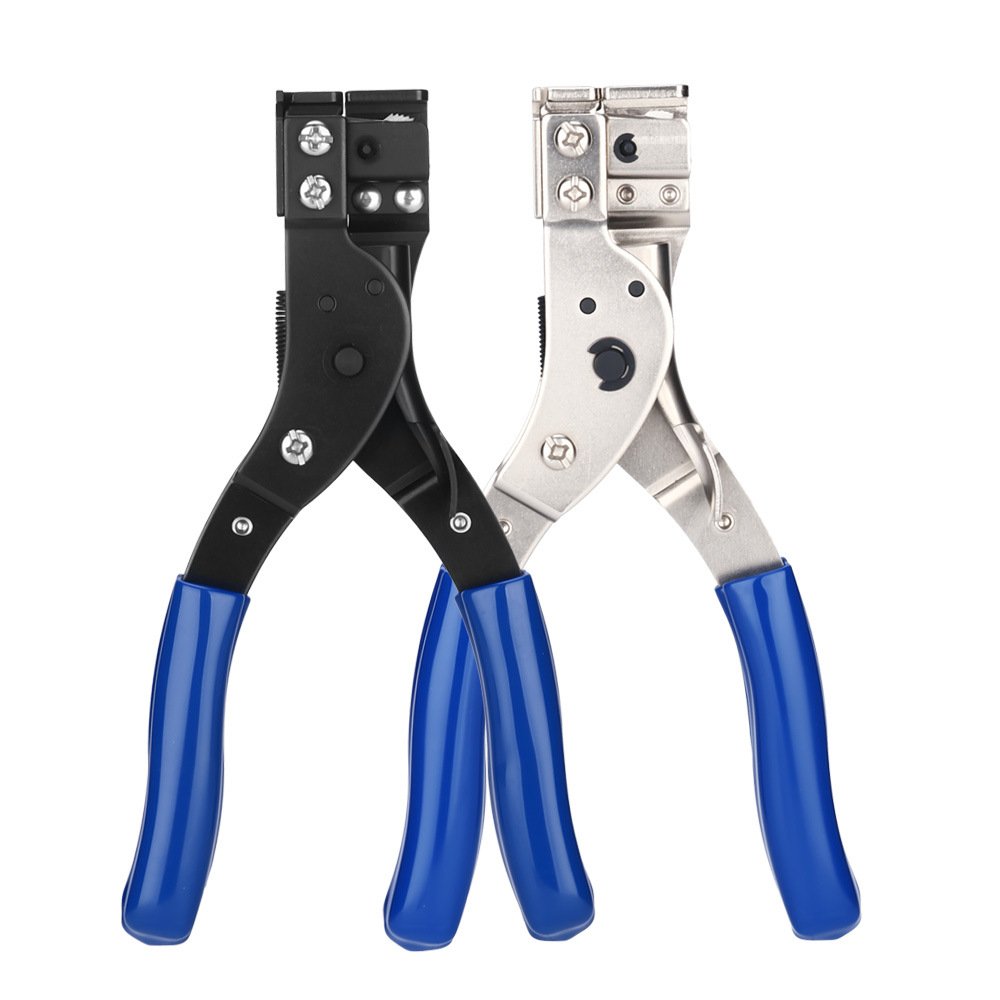
Tool compatibility: Fits all standard manual and pneumatic tensioning/cutoff tools.
Balanced elasticity: Maintains consistent radial pressure across thermal expansion cycles (-40°C to +85°C).
Heavy-Duty and Extra Heavy-Duty Zip Ties (120 lbs to 250+ lbs)
Demanding mechanical installations require wider cross-sections to distribute clamping forces and resist shearing:
Heavy-Duty (7.6 mm – 9.0 mm (0.30 – 0.35 in)): Delivers 120 lbs to 175 lbs (55 – 79 kg) tensile strength. Ideal for securing heavy power cables, industrial ducting, and commercial HVAC lines.
Extra Heavy-Duty (12.0 mm / 0.47 in): Delivers 250+ lbs (114+ kg) holding power. Features an enlarged locking head and reinforced pawl designed for outdoor utility lines, municipal piping, and severe-vibration industrial mounts.
Zip Tie Width and Size Comparison Guide
Selecting the proper fastener requires matching dimensional cross-sections with physical load demands. Cable tie widths are engineered to specific industry standards to ensure consistent mechanical performance across electrical, automotive, and industrial assemblies.
Standard Nylon 66 Dimension Chart
Our standard fasteners are precision-molded from 100% virgin Nylon 66 (UL 94V-2 rated), providing a dependable balance of flexibility, dielectric strength, and tensile resistance across operating temperatures from -40°C to +85°C. For comprehensive application parameters, consult our nylon cable ties selection guide to verify structural requirements.
Classification
Width (mm)
Width (Inches)
Minimum Tensile Strength
Standard Length Range
Miniature
2.5 mm
0.10 in
18 lbs / 8 kg
60 mm – 300 mm
Intermediate
3.6 mm
0.14 in
40 lbs / 18 kg
100 mm – 500 mm
Standard
4.8 mm
0.19 in
50 lbs / 22 kg
120 mm – 700 mm
Heavy Duty
7.6 mm – 9.0 mm
0.30 – 0.35 in
120 – 175 lbs / 55 – 79 kg
150 mm – 1200 mm
Extra Heavy Duty
12.0 mm
0.47 in
250 lbs / 114 kg
300 mm – 1500 mm
Heavy-Duty and Specialty Ties (Stainless Steel)
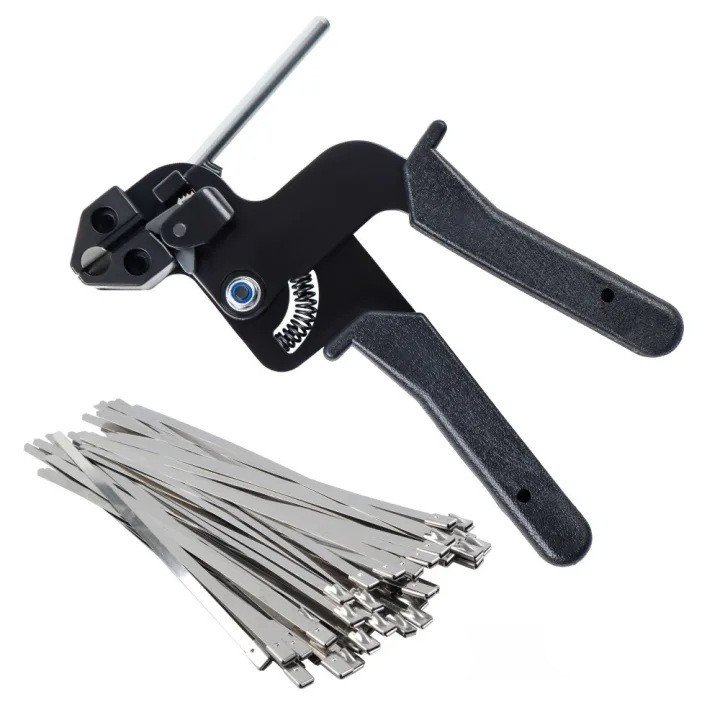
When mechanical loads, chemical exposure, or extreme thermal environments exceed the structural limits of polymeric materials, metal banding provides superior performance. Grade 304 and marine-grade 316 stainless steel cable ties feature specialized width profiles—typically ranging from 4.6 mm for standard strapping up to 7.9 mm or 12.0 mm for heavy-duty industrial bundling.
Ball-Lock Mechanism: Ensures instantaneous locking with low insertion resistance across standard and wide strap variants.
Corrosion & Flame Resistance: Impermeable to UV degradation, aggressive solvents, and severe industrial atmospheres.
Converting Width Measurements: Millimeters to Inches
Global procurement often requires converting between metric engineering drawings and imperial field specifications. The standard cross-reference values include:
2.5 mm ≈ 0.098 in (Industry standard: 0.10″ miniature profile)
3.6 mm ≈ 0.141 in (Industry standard: 0.14″ intermediate profile)
4.8 mm ≈ 0.189 in (Industry standard: 0.19″ or 3/16″ general-purpose profile)
7.6 mm ≈ 0.299 in (Industry standard: 0.30″ or 5/16″ heavy-duty profile)
9.0 mm ≈ 0.354 in (Industry standard: 0.35″ extra heavy-duty profile)
12.0 mm ≈ 0.472 in (Industry standard: 0.47″ or 1/2″ maximum-strength profile)
How to Choose the Right Zip Tie Width
Selecting the correct cable tie width ensures that your assembly holds securely without wasting material or overspending on hardware. Because zip ties are engineered with specific cross-sectional profiles, matching the strap dimensions to your mechanical requirements is essential for long-term reliability.
Determine Bundle Diameter and Weight Requirements
The primary factor in choosing a zip tie width is the static and dynamic load of the bundle. A wider strap provides a higher cross-sectional area and a larger locking pawl, delivering greater loop tensile strength.
Light Bundles (under 18 lbs / 8 kg): Use narrow 2.5 mm (0.10 in) ties for small wire harnesses and signal wiring.
Medium Commercial Bundles (up to 50 lbs / 22 kg): Standard 4.8 mm (0.19 in) ties are the industry benchmark for electrical conduits and maintenance work.
Heavy-Duty Industrial Bundles (120 to 250+ lbs / 55 to 114+ kg): Opt for 7.6 mm to 12.0 mm wide ties to support heavy power cables, industrial hoses, and structural bundling.
Head profile and strap width dictate whether a fastener will pass through mounting channels, panel punch-outs, and narrow raceways.
Enclosed Chassis and Racks: Miniature and intermediate widths (2.5 mm to 3.6 mm) fit through restricted slots where standard 4.8 mm heads will catch or bind.
Flush-Mount Configurations: In tight mechanical clearances, specialized head designs or knowing how to choose the right low-profile zip ties prevents snagging against adjacent components.
Mounting Accessories: Standardize your tie width to match the slot dimensions of associated mounting bases, push mounts, and cable clamps.
Account for Environmental Factors and Operating Conditions
Environmental exposure affects polymer performance over time, making cross-sectional width a critical safety margin.
Thermal Stress: Standard 100% Virgin Nylon 66 operates reliably between -40°C and +85°C. For continuous high-heat environments up to +120°C, a wider cross-section maintains structural integrity against thermal relaxation.
Vibration and Dynamic Shock: Equipment subjected to continuous vibration—such as automotive engines or heavy manufacturing equipment—requires wider 7.6 mm to 9.0 mm ties to resist fatigue wear at the locking teeth.
Extreme Corrosive Environments: In chemical processing or marine installations where polymers degrade, transition to 304 or 316 ball-lock stainless steel cable ties for permanent retention.
Common Applications by Zip Tie Width
Matching the correct zip tie width to your task prevents mechanical failure, avoids cable damage, and keeps installations clean and cost-effective. At WANDU, we manufacture cable ties across various width profiles to meet specific electrical, automotive, and industrial engineering standards.
Electronics and Small Cable Management (Narrow Widths)
Narrow zip ties—typically measuring 2.5 mm to 3.6 mm (miniature and intermediate profiles)—are built for compact assemblies and low-tensile tasks where space is limited:
Telecom & Network Racks: Organizing high-density patch cables, fiber optic bundles, and server chassis wiring without applying excessive pressure.
PCB & Appliance Wiring: Routing low-voltage wiring looms inside home appliances, gaming consoles, and control boards.
Precision Electronics: Fitting through tight mounting eyelets, miniature chassis holes, and delicate wire channels.
Safety Benefit: Narrow widths prevent over-tightening on fragile insulation, reducing the risk of signal attenuation or wire pinching.
Home, Office, and Automotive Uses (Standard Widths)
Standard 4.8 mm zip ties serve as the universal workhorse for everyday commercial, domestic, and vehicular installations. Our standard cable ties provide an optimal balance of 50 lbs (22 kg) tensile strength and flexibility:
Desktop & AV Cable Routing: Consolidating power cords, HDMI lines, and workstation peripherals into neat bundles.
Vehicular Harnesses: Securing under-dash looms, engine bay sensors, and lighting systems; see our guide on automotive wiring harness and component fixation for specialized automotive techniques.
Electrical Panels: Dressing branch circuit wiring and neutral conductor groups within residential and commercial breaker boxes.
Industrial, Commercial, and Construction Securing (Wide / Heavy-Duty)
Wide and heavy-duty ties measuring 7.6 mm to 12 mm or wider deliver the tensile capacity (120 lbs to 250+ lbs) required for harsh, high-load structural installations:
HVAC & Conduit Support: Hanging flexible ductwork, securing heavy conduit runs, and anchoring refrigeration line sets.
Industrial Manufacturing: Fastening heavy power feed lines, pneumatic tubing, and hydraulic hoses subjected to constant machine vibration.
Solar & Outdoor Infrastructure: Fastening large cable trunks along solar racking and utility towers using heavy-duty nylon or stainless steel ties.
Construction & Scaffolding: Securing protective netting, temporary perimeter fencing, and structural building harnesses on active job sites.
Frequently Asked Questions About Zip Tie Sizes and Widths
What is the most common standard zip tie width?
The industry benchmark for standard zip tie width is 4.8 mm (0.19 inches). At Wandu, this is our most frequently manufactured size. It delivers a reliable 50 lb (22 kg) loop tensile strength, making it the universal choice for commercial wire bundling, automotive routing, and everyday panel installations.
How do you accurately measure zip tie width?
To get an accurate measurement, follow these simple steps:
Use digital calipers: Place the jaws across the flat strap body rather than using a standard tape measure.
Measure the center strap: Take your measurement across the smooth mid-section of the band, avoiding the tapered tail tip.
Exclude the locking head: The head housing is significantly wider than the strap itself and will give you a false dimension.
Record in millimeters: Most technical standards (Miniature 2.5 mm, Intermediate 3.6 mm, Standard 4.8 mm, Heavy Duty 7.6mm – 9.0 mm) are categorized in metric sizing.
Does a wider zip tie always hold more weight?
In standard configurations, yes. A wider cross-section provides more material mass and accommodates a broader locking pawl, directly increasing mechanical holding power. However, material grade also plays a critical role. A 4.8 mm tie made from 100% virgin Nylon 66 will consistently outperform a poorly molded wider tie made from regrind plastic. For exact load limits, review our detailed guide on zip tie strength and how much weight they can hold across different width classifications.
Can you connect two thin zip ties together to increase strength?
No. Connecting two zip ties end-to-end (daisy-chaining) increases the usable bundle diameter, but it does not increase tensile strength. The joint remains limited to the load rating of a single locking pawl—if you connect two 18 lb miniature ties, the system will still fail at 18 lbs of force. To support heavier mechanical loads, replace thin wire ties with a single wider strap (such as an intermediate 3.6 mm or heavy-duty 7.6 mm -9.0 mm cable tie) or apply multiple individual ties parallel to each other along the cable run.
Introduction Zip ties (also known as cable ties, tie wraps, tie wire, zap straps) are one of the most common and practical bundling tools in modern life. But who invented zip ties? This article will take you through the complete story—from zip ties history, the invention process, patent application, to their lasting impact. What Are […]
1. Introduction: Why care about zip tie heat resistance? High temp zip ties, also known as high temp cable ties, are commonly used bundling tools in industrial and outdoor high temperature environments. In high temperature working environments such as automotive engine compartments and outdoor solar panels, standard nylon zip ties tend to soften, break, or […]
1.Introduction Whether managing cables in your daily life or bundling items in construction or industry, you’ve likely used zip ties. Their simple structure and ease of use make them ubiquitous in nearly every industry, from electronics manufacturing to construction and even aviation. But have you ever wondered: What are zip ties made of? Understanding the […]
We use cookies to enhance your browsing experience, serve personalised ads or content, and analyse our traffic. By clicking "Accept All", you consent to our use of cookies.
Looking For High Quality Nylon Cable Ties At A Great Price?
Order now to experience cost-effective cable tie products that provide convenience and protection for your work and life.




 EN
EN  AR
AR  ES
ES  PT
PT  FR
FR  RU
RU  DE
DE  KO
KO  JA
JA  IT
IT  NL
NL