Choosing the right types of cable markers can make a major difference in identification, maintenance, and long-term reliability. Whether your wires are already terminated, exposed to vibration, or likely to be reworked, the wrong marker can slip, fade, or fail when you need it most.
In this guide, you’ll learn how clip-on, slide-on, heat-shrink, tie-on, and wrap-around cable markers work, where each type fits best, and how to choose the right option for your cable run.
What Cable Markers Do in a Cable Run
Cable markers identify individual wires, cables, and cable groups throughout an installation. Clear legends, numbers, or symbols help technicians trace connections, verify terminations, and complete maintenance with less risk of error.
The right cable marker also supports orderly cable management. It keeps identification visible at the point of use, whether the wire is already terminated, exposed to movement, or installed in a demanding working environment. Different types of cable markers suit different installation stages, cable sizes, and durability requirements.
Clip-On Wire Markers: Post-Termination and Reusable
How Clip-On Cable Markers Attach to a Terminated Wire
Clip-on cable markers are designed for wires that are already terminated. The marker opens or clips around the cable, so there is no need to remove a terminal, connector, or cable tie before identification. This makes installation practical during maintenance, retrofits, and field rework.
The visible legend can show cable marker numbers, letters, or short circuit references, positioned where the number stays readable after the wire is dressed into the duct.
Reusability and Retention Under Vibration
A clip-on wire marker can usually be removed, repositioned, or replaced without disturbing the cable connection. This is useful when circuits change during commissioning or when equipment is serviced.
Retention depends on the marker’s fit around the wire and the level of movement in the application. On vibrating equipment, check that the marker remains securely clipped and does not slide into a position where the legend becomes difficult to read.
Where Clip-On Fits and Where It Does Not
Clip-on cable markers work well for:
Terminated wires that need fast identification
Maintenance and retrofit work
Temporary or changeable wire legends
Control panels, equipment wiring, and cable assemblies
They are less suitable where the marker must be permanently bonded to the cable or exposed to severe abrasion, chemicals, or continuous movement. In those conditions, a more secure marker construction may provide better long-term identification.
WANDU does not mould clip-on markers. Where a panel needs post-termination identification with better retention, the EC-J interlocking marker snaps onto the wire without a printer, and label cable ties cover the same job on larger bundles — see EC-J interlocking cable markers.
Slide-On Wire Markers: Pre-Termination and Permanent
Sleeve Mechanics and the Interlocking Variant
Slide-on wire markers are installed before a terminal, connector, or plug is fitted. The marker sleeve slides along the conductor and stays in position after termination. This makes it a practical choice for new control panels, machines, and harnesses where the wire can be accessed from the end.
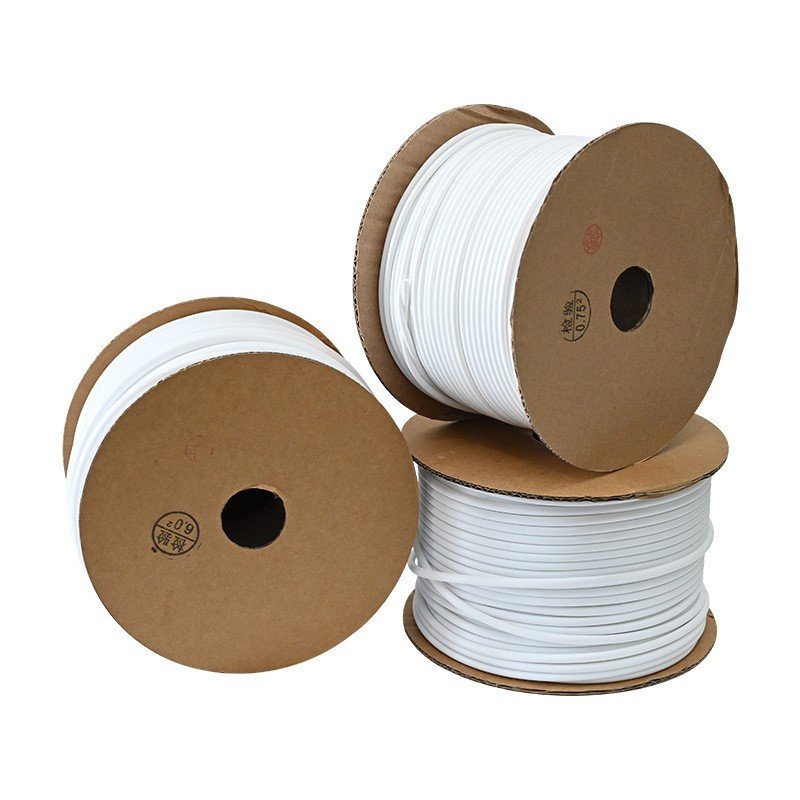
A printable PVC marking tube covers inner diameters from 0.5 mm to 10 mm, with a wall thickness of 0.4 mm to 0.7 mm, which spans 0.2 mm² to 25 mm² of panel wiring (AWG 24 to 4). The compound is rated -40°C to 105°C and carries UL94 V-0, so it holds up against the heat rise inside a closed enclosure. Because the legend is printed into the tube rather than attached to it, there is no adhesive layer to peel. These are supplied as printable PVC marking tube on continuous spools or cut lengths.
An interlocking cable marker uses matching sections that connect around the wire. EC-J style markers use a chevron cut, and each character is hot-stamped into the PVC surface from 0-9 and A-Z, so the legend sits in the material rather than on it. Characters arrive on a marker carrier strip and snap together one at a time, so a multi-digit wire number can be built on site with no printer in the loop. That gives a more secure fit than a loose sleeve while keeping the legend aligned — see EC-J interlocking cable markers. Choose the marker style according to the wire construction, available installation space, and required retention.
Matching Cable Marker Sleeve ID to Wire OD
The inside diameter of the cable marker sleeve should match the wire’s outside diameter, including insulation. The working rule is that ID equals the OD, or exceeds it by no more than 0.5 mm. A sleeve tighter than the wire has to be stretched over the conductor, which distorts the legend horizontally and makes the numbers wider than they are tall. One that is much looser will rotate or slide along the run, and the print stops facing the reader.
Before ordering slide-on wire markers, check:
Wire outside diameter, including insulation
Marker sleeve inside diameter
Available space near the terminal
Whether the marker must remain fixed in a vertical or horizontal position
For mixed wire sizes, using the correct marker range for each conductor gives a cleaner installation and more reliable identification.
Printing Legends Before or After Installation
Slide-on wire markers may be prepared with cable marker numbers, letters, or short identification codes before installation. Pre-printed markers speed up repetitive production work and help keep wire identification consistent across a panel or equipment build.
For flexible job-site work, printable wire markers can be marked before the sleeve is fitted, provided the printing method suits the marker surface. Keep the legend clear and position it so it remains visible after termination. In a full panel run, markers are usually cut from a continuous spool in wire-number order, so the sequence on the bench matches the sequence on the schematic.
Heat-Shrink Wire Markers: A Bonded Legend
How Shrinking Locks the Print in Place
Heat-shrink wire markers use a printed sleeve that contracts around the cable when heated. The reduced diameter creates a close, secure fit, helping keep the legend aligned and readable during normal handling. This makes heat-shrink cable markers suitable for organised wire identification where a permanent marker is preferred.
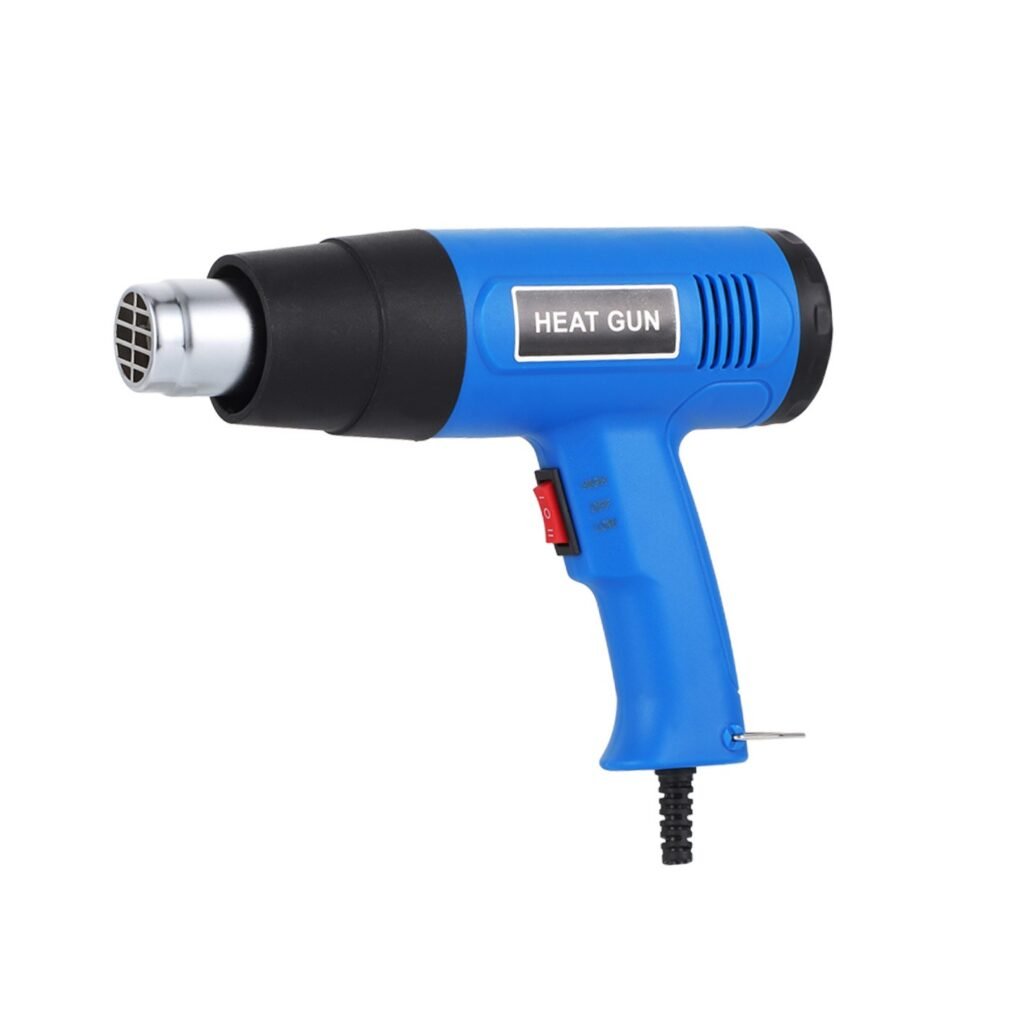
Use a controlled heat source and follow the sleeve’s application guidance. The correct process is explained in this guide to shrinking heat-shrink sleeves.
Chemical, Heat and Abrasion Limits
A bonded marker generally stays in place better than a loose label, but its service life still depends on the material, temperature and working environment. Before selecting heat-shrink wire markers, consider exposure to:
Oil, coolant and cleaning chemicals
Heat from equipment or nearby conductors
Repeated rubbing, pulling or vibration
Outdoor sunlight and changing weather conditions
Do not assume every heat-shrink cable marker has the same resistance. Match the marker construction to the cable route and the expected operating conditions.
When a Heat-Shrink Tube Beats a Pre-Printed Marker
A plain heat-shrink tube is often the stronger choice when the identification must stay bonded to the cable and space is limited. Where the tube is to carry a legend, it has to be printed or marked before it is shrunk onto the conductor; a pre-printed heat-shrink marker sleeve is a different product from a plain tube, and the two are not interchangeable on the same line item.
Choose another type of wire marker when the cable is already terminated, the legend may change during service, or heat cannot be safely applied. For general background on this product format, see what heat-shrink tube is and how it works.
Tie-On Cable Markers and Wrap-Around Wire Labels
Tie-On Markers for Bundles and Large Cables
Tie-on cable markers use a fastening point, cord, or cable tie to stay attached to a wire, cable, or bundle. They work well when the cable is already terminated, too large for a sleeve, or grouped with other conductors. A clear marker can show cable numbers, circuit references, or service information without needing to remove connectors.
WANDU supplies these as label cable ties: a nylon tie body carrying a flag that faces outward however the harness is later routed.
For larger bundles, position the marker where it remains visible and secure. If the bundle also needs mechanical organisation, pair the marker with correctly installed nylon cable ties for durable lashing. The marker identifies the bundle, while the tie helps hold the wiring in place.
Wrap-Around Wire Labels: Fast to Apply, Finite Life
Wrap-around wire labels combine a printed area with an adhesive section. The label is wrapped around the cable by hand, making it useful for field identification, maintenance work, and completed wiring. It can be applied without disconnecting the wire, which helps reduce installation time.
The adhesive surface must contact clean, dry cable insulation for reliable holding. Oil, dust, coolant, heat, and sunlight may shorten service life, so wrap-around wire labels are best suited to conditions that match their adhesive and printing limits. For demanding environments, use a marker design intended for stronger mechanical retention rather than relying only on adhesive.
WANDU does not supply self-laminating wrap-around labels. Where a bundle needs the same flexibility without an adhesive layer, label cable ties carry a flag that can be written or printed and are cinched on instead.
Comparison: Timing, Wire Range, Rework and Cost
Choosing among the main types of cable markers depends on when the marker is installed, the wire size, the need for rework, and the expected service conditions. The table below gives a practical comparison.
Marker type
Installation timing
How it holds
Rework
Relative cost
Clip-on cable markers
After termination
Spring tension on the jacket
Easy to remove and reposition
Low to medium
Slide-on wire markers
Before termination
Friction along the sleeve length
Limited after assembly
Low
Heat-shrink wire markers
Usually before termination
Recovered diameter gripping the jacket
Not normally reusable
Medium
Tie-on cable markers
Before or after termination
Cinch around the cable or bundle
Generally easy to replace
Low to medium
Wrap-around wire labels
After termination
Adhesive plus a laminated tail
Easy to replace, but not usually reusable
Low
Pre-Termination vs Post-Termination
Slide-on and heat-shrink cable markers are normally fitted before a connector, terminal, or gland is installed. This gives a neat, stable result, but the marker must be selected and positioned during assembly. Removing a terminal may be necessary when the legend needs to be changed later.
Clip-on cable markers, tie-on markers, and wrap-around labels can be installed after the wire is already terminated. They suit maintenance work, completed control panels, and field identification because they reduce disassembly time. Their main limitation is that retention and durability depend on the marker design and the service environment.
Durability, Reusability and Relative Cost
Best for quick rework: Clip-on and tie-on markers are easier to remove or replace.
Best for a permanent fit: Heat-shrink markers provide a close, bonded sleeve after shrinking.
Best for simple installation: Slide-on markers offer a straightforward option when fitted before termination.
Best for temporary or changing identification: Wrap-around wire labels are quick to apply and replace.
Relative cost includes more than the marker price. It also covers printing, installation time, tools, terminal removal, and future maintenance. For harsh applications, material performance and temperature exposure matter more than the unit price, because a legend that fails means a second intervention on the same wire.
How Each Type Fails in Service
Clip-On Retention Loss on Vibrating Equipment
Clip-on cable markers can loosen when equipment produces continuous vibration or repeated movement. The marker holds by spring tension against the jacket, so a size that is even slightly loose will walk along the wire, and once a drive or contactor starts cycling it usually ends up in the bottom of the duct. Watch for axial drift rather than outright loss: a marker that has moved 2 mm to 3 mm from where it was fitted is already at the first stage, and the next inspection tends to find it gone. Select a marker that matches the wire outside diameter and inspect it during routine maintenance, especially on motors, drive panels, and mobile machinery. Where a panel runs continuously, a marker that grips mechanically rather than by spring pressure is the safer specification.
Legend Damage When Heat-Shrink Over-Softens
Heat-shrink wire markers suffer most from excessive heat during installation. Over-heating rarely destroys the sleeve outright; it softens the compound enough for the print to smear while the tube is still being worked into position, and the damage only shows once the marker has cooled. Three visible signs tell you the tube has been taken too far: the surface turns glossy and slightly translucent, the edge of the legend goes white, and the end of the sleeve curls back instead of lying flat against the jacket. Apply controlled heat evenly from the middle outward and stop once the marker has tightened firmly around the wire and the print is sharp. For practical installation guidance, see this guide to using heat-shrink tubing without a heat gun.
Adhesive Failure on Oiled or Dusty Surfaces
Wrap-around wire labels and adhesive cable labels can lift when applied to oily, dusty, wet, or uneven surfaces. Contamination prevents the adhesive from bonding properly, and the failure starts at one end: the free tail lifts first, usually the end pressed down last, and within a few weeks the label curls back far enough to hide part of the legend. Heat and moisture accelerate edge lifting. Clean and dry the cable before application, press the label down from the middle outward rather than end to end, and use a clip-on, tie-on, or heat-shrink cable marker when stronger mechanical retention is needed.
How to Choose: Three Questions in Order
Choosing among the main types of cable markers becomes easier when you check the installation timing, working environment, and expected service changes in that order.
Is the Wire Already Terminated?
Wire condition
Suitable cable marker types
Already terminated
Clip-on wire markers, wrap-around wire labels, and some tie-on cable markers
Not yet terminated
Slide-on wire markers and heat-shrink wire markers
Large cable or cable bundle
Tie-on markers or larger wrap-around cable labels
For completed panels, harnesses, and field repairs, post-termination markers reduce rework. For new assemblies, slide-on or heat-shrink markers can be installed before the connector or terminal is fitted.
What Will Touch It: Oil, Coolant or Sunlight?
Match the marker to the exposure, not only to the wire size. Oil, coolant, dust, heat, abrasion, and sunlight can affect the print, adhesive, or marker retention.
Indoor, clean areas: Standard clip-on markers or printable wire labels may be suitable.
Vibrating equipment: Use a marker with secure retention and avoid relying on a loose fit.
Oil or coolant exposure: Choose a material and printing method intended for the working environment.
Outdoor or sunlit areas: Use cable labels designed for outdoor exposure, and check the UV and temperature rating of the material rather than the format of the marker.
Will the Legend Change On Site?
If cable numbers or circuit names may change during commissioning, choose a removable or replaceable option, such as a clip-on cable marker or wrap-around label. For fixed identification, a slide-on sleeve or heat-shrink cable marker provides a more permanent result.
You should also check whether the legend must be printed before installation or updated at the job site. This simple decision helps balance installation speed, rework, durability, and total marking cost.
Frequently Asked Questions
Can clip-on cable markers be reused on different wires?
Yes. Clip-on cable markers can usually be removed and fitted to another wire when the marker remains undamaged and the new wire matches its size range. Check retention after refitting, especially on equipment exposed to vibration.
Which cable marker type is best for outdoor use?
The best choice depends on exposure. For outdoor wiring, select a marker designed to withstand the expected sunlight, moisture, temperature changes, and abrasion. Heat-shrink markers may provide a secure, sealed fit, while tie-on markers can suit larger cables and bundles.
Do heat-shrink markers need a special heat gun?
A suitable controlled heat source is required to shrink the sleeve evenly. Follow the marker supplier’s installation instructions and avoid excessive heat, which can damage the legend, sleeve, or cable insulation.
What is the difference between a cable marker and a wire marker?
The two terms describe the same family of products. A wire marker is the usual term in North America, while a cable marker is more common in the UK and across European and Asian supply chains; both identify a conductor or a cable so it can be traced. Suppliers differ in which word they put on the catalogue page — Brady lists the category as wire markers, HellermannTyton as cable markers — but the fixing methods and the sizing rules are the same. Choose by installation timing and outside diameter, not by the word on the box.
How do you choose a wire marker sleeve size?
Match the sleeve to the cable or wire’s outside diameter, including insulation, rather than to the conductor cross-section. The inside diameter should equal the outside diameter or exceed it by no more than 0.5 mm; a tighter sleeve has to be stretched over the conductor and the legend distorts, while a much looser one rotates and the print stops facing the reader. Confirm the installation stage at the same time, because a slide-on sleeve has to be fitted before the terminal is crimped, and leave enough length for the legend plus a small margin at each end.
About Wandu — Zhejiang Wandu Plastic Co., Ltd. has produced nylon cable ties in Yueqing, Zhejiang, China since 2011. Our ISO 9001 certified factory runs 10 high-speed injection moulding machines and 8 professional cable tie test benches, covering nylon cable ties, stainless steel cable ties, cable clips, cable glands and spiral wrap. Products are CE and RoHS compliant and ship to buyers in 50+ countries. Every technical question below is answered by our own engineering team.
Is Electrical Tape Waterproof or Water-Resistant? Standard vinyl electrical tape is one of the most widely used supplies in electrical installations, maintenance, and repairs. However, confusing its protective properties can lead to damaged wiring or severe electrical hazards. The Direct Answer: Waterproof vs. Water-Resistant Standard electrician’s tape is water-resistant, not waterproof. While the polyvinyl chloride […]
Understanding Metal vs. Plastic Zip Ties Not all zip ties are created equal. Fasteners vary extensively in chemical composition, locking design, structural width, and mechanical load limits. Selecting between polymer and metallic fasteners depends entirely on environmental exposure, mechanical stress, and application demands. What Are Plastic Zip Ties? Plastic cable ties, commonly known as nylon […]
This article thoroughly explains “zip ties strength: how much weight can they hold”—covering rated tensile strength, key influencing factors, material and size selection. It also provides selection guidelines and practical considerations, including comparison tables and FAQs, to help you quickly choose the right cable tie and ensure safe use. Definition and Data of Loop Tensile […]
We use cookies to enhance your browsing experience, serve personalised ads or content, and analyse our traffic. By clicking "Accept All", you consent to our use of cookies.
Looking For High Quality Nylon Cable Ties At A Great Price?
Order now to experience cost-effective cable tie products that provide convenience and protection for your work and life.




 EN
 AR
 ES
 PT
 FR
 RU
 DE
 KO
 JA
 IT
 NL
 TR