Why Cutting Stainless Steel Zip Ties Requires the Right Approach
Cutting stainless steel zip ties requires a fundamentally different technique than trimming standard nylon fasteners. Engineered for harsh industrial environments, automotive exhaust systems, and marine applications, these metal fasteners deliver uncompromising security. Attempting to cut or remove them without the proper strategy will destroy your tools, ruin expensive installations, and pose severe safety hazards.
High Tensile Strength and Metal Durability
Unlike flexible plastic ties, stainless steel cable ties are crafted from high-grade 304 or marine-grade 316 stainless steel, delivering exceptional mechanical properties:
Extreme Tensile Capacity: Designed to withstand loop tensile ratings from 100 lbs to over 350 lbs, making them virtually impossible to snap or tear through brute force.
Severe Environment Resistance: They resist temperatures exceeding 1000°F (538°C), continuous UV radiation, and harsh chemical exposure.
Tool Wear: Standard household scissors or light-duty wire snips will immediately dull, notch, or shatter against heavy duty steel ties.
Risk of Damaging Bundled Wires and Cables
Stainless steel does not stretch or yield once tensioned. Cutting them in tight spaces presents distinct challenges:
Zero Clearance: A properly tensioned metal cable tie sits completely flush against cable jackets, leaving little to no margin for tool positioning.
Crush and Slice Hazards: Forcing dull cutters or twisting a blade under the band applies extreme pressure directly onto the insulation, easily puncturing critical wiring, fiber optics, or hydraulic hoses.
Costly Downtime: A single slip while severing a tie can cause immediate electrical shorts, leading to expensive line troubleshooting and rewiring.
Danger of Razor-Sharp Metal Edges
Severed metal behaves very differently from trimmed plastic:
Surgical-Grade Edges: When cut improperly, the truncated edge of a metal zip tie acts like a razor blade under tension.
High Laceration Risk: Jagged burrs and exposed corners frequently cause severe cuts to technicians during subsequent maintenance or cable pulling.
System Vibration Hazards: In high-vibration applications—such as automotive or aerospace assemblies—an exposed, sharp steel edge can vibrate against adjacent conduits, gradually sawing through protective sheaths over time. Achieving a safe, clean cut is critical for maintaining workplace safety and equipment integrity.
Best Tools for Cutting Stainless Steel Zip Ties
Standard cutting tools simply cannot handle the sheer tensile strength of metal fasteners without blunting or snapping. When learning how to cut stainless steel zip ties cleanly and safely, using the right gear makes all the difference between a clean flush cut and a dangerous, jagged edge.
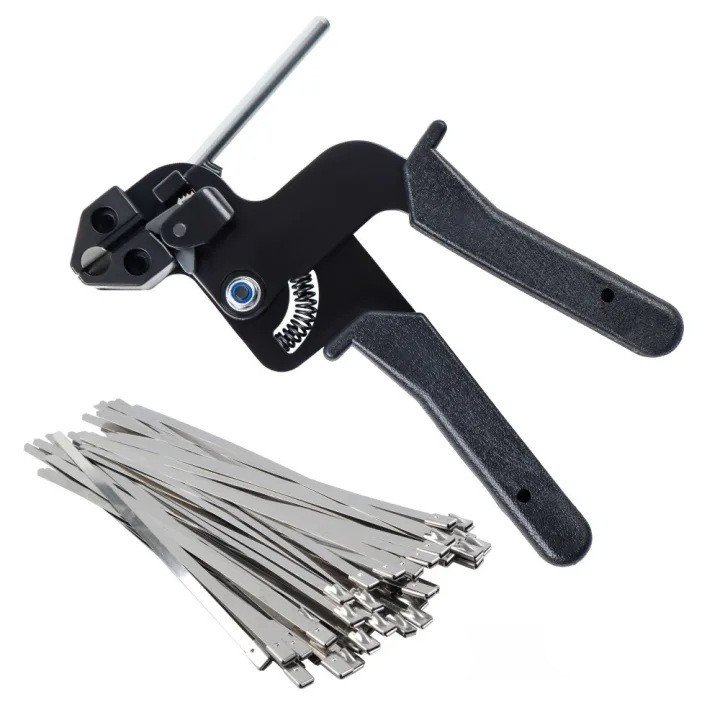
Specialized Stainless Steel Cable Tie Gun
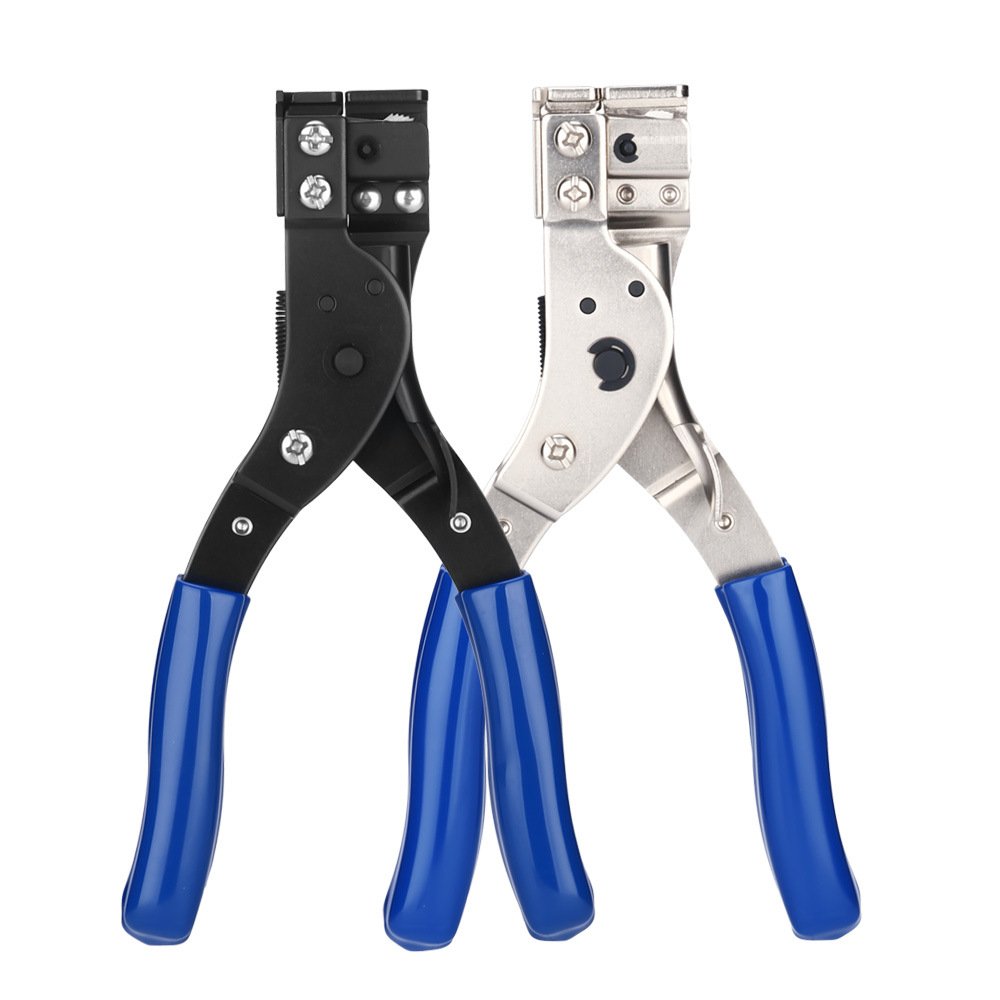
If you regularly work with metal fasteners, a dedicated stainless steel zip tie gun is by far your best investment. At WANDU, we always recommend pairing heavy-duty steel ties with a proper tensioning tool because it combines two critical functions into one motion: tensioning and shearing.
Flush cutting: It slices the tie immediately against the locking head, leaving zero protruding sharp metal.
Uniform tension: It tightens the tie to an exact, preset tension before automatically engaging the blade, which eliminates damage to sensitive wiring.
Speed: High-volume industrial bundling becomes fast and effortless compared to manual hand cutting.
High-leverage diagonal cutters—often called side cutters or dykes—are the most common handheld solution for trimming or removing installed metal ties. However, everyday electrical cutters won’t do the job; you need tools engineered specifically for hard metals.
Carbide or hardened steel jaws: Look for induction-hardened cutting edges designed for piano wire or hardened steel.
Cutting technique: Position the tie as deep inside the cutter’s jaws as possible to maximize leverage. Avoid twisting the tool side-to-side, which can pit the cutting edge.
Tin Snips and Aviation Shears
Aviation shears and straight-cut tin snips provide exceptional mechanical leverage, making them great metal cable tie cutters for thick or extra-wide ties.
Pros: The compound pivot design requires minimal hand effort to slice cleanly through tough 304 or 316 stainless bands.
Cons: Their wide, bulky jaws struggle to fit into tight enclosures or sit completely flush against the tie’s ball-lock head, often leaving a tiny tail that requires deburring.
Rotary Tool (Dremel) with Cut-Off Wheel
When you need to remove an overtightened tie without squeezing cutting jaws under the strap—risking the bundle beneath—a rotary tool equipped with a fiberglass-reinforced cut-off wheel provides a touch-free alternative.
Precision cutting: You slice solely through the outer metal band using high RPMs rather than brute force.
Protection: Slide a thin metal feeler gauge or putty knife under the strap directly below your cut line to act as a heat- and spark-shield for the cables beneath.
Step-by-Step Guide: How to Cut Stainless Steel Zip Ties Safely
Cutting through metal cable ties requires a methodical technique. Unlike plastic fasteners, stainless steel resists dull blades, stores tension, and leaves razor-sharp edges if handled improperly. Follow this straightforward process to trim or remove heavy-duty steel ties cleanly without damaging your hands or bundled lines.
Step 1: Put on Essential Safety Gear
Before touching any cutting tool, put on proper personal protective equipment. Thin metal bands can spring back unexpectedly once severed, turning small fragments into flying hazards.
Cut-resistant work gloves: Use gloves rated ANSI Cut Level A3 or higher to shield your hands against sharp sheet metal edges and sudden slips.
Safety glasses: Wear impact-rated eye protection to safeguard against flying metal tails that snap under tension.
Step 2: Position the Cutting Tool Close to the Fastener
Placement determines whether you make a clean cut or damage your wiring.
When trimming excess tail during installation, slide your tool flush against the locking head.
When removing an existing tie, wedge the cutting jaws underneath the strap where it exits the ball-lock head. Angle the cutting face slightly away from the wiring harness. If you followed our standard guide on how to use metal zip ties, you should have enough clearance to slip the jaw tip underneath without pinching wire insulation.
For tight bundles, slip a thin plastic strip or metal shim directly beneath the cut point as a protective buffer.
Step 3: Make a Clean Cut with Controlled Pressure
Apply firm, steady pressure directly through the jaws of your metal cable tie cutters or diagonal shears.
Avoid twisting: Do not twist, wrench, or bend the tool sideways while squeezing. Twisting warps the cutting blades and creates ragged, barbed metal points.
Using a manual tool: Squeeze straight through the band until you feel a clean shear.
Using a tensioning tool: If using a specialized stainless steel zip tie gun, squeeze the tension trigger until the band reaches the preset firmness, then engage the cutoff lever to slice the band flush against the head automatically.
Step 4: Inspect Bundled Cables for Accidental Damage
Once the cut is complete, pull the loose band free from the assembly and immediately drop the scrap into a disposal bin.
Examine the outer jacket of your hoses or electrical lines for nicks, scuffs, or pinches caused by the tool tips.
Check the remaining stub on the locking head. If any sharp burr remains exposed on the bundle, address it immediately before running adjacent lines or closing the access panel.
How to Deal with Sharp Metal Edges After Cutting
Whenever you trim metal cable ties, the remaining tail often leaves a razor-sharp burr. Leaving that edge exposed poses a serious snag hazard to your hands and risks slicing into sensitive cable insulation over time. Here is how we neutralize dangerous ends on heavy-duty steel ties right after trimming.
Filing Down Burrs with a Metal Needle File
A small metal needle file is the most reliable way to take off the micro-burrs left on stainless steel zip ties.
File in one direction: Push the file forward across the trimmed edge rather than scrubbing back and forth to keep the metal smooth.
Focus on the corners: Work the top and bottom corners of the cut strap until they feel rounded and dull to the touch.
Clear metal shavings: Wipe away any fine stainless steel dust immediately to prevent it from settling inside electrical enclosures.
If you do not have a file handy on site, folding the cut edge away from exposure works fast:
Grab needle-nose pliers and clamp the very tip of the trimmed steel strap.
Bend the exposed tip 90 to 180 degrees inward, curling it toward the bundled bundle or tucking it back under the tie head.
Squeeze firmly with the pliers to flatten the fold flush against the strap surface.
This tucks the sharp point completely out of reach, ensuring maintenance technicians will not catch skin or clothing on it later.
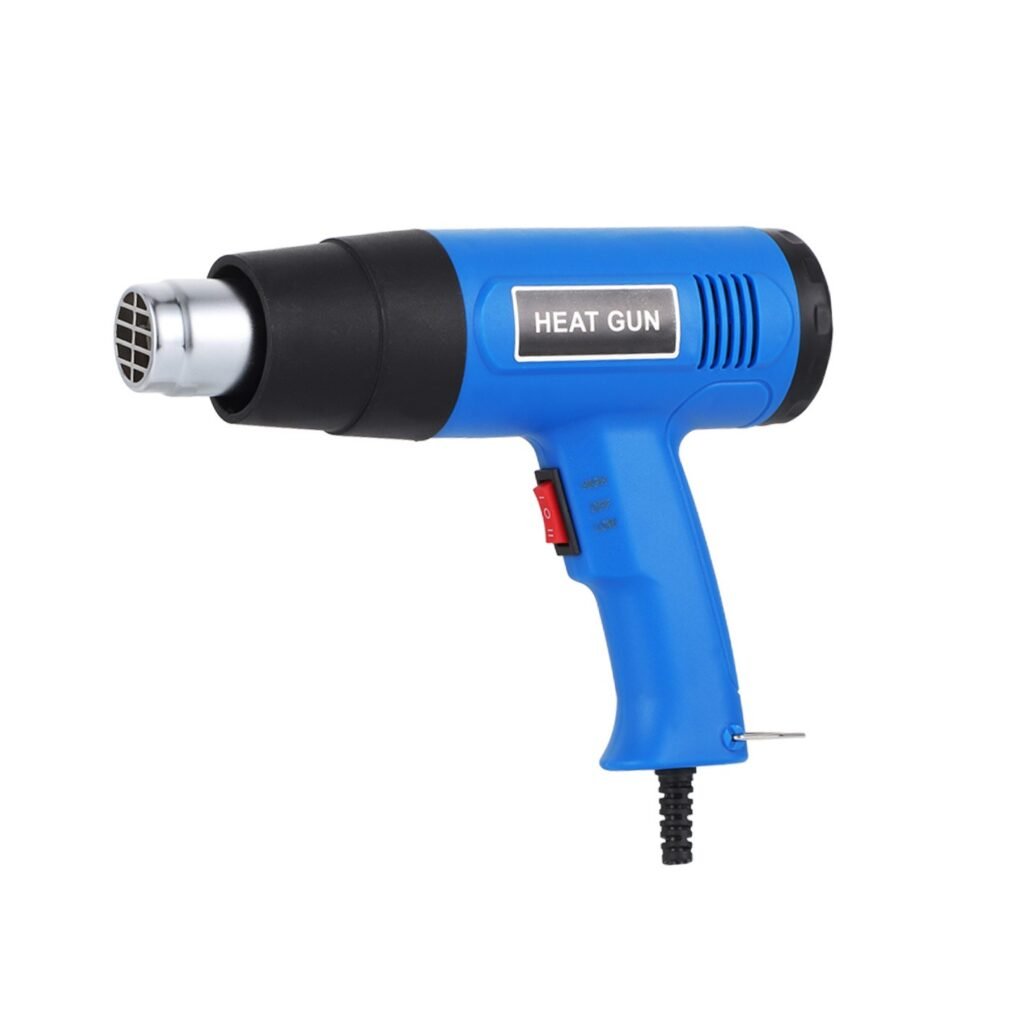
Covering Sharp Ends with Heat Shrink Tubing
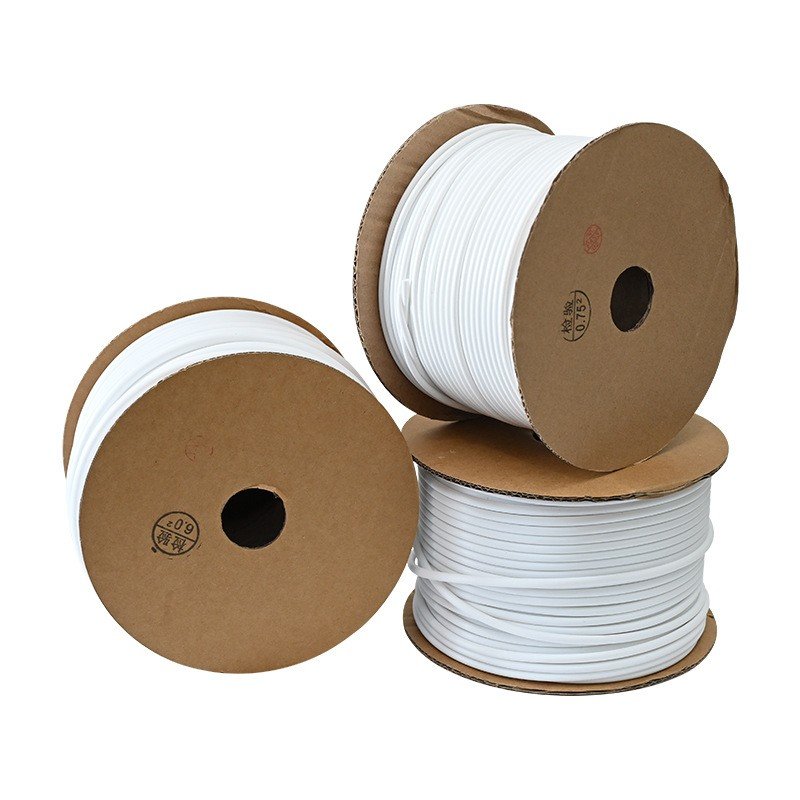
For critical wiring harnesses where vibration could cause a trimmed tie to rub against adjacent insulation, insulation sleeving adds an extra protective cushion.
Step
Action
Best Practice
Sizing
Cut a short piece of dual-wall or adhesive-lined tubing
Ensure it extends at least 5 mm past the cut metal tip
Placement
Slide the sleeve over the severed end and the clasp
This rubberized cap permanently encapsulates the steel edge, guarding your wiring against abrasions in high-vibration engine bays and industrial control panels.
Can You Remove Stainless Steel Zip Ties Without Cutting?
Yes, you do not always have to cut stainless steel zip ties to take them off. While standard metal cable ties provide a permanent, tamper-resistant hold, knowing how to remove cable ties safely and efficiently without cutting saves your cables from accidental nicks and allows for quick setup adjustments.
Unlocking Ball-Lock Ties Using a Thin Pin or Screwdriver
A standard ball lock stainless steel cable tie holds its grip using a small internal ball bearing trapped inside an angled locking head. Pulling the tie tight wedges the ball firmly against the metal strip. To disengage this mechanism without cutters:
Find the entry slot: Locate the small opening at the rear or underside of the tie head where the tail feeds through.
Depress the ball: Insert a heavy-duty sewing needle, a jeweler’s flathead screwdriver, or a stiff paperclip straight into the head channel behind the ball bearing.
Release the grip: Push the ball forward against its internal ramp to release the wedge pressure applied to the strap.
Back out the tail: Keep steady pressure on the tool while pulling the metal strap backward out of the locking head.
Identifying and Releasing Reusable Metal Cable Ties
Certain jobs require routine access or wire repositioning, where reusable stainless steel cable ties make far more sense than permanent ties. Identifying and operating these ties takes only a moment:
Visual cues: Unlike smooth-headed ball-lock ties, reusable metal zip ties feature an external spring-loaded tab, a fold-over tab buckle, or a screw-clamp head.
Releasing the buckle: For tabbed ties, simply use a flat-blade screwdriver or small pliers to pry the locking flap open. The steel band slides out smoothly without bending or kinking.
Inspection: Once opened, inspect the band and locking teeth. High-grade WANDU reusable metal ties can be re-tensioned immediately, provided the band remains flat and free from deep creases.
Common Mistakes to Avoid When Cutting Metal Cable Ties
Trimming metal fasteners requires a completely different technique than working with standard plastic wraps. When dealing with heavy duty steel ties, small missteps can ruin expensive cabling or lead to severe hand lacerations. Here are the most common pitfalls we encounter in the field and how to steer clear of them.
Using Standard Household Scissors or Weak Cutters
Never reach for utility shears, household scissors, or cheap wire strippers when trimming stainless steel cable ties. These tools lack the hardened cutting edges required to shear through grade 304 or 316 steel.
Tool damage: The high tensile strength of metal zip ties will immediately notch, dull, or warp soft steel blades.
Slipping hazards: Weak cutters tend to slide off the slick metal strap rather than biting into it, sending sharp edges directly toward your fingers.
Crushed bundles: Squeezing with underpowered jaws forces you to exert excessive pressure, which crushes the underlying wire jacket before the tie actually cuts. Always stick to purpose-built metal cable tie cutters or specialized diagonal pliers.
Twisting or Prying the Tie During the Cut
If your cutting tool does not slice completely through the strap on the first squeeze, resist the urge to twist, bend, or pry the jaws back and forth.
Twisting work-hardens the steel unevenly, tearing the band rather than slicing it cleanly. This creates jagged barb-like edges and pinches the underlying cables. Forcing and prying also compromises your wiring bundle, directly shortening the expected service life of cable ties and leaving jacketed lines exposed to moisture or abrasion. Always hold the cutting head strictly perpendicular to the tie and deliver a single, clean, controlled bite.
Leaving Exposed Jagged Edges
Leaving an unfinished tail protruding from a ball lock stainless steel cable tie creates a razor-sharp hazard on the job site:
Snagging risks: Technicians pulling future runs through the same conduit or tray will slice their arms or strip surrounding wire insulation against protruding metal tails.
Vibration wear: In automotive or marine engine bays, high vibration causes rough metal ends to saw directly into adjacent rubber hoses and harnesses over time.
The fix: Always aim for a flush cut directly against the locking head. If your tool leaves a slight tail, immediately roll it inward or tap it flat against the fastener body so no exposed edge faces outward.
Frequently Asked Questions About Cutting Metal Zip Ties
Can metal zip ties be reused after being cut?
No, once you sever the band, a standard metal tie cannot be salvaged. Trimming removes the required lead length needed for the internal ball bearing to grab and hold tension. If you want to understand why the locking mechanism depends on an intact band, check out our guide on how do stainless steel zip ties work. Unless you intentionally purchased specialty release-tab ties and bypassed cutting altogether, severed ties must be recycled and replaced.
How do you achieve a flush cut on stainless steel ties?
The single best way to achieve an edge-free, flush cut is with a dedicated cable tie gun for stainless steel ties. Manual flush-cut snips rarely cut clean against metal and will ruin their blades. At WANDU, we recommend using a professional tensioning tool because it automatically grips the strap, tensions it to your exact setting, and shears the tail flush against the locking head, completely eliminating razor-sharp burrs in a split second.
Can standard wire cutters handle marine-grade 316 stainless ties?
Standard household diagonal cutters or electrical pliers will fail against marine-grade 316 stainless steel. Copper wire cutters use soft steel jaws that will dent, notch, and dull instantly against high-tensile 316 alloys. When assessing if metal zip ties are better than plastic for harsh environments, remember that the extreme alloy density giving them superior corrosion resistance also makes them tough to cut. Always use hardened carbide-tipped cutters, aviation snips, or a heavy-duty stainless tie cutter designed for steel wire.
High quality zip ties are a type of tying tool widely used in various industries. Whether it is cable management for household appliances, fixing of industrial equipment, or material tying in construction projects, nylon cable ties are favored for their excellent durability and versatility. This article will introduce the characteristics, specifications, application scenarios and purchase […]
Have you ever wondered how are cable ties made? Cable ties, also known as zip ties, are essential tools for organizing and securing wires and cables. From raw material selection to the final packaging, the manufacturing process of cable ties involves several intricate steps. In this blog post, we’ll explore the fascinating journey behind the creation […]
Understanding the Zip Tie Locking Mechanism How Do Standard Zip Ties Work? Standard zip ties, also known as cable ties, operate on a simple yet highly effective one-way ratcheting mechanism. The design consists of a flexible nylon strap with integrated gear racks (teeth) and a head containing a tiny, flexible locking prong (the ratchet). When […]
We use cookies to enhance your browsing experience, serve personalised ads or content, and analyse our traffic. By clicking "Accept All", you consent to our use of cookies.
Looking For High Quality Nylon Cable Ties At A Great Price?
Order now to experience cost-effective cable tie products that provide convenience and protection for your work and life.


 EN
EN  AR
AR  ES
ES  PT
PT  FR
FR  RU
RU  DE
DE  KO
KO  JA
JA  IT
IT  NL
NL  TR
TR