Why Cable Management Matters in Data Center Racks and Cabinets
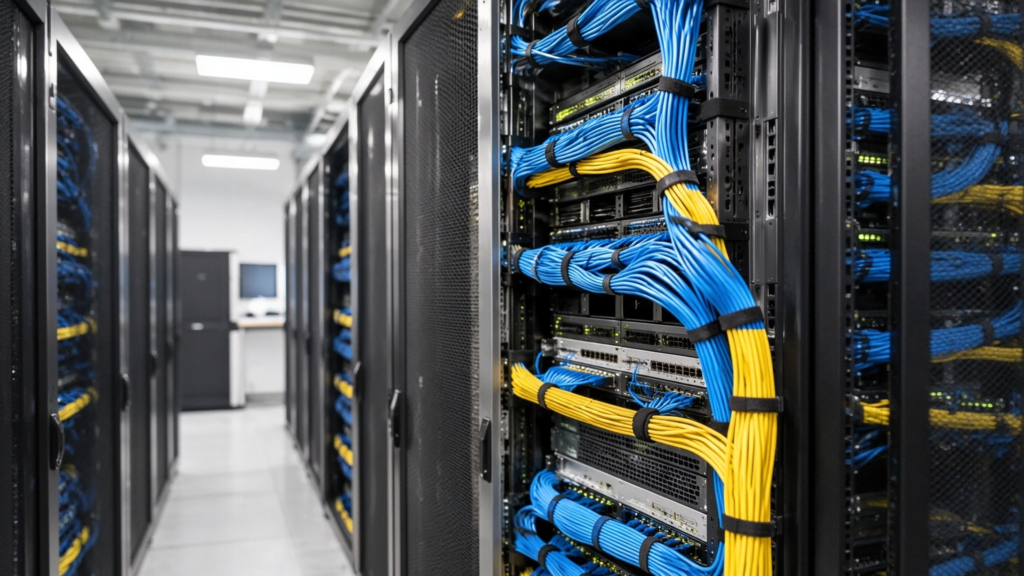
Effective server rack cable management turns a tangled cabinet into a reliable, high-performing network environment. Without structured routing and secure bundling, loose cords create operational bottlenecks that threaten uptime and hardware longevity.
Prevent hot spots: Grouping cords neatly along rack rails using nylon cable ties and tie mounts clears space for unobstructed air circulation.
Lower cooling strain: Better airflow helps your cooling units maintain steady operating temperatures without overworking.
Protecting Signal Integrity and Preventing Cable Damage
Loose cables are vulnerable to physical stress, sharp cabinet edges, and accidental tugs during routine cabinet access.
Eliminate physical wear: Applying spiral wraps and cable protection sleeves shields wiring systems from abrasion and mechanical damage.
Reduce port tension: Anchoring bundles with adhesive or screw-mounted cable clamps prevents heavy cords from pulling down on sensitive switch ports and connectors.
Simplifying Maintenance, Troubleshooting, and Scalability
A messy rack turns a five-minute patch change into a frustrating, high-risk tracing job.
Speed up identification: Using coloured cable ties lets technicians separate power, data, and uplink pathways at a glance for faster troubleshooting.
Support clean expansion: Consistent bundling with durable Nylon 66 ties leaves predictable, open pathways when adding new servers or switches later.
Key Benefits of Using Cable Ties in Server Racks
Effective server rack cable management relies on secure, durable bundling solutions that keep wiring organized without damaging sensitive conductors. At Wandu, we manufacture wiring accessories designed to help technicians and IT teams maintain structured, reliable cabinet layouts.
Reusability for Moves, Adds, and Changes in Live Racks
Live data centers require frequent hardware upgrades, port swaps, and rerouting. Managing moves, adds, and changes efficiently means balancing permanent stability with flexible access:
Modular Bundling: Grouping smaller sub-bundles with durable nylon cable ties lets technicians isolate individual lines without disturbing adjacent patch cords.
Color-Coded Identification: Using coloured cable ties to separate network tiers, power feeds, and backup lines helps crews trace circuits immediately during maintenance.
Protective Grouping: Pairing ties with spiral wraps shields high-traffic wire bundles from abrasion when swapping switches or servers in tight rack spaces.
Reducing Installation Time and Operational Costs
Sourcing directly from an experienced manufacturer streamlines both initial builds and ongoing data center cable management maintenance:
Faster Routing: Pre-staged adhesive-backed tie mounts and screw-mounted cable clips establish clear pathways along cabinet rails and walls, cutting down installation hours.
Lower Replacement Rates: Quality-controlled Nylon 66 and stainless steel cable ties resist breakage and loosening over time, reducing repeat labor calls.
Consolidated Supply: Ordering ties, mounts, clamps, and cable protection accessories together from a single factory simplifies procurement and bulk inventory control.
Material Ratings That Matter in High-Density Racks
High-density cabinets concentrate heat, mechanical tension, and continuous airflow around tightly packed lines. Selecting the right compound ensures long-term performance across different rack zones:
Rack Environment
Recommended Wandu Material
Core Application Benefit
Standard Indoor Cabinets
Standard Nylon 66 Cable Ties
Everyday bundling and securing of patch cords and wiring
Color-Coded Pathways
Coloured Nylon Cable Ties
Visual circuit marking, warning, and rapid line identification
Hot Aisles and Warm Enclosures
Heat-Stabilized Nylon 66 (to 150°C)
Holds tensile strength where ambient heat exceeds standard nylon limits
Heavy Load and Chemical Exposure
Stainless Steel Cable Ties
Higher tensile loads and chemical resistance where plastic ties fail
Cold Storage and Unheated Rooms
Cold-Weather Nylon (to -40°C)
Retains flexibility below the working range of standard nylon
Food-Grade and Regulated Facilities
Metal Detectable Nylon (≥11% metal powder)
Detectable by metal detectors and X-ray inspection systems
Cold aisles in a standard data hall sit around 18 to 27°C, which standard nylon handles without modification, so cold-weather ties apply only to freezers and unheated sites. Understanding cable tie heat resistance and material properties helps you match the right compound to the conditions around each rack zone.
Cable Tie and Mounting Options for Rack Builds
When building out server rack cable management, matching the right fastening and mounting hardware to each zone prevents cable wear and keeps pathways clear. We supply a complete line of factory-direct wiring accessories for structured rack installations.
Hook-and-Loop Ties and Cut-to-Length Rolls
For sections of a rack where technicians frequently add, move, or re-route patch cords, soft hook-and-loop wraps and cut-to-length rolls are commonly used to hold bundles without pinching sensitive copper or fiber lines. Where permanent, tamper-resistant bundling is preferred, we also provide spiral wraps to group and shield cables from abrasion against sharp rack edges.
Standard, UV-Stabilized, and Heat-Resistant Nylon Ties
For permanent structural bundling inside cabinets, our Nylon 66 cable tie selection covers standard indoor runs alongside specialized formulations for demanding environments:
Standard Nylon 66 Cable Ties: Ideal for everyday patch cord bundling, power cable grouping, and general rack organization.
Coloured Cable Ties: Used for clear visual marking, warning labels, and color-coding different network tiers or power circuits.
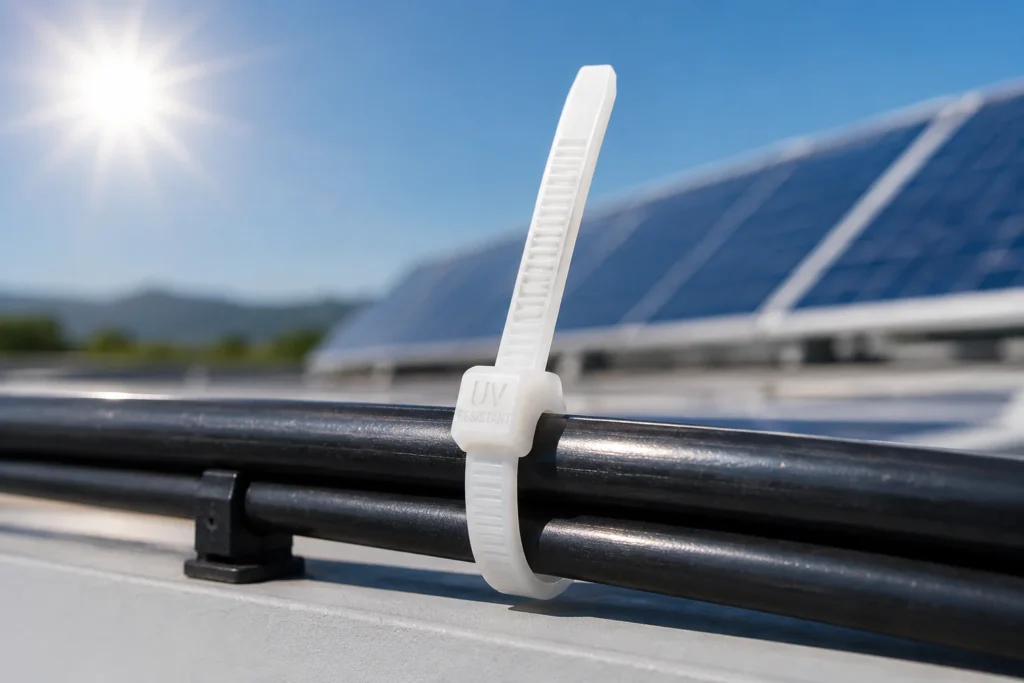
UV-Stabilized Cable Ties: For outdoor cabinets, rooftop enclosures, and unshaded installations where sunlight degrades standard nylon.
Low-Temperature Resistant Nylon Ties: Engineered to stay reliable in cold storage facilities or freezing environments.
Heat-Resistant Cable Ties: Heat-stabilized Nylon 66 rated to 150°C for warm enclosures and equipment bays where standard nylon softens.
Stainless Steel Cable Ties: Built for heavy mechanical loads and harsh chemical exposure where standard plastics fall short.
Adhesive and Screw-Mounted Tie Mounts for Metal Cabinets
Cables need solid anchor points along vertical rails, side panels, and cabinet frames so weight does not pull on port connections. We manufacture two primary mounting styles for metal and flat surfaces:
Mounting Option
Attachment Method
Best Rack Application
Adhesive Tie Mounts & Cable Clamps
Self-adhesive backing
Fast installation on smooth metal cabinet walls, painted frames, and ceilings without drilling
Screw-Mounted Cable Clips & Clamps
Mechanical screw fastening
High-load vertical runs, overhead pathways, and vibration-prone enclosures requiring maximum hold
Low-Profile Ties and Compact Mounts for Tight Cabinets
In dense IT cabinets and control panels, space around rack rails and sliding shelves is tight. Compact cable clips, slim tie mounts, and neatly trimmed plastic cable ties keep bundles tucked close to the frame so doors close cleanly without snagging. Where a specification calls for a flame-rated compound or a non-standard size, we produce to order and quote within 24 hours.
Hook-and-Loop vs. Nylon Zip Ties in a Rack Environment
Choosing the right fastener for server rack cable management comes down to balancing everyday accessibility with long-term structural hold. We manufacture standard Nylon 66 cable ties, coloured cable ties, stainless steel ties, and cable protection wraps, and each rack zone tends to call for a different bundling method.
Where Reusable Hook-and-Loop Wins Inside a Rack
In active patch panels and switch ports where technicians frequently swap or add lines, reusable straps offer clear operational advantages:
Zero tool removal: You can unwrap and re-bundle patch cords by hand without bringing flush cutters near delicate copper or fiber jackets.
Gentle tension: Soft fabric straps prevent over-cinching on sensitive data cables that undergo regular moves, adds, and changes.
Fast troubleshooting: Tracing a single cable inside a dense horizontal pathway takes seconds when you do not have to snip and replace multiple ties.
When Nylon Zip Ties Are the Right Call
Once you move away from active patch fields to permanent infrastructure, nylon zip ties deliver superior locking strength and clean organization. As a direct manufacturer producing cable ties for fixed runs, we recommend Nylon 66 and specialized ties for these applications:
Permanent backbone and power routing: Standard Nylon 66 ties lock firmly around heavy bundles along vertical rack rails without slipping over time.
Color-coded circuit identification: Using coloured cable ties lets your team visually separate power, data, and warning lines at a glance.
Harsh or specialized cabinet zones: For high-heat environments, chemical exposure, or heavy mechanical loads, upgrading from standard nylon to stainless steel vs. nylon zip ties ensures your bundles stay secure.
Surface anchoring: Pairing nylon ties with adhesive-backed tie mounts or screw-mounted cable clamps keeps fixed runs tight against metal cabinet frames.
Cost per Reuse vs. Cost per Tie
Evaluating hardware budgets means comparing upfront unit price against maintenance labor over the life of the cabinet.
Factor
Reusable Hook-and-Loop Straps
Nylon 66 Zip Ties
Upfront Unit Cost
Higher per strap
Very low per tie in bulk factory orders
Best Rack Zone
Active patch panels and frequent-change ports
Permanent vertical runs, power cables, and fixed mounts
High locking security for heavy, static cable loads
For most data center builds, a hybrid setup works best: use reusable straps where lines change weekly, and rely on factory-direct nylon cable ties and mounts for permanent infrastructure that needs to stay locked in place for years.
Data Center Cable Management Best Practices
Clean server rack cable management relies on repeatable habits across every cabinet on the floor. Following proven data center cable management best practices keeps airflow open, simplifies troubleshooting, and protects cabling from physical wear over years of service.
Separating Power and Data Cables
Running power cords and network patch cables in the same bundle causes electromagnetic interference and makes maintenance harder. Keep these two groups physically separated from the patch panel to the power distribution unit:
Dedicate opposite sides of the cabinet: Route power cables along one vertical rail and data lines down the opposite side.
Color-code your tie-downs: Use coloured cable ties to visually separate power feeds, primary network uplinks, and secondary circuits at a glance.
Isolate high-heat power zones: In cabinets with elevated temperatures or heavy power loads, consider how to use stainless steel cable ties to keep heavy power bundles firmly anchored without softening or loosening over time.
Structuring Vertical, Horizontal, and Overhead Pathways
Every cable leaving a switch or server needs a supported path so connectors do not bear the weight of hanging lines.
Vertical runs: Anchor adhesive cable tie mounts or screw-mounted cable clamps along the side rails to guide trunks cleanly down the cabinet frame.
Horizontal transitions: Support cables crossing between ports and side channels with cable clips attached to frame panels so cords do not sag across front intake vents.
Overhead drops and sharp edges: Wrap exposed bundles entering from overhead trays with spiral wraps to guard jackets against abrasion, chafing, and mechanical wear where lines bend over metal edges.
Bundle Sizing and Labeling Rules
Over-tightening or over-packing bundles crushes insulation and slows down future upgrades. Keep each trunk manageable and clearly marked from day one:
Practice Area
Practical Rule for Rack Builds
Bundle Capacity
Group cables into smaller, uniform trunks rather than one massive bundle so individual lines stay easy to trace and replace.
Tension Control
Cinch Nylon 66 cable ties snug enough to hold the bundle without pinching or deforming cable jackets.
Visual Identification
Pair consistent coloured cable ties with clear circuit labeling at both ends of every run to speed up maintenance.
How to Select the Right Cable Ties for Your Rack Configuration
Getting your server rack cable management right starts before you ever pull a cable through a cabinet. At Wandu, we work directly with network installers and facility teams to match our wiring accessories to real-world cabinet layouts, ensuring every bundle stays secure and accessible.
Evaluating Rack Density and 42U Cabinet Layouts
A standard 42U enclosure packs dozens of patch cords, power leads, and uplinks into tight vertical channels. Before choosing your fasteners, map out how dense your runs will be and what environments they pass through:
Standard Indoor Enclosures: Use baseline Nylon 66 cable ties for everyday bundling of data and power lines without damaging wire jackets.
Harsh or High-Temp Areas: Switch to heat-stabilized nylon or stainless steel ties in heavy-duty industrial cabinets exposed to extreme temperatures or chemical wear, or use low-temperature nylon ties in cold storage and refrigerated facilities.
Edge & Abrasion Protection: Pair your ties with spiral wraps along metal rack pass-throughs to shield bundles from sharp edges and friction.
Mounting Method by Panel Material and Access
How you anchor your bundles depends entirely on the cabinet surface and whether you can reach the back of the mounting rail:
Cabinet Surface & Access
Recommended Hardware
Best Application
Smooth Painted Steel / Blind Panels
Adhesive-backed tie mounts & cable clamps
Fast, tool-free routing inside side panels where drilling is not an option
Pre-Drilled Rails & Structural Frames
Screw-mounted cable clips
Permanent, high-load anchor points along vertical cabinet posts and walls
Tight Rear Access Channels
Compact adhesive cable clips
Low-profile organization along narrow rear doors and shelf undersides
Bulk Ordering and Custom Sizing Considerations
Multi-rack deployments burn through fasteners fast, and running out of a specific tie length mid-build stalls your entire installation schedule. Sourcing directly from an experienced manufacturer lets you consolidate standard nylon ties, colored ties, adhesive mounts, and spiral wraps into a single factory shipment.
When you are planning a large rollout, review key factors for choosing the right nylon cable tie manufacturer so you can lock in consistent Nylon 66 quality, confirm test reports and certifications, and request custom bulk quotes tailored to your exact bundle diameters and color codes.
Frequently Asked Questions
Are Hook-and-Loop Straps Safe for Fiber Optic and Cat6 Cables?
Soft, reusable wraps are commonly favored for delicate fiber optic and Cat6 patch cords because they prevent over-tightening and jacket crushing. When high-density server rack cable management is built with standard Nylon 66 zip ties, the same cables stay safe as long as tension is controlled by hand or a calibrated tool, and bundles passing through sharp-edged cutouts are wrapped with spiral wraps to protect the jacket.
When Should You Use Fire-Retardant Cable Ties?
Use a flame-retardant compound where the tie itself has to resist ignition, or where the project specification names a material rating. Our flame-retardant ties are rated UL94 V-0, which means the material self-extinguishes and does not drip once the flame source is removed. That rating describes the material only — compliance for air-handling spaces is a separate test under NFPA 262, set by the project specification, so confirm the documentation before fixing a part number. Where the concern is sustained heat rather than ignition, heat-stabilized Nylon 66 rated to 150°C is the better fit.
How Do You Estimate Cable Tie Quantity for a 42U Rack?
Estimating quantities for a full 42U cabinet depends on port density, pathway length, and how you separate power from data lines:
Vertical and Horizontal Runs: Plan for a fastener every 6 to 12 inches along vertical rails and horizontal pathways to prevent sagging.
Anchor Points and Spares: Match your tie count with adhesive-backed tie mounts or screw-mounted cable clips along solid metal panels, and always add a 15% to 20% buffer for future moves, adds, and changes.
About the manufacturer — Zhejiang Wandu Plastic Co., Ltd. is a wiring accessories manufacturer and supplier in Yueqing, Zhejiang, China, founded in 2011 and trading as Wenzhou Wandu Plastic Co., Ltd. until its 2023 renaming. The 6,000 m² factory moulds nylon 66 cable ties on 25 injection moulding machines with 10 test devices; the wider catalogue covers stainless steel cable ties, cable clips, cable glands, tie mounts, cable protection and wiring tools. Certification and test evidence for the cable tie range — ISO 9001:2015, CE (LVD), RoHS, PPWR, food contact, UV ageing and UL 94 — is published on our certificate page. Products ship to buyers in 50+ countries.
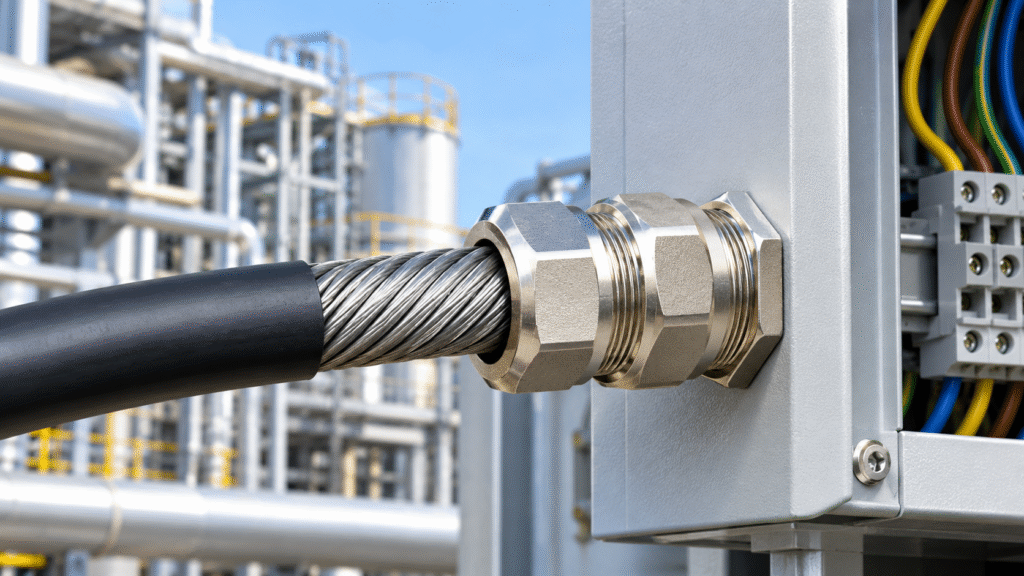
What Makes an SWA Cable Gland Different Standard cable glands only seal against the outer jacket of a non-armoured cable. An SWA cable gland serves a dual engineering purpose: it secures the heavy physical steel wire armour (SWA) and provides a continuous earth path, all while maintaining ingress protection at the enclosure entry. Armour Clamping: […]
Have you ever used standard white zip ties for an outdoor project, only to watch them snap like twigs a few months later? You’re not alone. It’s a common frustration for contractors and DIYers alike who assume a cable tie is just a cable tie. But when it comes to braving the brutal sun, the […]
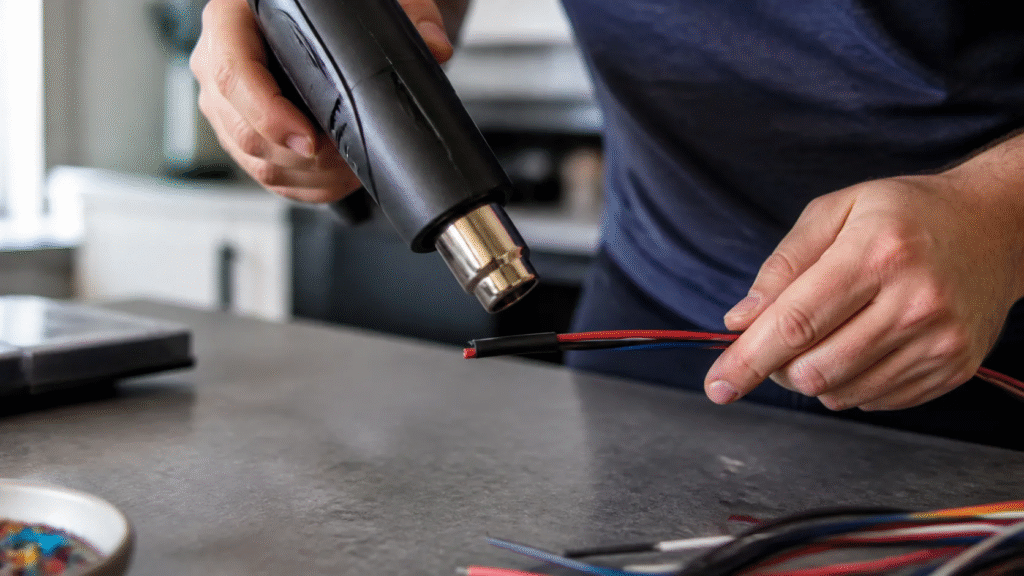
Understanding Heat Shrink Tube Heat shrink tube is an essential component in modern electrical, automotive, and DIY wiring applications. It provides tight, dependable protection against environmental elements, mechanical stress, and electrical hazards. What Is Heat Shrink Tube and How Does It Work? Heat shrink tubing is a specialized thermoplastic sleeve engineered to shrink radially when […]
We use cookies to enhance your browsing experience, serve personalised ads or content, and analyse our traffic. By clicking "Accept All", you consent to our use of cookies.
Looking For High Quality Nylon Cable Ties At A Great Price?
Order now to experience cost-effective cable tie products that provide convenience and protection for your work and life.

 EN
 AR
 ES
 PT
 FR
 RU
 DE
 KO
 JA
 IT
 NL
 TR