Have you ever used standard white zip ties for an outdoor project, only to watch them snap like twigs a few months later?
You’re not alone. It’s a common frustration for contractors and DIYers alike who assume a cable tie is just a cable tie. But when it comes to braving the brutal sun, the truth is that natural white nylon usually fails fast—unless you know exactly what to look for.
Can white zip ties actually be UV resistant?
The short answer is yes, but it all comes down to a massive chemical difference between Nylon 6 vs Nylon 66, and whether they’ve been engineered with specialized UV-stabilized additives.
In this quick guide, we’re going to cut through the noise and look at how white PA66 cable ties stack up against standard ties, how long they actually last outside, and how to spot the difference before your next installation fails.
Let’s dive right in.
Can Nylon White Zip Ties Be UV Resistant?
The Short Answer to UV Resistance in White Cable Ties
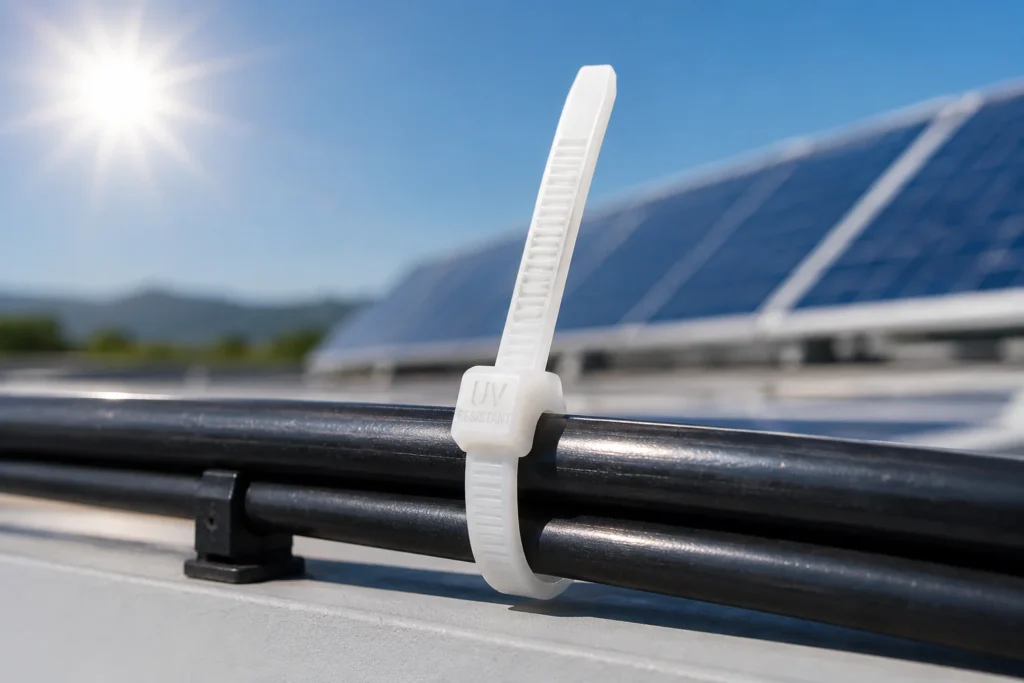
Yes, white zip ties can be UV resistant, but standard natural nylon ties are not. To withstand prolonged sunlight, a white cable tie must be manufactured with specialized UV-stabilized chemical additives. Products like our UV-resistant white zip ties are specifically engineered to resist ultraviolet degradation while maintaining a clean, clean-looking aesthetic.
Why Standard White (Natural) Zip Ties Fail in the Sun
Standard natural white zip ties are made from untreated polyamide (nylon). When exposed to outdoor environments, ultraviolet radiation breaks down the material’s molecular chains.
This process causes rapid degradation, leading to distinct problems: Embrittlement: The plastic loses its elasticity and flexibility. Discoloration: The tie turns a distinct yellowish hue. Premature Failure: The locking mechanism snaps under minimal load, often within a few months of direct sunlight exposure.
Specialized UV-Resistant White Zip Ties vs. Standard Ties
Feature
Standard White Zip Ties
UV-Resistant White Zip Ties
Material Base
Standard Polyamide (Nylon)
UV-Stabilized Nylon
Additives
None (Natural Resin)
UV Blockers & Stabilizers
Outdoor Lifespan
Very Short (Months)
Multi-Year Performance
Best Used For
Indoor wire routing, temporary bundling
Outdoor installations, solar panels, white conduits
Our specialized UV-resistant cable ties bridge the gap for global market applications where aesthetics matter but environmental durability cannot be compromised.
Why White PA66 Cable Tie Are the Top Choice for UV Resistance (vs PA6)
When sourcing high-performance fasteners for demanding environments, the underlying chemistry of the polymer dictates the success of your application. Not all nylon is created equal. For industrial, solar, and outdoor infrastructure projects, selecting a white PA66 cable tie over standard PA6 is a critical decision that directly prevents premature field failures.
Understanding the Material Difference: Nylon 6 vs Nylon 66
The primary distinction between Nylon 6 (PA6) and Nylon 66 (PA66) lies in their molecular structures. PA6 is synthesized from a single monomer (caprolactam), resulting in a more open crystalline structure.
In contrast, PA66 is engineered from two monomers (adipic acid and hexamethylenediamine). This creates a highly dense, tightly packed molecular chain.
PA6 (Nylon 6): Higher moisture absorption, lower melting point, and greater flexibility, but degrades rapidly under structural stress and environmental exposure.
PA66 (Nylon 66): Low moisture permeability, high melting point, superior tensile strength, and excellent dimensional stability under load.
UV Resistance Analysis: White Standard Nylon 6 vs Nylon 66 Cable Ties
The tighter molecular structure of a nylon66 cable tie gives it an inherent advantage when fighting ultraviolet radiation. UV rays break down polymer chains through a process called photo-oxidation. Because PA6 absorbs more moisture and has weaker intermolecular bonds, UV light penetrates the material faster, leading to rapid embrittlement and cracking.
A white cable tie made from premium PA66 resists this degradation significantly longer, maintaining its tensile strength even when exposed to solar radiation.
Performance Metric
White PA6 Cable Ties
White PA66 Cable Ties
Tensile Strength
Moderate
High / Superior
Moisture Absorption Rate
High (2.8% – 3.0%)
Low (2.5% or less)
Melting Point
220°C
262°C
UV Degradation Resistance
Poor (Quickly becomes brittle)
Moderate to High (Extensively longer service life)
Best Use Case
Indoor bundling, light-duty applications
Industrial, outdoor, and heavy-duty environments
By utilizing advanced compounding, our uv resistant cable ties made from modified PA66 ensure that your wiring setups remain secure, minimizing maintenance costs and avoiding the structural failures common with cheaper PA6 alternatives.
How Long Do White PA66 Cable Tie Last Outside?
Lifespan of Natural Nylon in Outdoor Environments
Standard, non-stabilized white zip ties made from natural nylon 66 face a tough time outdoors. When exposed to direct sunlight and shifting weather, a standard white cable tie typically lasts only 6 to 12 months before losing its structural integrity. Without UV stabilizers, the material absorbs radiation, causing the polymer chains to break down rapidly.
If you need a pa66 cable tie to survive the elements long-term, you must use a specialized weatherable or UV-stabilized version. Our heavy-duty uv resistant cable ties are engineered to withstand these harsh outdoor environments, extending the operational life to several years depending on the intensity of the sun exposure.
Signs of UV Degradation and Failure in White Ties
Outdoor degradation does not happen overnight, but you can spot the warning signs early. Keep an eye out for these clear indicators that your nylon66 cable tie is failing:
Color Fading and Yellowing: The clean white or natural look turns into a dull, yellowish-brown hue.
Surface Cracking: Fine hairline cracks appear along the strap and around the locking head.
Chalking: A powdery residue forms on the surface of the tie.
Brittleness: The tie loses its flexibility and snaps instantly under minimal load or vibration.
How to Extend the Life of Outdoor Cable Ties
To get the maximum runtime out of your wiring setups, follow these practical installation steps:
Shield from Direct Sunlight: Whenever possible, route your uv resistant wire ties underneath conduits, beams, or structures to block direct UV rays.
Avoid Over-Tensioning: Do not over-tighten the ties during installation. Excessive tension accelerates mechanical failure once UV degradation begins.
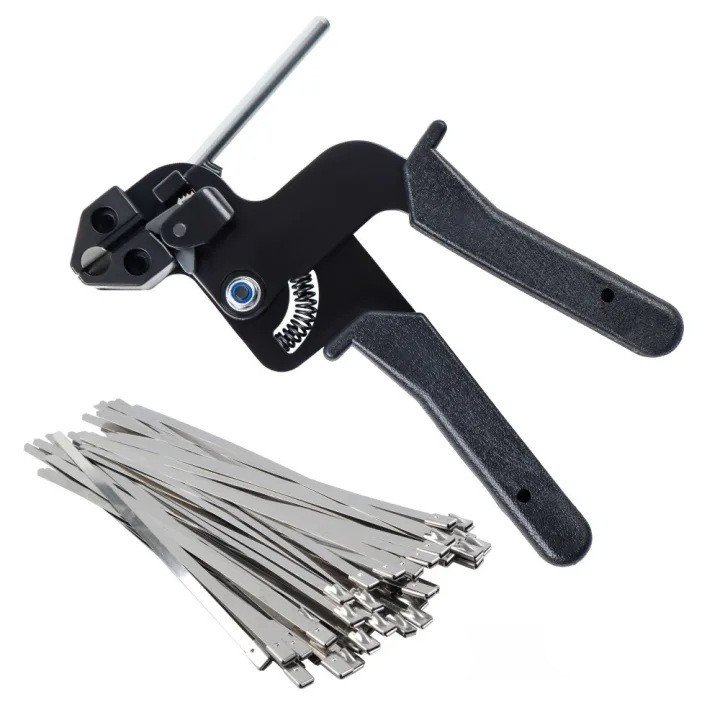
Choose the Right Material: If your project faces extreme, unshielded sunlight for years, bypass standard natural ties completely. Opt for our premium uv resistant zip ties, or upgrade to tefzel zip ties and stainless steel metal cable ties for maximum durability in extreme environments.
Key Differences Between Black and White Zip Ties
When managing cables, choosing between a black zip tie and a white zip tie involves more than just aesthetics. The fundamental differences lie in their chemical composition, outdoor durability, and intended application environments.
Material Composition and Carbon Black Additives
The primary difference between these fasteners comes down to a critical additive: carbon black.
White Zip Ties: Often referred to as natural nylon, these are made of pure polyamide 66 (PA66) without protective light stabilizers.
Black Tie Wraps: During manufacturing, we integrate carbon black into the PA66 material. This additive acts as a natural shield, absorbing harmful ultraviolet rays and transforming them into harmless heat before they can degrade the polymer chains.
UV Resistance and Lifespan Comparison
The presence of carbon black directly impacts how long these fasteners last when exposed to the elements. Standard natural ties degrade rapidly under solar radiation, whereas UV resistant zip ties maintain their tensile strength for years.
Feature
White Zip Ties (Standard)
Black Zip Ties (UV-Stabilized)
Material Base
Standard Nylon 66
PA66 with Carbon Black Additive
UV Resistance
Low (Weak against sunlight)
High (Excellent UV protection)
Outdoor Lifespan
1 to 2 years
5 to 10+ years (Weatherable grades)
Primary Failure Mode
Embrittlement, yellowing, snapping
Gradual surface wear over a decade
Outdoor vs. Indoor Application Scenarios
To get the most value out of your inventory, deploy these fasteners based on their environmental strengths.
Indoor Applications: White cable ties are ideal for indoor control panels, home entertainment wiring, and server racks. They offer a clean look and permanent reliability where UV rays cannot reach them.
Outdoor Applications: Black uv cable ties are the industry standard for solar panel installations, HVAC outdoor units, telecommunications rigging, and construction sites. They endure direct sunlight, temperature swings, and harsh weather without losing their grip.
Choosing the Right UV-Resistant Zip Ties for Outdoor Use
Selecting the right fastener for outdoor applications means matching the material to the exact environmental stressors it will face. Standard ties will fail quickly under constant solar radiation, making specialized selection crucial for long-term reliability.
When to Look for Weatherable/UV-Stabilized Nylon
Standard natural nylon degrades rapidly under solar radiation. You need to step up to weatherable or uv stabilized nylon when your projects involve long-term outdoor exposure.
Solar Installations: Wiring exposed to direct sunlight requires uv resistant cable ties to prevent brittle snapping.
Infrastructure & Telecom: Outdoor routing on towers or poles demands uv rated cable ties that can handle decades of sun exposure.
Industrial Bundling: Any exterior piping or conduit management needs specialized uv zip ties to avoid frequent maintenance cycles.
Alternative Materials for High UV Exposure (Stainless Steel & Tefzel)
When standard or even stabilized plastics aren’t enough for extreme environments, alternative heavy-duty materials offer virtually indestructible performance.
Material Type
Key Features
Best Used For
Stainless Steel Metal Cable Ties
Non-corrosive, zero UV degradation, extreme tensile strength, fireproof.
Marine environments, heavy industrial oil rigs, extreme high-load bundling.
Tefzel Zip Ties
Advanced fluoropolymer, exceptional chemical resistance, high radiation tolerance.
Aerospace, chemical processing plants, nuclear facilities, extreme UV environments.
Factors to Consider: Temperature, Strength, and Environment
Getting the right uv resistant wire ties requires looking at the complete environmental picture, not just the sunshine.
Operating Temperature: Ensure the pa66 cable tie or specialty tie can handle both the freezing winter lows and the scorching summer heat reflective off metal surfaces.
Tensile Strength Requirements: Calculate the heavy weight loads or wind resistance forces the bundle will experience. Heavy-duty applications require wider, thicker nylon66 cable tie options.
Chemical Exposure: If the installation is near coastal salt spray, automotive fluids, or industrial emissions, choose cable ties stainless or tefzel cable ties to prevent chemical breakdown alongside UV damage.
Frequently Asked Questions About Cable Tie Durability
Are black zip ties always UV resistant?
No, not automatically. While it is a common belief that every black zip tie can handle the sun, the color alone does not guarantee protection. Standard black ties are often colored with basic pigments that fade and crack under the sun. To be truly UV resistant, a black tie wrap must be manufactured with specialized carbon black additives. These additives absorb ultraviolet light and shield the plastic core from degradation. Always verify that the product is explicitly rated for outdoor use rather than assuming based on color.
How can you tell if a white zip tie is UV stabilized?
You cannot determine UV resistance in a white cable tie just by looking at it. Standard natural ties and UV-stabilized versions look identical on the surface. To confirm if a white zip tie is UV protected, you must check the manufacturing specifications and packaging labels. Look for clear designations such as:
Weatherable Nylon
UV-Stabilized PA66
UV Rated
Reliable suppliers like WANDU provide explicit material certifications to ensure your cable ties white options will survive outdoor exposure without turning brittle.
What is the best type of zip tie for direct sunlight?
The best choice depends on the severity of your environment and how long you need the installation to last:
Zero UV degradation, maximum strength, and fireproof performance.
For everyday outdoor wiring and mounting, a high-quality, uv resistant zip tie made from stabilized nylon 66 delivers the best balance of performance and value.
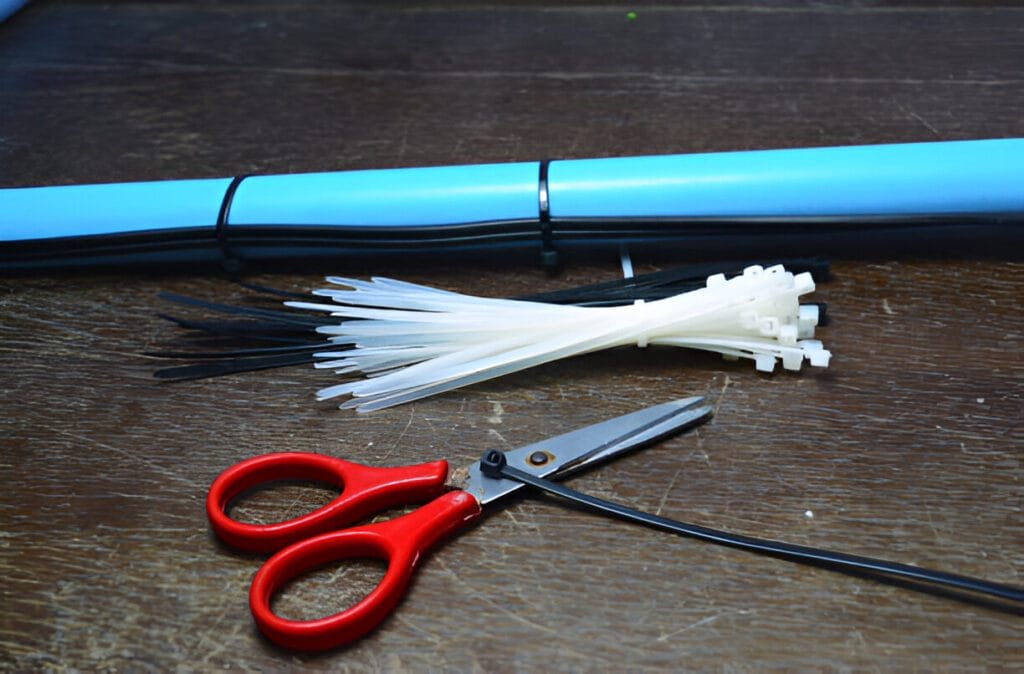
Most people only associate nylon cable ties with industrial wiring jobs. But these affordable, tough, flexible little accessories act as an all-in-one DIY helper for everyday home life. Simple to operate and sturdy enough for dozens of tasks, cable ties resolve common storage, repair, wiring and daily living headaches around the house. If you’re looking […]
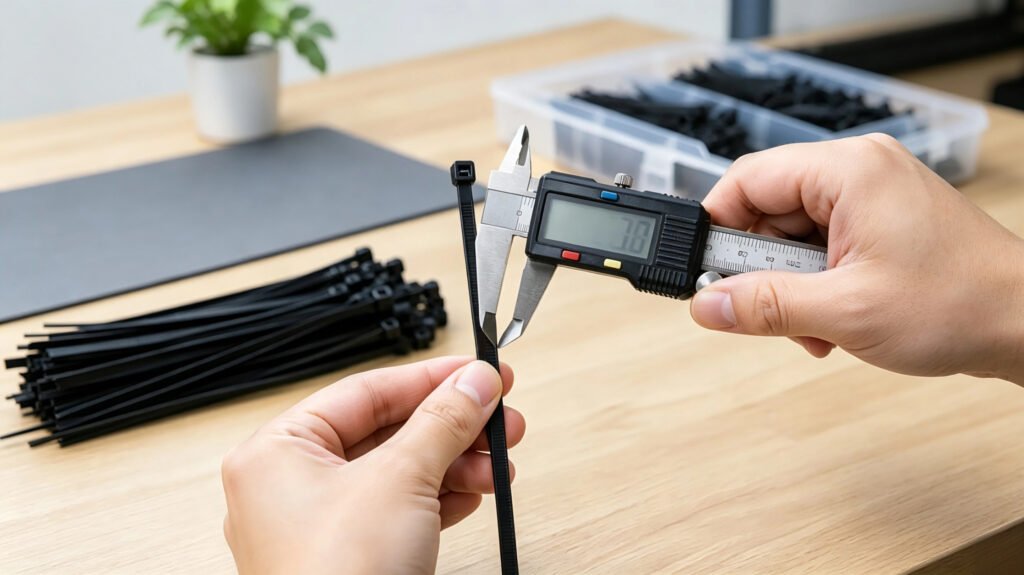
Standard Zip Tie Thickness and Dimensions Zip tie thickness is a critical dimensional spec that determines the structural integrity, flexibility, and loop tensile strength of a fastener. Across standard manufacturing profiles, the cross-sectional thickness of a zip tie is engineered in direct proportion to its width and intended mechanical load, ensuring optimal performance under various […]
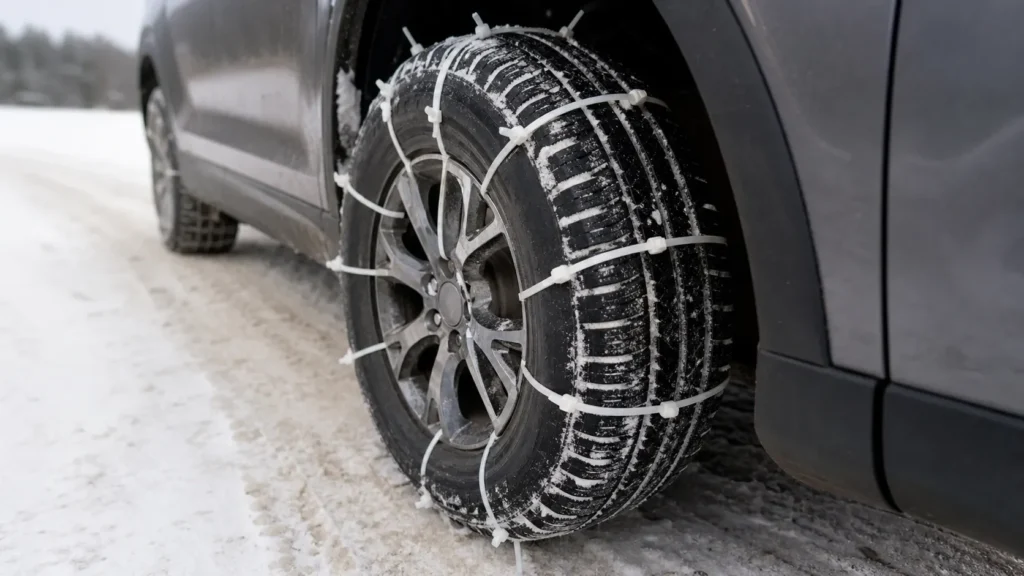
What Are Plastic Snow Chains and How Do They Work? Zip tie snow chains are lightweight, emergency traction aids engineered from high-tensile nylon polymers. Designed as a rapid-response alternative to heavy steel chains, these specialized cable ties wrap directly around the tire tread through the wheel rims, providing instant bite on slippery, snow-covered roads. Understanding […]
We use cookies to enhance your browsing experience, serve personalised ads or content, and analyse our traffic. By clicking "Accept All", you consent to our use of cookies.
Looking For High Quality Nylon Cable Ties At A Great Price?
Order now to experience cost-effective cable tie products that provide convenience and protection for your work and life.

 EN
EN  AR
AR  ES
ES  PT
PT  FR
FR  RU
RU  DE
DE  KO
KO  JA
JA  IT
IT  NL
NL