Understanding Cable Tie Mounts: Adhesive vs. Screw Types
Securing cables reliably starts with choosing the right anchor point. At Wandu, we manufacture fastening hardware designed to keep wire bundles organized across walls, desks, floors, and equipment cabinets. Understanding the structural difference between adhesive mounts and screw mount cable ties (or screw-mount bases) ensures your wiring stays firmly in place without sagging or detaching over time.
What Are Self-Adhesive Cable Tie Mounts?
Self-adhesive cable tie mounts are small, flat fixing bases equipped with a peel-and-stick backing on one side and slots on the other to thread a standard cable tie through.
Tool-Free Attachment: They press directly onto clean, smooth surfaces without drilling holes.
Lightweight Routing: Ideal for organizing light wire bundles along desks, smooth panels, or inside server rack cabinets where permanent surface penetration is not desired.
Fast Deployment: Peel-and-stick installation speeds up routine wire management tasks in indoor environments.
What Are Screw-Mount Cable Tie Bases?
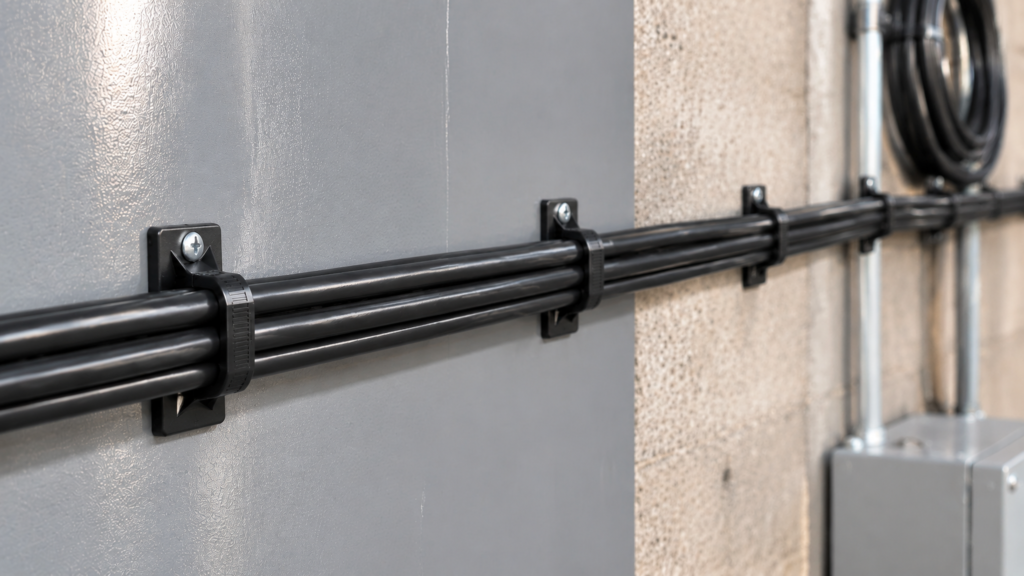
Screw mount cable ties and screw-mount bases use a physical fastener—such as a screw or wall anchor—to lock the mounting point directly into a substrate. They come in two common styles: a standalone cable tie mounting base with a central screw hole and tie slots, or an integrated screw mount cable tie featuring a molded eyelet at the head of the strap itself.
Mechanical Security: Fastening with screws creates a firm hold on walls, floors, and structural frames that adhesives cannot match.
Heavy-Duty Stability: Built to support heavier wire runs and resist pulling forces without slipping.
Substrate Versatility: When paired with plastic or metal expansion tubes, screw-mounted hardware anchors securely into masonry, drywall, and solid surfaces.
Mounting Base vs. Cable Clamp vs. Standoff
While all three components organize wiring, each serves a distinct mechanical role in an installation:
Hardware Type
How It Holds Wires
Best Use Case
Cable Tie Mounting Base
Acts as an anchor point; requires a separate nylon or stainless steel cable tie to bundle the wires.
Flexible bundle diameters where you want to replace or add ties without removing the base.
Cable Clamp / Clip
Encloses the wire directly inside a curved loop, secured to the surface via screw or adhesive backing.
Routing single cables or fixed-diameter wire runs neatly along walls, desks, or baseboards.
Standoff Mount
Elevates the cable tie slot away from the mounting surface using a raised spacer body.
Keeping wire bundles clear of sharp panel edges, heat sources, or vibrating chassis walls.
Why the Mount Is Often the Weak Link in Cable Management
Even the strongest cable tie fails its job if the base holding it detaches from the surface. In industrial setups and server racks, the cable tie base carries the entire weight of the wire bundle, which makes the attachment point the primary failure zone. When we manufacture wiring accessories at Wandu, we see that most cable drops happen because the mounting style does not match the physical forces pulling on the run.
Adhesive Failure: Shear Load vs. Peel Load
An adhesive cable tie mount handles directional forces very differently depending on how you route your wires:
Shear Load (Parallel Pull): When cables run vertically down a flat wall, gravity pulls straight down along the surface. Sticky pads resist this sideways shear force reasonably well for lighter wire bundles.
Peel Load (Outward Pull): When cables hang from a ceiling or pull outward at an angle, the weight pries the edge of the adhesive backing away from the surface. Once one corner lifts, the entire cable mounting base peels off quickly.
Surface & Temperature Stress: Dust, textured walls, and extreme temperatures weaken standard adhesive bonds over time. You can read more about proper installation in the ultimate guide to adhesive cable clips to prevent premature detachment.
Screw Failure: Over-Torque, Thin Substrates, and Vibration
Switching to screw mount cable ties eliminates sticky-pad peel, yet mechanical fasteners introduce their own failure points if installed carelessly:
Over-Torque Cracking: Driving a screw too tight crushes the nylon cable tie mounts, creating stress fractures around the screw hole that snap under bundle weight.
Thin or Brittle Substrates: Fastening directly into thin sheet metal, hollow drywall, or soft masonry without proper plastic or metal expansion tubes causes the screw threads to strip and pull out.
Continuous Vibration: Near heavy machinery or industrial motors, constant movement gradually backs standard screws out of their holes unless paired with locking hardware. To ensure your entire assembly holds up under stress, check out how to evaluate the durability and cost-effectiveness of nylon cable ties.
Key Differences: Load Capacity, Surface Compatibility, and Longevity
When we help clients source wiring accessories at Wandu, choosing between adhesive backs and screw mount cable ties comes down to three practical realities: how heavy the bundle is, what surface you are mounting to, and how harsh the environment gets. Both styles hold cables in place, yet they perform very differently over time.
Side-by-Side Comparison: Adhesive vs. Screw Cable Tie Mounts
Feature
Self-Adhesive Cable Tie Mounts
Screw-Mount Cable Tie Bases
Installation Method
Peel-and-stick backing
Mechanical screw (paired with expansion tubes on masonry)
Built for heavy vibration, outdoor exposure, and long runs
Load Capacity and Cable Bundle Weight
Adhesive cable tie mounting bases rely strictly on glue bonding to the top layer of a surface. They work fine for light patch cords or thin sensor wires inside a clean cabinet, but heavy power cables will gradually pull the adhesive away from the wall.
With a cable tie screw mount, the load transfers directly into the fastener and the wall or frame behind it. Because the base is mechanically anchored, your holding limit depends on the screw, substrate, and tie strength rather than tape adhesion.
Support Spacing, Span Sag, and Safety Margin
How far apart you place each cable tie mounting base directly controls wire sag:
Closer spacing reduces point load: Placing bases closer together spreads the weight of thick cable bundles across more anchor points.
Preventing span sag: Heavy runs left unsupported over long gaps droop and pull sideways on the mounts, which causes adhesive pads to peel from the edges.
Built-in safety margin: Mechanical screw mount cable ties handle uneven tension much better when routing cables around corners or across overhead beams, especially when paired with proper bundling techniques covered in our guide to tying cable ties safely.
Surface Material and Drilling Restrictions
Your mounting surface often makes the decision for you:
Smooth, sealed surfaces: Painted server rack frames, glass, and smooth metal enclosures allow full contact for an adhesive cable tie mount—and are ideal when drilling holes would void equipment warranties or damage sealed panels.
Porous, rough, or masonry surfaces: Unfinished wood, textured walls, brick, and concrete prevent sticky pads from making full contact. On walls, floors, and masonry, mechanical fasteners paired with plastic or metal expansion tubes create a solid cable tie wall mount that will not shake loose.
Environmental Resistance, Vibration, and Lifespan
Temperature swings, moisture, and machine vibration shorten the service life of standard adhesive pads. Heat softens glue, freezing temperatures make standard adhesives brittle, and constant machine hum slowly works tape free.
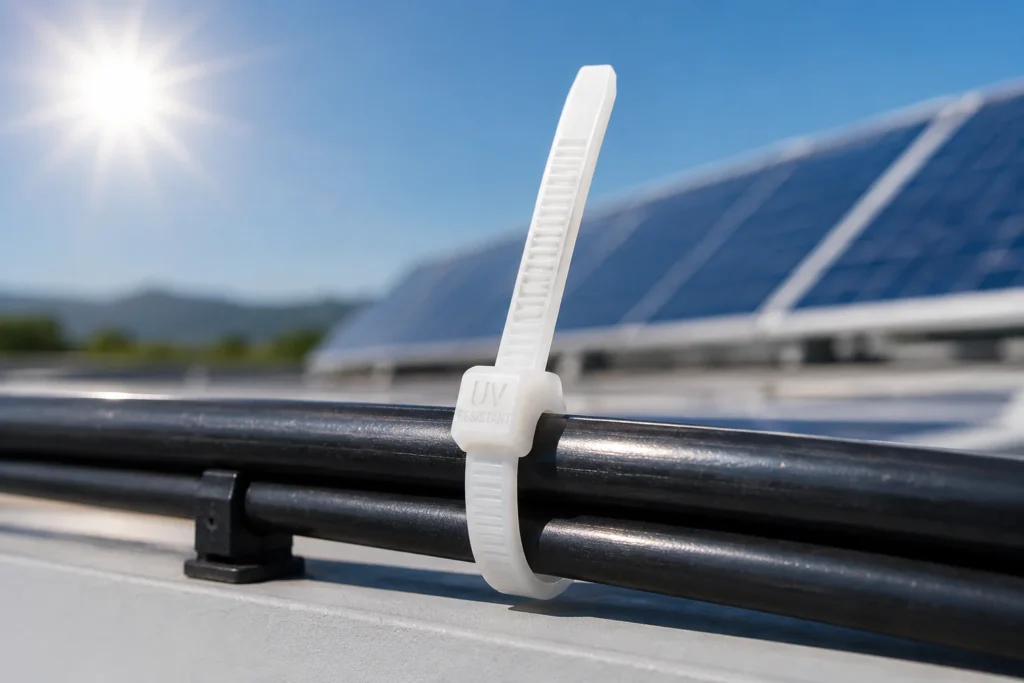
In contrast, nylon cable tie mounts secured with screws stay locked in place regardless of surface dust or vibration. At Wandu, we manufacture cable ties and fastening components using standard Nylon 66 alongside specialized compounds—such as UV-stabilized materials for prolonged outdoor sunlight, low-temperature resistant nylon for freezing rooms, and polypropylene for chemical environments—so the base and tie match the job site. You can compare how different polymers hold up in our breakdown of Nylon 6 vs. Nylon 66 cable ties.
Pros and Cons of Each Mounting Method
Choosing between adhesive and screw-mount bases comes down to balancing installation speed against long-term holding strength. At Wandu, we manufacture wiring accessories for both light-duty routing and demanding industrial setups, so we see firsthand where each mounting style shines—and where it falls short.
Advantages and Limitations of Adhesive Cable Tie Mounts
Adhesive cable tie mounts are built for speed and clean aesthetics when drilling isn’t an option.
Fast, tool-free installation: Peel the backing, press the cable tie base onto a clean surface, and route your wires in seconds.
Zero surface damage: Ideal for painted walls, finished desks, glass, or enclosures where drill holes would void warranties or ruin appearances.
Lightweight bundle support: Works well for small, low-tension indoor wire runs that stay undisturbed.
Surface and environment limits: Adhesive backing struggles on rough, dusty, or porous materials. Heat, moisture, and prolonged outdoor exposure can also weaken the bond over time, leading to detachment under heavier loads.
Advantages and Limitations of Screw-Mount Cable Tie Bases
When you need permanent fixation that won’t budge under weight or vibration, screw mount cable ties and screw-in mounting bases are the clear choice.
Superior mechanical strength: Fastening directly into a wall, panel, or floor with a screw—or pairing the base with plastic or metal expansion tubes in masonry—prevents peeling and holds heavier cable bundles securely.
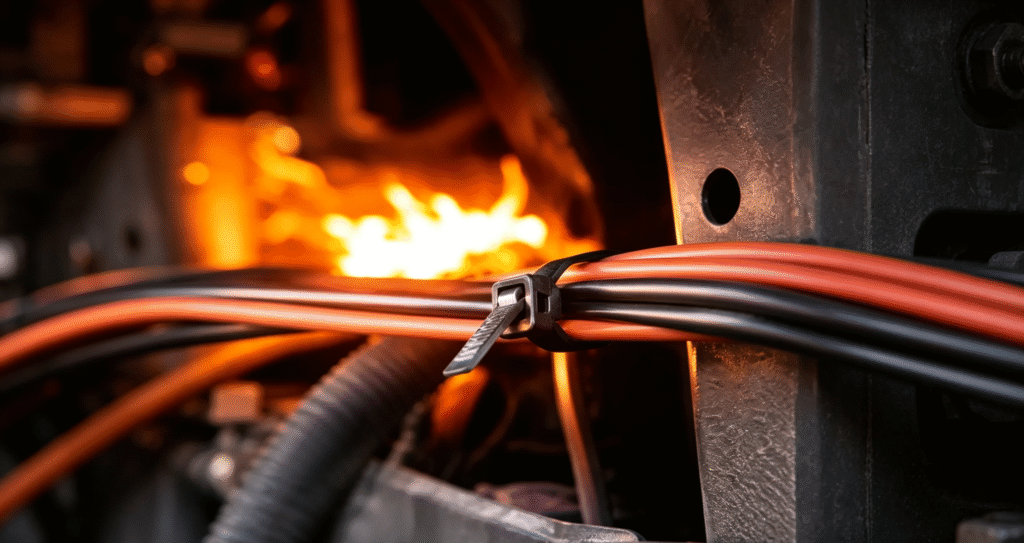
Built for harsh environments: Mechanical fastening performs reliably across freezing temperatures, high-heat zones, and outdoor sunlight without losing grip.
Versatile material pairing: You can match durable Nylon 66 or UV-stabilized bases with versatile nylon cable ties to handle demanding industrial, chemical, or outdoor routing.
Longer setup time: Requires drilling pilot holes and driving screws, making installation slower and leaving permanent holes if you ever relocate the cable run.
Best Applications for Adhesive vs. Screw Cable Tie Mounts
Picking between adhesive bases and screw mount cable ties comes down to the surface, cable weight, and surrounding environment. At Wandu, we manufacture both mounting styles across our tie mounts and cable clamps line so you can match the hardware to the job.
Office Desks and Workstations: Route light computer cords and charger wires neatly under desks without damaging finished surfaces.
Server Rack Cabinets: Organize lightweight patch cables along smooth metal panels where drilling is not allowed.
Temporary Wiring: Secure short-term indoor cable runs that you plan to adjust or remove later.
When to Choose Screw Mounts
Switch to a cable tie screw mount whenever safety, heavy loads, or harsh environments are part of the job.
Heavy Cables and Hoses: Anchor thick electrical bundles and industrial hoses to walls or floors without worrying about adhesive peel.
Rough or Porous Walls: Fasten a cable tie mounting base directly into masonry, concrete, or wood using screws and expansion tubes.
Outdoor and Harsh Conditions: Pair screw-mounted bases with UV-stabilized, low-temperature, or chemical-resistant polypropylene ties for long-term stability in sunlight, freezing weather, or labs.
Installation Best Practices for Maximum Holding Force
Proper installation makes the difference between a permanent wiring run and a collapsed bundle. At Wandu, we manufacture nylon cable tie mounts, cable clips, and expansion tubes to strict quality standards, and following the right mounting steps ensures you get full holding performance on walls, desks, floors, and server rack cabinets.
Surface Preparation and Application Steps for Adhesive Mounts
Adhesive cable tie mounts rely on direct surface contact to hold wires and cables cleanly in place. Before sticking down a self-adhesive cable tie mount, follow these essential preparation steps:
Clean the surface thoroughly: Remove all dust, grease, oil, and moisture from the wall, desk, or enclosure panel so the backing makes full contact.
Dry completely: Let the mounting area air-dry before peeling off the protective liner.
Press firmly into place: Apply steady, even pressure across the entire cable tie mounting base to eliminate air gaps.
Allow time to set: Let the adhesive bond settle onto the surface before threading your cable ties through the slots and pulling your wire bundle tight.
Minimum Application Temperature for Adhesive Mounts
Ambient conditions directly affect how well a peel-and-stick backing grips a surface. Standard adhesives struggle to bond properly on cold surfaces, so always apply self-adhesive cable tie mounts in a dry, moderate-temperature indoor environment whenever possible. For the strongest bond, install at an ambient temperature of 10°C (50°F) or above.
If your equipment operates in freezing conditions or unheated areas, skip adhesive backings altogether. Instead, switch to mechanical fasteners paired with low-temperature resistant cable ties that retain their flexibility and binding strength without snapping in the cold.
Drilling, Fastening, and Spacing Tips for Screw Mounts
When securing heavier wire bundles or working on rough surfaces where tape fails, screw mount cable ties and screw-fixed cable mounting bases deliver dependable mechanical hold. Keep these practical guidelines in mind during installation:
Choose the right anchor for the wall: On solid masonry, brick, or drywall, insert a plastic or metal expansion tube into your pre-drilled hole before driving the screw in.
Keep spacing consistent: Space each cable tie wall mount evenly along the run to prevent cable sag and distribute weight across multiple anchor points.
Match the base to your tie: Thread standard Nylon 66, UV-stabilized, or polypropylene ties smoothly through the base slot so the locking head sits flat against the bundle without twisting.
Hole Size and Driver Torque for Screw-Mount Bases
Selecting the right hardware protects the plastic base from stress cracks. Match your screw diameter cleanly to the center mounting hole of your cable tie fixing base so the screw head sits flush against the plastic without wedging into the sides.
When using a power driver, set a low torque limit and finish tightening by hand. Over-tightening compresses and weakens the nylon around the screw hole, reducing the long-term strength of the cable tie anchor mount.
Can You Combine Adhesive and Screw Mounts on the Same Run?
Yes, combining both styles on a single wiring route is a smart, practical approach for complex installations. You can place screw mount cable ties at high-stress points—such as corners, vertical drops, and heavy bundle junctions—while using adhesive cable tie mounts along straight, lightweight sections where drilling into desks or thin panels isn’t ideal. This hybrid setup keeps your cable routing neat, secure, and easy to maintain.
How to Select the Right Cable Tie Mount
Choosing the right cable tie mounting base comes down to three practical checks: the size of your tie, the surface you are attaching to, and the environment around the cables. Getting these right ensures your wiring stays secure without premature failure.
Matching Mount Slot Size to Cable Tie Width
Every cable tie mounting base has a specific slot width designed to hold the strap securely. If the slot is too narrow, your tie will not thread through; if it is too wide, the bundle can shift and sag.
Check strap width first: Always match the tie width to the exact slot opening of your cable tie base before ordering in bulk.
Account for bundle weight: Heavier wire bundles require wider straps, which means stepping up to a larger cable mounting base with a wider slot and thicker base walls.
Keep the head clear: Make sure the slot allows the tie to slide smoothly so the locking head sits cleanly against the side of the mount without binding.
Matching the Mount to the Substrate
The surface material determines whether an adhesive backing or a physical fastener will hold over time.
Smooth indoor surfaces: Clean, flat surfaces like painted metal panels, finished desks, and glass work well with a self adhesive cable tie mount for light wire routing.
Rough or porous walls: Concrete, brick, and textured drywall do not give adhesive enough contact area. Use a cable tie screw mount paired with plastic or metal expansion tubes for a reliable wall hold.
High-vibration or overhead runs: When routing cables along ceilings, floors, or vibrating equipment, always use screw mount cable ties or screw-down bases so gravity and movement cannot peel the mount loose.
Material Selection for Indoor vs. Outdoor Environments
Standard Nylon 66 works well for most indoor offices, server racks, and electrical cabinets, but harsh environments require specialized compounds to maintain how long the service life of cable ties and mounts will last.
Environment / Condition
Recommended Material
Key Performance Benefit
Standard Indoor
Standard Nylon 66
General-purpose strength and reliable bundling for everyday wiring.
Outdoor / Direct Sunlight
UV-Stabilized Nylon
Resists prolonged UV exposure without turning brittle or losing tensile strength.
Cold Storage / Freezing Areas
Low-Temperature Resistant Nylon
Retains flexibility and holding power in freezing conditions without snapping.
Chemical / Laboratory Areas
Polypropylene (PP)
High chemical resistance for laboratories and industrial chemical processing.
Food & Pharma Lines
Metal Detectable Compound
Contains at least 11% magnetic metal powder for metal detector and X-ray inspection.
For extreme outdoor heat, coastal salt air, or heavy structural loads, pairing your mounting hardware with 304 vs 316 stainless steel cable ties provides maximum durability where standard plastics wear down.
Frequently Asked Questions
Can Adhesive Cable Tie Mounts Hold Heavy Cables?
No, adhesive cable tie mounts are best kept for lightweight indoor wiring on smooth, clean surfaces. When you run heavy wire bundles, hoses, or cables that pull downward over time, adhesive pads tend to lose their grip. For heavier loads or overhead runs, we always recommend switching to screw mount cable ties or a mechanical cable tie mounting base anchored directly into the wall, desk, or frame.
Are Adhesive Cable Tie Mounts Suitable for Outdoor Use?
Generally, no—prolonged sunlight, moisture, and temperature swings break down standard adhesive backings quickly. If you are routing cables outside, mechanically fastened bases paired with UV-stabilized nylon or polypropylene compounds hold up much better against harsh weather and sunlight exposure. You can read more about selecting materials that resist sunlight degradation in our guide on cable ties for outdoor use.
How Far Apart Should Cable Tie Mounts Be Spaced?
There is no single fixed spacing rule because the right distance depends on the weight of your cable bundle, the rigidity of the wiring, and whether the run is horizontal or vertical:
Heavy or flexible bundles: Place your cable tie anchor mounts closer together so the wires do not sag or put extra strain on any single fixing point.
Lightweight, rigid runs: You can space the mounting bases slightly wider apart along straight sections.
Corners and bends: Always place a cable tie screw mount right before and right after a sharp turn to keep the bundle neat and supported.
How Big a Hole Do I Need for a Screw-Mount Base?
The exact hole size depends on the specific cable tie base model and the fastener you plan to use. Always check the center mounting hole diameter of your chosen base before drilling:
Into wood or sheet metal: Match your drill bit to the root diameter of the screw so the threads bite firmly without stripping.
Into concrete, brick, or drywall: Drill a pilot hole sized to fit an appropriate plastic or metal expansion tube, then drive the screw through the cable tie fixing base into the anchor.
If you need exact hole dimensions or compatible fastener specs for a specific project, contact our team at Wandu for a product spec sheet and free quote.
Can I Remove a Mount Without Damaging the Surface?
It depends on how the base is attached and what surface it sits on:
Adhesive cable tie mounts: You can usually pry them off smooth metal or plastic using gentle heat and an adhesive remover, though they can tear paint or drywall paper if pulled off too quickly.
Screw-mount cable tie bases: Unscrewing the fastener removes the base cleanly, leaving behind a small screw hole that can be patched or filled depending on the wall or panel material.
About the manufacturer — Zhejiang Wandu Plastic Co., Ltd. is a wiring accessories manufacturer and supplier in Yueqing, Zhejiang, China, founded in 2011 and trading as Wenzhou Wandu Plastic Co., Ltd. until its 2023 renaming. The 6,000 m² factory moulds nylon 66 cable ties on 25 injection moulding machines with 10 test devices; the wider catalogue covers stainless steel cable ties, cable clips, cable glands, tie mounts, cable protection and wiring tools. Certification and test evidence for the cable tie range — ISO 9001:2015, CE (LVD), RoHS, PPWR, food contact, UV ageing and UL 94 — is published on our certificate page. Products ship to buyers in 50+ countries.
Introduction to Zip Ties What is a Zip Tie? A zip tie—also universally known as a cable tie, tie wrap, or hose tie—is a robust, one-piece fastener designed to securely bundle cables, wires, and hoses. Operating on a simple yet highly effective ratcheting mechanism, the strap features a series of integrated triangular teeth that engage […]
Have you ever used standard white zip ties for an outdoor project, only to watch them snap like twigs a few months later? You’re not alone. It’s a common frustration for contractors and DIYers alike who assume a cable tie is just a cable tie. But when it comes to braving the brutal sun, the […]
At What Temperature Do Zip Ties Melt? Standard polymer zip ties begin to melt at 255°C (491°F), while high-performance metallic ties can withstand extreme thermal environments up to 1370°C (2498°F). However, physical melting is the ultimate point of complete destruction. Structural degradation, loss of tensile strength, and locking failure occur long before a tie reaches […]
We use cookies to enhance your browsing experience, serve personalised ads or content, and analyse our traffic. By clicking "Accept All", you consent to our use of cookies.
Looking For High Quality Nylon Cable Ties At A Great Price?
Order now to experience cost-effective cable tie products that provide convenience and protection for your work and life.

 EN
 AR
 ES
 PT
 FR
 RU
 DE
 KO
 JA
 IT
 NL
 TR