

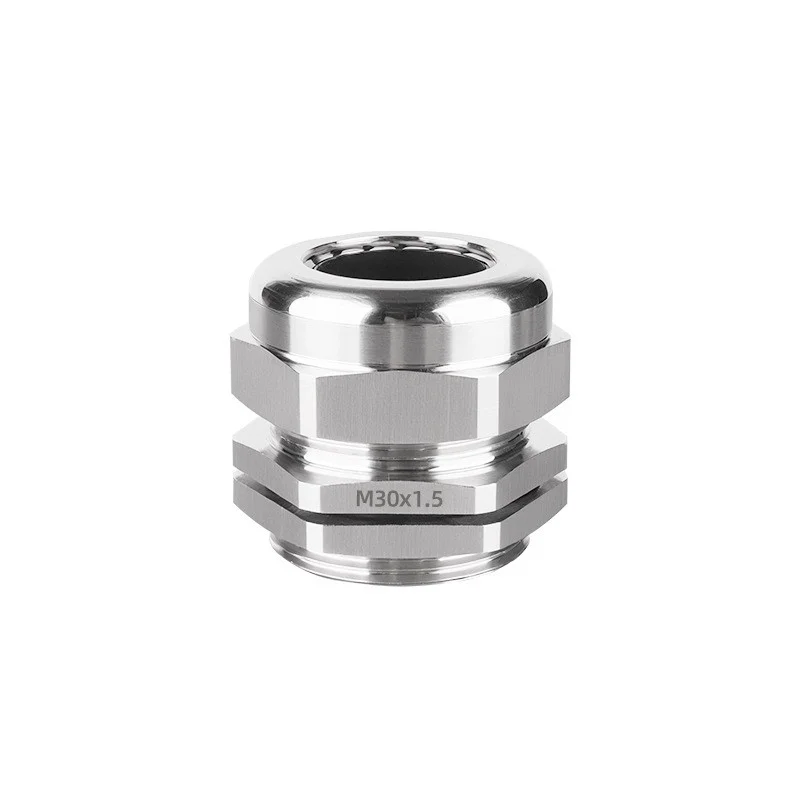
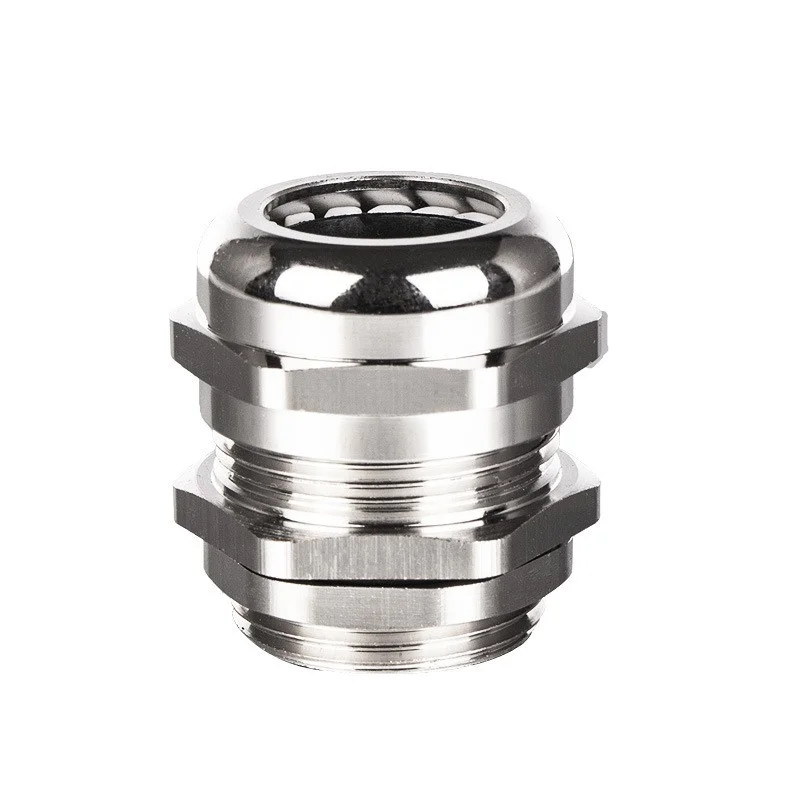
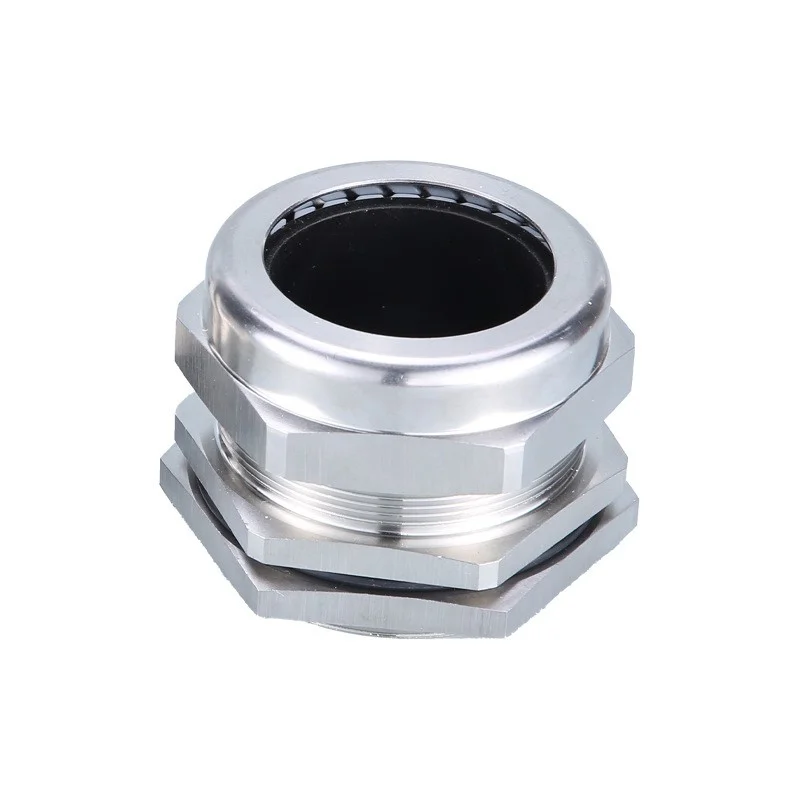


What is a Metal Cable Gland?
Definition and Working Principle
A metal cable gland is a robust cable entry device designed to secure and terminate the end of an electrical cable to an enclosure, bulkhead, or piece of machinery. Operating on a mechanical compression principle, it safely clamps the cable as it passes through the entry point.
When the outer dome nut is tightened onto the gland body, it compresses an internal elastomeric sealing insert around the cable jacket. This compression provides complete 360-degree strain relief, locking the cable firmly in place while creating an airtight and watertight seal around the perimeter of the cable.
Key Components and Design
The high-performance architecture of a standard cable gland metal construction consists of several precision-engineered parts:
- Gland Body: The main structural component featuring external threads that mount directly into the machine wall or electrical junction box.
- Locknut: A heavy-duty metallic ring used to secure the gland body firmly from the inside of the enclosure when unthreaded entry holes are used.
- Compression Nut / Dome Cap: The outer component that applies mechanical force to the internal sealing rings upon tightening.
- Sealing Insert / Bushing: A resilient elastomer (such as Neoprene, Silicone, or EPDM) that conforms tightly around the cable to block moisture and dust.
- Clamping Claw / Plastic Insert: A non-corrosive friction ring that grips the cable jacket to absorb pulling forces.
- O-Ring Seal: A high-grade washer placed at the entry thread interface to guarantee a tight seal against the enclosure wall.
Importance in Electrical Installations
Utilizing high-quality metal cable gland is essential for maintaining the physical and operational integrity of global industrial electrical systems. They fulfill three critical safety requirements:
Environmental Isolation: They prevent the ingress of dust, dirt, water, and aggressive chemicals into sensitive electrical enclosures, preventing short circuits and equipment downtime.
Strain Relief: They shield internal terminal connections from mechanical stress, vibrations, and accidental pulling forces that could cause wire detachment.
Grounding and Safety: Metal construction ensures excellent electrical continuity, allowing for safe earthing and effective dissipation of fault currents when handling armored or shielded cables.
Key Functions and Benefits of Metal Cable Gland
Metal cable glands are essential components designed to secure, seal, and protect electrical cables where they enter equipment or enclosures. By choosing high-quality metal glands for cables, you ensure long-term safety and operational efficiency in demanding environments.
Cable Protection and Strain Relief
One of the primary jobs of a metal cable gland is providing exceptional strain relief. Cables in industrial settings constantly face pulling, twisting, and bending forces.
- Prevents Disconnection: The internal clamping mechanism tightly grips the cable jacket, transferring mechanical stress away from sensitive electrical terminals.
- Reduces Wear: By eliminating constant movement at the entry point, it prevents the internal conductors from fraying or snapping over time.
- Neat Wire Management: It keeps your wiring layout organized and secure, much like using high-quality wire nuts to maintain stable and safe connections inside junction boxes.
Environmental Sealing and IP Ratings
Moisture, dust, and airborne contaminants are the enemies of electrical systems. Metal cable gland provide a tight environmental seal around the cable entry point to maintain the integrity of your enclosures.
| IP Rating | Level of Protection | Ideal Application Scenario |
|---|---|---|
| IP66 | Dust-tight and protected against powerful water jets. | Standard industrial machinery, outdoor washing areas. |
| IP68 | Dust-tight and protected against continuous immersion in water. | Marine equipment, offshore platforms, underground wiring. |
These high Ingress Protection (IP) ratings ensure that internal electronics remain bone-dry and completely free from dust buildup, preventing short circuits and costly downtime.
Mechanical Reliability and Durability
When compared to plastic alternatives, metal cable glands offer unmatched mechanical strength. They are built to withstand the toughest operating conditions without cracking or degrading.
- Impact Resistance: Heavy duty metal cable gland resist accidental impacts from tools, machinery, and falling debris.
- Temperature Tolerance: They maintain their structural integrity across extreme temperature fluctuations, from freezing outdoor conditions to scorching industrial processing plants.
- Corrosion Resistance: Depending on the material choice, these glands resist rust, chemical exposure, and UV damage, ensuring a service life that spans decades.
Main Types of Metal Cable Glands by Material
Choosing the right material for your metal cable glands determines how well your electrical connections hold up against environmental stress. Different projects demand different levels of corrosion resistance, weight control, and structural strength.
Brass Cable Glands
Brass cable glands serve as the industry standard for most standard industrial applications. A high-quality brass gland cable gland delivers an excellent balance of high mechanical strength, decent corrosion resistance, and great electrical conductivity.
- Key Features: Excellent machinability, high temperature tolerance, and naturally spark-resistant.
- Common Sizes: The m20 brass cable gland is the go-to size for standard control boxes and small power cables.
- Surface Treatment: Most options feature nickel plating to prevent tarnishing and extend service life in damp environments.
- Best For: Manufacturing plants, power distribution units, and standard machinery where cost-efficiency and durability must align.
Stainless Steel Cable Glands
When conditions get harsh, upgrading to a stainless steel cable gland is non-negotiable. Typically manufactured from grade 304 or marine-grade 316 stainless steel, these components offer premium resistance to aggressive chemicals and saltwater.
- Maximum Corrosion Resistance: They prevent rust even when exposed to acids, high moisture, and heavy washdown procedures.
- Hygiene Friendly: The smooth surface prevents bacterial growth, making them easy to sanitize.
- Best For: Marine vessels, offshore drilling platforms, food processing facilities, and chemical labs.
Aluminum Cable Glands
An aluminum cable gland provides a lightweight yet durable alternative to heavier metal glands for cables.
- High Strength-to-Weight Ratio: Offers reliable structural support without adding unnecessary weight to lightweight enclosures or mobile machinery.
- Thermal Conductivity: Dissipates heat efficiently, making it suitable for high-temperature applications.
- Best For: Aerospace components, telecommunications infrastructure, and automated transport systems where every ounce matters.
Common Thread Standards for Metal Cable Glands
Choosing the right thread standard for your metal cable glands is critical to ensuring a secure fit and maintaining system integrity. Different regions and industries rely on specific thread types to match their machinery and electrical enclosures.
Metric Threads
Metric threads are the global standard for modern electrical installations, designated by the letter “M” followed by the major diameter in millimeters (e.g., M20, M25, M32).
- Design: Parallel threads that require an O-ring or washer to achieve an airtight or watertight seal.
- Common Sizes: M20 brass cable gland options are the industry benchmark for standard control boxes and small power cables.
- Best Used For: European machinery, global automation systems, and most new industrial builds.
NPT (National Pipe Taper)
NPT (National Pipe Taper) threads are the standard choice across North America for rigid conduit and cable entry systems.
- Design: Tapered threads that create a mechanical seal through metal-to-metal contact as they are tightened.
- Key Feature: A npt cable gland provides exceptional pull-out resistance and reliable sealing in heavy-duty piping systems.
- Best Used For: US industrial plants, oil and gas facilities, and heavy machinery installations.
PG (Panzer-Gewinde)
PG threads are an older German standard historically used throughout Europe for heavy-duty industrial equipment.
- Design: Shorter thread depth and a unique pitch profile compared to metric threads.
- Current Status: While largely superseded by Metric threads in new designs, the pg metal cable gland remains vital for maintaining, repairing, and upgrading legacy European machinery.
- Best Used For: Maintenance of older factory equipment and specific European replacement parts.
Quick Thread Comparison
| Thread Type | Standard Region | Sealing Method | Common Application |
|---|---|---|---|
| Metric (M) | Global / Europe | Requires O-Ring / Washer | Modern Automation & Enclosures |
| NPT | North America | Tapered Metal-to-Metal Fit | Rigid Conduits & Heavy Industry |
| PG | Legacy Europe | Parallel with Washer | Older Machinery Maintenance |
Specialized Types of Metal Cable Gland
When standard connectors won’t cut it, you need specialized metal cable gland built for extreme environments and specific technical demands. We engineer these heavy-duty solutions to handle everything from electromagnetic interference to high-risk explosive zones.
EMC Shielded Cable Glands
Electromagnetic interference (EMI) can ruin signal integrity in automation and telecommunications. Our EMC shielded metal cable glands feature an integrated grounding spring or claw that makes 360-degree contact with the cable shield. This guarantees continuous earthing and protects sensitive electronics from disruptive frequencies.
- Key Feature: Integral shield contact springs.
- Best For: Frequency converters, control panels, and telecommunication feeds.
Explosion-Proof and Hazardous Area Glands
Safety is non-negotiable in volatile environments. Our explosion-proof cable gland metal variants are flameproof (Ex d) and increased safety (Ex e) certified. Built from heavy-duty brass or stainless steel, these glands contain internal explosions and prevent sparks or hot gases from escaping into the surrounding atmosphere.
- Certifications: ATEX, IECEx, and CE compliant.
- Applications: Refineries, mining operations, and chemical storage facilities.
Armoured vs. Unarmoured Cable Glands
Choosing the right type of cable glands depends entirely on your cable construction.
| Feature | Armoured Cable Glands | Unarmoured Cable Glands |
|---|---|---|
| Cable Compatibility | SWA (Steel Wire Armour), STA (Steel Tape Armour), braided cables | Standard flexible cables, trailing cables |
| Design | Includes a mechanical clamping ring to grip the armour | Relies solely on an inner/outer sealing ring |
| Primary Benefit | Provides electrical continuity and high pulling resistance | Focuses on environmental sealing and basic strain relief |
For outdoor armoured setups, ensuring proper termination is key. While securing your cables, using heavy-duty support accessories like specialized masonry cable tie mounts helps maintain structural integrity and keeps your heavy runs neatly organized along walls and structures.
Common Applications and Industry Scenarios for Metal Cable Glands
Industrial Manufacturing and Automation
Modern automated factories rely on continuous uptime. We design our metal cable gland to secure heavy-duty power and data lines feeding into automated machinery, robotic arms, and control panels. High-vibration environments can easily loosen weak connections, but these rugged metal glands for cables maintain a constant, firm grip. They protect internal wiring from dust, flying debris, and automated washdown cycles, ensuring your production line never misses a beat.
Marine and Offshore Environments
Saltwater, dense fog, and relentless waves will quickly destroy substandard hardware. For marine installations, our stainless steel cable glands offer the ultimate defense against severe corrosion on ships, docks, and offshore drilling platforms. These specialized cable gland metal solutions prevent harsh marine elements from breaching electrical enclosures, maintaining a tight, leak-proof seal under extreme open-ocean conditions.
Oil, Gas, and Chemical Processing
Safety is non-negotiable in environments filled with volatile gases and flammable liquids. In these high-risk zones, specialized brass cable glands and explosion-proof variants are critical for containing internal sparks and resisting chemical exposure. For areas utilizing heavy conduit systems alongside cable runs, implementing a robust NPT cable gland ensures a flameproof, tapered thread connection that meets strict global safety standards.
How to Choose the Right Metal Cable Glands
Choosing the right cable gland metal specification prevents system failures, protects your wiring, and ensures long-term safety. We focus on three critical steps to help you select the perfect match for your application.
Matching Cable Diameters and Thread Types
You must match the gland size to both the outer diameter (OD) of your cable and the entry thread of your enclosure. A mismatch will compromise the seal and ruin your strain relief.
Refer to this standard metal cable gland size chart for common selections:
| Cable Gland Size | Cable Diameter Range (mm) | Thread Outer Diameter (mm) | Common Applications |
|---|---|---|---|
| M12 | 3.0 – 6.5 | 12.0 | Small sensors, instrument panels |
| M16 | 4.0 – 8.0 | 16.0 | Control switches, tight spaces |
| M20 | 6.0 – 12.0 | 20.0 | Standard industrial power cables |
| M25 | 9.0 – 17.0 | 25.0 | Heavy-duty machinery, distribution boxes |
| M32 | 15.0 – 21.0 | 32.0 | Large power supply lines |
- Metric Threads: Standard in global markets (e.g., M20, M25).
- NPT Threads: Tapered threads preferred in North American industrial setups.
- PG Threads: Older German standard, still used in specific European machinery.
Assessing Environmental Conditions and Certifications
Your working environment dictates the specific type of cable glands and certifications required:
- Ingress Protection (IP Ratings): Use IP68-rated glands for continuous underwater submersion or high-pressure washdowns.
- Hazardous Areas: For oil, gas, or chemical plants, verify ATEX or IECEx certifications to guarantee explosion-proof safety.
- Corrosion Resistance: Marine and coastal environments demand premium stainless steel cable glands to combat saltwater rust.
Selecting Compatible Accessories and O-Rings
A reliable installation requires the right finishing accessories. We supply high-quality locknuts, earth tags, and shrouds to match your metal cable gland.
The choice of O-ring material determines the sealing performance:
- NBR (Nitrile Rubber): Best for standard industrial use, offering excellent oil and abrasion resistance.
- Silicone: Ideal for extreme temperature fluctuations, both high and low.
- FKM (Viton): Chosen for maximum chemical resistance in harsh processing plants.
When organizing the internal layout of your enclosure alongside these glands, managing smaller wires efficiently is key. We recommend using heavy-duty routing options like spiral wrap tubing to bundle internal conductors cleanly before routing them through the gland entry points.
Installation and Maintenance Best Practices
Getting the most out of your metal cable glands comes down to how carefully they are put together and looked after. Even the toughest brass or stainless steel hardware will fail if a shortcut is taken during assembly. Follow these professional field guidelines to ensure a flawless, long-lasting seal.
Proper Installation Steps
A secure, weatherproof connection requires a precise, systematic approach. Follow this sequence for a perfect fit every time:
Strip the outer jacket cleanly to expose the inner conductors or armor. Ensure the cut is straight and free of jagged edges that could tear the internal sealing insert.
Unscrew the dome nut and remove the internal sealing washer and claw from the main gland body.
Slide the dome nut, sealing insert, and gland body onto the cable in the exact order they were removed. If working with armored variants, ensure the armor clamping rings are correctly positioned.
Thread the gland body into the enclosure wall or locknut. Tighten firmly using the correct wrench size to achieve a secure chassis connection.
Tighten the outer dome nut onto the gland body. This compresses the internal seal around the cable jacket to lock in your IP rating and establish robust strain relief.
Common Errors to Avoid
Avoid these frequent mistakes to ensure your metal glands for cables don’t fail prematurely in the field:
- Over-tightening the Dome Nut: Cranking down too hard can crush the cable jacket, split the internal rubber seal, or strip the threads. Tighten until snug, then add a quarter to a half turn.
- Mismatched Sizing: Trying to force a thick cable into a tight seal, or using a large gland on a thin wire, destroys the environmental barrier. Always verify dimensions against a trusted cable gland size chart before starting your project.
- Skipping the Entry Thread Seal: Forgetting the O-ring or sealing washer between the gland body and the enclosure wall leaves an open pathway for water and dust penetration.
- Using Misaligned Tools: Using adjustable pliers instead of a proper open-ended wrench will round off the flats of a brass cable gland, ruining its appearance and making future maintenance incredibly difficult.
Routine Inspection and Maintenance
Industrial environments put heavy stress on electrical components. Implement a strict maintenance schedule to protect your infrastructure:
Maintenance Pro-Tip: Inspect all outdoor and high-vibration metal cable entries at least once every six months to catch minor seal degradation before it causes an expensive electrical short.
| Inspection Checkpoint | What to Look For | Corrective Action |
|---|---|---|
| Thread Tightness | Loose components caused by machinery vibration or thermal cycles. | Re-torque to factory specifications using a calibrated wrench. |
| Seal Integrity | Dry-rotting, cracking, or perishing of the exposed rubber elements. | Replace the internal sealing insert or swap out the entire gland assembly. |
| Corrosion Check | Discoloration or pitting, especially on in marine zones. | Clean off surface deposits; replace if structural integrity is compromised. |
| Cable Seating | Signs of the cable slipping outward or twisting out of its original alignment. | Loosen the dome nut, pull the cable back to its proper position, and re-tighten. |
 EN
EN  AR
AR  ES
ES  PT
PT  FR
FR  RU
RU  DE
DE  KO
KO  JA
JA  IT
IT  NL
NL  TR
TR