



What is a Plastic NPT Cable Gland?
Definition and Working Principle
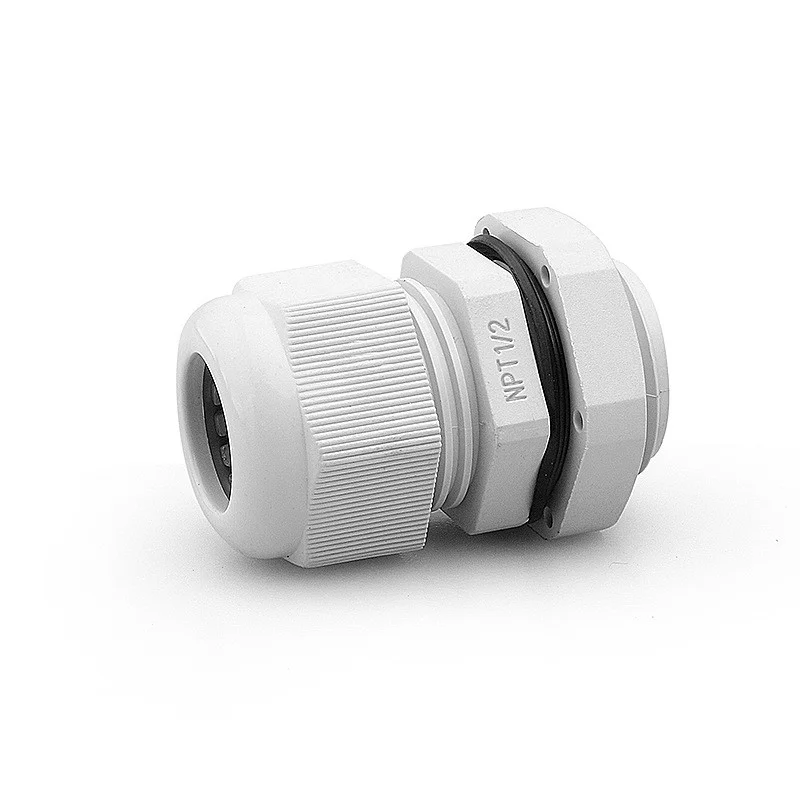
A plastic NPT cable gland is a heavy-duty electrical fitting designed to secure, seal, and protect the end of an electrical cable where it enters an enclosure or equipment housing. Operating on a compression mechanism, the gland utilizes an internal sealing nut and a flexible claw/collet design. When the outer cap is tightened, it compresses an internal rubber seal around the cable jacket. This creates a secure, airtight, and watertight barrier while preventing the cable from being pulled out or twisted.
Understanding NPT (National Pipe Thread) Standards
The cable gland NPT thread configuration adheres to the American National Standard Pipe Thread standard. Unlike metric threads, NPT threads are tapered.
- Taper Angle: The thread profile features a $1^{circ} 47’$ (1 degree 47 minutes) taper angle.
- Sealing Action: The tapered design allows the threads to wedge together tightly as they are screwed into a matching female port, creating a mechanical seal between the flanks of the threads.
- Industrial Standard: This configuration is widely used across North America and global industrial systems to ensure reliable, leak-proof connections in electrical conduit and junction box entries.
Role in Cable Management and Strain Relief
In demanding electrical setups, nylon cable glands serve three critical functions:
- Strain Relief: They absorb mechanical pull, twist, and tug forces, ensuring the internal wiring connections remain undisturbed and secure.
- Environmental Sealing: They block dust, moisture, and corrosive contaminants from entering sensitive electrical enclosures.
- Cable Protection: The smooth plastic body prevents sharp enclosure edges from chafing or cutting the cable jacket over time.
Key Features and Advantages of Nylon Plastic Cable Glands
High Durability and Mechanical Strength
Our nylon cable glands are engineered for tough environments. Made from high-grade Nylon, these npt cable glands offer exceptional impact resistance and mechanical strength. They won’t crack or degrade under physical stress, ensuring your electrical connections stay secure over long-term use. For heavy-duty cable management, they provide the rugged reliability you need without the heavy weight or cost of metal.
Excellent Chemical Resistance
Nylon plastic cable glands excel in harsh industrial settings where exposure to harsh substances is common. They naturally resist salt water, weak acids, alcohol, oil, grease, and common solvents. This makes them the go-to electrical connectors for marine, chemical processing, and outdoor applications where environmental degradation is a constant threat.
IP68 and IP69K Waterproof Ingress Protection
When it comes to sealing out dust and water, our npt glands deliver top-tier performance. Featuring high-quality sealing inserts, they achieve IP68 and IP69K ratings. This means they are completely dust-tight, can handle continuous immersion in water, and withstand high-pressure, high-temperature washdowns.
| Feature | Nylon Cable Gland Specification | Benefit |
|---|---|---|
| Material | Premium Nylon(UL 94V-2 flammability rated) | High safety, self-extinguishing |
| Protection Rating | IP68 / IP69K | Waterproof, dustproof, and washdown-safe |
| Temperature Range | -40°C to 100°C (static state) | Performs in extreme cold and high heat |
| Thread Type | Cable gland npt thread Standard | Seamless fit with US standard enclosures |
Common Sizes and Specifications
Standard NPT Thread Sizes (1/4″ to 2″ NPT)
Finding the right npt cable gland requires matching the thread size directly to your junction box or enclosure knockouts. The standard NPT (National Pipe Thread) lineup scales from compact 1/4″ fittings up to heavy-duty 2″ models. The most frequently used options in commercial and industrial projects include the 1/2 npt cable gland, 3/4 npt cable gland, and 3/8 npt cable gland. Because NPT threads are tapered, they create a tighter, more secure seal as they are wrenched into place.
Clamping and Cable Diameter Ranges
An npt cable gland size chart is essential for matching the outer diameter (OD) of your electrical wiring to the proper npt gland. Selecting a fitting where the cable sits comfortably in the middle of the clamping range ensures the internal bush compresses evenly, delivering optimal strain relief and a watertight seal.
| NPT Thread Size | Common Cable Diameter Range (mm) | Common Cable Diameter Range (inches) |
| 3/8” NPT | 6.0 – 10.0 mm | 0.24” – 0.39” |
| 1/2” NPT(1/2 inch npt cable gland) | 8.0 – 14.0 mm | 0.31” – 0.55” |
| 3/4” NPT | 12.0 – 18.0 mm | 0.47” – 0.71” |
| 1” NPT(1 npt cable gland) | 18.0 – 25.0 mm | 0.71” – 0.98” |
| 1 1/4” NPT | 24.0 – 32.0 mm | 0.94” – 1.26” |
| 1 1/2” NPT | 22.0 – 32.0 mm | 0.87” – 1.26” |
Color Options: Black vs. Gray Nylon Glands
We offer nylon cable glands in two standard industry colors to match your specific application needs:
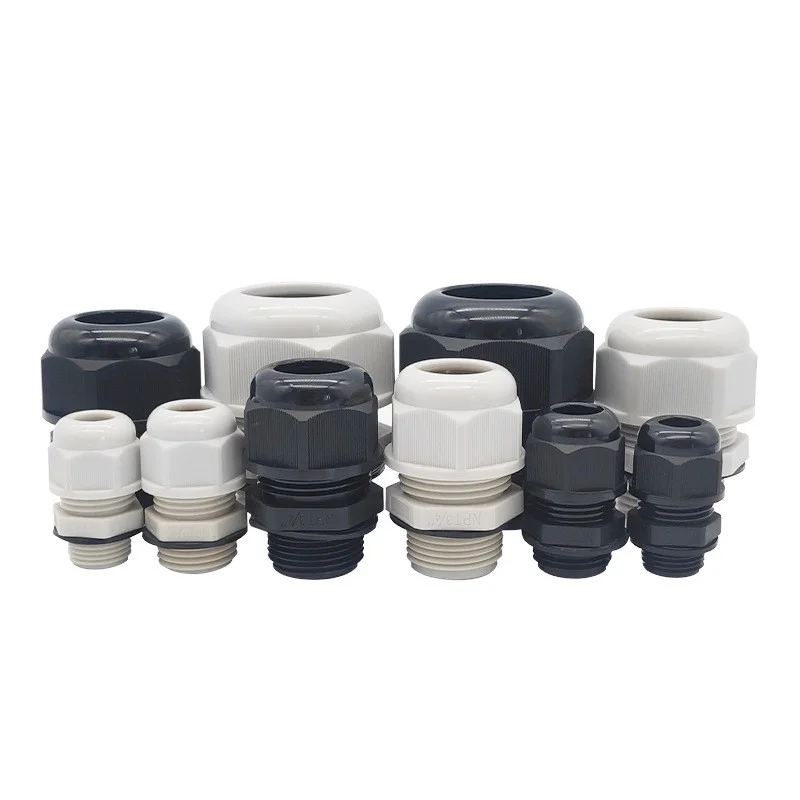
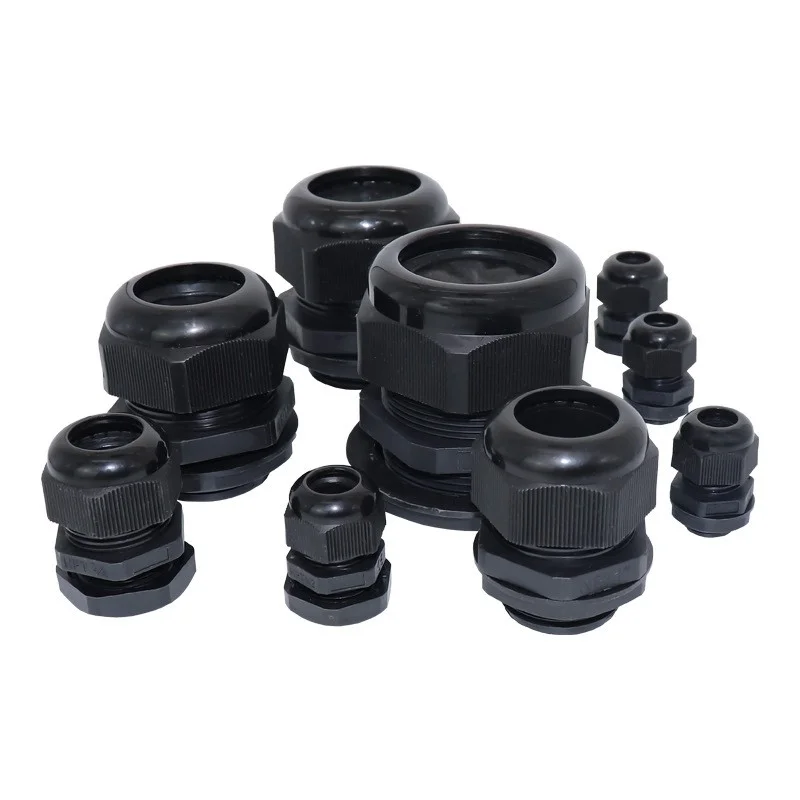
- Black Nylon Glands: Formulated with UV-stabilized additives. These are the top choice for outdoor installations, solar arrays, and exposed routing where prolonged sunlight exposure would typically degrade standard plastics.
- Gray Nylon Glands: Ideal for indoor control panels, industrial machinery, and cleanroom electrical connectors. They provide a clean, professional look that seamlessly matches standard industrial enclosures.
Types and Classifications of Plastic NPT Glands
Choosing the right npt cable gland depends heavily on your specific routing and environmental needs. We manufacture and supply three primary types of nylon glands designed to protect your wiring setups.
Standard Straight Plastic Cable Glands
+—————————————————————+
| Main Components |
| — |
| [Locknut] —> [Body] —> [Clamping Claw] —> [Sealing] |
+—————————————————————+
The standard straight npt gland is the go-to choice for everyday electrical installations. It provides a straightforward, secure connection perpendicular to the enclosure wall.
- Best for: Rigid setups where cables run straight into panels without sharp bends.
- Key Benefit: Compact design that saves space inside crowded terminal boxes.
- Common Size: The 1/2 npt cable gland is the industry standard for general commercial wiring.
Spiral Strain Relief Flex Cable Glands
When your cables are constantly moving or bending, a standard gland won’t cut it. Spiral strain relief flex glands feature an extended, helical spring guard that supports the cable’s bend radius.
- Prevents Kinking: Protects the internal conductors from snapping under continuous motion.
- Applications: Handheld equipment, robotics, and pendant controllers.
- Durability: Extends the lifespan of your heavy-duty nylon cable glands by distributing bending stress.
Multi-Hole and Special Insert Cable Glands
[ Standard Insert ] [ Multi-Hole Insert ]
+————-+ +————-+
| ( O ) | | (O) (O) (O) |
+————-+ +————-+
Single Large Cable Multiple Small Cables
Instead of running multiple individual npt cable glands and drilling several holes in your enclosure, multi-hole inserts let you run multiple cables through a single gateway.
- Space Saver: Maximize panel real estate by sealing up to four or more cables in one fitting.
- Customization: Available with flat inserts for ribbon cables or varying hole diameters for mixed wire sizes.
- Tip: For organized routing before the cables enter these glands, secure them externally using reliable cable clips to keep your layout clean and professional.
Primary Applications and Industries
Electrical Control Panels and Enclosures
We supply our npt cable gland solutions heavily to the electrical contracting and panel-building sectors. Inside complex control panels and distribution boards, maintaining a clean, sealed environment is critical. These electrical connectors secure the incoming power and signal lines, protecting sensitive internal components from dust and ambient moisture while providing necessary strain relief.
Industrial Automation and Machinery
In modern manufacturing plants, automated machinery undergoes constant vibration and movement. Our heavy-duty nylon cable glands ensure that data cables and power lines remain firmly connected to sensors, motors, and robotic arms. The reliable grip prevents costly downtime caused by loose wiring connections in fast-paced production lines.
Outdoor Lighting and Renewable Energy Systems
Weather resistance is mandatory for outdoor infrastructure. Our npt cable glands are widely utilized in solar panel junction boxes, wind turbine control housings, and commercial LED lighting systems. They withstand harsh UV exposure and heavy rain, keeping the internal wiring completely dry and operational. When setting up these systems, installers often secure exterior wiring enclosures to walls or structures using durable mounting hardware like a <a href=”https://wanducn.com/tag/butterfly-screw-wall-plug/“>butterfly screw wall plug to ensure the entire installation remains firmly in place against the elements.
How to Choose the Right Plastic NPT Cable Gland
Choosing the right npt cable gland ensures your electrical enclosures remain completely sealed, protected, and strain-free. Selecting the wrong size or material compromises your entire system. Focus on three critical factors to get the perfect fit.
Measuring Your Cable Diameter Correctly
You must measure the outside diameter (OD) of your cable using a caliper before choosing a gland. Do not rely on the wire gauge size, as insulation thickness varies. The cable OD must fall comfortably within the clamping range of the npt gland. If the cable is too thin, the gland cannot create a waterproof seal; if it is too thick, the dome nut will not tighten properly.
Matching Thread Sizes to Your Enclosure
NPT (National Pipe Thread) uses a tapered thread that seals as it tightens. Match the trade size of your enclosure’s knockout hole to the corresponding cable gland npt thread. Note that NPT sizes refer to nominal pipe sizes, not the actual physical measurement of the thread diameter.
| NPT Thread Size | Typical Cable Diameter Range (mm) | Common Applications |
|---|---|---|
| 3/8 NPT cable gland | 5.0 – 10.0 mm | Small sensors, LED lighting |
| 1/2 npt cable gland | 6.0 – 12.0 mm | Standard junction boxes, power cords |
| 3/4 npt cable gland | 13.0 – 18.0 mm | Industrial machinery, heavy duty cables |
| 1 npt cable gland | 18.0 – 25.0 mm | Main power feeds, distribution panels |
Environmental Factors to Consider
Assess the specific operating environment before deploying your nylon cable glands.
- UV Exposure: Choose black nylon glands for outdoor applications, as they contain additives that resist UV degradation better than gray options.
- Chemical Exposure: Ensure the nylon material resists any oils, cleansers, or solvents present in industrial automation spaces.
- Moisture Protection: Verify the ingress protection rating (like IP68) to handle heavy washdowns or prolonged outdoor exposure. For organizing peripheral wiring outside the enclosure, you can also check our latest insights on the Wandu blog to optimize your full cable management setup.
Installation and Maintenance Best Practices
Getting the most out of your npt cable gland setup comes down to proper installation and regular upkeep. Even the highest-quality nylon cable glands will fail if they are put together carelessly. Follow these practical steps to ensure a watertight, secure fit every time.
Step-by-Step Installation Guide
Installing a cable gland npt thread type is straightforward, but it requires precision.
- Prep the Enclosure: Ensure the threaded hole or knockout on your panel is clean, burr-free, and matches your specific npt gland size (such as a 1/2 npt cable gland or 3/4 npt cable gland).
- Thread the Body: Screw the main gland body directly into the NPT tapped hole. Because NPT threads are tapered, they will naturally tighten and form a seal as you turn them.
- Insert the Cable: Pass your cable through the sealing nut, the internal plastic claw, and the main body into the enclosure.
- Tighten the Cap: Hand-tighten the dome sealing nut onto the body until it grips the cable jacket firmly, then give it a final turn with a wrench to compress the internal rubber seal.
Proper Torque and Sealing Techniques
Over-tightening is the number one cause of cracked electrical connectors and damaged cables. You want a snug, secure seal without crushing the internal components.
| Gland Thread Size | Recommended Body Torque (Nm) | Sealing Nut Torque (Nm) |
|---|---|---|
| 3/8 npt cable gland | 3.5 – 5.0 | 2.5 – 3.5 |
| 1/2 npt cable gland | 5.0 – 7.0 | 3.5 – 5.0 |
| 3/4 npt cable gland | 7.0 – 9.0 | 5.0 – 7.0 |
| 1 npt cable gland | 10.0 – 12.0 | 7.0 – 9.0 |
Pro-Tip: Always use a calibrated torque wrench for industrial applications. If you notice the cable jacket bulging significantly outside the sealing nut, the fitting is too tight. For bundled cables inside the cabinet, organizing them with quality plastic coated metal zip ties prevents strain on the rear of the gland.
Inspection and Maintenance for Long-Term Safety
Outdoor environments and vibrating machinery can take a toll on your npt cable glands over time. Implement a quick inspection routine to prevent unexpected downtime.
- Check for Material Degradation: Look for signs of color fading, cracking, or brittleness caused by extreme UV exposure or harsh chemicals.
- Verify the Seal: Inspect the rubber insert around the cable to ensure it hasn’t shifted, hardened, or dry-rotted.
- Test for Tightness: Give the npt cable gland and the cable a gentle tug during routine electrical maintenance to confirm that vibration hasn’t backed the sealing nut off. Replace any worn components immediately to preserve your system’s waterproof integrity.
 EN
EN  AR
AR  ES
ES  PT
PT  FR
FR  RU
RU  DE
DE  KO
KO  JA
JA  IT
IT  NL
NL  TR
TR