Ultimate Guide: How to Use Fish Tape for Industrial Wiring
What is a Fish Tape?
A fish tape is an essential electrician’s tool used to route new wiring through walls, electrical conduit, and tight spaces. Understanding how to use fish tape properly ensures safe electrical connections and stable conductivity in industrial and commercial projects.
How a Fish Tape Works
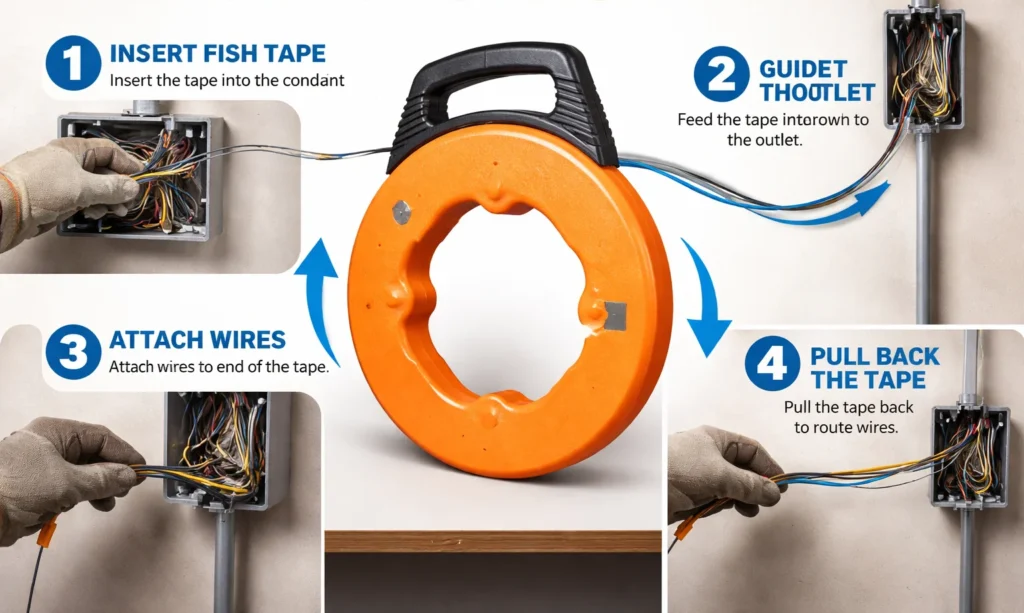
The tool consists of a long, flexible band coiled inside a reel. You push the tape through a conduit until it emerges at the other end, attach your electrical wires to the tape’s leader, and pull the tape back through the conduit to route the wires safely.
Common Applications for Fishing Wire
* Routing wires through PVC or metal conduits. * Pulling cables behind drywall or under floors. * Industrial facility upgrades requiring heavy-duty wire management.
Different Types
Selecting the right material is crucial for safety and efficiency on the job site.
Steel Fish Tape
The industry standard. Steel offers high tensile strength, making it ideal for long, straight runs in heavy-duty commercial applications.
Fiberglass Fish Tape
Fiberglass is non-conductive. This makes it the safest choice when routing wires near live electrical circuits.
Successful wire pulling requires a complete toolkit. You will need wire pulling lubricant, electrical tape, wire strippers, and high-quality wiring accessories to secure the installation once the pull is complete.
Step-by-Step Guide: How to Use Fish Tape
Step 1: Plan Your Route and Prepare Conduit
Inspect the conduit for obstructions. Ensure all junction boxes are open and accessible before beginning the pull.
Step 2: Feed the Fish Tape Through the Wall
Unspool the tape and push the leader into the conduit. Apply steady, even pressure to navigate bends until the tape emerges at the target destination.
Step 3: Securely Attach the Wires
Strip the ends of the wires you intend to pull. Loop the bare wire through the fish tape’s eyelet. Wrap the connection tightly with electrical tape to create a smooth, low-profile head that will not snag inside the pipe.
Step 4: Pull the Wires to the Destination
Communicate with a partner if possible. One person pulls the fish tape steadily from the reel end, while the other smoothly feeds the wires into the conduit to prevent tangling and friction.
Expert Tips for Using Fish Tape Effectively
Navigating Tight Corners and Bends
Never force the tape. If you encounter resistance, pull back slightly and twist the reel to help the leader navigate past the obstruction.
Preventing Wire Snags and Damage
Use generous amounts of wire pulling lubricant inside the conduit. Keep the taped connection between the wire and the fish tape as slim as possible.
Securing Wires in Harsh Environments
Once you know how to use fish tape to route your cables, proper wire management is the critical next step. Zhejiang Wandu Plastic Co., Ltd. provides industry-leading wiring accessories to secure your installations based on strict production controls. * Standard Environments: Use our premium nylon cable ties, tie mounts, and cable clips for neat, organized routing. * Extreme Conditions: For outdoor or freezing environments, utilize our specially formulated UV-resistant and low-temperature resistant cable ties. * Corrosive/Industrial Areas: Apply our high-quality stainless steel cable ties or metal-detectable ties for maximum durability and compliance in chemical or X-ray environments.
Maintenance and Care for Your Tape
Wipe down the tape with a clean rag as you reel it back in. Store it in a dry environment to prevent steel tapes from rusting and to maintain the flexibility of nylon or fiberglass tapes.
Need high-quality cable ties, expansion tubes, or wiring accessories for your next project? Get a Free Quote today to secure your newly routed cables. We respond to all inquiries promptly to ensure your operations run efficiently.
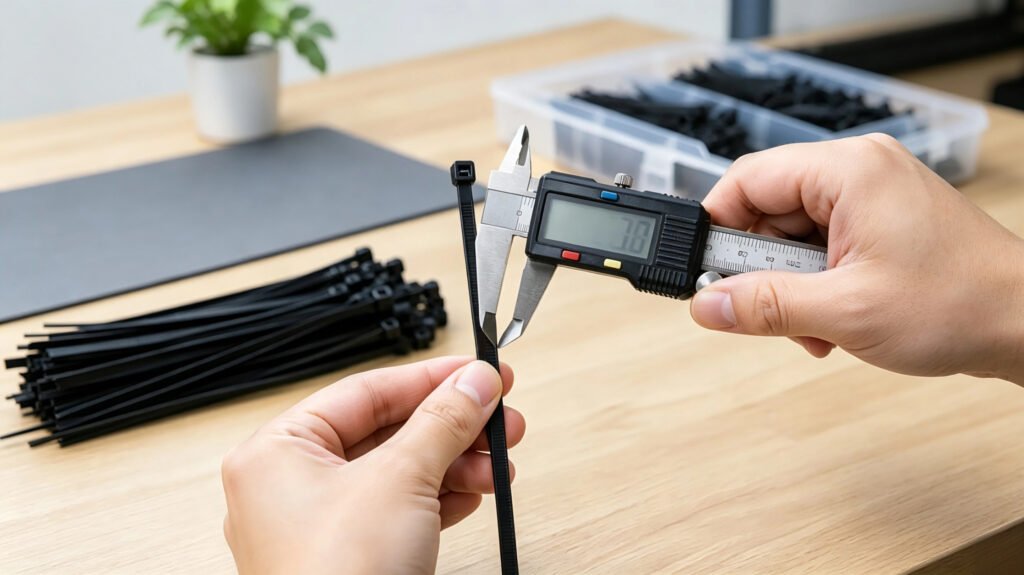
Standard Zip Tie Thickness and Dimensions Zip tie thickness is a critical dimensional spec that determines the structural integrity, flexibility, and loop tensile strength of a fastener. Across standard manufacturing profiles, the cross-sectional thickness of a zip tie is engineered in direct proportion to its width and intended mechanical load, ensuring optimal performance under various […]
This article thoroughly explains “zip ties strength: how much weight can they hold”—covering rated tensile strength, key influencing factors, material and size selection. It also provides selection guidelines and practical considerations, including comparison tables and FAQs, to help you quickly choose the right cable tie and ensure safe use. Definition and Data of Loop Tensile […]
Are Zip Ties Recyclable? Standard plastic zip ties are generally not recyclable through typical residential recycling systems. While the plastic resins used to manufacture them are technically meltable, their physical design and the structural properties of the material create massive roadblocks for standard municipal processing plants. Why Most Curbside Programs Do Not Accept Zip Ties […]
We use cookies to enhance your browsing experience, serve personalised ads or content, and analyse our traffic. By clicking "Accept All", you consent to our use of cookies.
Looking For High Quality Nylon Cable Ties At A Great Price?
Order now to experience cost-effective cable tie products that provide convenience and protection for your work and life.


 EN
EN  AR
AR  ES
ES  PT
PT  FR
FR  RU
RU  DE
DE  KO
KO  JA
JA  IT
IT  NL
NL  TR
TR