Are you tired of dealing with leaky connections, snapped fittings, or rusted hardware mid-job?
Selecting the right stainless steel hose clamps can make all the difference between a rock-solid, leak-free seal and a costly system failure. From high-pressure automotive and marine applications to industrial machinery and household plumbing, choosing the proper fastener is essential for structural integrity.
In this guide, you’ll learn what makes stainless steel vastly superior to carbon steel or plastic clamps. We’ll cover everything you need to know—from decoding 304 vs. 316 stainless steel grades and W1 to W5 material classifications to picking the ideal design between worm gear hose clamps, T-bolt hose clamps, and quick release hose clamps.
If you’re looking for superior corrosion resistance, maximum tightening torque, and long-term cost efficiency for any environment, this guide is for you.
Let’s dive right in!
What Makes Stainless Steel Hose Clamps Better?
Overview of Stainless Steel Hose Clamps
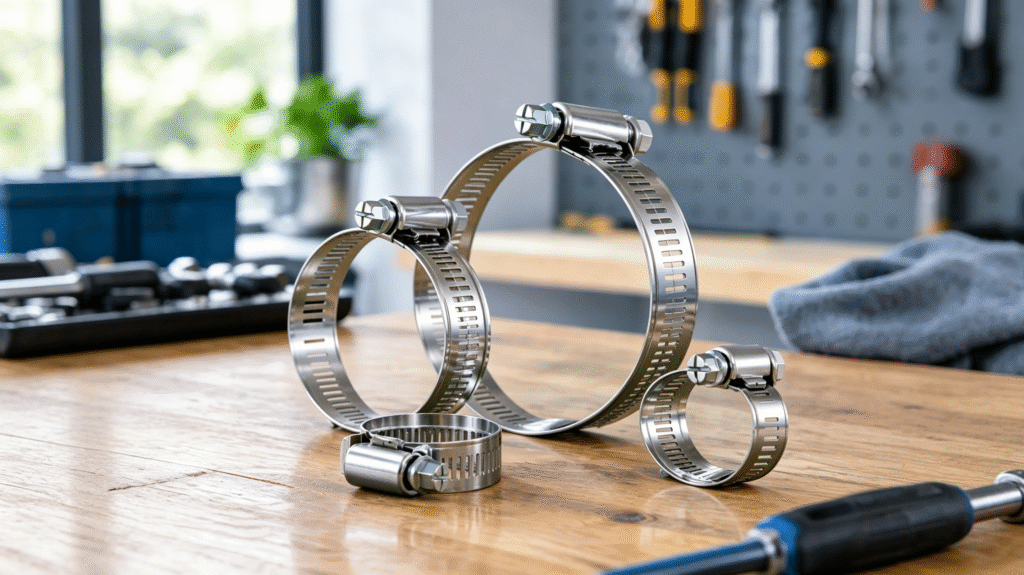
Stainless steel hose clamps are specialized mechanical fasteners engineered to secure flexible tubing, pipes, and hoses onto solid fittings. By delivering a uniform, 360-degree radial seal, a quality stainless steel hose clamp prevents fluid, air, and gas leaks under dynamic operating pressures. High-grade ss hose clamps serve as essential components across marine, automotive, industrial manufacturing, and household applications.
Leak-Proof Sealing: Maintains airtight and watertight connections under continuous pressure.
Vibration Resistance: Prevents hose dislodgement caused by mechanical vibration or engine oscillation.
Material Integrity: Fits rubber, silicone, and PVC hoses without cutting or biting into the outer wall.
How Stainless Steel Prevents Rust and Corrosion
The corrosion resistance of a hose clamp stainless steel construction stems from its chromium-rich alloy structure. Unlike standard steel hose clamps that oxidize quickly when exposed to moisture, stainless steel actively protects itself against atmospheric and chemical degradation.
Passive Oxide Layer: Chromium content reacts with oxygen to form an invisible, protective chromium oxide film across the surface.
Self-Healing Protection: If the band is scratched or abraded during installation, the protective layer automatically regenerates in the presence of air.
Moisture Defense: Inhibits severe rust, pitting, and galvanic corrosion in high-humidity or wet operational environments.
Overall Durability and Structural Integrity
While plastic or carbon steel alternatives suffer from mechanical fatigue, stress cracking, and environmental degradation, heavy duty stainless steel hose clamps offer exceptional structural performance.
High Tensile Strength: Handles maximum tightening torque without stripping the worm gear threads, warping the band, or damaging the housing.
Thermal Endurance: Retains structural shape and clamping force across extreme hot and cold temperature cycles.
Long Service Life: Maintains constant radial tension over long periods, minimizing system maintenance, fluid loss, and operational downtime.
Key Benefits of Using Stainless Steel Hose Clamps
Superior Corrosion and Moisture Resistance
Moisture, salt, and harsh chemicals quickly destroy standard fasteners. Upgrading to high-grade stainless steel hose clamp prevents oxidation and rust formation, ensuring a leak-proof seal in marine, automotive, and outdoor environments. Unlike coated carbon steel, the protective chromium oxide layer on an ss hose clamp self-heals when scratched, maintaining continuous rust protection in damp settings.
High Mechanical Strength and Tightening Torque
Heavy-duty operations require hardware that won’t strip, warp, or snap under pressure. Heavy duty stainless steel hose clamps deliver exceptional tensile strength, allowing you to apply maximum tightening torque without stripping the screw threads or expanding the band.
Clamp Feature
Benefit
Impact on Operation
High Tensile Strength
Resists band deformation
Maintains constant clamping pressure
Precision Threads
Prevents screw slipping
Eliminates fluid leaks in high-pressure lines
Smooth Band Edges
Equalized force distribution
Protects soft silicone and rubber hoses from cuts
Resistance to Extreme Temperatures
Thermal expansion and extreme cold often cause low-grade clamps to loosen or fracture. A stainless steel hose clamp retains its structural integrity across massive temperature swings—from freezing sub-zero conditions to blistering engine bay heat. They will not melt, dry rot, or turn brittle over time.
Long-Term Cost Efficiency
While initial purchasing costs might be slightly higher than plastic fittings, steel hose clamps offer significantly lower total cost of ownership:
Zero Frequent Replacements: Eliminates recurring maintenance labor and downtime.
Leak Prevention: Protects expensive machinery and fluid systems from costly damage.
Reusable Hardware: Easily unfasten and reinstall during routine system servicing without losing clamping force.
Stainless Steel vs. Alternative Hose Clamp Materials
Choosing the right material for your clamping needs directly impacts system safety, maintenance schedules, and overall operational lifespan. While alternative materials exist on the market, stainless steel hose clamps consistently outperform carbon steel, plastic, and nylon under demanding operational conditions.
Stainless Steel vs. Carbon Steel Clamps
A carbon steel hose clamp offers solid initial mechanical strength at a low upfront cost, making it common in temporary or strictly dry indoor applications. However, carbon steel lacks native corrosion resistance and relies on thin surface plating that quickly wears away.
Corrosion Resistance: Plated carbon steel rusts rapidly once exposed to humidity, road salt, or moisture. In contrast, a 304 stainless steel hose clamp resists rust intrinsically, preserving its grip and structural integrity over years of service.
Maintenance & Reusability: Corrosion frequently causes a steel hose clamp made of carbon steel to seize or snap during adjustment. SS hose clamps remain easy to tighten, loosen, or reuse without thread stripping.
System Fastening Integrity: When securing severe-duty lines, combining high-torque hose clamps stainless steel hardware with durable stainless steel cable ties for industrial use eliminates weak points across your entire routing setup.
Stainless Steel vs. Plastic and Nylon Clamps
Non-metallic options like a plastic hose clamp or nylon hose clamp are lightweight, inexpensive, and non-conductive. While useful for light-duty, low-pressure tubing, they fall short in critical industrial environments.
Temperature Extremes: Plastic and nylon soften under engine heat and turn brittle in freezing conditions, leading to sudden cracks and pressure leaks.
Torque Limitations: A hose clamp nylon option cannot handle high tightening torque without stripping its teeth or snap-fitting joints.
UV Degradation: Prolonged sun exposure degrades plastic fasteners, whereas heavy duty stainless steel hose clamps remain unaffected by UV rays, chemical splashes, or continuous vibration.
Performance Metric
Stainless Steel Hose Clamps
Carbon Steel Clamps
Plastic & Nylon Clamps
Corrosion Resistance
Superior (304 / 316 Grades)
Poor to Moderate
High (Non-metallic)
Clamping Force / Torque
Very High
High
Low
Thermal Tolerance
Extreme Heat & Cold
Moderate
Low (Warps / Embrittles)
UV & Outdoor Lifespan
Decades
Short (Rusts)
Short (UV Degradation)
Best Use Case
Automotive, Marine, Industrial
Temporary indoor use
Light-duty, low-pressure lines
Understanding Stainless Steel Grades and Standards
Not all metal clamps are created equal. Choosing the right material grade ensures your hose connection holds up against specific working conditions without failing prematurely.
304 Stainless Steel for General Use
A 304 stainless steel hose clamp is the industry standard for everyday applications. Containing 18% chromium and 8% nickel, 304 grade provides high tensile strength and reliable resistance to oxidation in automotive engine bays, indoor plumbing, and factory air lines. It delivers the ideal balance of performance and long-term value for standard environments.
316 Stainless Steel for Marine and Harsh Environments
When exposed to saltwater spray, chemical fumes, or de-icing road salts, marine-grade 316 ss hose clamps are essential. The inclusion of molybdenum dramatically enhances protection against pitting and chloride corrosion. For severe marine and industrial installations, we pair 316 stainless steel hose clamps with complementary high-durability hardware like coated stainless steel cable ties to safeguard critical lines against aggressive environmental decay.
W1 to W5 Material Classifications Explained
Global manufacturing standards classify hose clamps from W1 to W5 to specify the exact metal composition of the band, housing, and screw:
W1: All parts constructed from zinc-plated carbon steel (light-duty indoor use).
W2: Stainless steel band and housing combined with a zinc-plated carbon steel screw.
W3: Stainless steel band and housing with a chrome-steel screw (intermediate corrosion protection).
W4: Completely manufactured from 304 stainless steel (A2 grade) for heavy-duty outdoor and industrial use.
W5: Completely manufactured from 316 stainless steel (A4 marine grade) for maximum acid, chemical, and saltwater resistance.
Types of Stainless Steel Hose Clamps
Selecting the right hose clamp types comes down to your system’s pressure requirements, band diameter, and installation environment. We supply several distinct designs engineered to deliver reliable, leak-proof performance across different applications.
Worm Gear Hose Clamps
The standard stainless steel hose clamp design features a continuous band with captive screw threads. As you turn the screw, it pulls the band tight around the hose. Best for: General plumbing, automotive coolant lines, and low-to-medium pressure systems. Key advantage: Highly adjustable, versatile, and cost-effective for daily maintenance.
T-Bolt Hose Clamps
For high-pressure or high-vibration applications, heavy duty stainless steel hose clamps with a T-bolt design provide superior structural support. The solid band distributes 360-degree clamping pressure evenly, preventing hose damage and leaks under pressure spikes. While hardware like R-type cable clamps manages organized wire routing, T-bolt clamps handle demanding fluid and intake connections. Best for: Turbochargers, intercooler piping, marine exhaust systems, and industrial machinery. Key advantage: Exceptional tightening torque and resistance to back-off under extreme stress.
Quick Release Hose Clamps
Designed for rapid installation and teardown, quick release ss hose clamps feature a swivel-action latch mechanism. You can open and lock the band without completely backing out the tightening screw. Best for: Large-diameter ducting, temporary maintenance, and closed-loop filtration systems. Key advantage: Saves time during frequent servicing and allows fast, tool-free release.
Primary Applications Across Industries
Automotive and Marine Applications
We design and supply stainless steel hose clamps built to withstand extreme vibration, rapid temperature shifts, and aggressive environments. In automotive engineering, these clamps secure radiator hoses, turbocharger lines, and fuel systems against pressure leaks.
In saltwater and marine environments, standard steel fails rapidly. Using 316 stainless steel hose clamps guarantees long-term resistance against saltwater corrosion, pitting, and oxidation on boat engines and bilge systems.
High-vibration equipment and heavy processing plants rely on heavy duty stainless steel hose clamps to maintain secure fluid and gas routing. These clamps prevent downtime by holding thick reinforced hoses firmly against hose barbs and metal fittings.
When managing complex machinery assemblies, combining durable ss hose clamps for fluid lines with a reliable cable gland for electrical enclosures creates a clean, fully sealed environment for industrial control panels.
Chemical & Processing Lines: Resists chemical degradation during aggressive washdowns.
Pneumatic & Hydraulic Hose Assemblies: Holds firm against steady pressure spikes and constant movement.
For home repair, irrigation, and commercial plumbing, reliable hose clamps stainless steel construction prevents sudden leaks and structural failures. They install easily in tight spaces and adapt well to flexible PVC, rubber, and silicone tubing.
Home Appliances: Secures washing machine and dishwasher inlet/outlet hoses.
Garden & Agricultural Irrigation: Withstands rain, direct sun, and soil moisture without rusting.
How to Choose the Right Stainless Steel Hose Clamp
When we supply stainless steel hose clamps for industrial and commercial projects, we always guide customers through three critical factors: size, pressure rating, and operating environment. Selecting the correct clamp ensures a leak-proof seal and prevents premature assembly failure.
Matching Clamp Size and Band Diameter
Never size a clamp based solely on the hose inner diameter. We recommend measuring the actual outside diameter (OD) of the hose once it is fully installed over the fitting or barb.
Measure the Assembled Hose: Slide the hose onto your fitting, then measure the exact outer diameter using calipers.
Target the Mid-Range: Choose a stainless steel hose clamp where your hose OD sits in the middle of the clamp’s adjustment range.
Avoid Excessive Tail: Oversized clamps leave long band tails that create safety hazards and deliver uneven sealing pressure.
Parameter
Selection Guide
Recommended Application
Hose Outside Diameter (OD)
Measure hose fitted on barb
Select size where OD falls in mid-range
Standard Band Width (1/2 in)
Fits standard hose barbs
Coolant lines, fuel hoses, plumbing
Wide Band Width (5/8 in+)
Fits heavy-duty barbs
Turbo intake, industrial pumps, marine lines
Evaluating Pressure and Clamping Force Requirements
System pressure determines the structural strength and clamping torque required to maintain a secure hold.
Low to Medium Pressure: Standard worm gear ss hose clamps handle daily plumbing, automotive coolant, and low-pressure fluid transfer up to 50 PSI.
High-Pressure Systems: Heavy duty stainless steel hose clamps or T-bolt clamps provide maximum tightening torque and 360-degree uniform pressure for boosted turbochargers and industrial pumps.
Hose Protection: High-torque applications require smooth inner liners or wider bands to prevent the clamp from cutting into soft silicone or rubber hoses.
Assessing Environmental Conditions and Chemical Exposure
The operating environment dictates the grade of stainless steel you need to avoid rapid corrosion and costly downtime.
General & Automotive Use: Grade 304 ss hose clamp options handle atmospheric moisture, high heat, and standard road debris.
Marine & Chemical Exposure: Grade 316 ss hose clamps contain molybdenum, offering superior resistance to salt water, acids, and harsh chemical washdowns.
Fastener Durability: Understanding what is the difference between nylon and metal zip ties and metal clamps helps teams choose stainless steel hardware over plastic alternatives when extreme temperatures or UV exposure are present.
Ever found yourself reaching for a zip tie, only to realize it’s a few inches too short for the job? It’s a frustrating moment, whether you’re managing a chaotic bundle of cords or tackling a weekend DIY project. But before you throw it away or make a frantic run to the hardware store, there’s a […]
Why Cutting Stainless Steel Zip Ties Requires the Right Approach Cutting stainless steel zip ties requires a fundamentally different technique than trimming standard nylon fasteners. Engineered for harsh industrial environments, automotive exhaust systems, and marine applications, these metal fasteners deliver uncompromising security. Attempting to cut or remove them without the proper strategy will destroy your […]
1. What is Zip Tie Strength Zip tie strength refers to the maximum load a zip tie can withstand before breaking. This metric is critical to ensure cables, pipes, or equipment are held securely without loosening. The most commonly used self-locking zip tie has its strength mainly determined by material type, strap width, and the […]
We use cookies to enhance your browsing experience, serve personalised ads or content, and analyse our traffic. By clicking "Accept All", you consent to our use of cookies.
Looking For High Quality Nylon Cable Ties At A Great Price?
Order now to experience cost-effective cable tie products that provide convenience and protection for your work and life.


 EN
EN  AR
AR  ES
ES  PT
PT  FR
FR  RU
RU  DE
DE  KO
KO  JA
JA  IT
IT  NL
NL  TR
TR