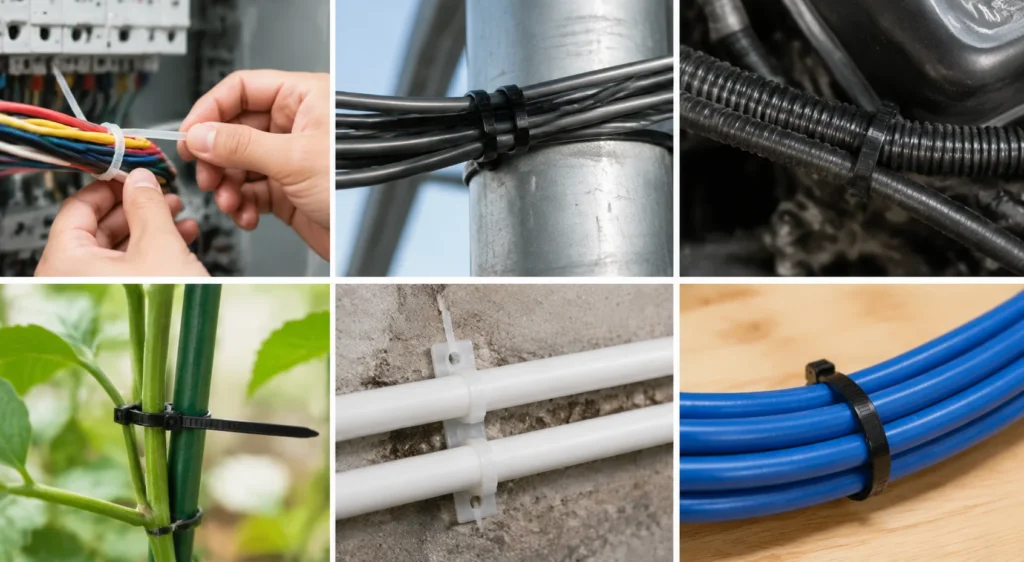
Whether you call them zip ties, wire ties, or hose fasteners, cable ties are the unsung heroes of modern organization. Used globally across automotive, industrial, and residential sectors, these simple fasteners provide incredibly secure binding with minimal effort. As a premier wiring accessories manufacturer and supplier, WANDU engineers these components to withstand demanding environments, ensuring your routing remains immaculate and secure.
The Main Components of a Zip Tie
A standard cable tie consists of three primary sections engineered for maximum efficiency:
The Head: The housing at one end of the tie containing the locking mechanism.
The Strap: The flexible nylon band featuring gear racks (serrated teeth) along its inner or outer surface.
The Tail: The pointed, often serrated tip designed for quick, easy insertion into the head.
How the Locking Mechanism Works
The locking mechanism relies on a simple, one-way ratchet design:
The Pawl: Inside the head is a small, flexible pawl (or tooth) that acts as a ratchet.
The Engagement: When you insert the tail into the head, the pawl rides over the sloped teeth of the strap.
The Lock: Once pulled tight, the pawl catches against the flat back of the strap’s teeth. This prevents the strap from slipping backward, securing the loop under constant tension.
Are Cable Ties Permanent or Reusable?
Choosing the right fastener depends entirely on your project requirements:
Caratteristica
Permanent Cable Ties
Reusable Cable Ties
Design
Features a one-way locking pawl that cannot be easily backed out without a tool.
Features an integrated release tab or a trigger on the head to disengage the pawl.
cURL Too many subrequests by single Worker invocation. To configure this limit, refer to https://developers.cloudflare.com/workers/wrangler/configuration/#limits
Heavy-duty industrial routing, permanent construction, and high-vibration environments.
Temporary setups, prototyping, and cable bundles requiring frequent additions or changes.
Longevity
cURL Too many subrequests by single Worker invocation. To configure this limit, refer to https://developers.cloudflare.com/workers/wrangler/configuration/#limits resistenza delle fascette autobloccanti and tamper resistance.
Cost-effective and highly sustainable for evolving setups.
Choosing the right tie isn’t just about grabbing the first plastic strap you see. To get a secure, lasting hold, you must match the tie’s specifications to your specific job. When you look to choose the right nylon cable tie manufacturer, understanding these core factors saves both time and money.
Tensile Strength and Weight Capacity
The resistenza a trazione fascette (also referred to as resistenza delle fascette autobloccanti) dictates the maximum weight load a tie can handle before failing. For demanding environments or heavy bundling, you must rely on high tensile strength zip ties to prevent snapping.
cURL Too many subrequests by single Worker invocation. To configure this limit, refer to https://developers.cloudflare.com/workers/wrangler/configuration/#limits
cURL Too many subrequests by single Worker invocation. To configure this limit, refer to https://developers.cloudflare.com/workers/wrangler/configuration/#limits
Primary Applications
Miniature
cURL Too many subrequests by single Worker invocation. To configure this limit, refer to https://developers.cloudflare.com/workers/wrangler/configuration/#limits
cURL Too many subrequests by single Worker invocation. To configure this limit, refer to https://developers.cloudflare.com/workers/wrangler/configuration/#limits
Standard
cURL Too many subrequests by single Worker invocation. To configure this limit, refer to https://developers.cloudflare.com/workers/wrangler/configuration/#limits
cURL Too many subrequests by single Worker invocation. To configure this limit, refer to https://developers.cloudflare.com/workers/wrangler/configuration/#limits
cURL Too many subrequests by single Worker invocation. To configure this limit, refer to https://developers.cloudflare.com/workers/wrangler/configuration/#limits
cURL Too many subrequests by single Worker invocation. To configure this limit, refer to https://developers.cloudflare.com/workers/wrangler/configuration/#limits
cURL Too many subrequests by single Worker invocation. To configure this limit, refer to https://developers.cloudflare.com/workers/wrangler/configuration/#limits
cURL Too many subrequests by single Worker invocation. To configure this limit, refer to https://developers.cloudflare.com/workers/wrangler/configuration/#limits
cURL Too many subrequests by single Worker invocation. To configure this limit, refer to https://developers.cloudflare.com/workers/wrangler/configuration/#limits
cURL Too many subrequests by single Worker invocation. To configure this limit, refer to https://developers.cloudflare.com/workers/wrangler/configuration/#limits
cURL Too many subrequests by single Worker invocation. To configure this limit, refer to https://developers.cloudflare.com/workers/wrangler/configuration/#limits
cURL Too many subrequests by single Worker invocation. To configure this limit, refer to https://developers.cloudflare.com/workers/wrangler/configuration/#limits
cURL Too many subrequests by single Worker invocation. To configure this limit, refer to https://developers.cloudflare.com/workers/wrangler/configuration/#limits
cURL Too many subrequests by single Worker invocation. To configure this limit, refer to https://developers.cloudflare.com/workers/wrangler/configuration/#limits cURL Too many subrequests by single Worker invocation. To configure this limit, refer to https://developers.cloudflare.com/workers/wrangler/configuration/#limits
cURL Too many subrequests by single Worker invocation. To configure this limit, refer to https://developers.cloudflare.com/workers/wrangler/configuration/#limits These cURL Too many subrequests by single Worker invocation. To configure this limit, refer to https://developers.cloudflare.com/workers/wrangler/configuration/#limits cURL Too many subrequests by single Worker invocation. To configure this limit, refer to https://developers.cloudflare.com/workers/wrangler/configuration/#limits
cURL Too many subrequests by single Worker invocation. To configure this limit, refer to https://developers.cloudflare.com/workers/wrangler/configuration/#limits
cURL Too many subrequests by single Worker invocation. To configure this limit, refer to https://developers.cloudflare.com/workers/wrangler/configuration/#limits
cURL Too many subrequests by single Worker invocation. To configure this limit, refer to https://developers.cloudflare.com/workers/wrangler/configuration/#limits
cURL Too many subrequests by single Worker invocation. To configure this limit, refer to https://developers.cloudflare.com/workers/wrangler/configuration/#limits
cURL Too many subrequests by single Worker invocation. To configure this limit, refer to https://developers.cloudflare.com/workers/wrangler/configuration/#limits cURL Too many subrequests by single Worker invocation. To configure this limit, refer to https://developers.cloudflare.com/workers/wrangler/configuration/#limits
cURL Too many subrequests by single Worker invocation. To configure this limit, refer to https://developers.cloudflare.com/workers/wrangler/configuration/#limits cURL Too many subrequests by single Worker invocation. To configure this limit, refer to https://developers.cloudflare.com/workers/wrangler/configuration/#limits
cURL Too many subrequests by single Worker invocation. To configure this limit, refer to https://developers.cloudflare.com/workers/wrangler/configuration/#limits cURL Too many subrequests by single Worker invocation. To configure this limit, refer to https://developers.cloudflare.com/workers/wrangler/configuration/#limits
cURL Too many subrequests by single Worker invocation. To configure this limit, refer to https://developers.cloudflare.com/workers/wrangler/configuration/#limits
cURL Too many subrequests by single Worker invocation. To configure this limit, refer to https://developers.cloudflare.com/workers/wrangler/configuration/#limits cURL Too many subrequests by single Worker invocation. To configure this limit, refer to https://developers.cloudflare.com/workers/wrangler/configuration/#limits cURL Too many subrequests by single Worker invocation. To configure this limit, refer to https://developers.cloudflare.com/workers/wrangler/configuration/#limits
cURL Too many subrequests by single Worker invocation. To configure this limit, refer to https://developers.cloudflare.com/workers/wrangler/configuration/#limits cURL Too many subrequests by single Worker invocation. To configure this limit, refer to https://developers.cloudflare.com/workers/wrangler/configuration/#limits
cURL Too many subrequests by single Worker invocation. To configure this limit, refer to https://developers.cloudflare.com/workers/wrangler/configuration/#limits cURL Too many subrequests by single Worker invocation. To configure this limit, refer to https://developers.cloudflare.com/workers/wrangler/configuration/#limits cURL Too many subrequests by single Worker invocation. To configure this limit, refer to https://developers.cloudflare.com/workers/wrangler/configuration/#limits cURL Too many subrequests by single Worker invocation. To configure this limit, refer to https://developers.cloudflare.com/workers/wrangler/configuration/#limits
cURL Too many subrequests by single Worker invocation. To configure this limit, refer to https://developers.cloudflare.com/workers/wrangler/configuration/#limits
cURL Too many subrequests by single Worker invocation. To configure this limit, refer to https://developers.cloudflare.com/workers/wrangler/configuration/#limits
cURL Too many subrequests by single Worker invocation. To configure this limit, refer to https://developers.cloudflare.com/workers/wrangler/configuration/#limits cURL Too many subrequests by single Worker invocation. To configure this limit, refer to https://developers.cloudflare.com/workers/wrangler/configuration/#limits
Avoid Pinching: Over-tightening can crush wire insulation, pinch delicate copper strands, and degrade signal quality in data cables (like Cat6).
Account for Expansion: Heavy-duty electrical cables generate heat and expand slightly under load. Leave a small amount of breathing room to accommodate this thermal expansion.
How to Properly Cut and Trim Cable Ties
After learning come legare fascette stringicavo securely, the final step is trimming the excess tail. Leaving a jagged, half-cut tail is a safety hazard and looks highly unprofessional. Proper trimming ensures your cable bundles remain neat, secure, and safe to handle.
Why Flush Cutting Matters for Safety
Cutting a zip tie improperly leaves a sharp, razor-like edge on the remaining tail. This exposed plastic protrusion can easily slice through skin, snag clothing, or damage adjacent wiring over time.
For high-quality wire management, a flush cut is non-negotiable. If you are working in tight spaces or high-traffic panels, clean-cut tails prevent painful scratches during routine maintenance. Additionally, cutting them correctly ensures the structural integrity of the locking head remains intact.
Recommended Tools for a Clean Cut
To achieve a professional, flush finish, you need the right gear. Standard household scissors or heavy-duty wire cutters often leave sharp diagonal points.
Instead, use one of these dedicated cable tie tools:
Flush Cutters (Micro Shears): These tools feature a completely flat cutting face. They allow you to cut the tie perfectly level with the locking head, leaving zero sharp edges behind.
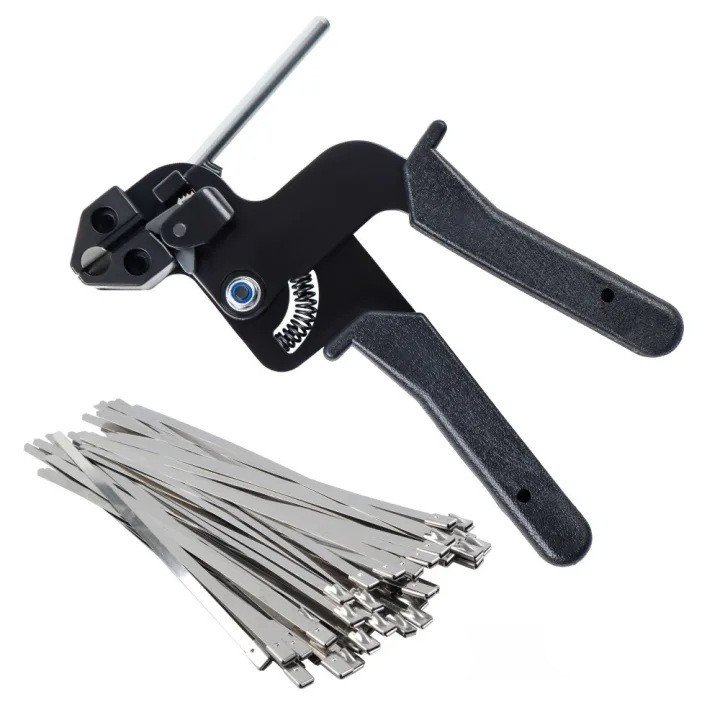
Cable Tie Tension Tools: These specialty tools pull the tie to your pre-set tension and automatically snip the tail flush in one swift motion.
Utility Knives (with caution): If a flush cutter isn’t handy, a sharp utility blade can shave the tail off flat against the head, though it requires a steady hand to avoid damaging the bundle.
Avoiding Common Trimming Mistakes
Even experienced installers make simple mistakes when cleaning up their work. Here is what you should avoid to keep your installations clean and secure:
Twisting the Tail Off: Using pliers to twist and snap the tail damages the locking pawl inside the head, significantly reducing the resistenza a trazione fascette.
Leaving “Dagger” Tails: Cutting at an angle with standard diagonal cutters creates a razor-sharp plastic point. Always cut perpendicular to the tie.
Best Practices for Cable Management and Wire Organization
Proper wire organization isn’t just about making things look clean; it extends the lifespan of your wiring and prevents costly maintenance issues. Learning come legare fascette stringicavo correctly ensures your installations remain safe, organized, and reliable over time.
How to Group and Route Electrical Cables
Grouping cables systematically prevents clutter and reduces signal interference. Follow these core routing rules:
Separate Power and Data: Run power cables and data lines in separate bundles to eliminate electromagnetic interference (EMI).
cURL Too many subrequests by single Worker invocation. To configure this limit, refer to https://developers.cloudflare.com/workers/wrangler/configuration/#limits cURL Too many subrequests by single Worker invocation. To configure this limit, refer to https://developers.cloudflare.com/workers/wrangler/configuration/#limits
cURL Too many subrequests by single Worker invocation. To configure this limit, refer to https://developers.cloudflare.com/workers/wrangler/configuration/#limits cURL Too many subrequests by single Worker invocation. To configure this limit, refer to https://developers.cloudflare.com/workers/wrangler/configuration/#limits
cURL Too many subrequests by single Worker invocation. To configure this limit, refer to https://developers.cloudflare.com/workers/wrangler/configuration/#limits
cURL Too many subrequests by single Worker invocation. To configure this limit, refer to https://developers.cloudflare.com/workers/wrangler/configuration/#limits
cURL Too many subrequests by single Worker invocation. To configure this limit, refer to https://developers.cloudflare.com/workers/wrangler/configuration/#limits cURL Too many subrequests by single Worker invocation. To configure this limit, refer to https://developers.cloudflare.com/workers/wrangler/configuration/#limits
cURL Too many subrequests by single Worker invocation. To configure this limit, refer to https://developers.cloudflare.com/workers/wrangler/configuration/#limits cURL Too many subrequests by single Worker invocation. To configure this limit, refer to https://developers.cloudflare.com/workers/wrangler/configuration/#limits
cURL Too many subrequests by single Worker invocation. To configure this limit, refer to https://developers.cloudflare.com/workers/wrangler/configuration/#limits cURL Too many subrequests by single Worker invocation. To configure this limit, refer to https://developers.cloudflare.com/workers/wrangler/configuration/#limits fascette in polipropilene cURL Too many subrequests by single Worker invocation. To configure this limit, refer to https://developers.cloudflare.com/workers/wrangler/configuration/#limits
cURL Too many subrequests by single Worker invocation. To configure this limit, refer to https://developers.cloudflare.com/workers/wrangler/configuration/#limits
cURL Too many subrequests by single Worker invocation. To configure this limit, refer to https://developers.cloudflare.com/workers/wrangler/configuration/#limits
cURL Too many subrequests by single Worker invocation. To configure this limit, refer to https://developers.cloudflare.com/workers/wrangler/configuration/#limits cURL Too many subrequests by single Worker invocation. To configure this limit, refer to https://developers.cloudflare.com/workers/wrangler/configuration/#limits
cURL Too many subrequests by single Worker invocation. To configure this limit, refer to https://developers.cloudflare.com/workers/wrangler/configuration/#limits cURL Too many subrequests by single Worker invocation. To configure this limit, refer to https://developers.cloudflare.com/workers/wrangler/configuration/#limits cURL Too many subrequests by single Worker invocation. To configure this limit, refer to https://developers.cloudflare.com/workers/wrangler/configuration/#limits cURL Too many subrequests by single Worker invocation. To configure this limit, refer to https://developers.cloudflare.com/workers/wrangler/configuration/#limits
cURL Too many subrequests by single Worker invocation. To configure this limit, refer to https://developers.cloudflare.com/workers/wrangler/configuration/#limits cURL Too many subrequests by single Worker invocation. To configure this limit, refer to https://developers.cloudflare.com/workers/wrangler/configuration/#limits
cURL Too many subrequests by single Worker invocation. To configure this limit, refer to https://developers.cloudflare.com/workers/wrangler/configuration/#limits
cURL Too many subrequests by single Worker invocation. To configure this limit, refer to https://developers.cloudflare.com/workers/wrangler/configuration/#limits
cURL Too many subrequests by single Worker invocation. To configure this limit, refer to https://developers.cloudflare.com/workers/wrangler/configuration/#limits
cURL Too many subrequests by single Worker invocation. To configure this limit, refer to https://developers.cloudflare.com/workers/wrangler/configuration/#limits cURL Too many subrequests by single Worker invocation. To configure this limit, refer to https://developers.cloudflare.com/workers/wrangler/configuration/#limits
cURL Too many subrequests by single Worker invocation. To configure this limit, refer to https://developers.cloudflare.com/workers/wrangler/configuration/#limits cURL Too many subrequests by single Worker invocation. To configure this limit, refer to https://developers.cloudflare.com/workers/wrangler/configuration/#limits
cURL Too many subrequests by single Worker invocation. To configure this limit, refer to https://developers.cloudflare.com/workers/wrangler/configuration/#limits cURL Too many subrequests by single Worker invocation. To configure this limit, refer to https://developers.cloudflare.com/workers/wrangler/configuration/#limits
cURL Too many subrequests by single Worker invocation. To configure this limit, refer to https://developers.cloudflare.com/workers/wrangler/configuration/#limits
cURL Too many subrequests by single Worker invocation. To configure this limit, refer to https://developers.cloudflare.com/workers/wrangler/configuration/#limits cURL Too many subrequests by single Worker invocation. To configure this limit, refer to https://developers.cloudflare.com/workers/wrangler/configuration/#limits cURL Too many subrequests by single Worker invocation. To configure this limit, refer to https://developers.cloudflare.com/workers/wrangler/configuration/#limits
cURL Too many subrequests by single Worker invocation. To configure this limit, refer to https://developers.cloudflare.com/workers/wrangler/configuration/#limits cURL Too many subrequests by single Worker invocation. To configure this limit, refer to https://developers.cloudflare.com/workers/wrangler/configuration/#limits
cURL Too many subrequests by single Worker invocation. To configure this limit, refer to https://developers.cloudflare.com/workers/wrangler/configuration/#limits cURL Too many subrequests by single Worker invocation. To configure this limit, refer to https://developers.cloudflare.com/workers/wrangler/configuration/#limits
cURL Too many subrequests by single Worker invocation. To configure this limit, refer to https://developers.cloudflare.com/workers/wrangler/configuration/#limits cURL Too many subrequests by single Worker invocation. To configure this limit, refer to https://developers.cloudflare.com/workers/wrangler/configuration/#limits
cURL Too many subrequests by single Worker invocation. To configure this limit, refer to https://developers.cloudflare.com/workers/wrangler/configuration/#limits cURL Too many subrequests by single Worker invocation. To configure this limit, refer to https://developers.cloudflare.com/workers/wrangler/configuration/#limits cURL Too many subrequests by single Worker invocation. To configure this limit, refer to https://developers.cloudflare.com/workers/wrangler/configuration/#limits
Safely Removing Ties to Avoid Wire Damage
When you must cut a tie, doing it improperly can easily nick or slice the underlying cables. Follow these safety rules:
Avoid utility knives: A slipping blade is the fastest way to ruin expensive copper wiring.
Use flush cutters: Snip the locking head directly rather than trying to cut the tensioned loop over the wires.
Pry gently: If you are trying to manually release cable ties, never pull so hard that you bend or strain the copper conductors inside the jacket.
cURL Too many subrequests by single Worker invocation. To configure this limit, refer to https://developers.cloudflare.com/workers/wrangler/configuration/#limits
How long do cable ties typically last?
The service life of cable ties depends heavily on their material composition and the environment where they are installed. Standard nylon ties used indoors typically last between 2 to 5 years. If you install them outdoors, UV exposure and temperature fluctuations will degrade standard plastics quickly. For long-term outdoor use, UV-resistant or stainless steel ties are required to achieve a lifespan of 10 to 20+ years.
What is the difference between standard and plenum-rated ties?
The primary difference lies in fire safety and building code compliance. Air handling spaces (plenums) require materials that do not contribute to the spread of fire or release toxic fumes.
Caratteristica
Standard Cable Ties
Plenum-Rated Cable Ties
cURL Too many subrequests by single Worker invocation. To configure this limit, refer to https://developers.cloudflare.com/workers/wrangler/configuration/#limits
Standard Nylon 6/6
Flame-retardant Nylon or Fluoropolymer
Flame Resistance
Low to moderate
High (Self-extinguishing)
Smoke Emission
Generates smoke when burned
Minimal smoke and low toxicity
cURL Too many subrequests by single Worker invocation. To configure this limit, refer to https://developers.cloudflare.com/workers/wrangler/configuration/#limits
General bundling, indoor wire management
Air ducts, drop ceilings, raise floors
Can you use zip ties to support heavy cables?
Yes, you can use zip ties to support heavy cables, but you must select heavy-duty ties with a high resistenza a trazione fascette.
Light-duty bundling: 18 lbs to 40 lbs tensile strength.
Heavy-duty cable support: 120 lbs to 250+ lbs tensile strength.
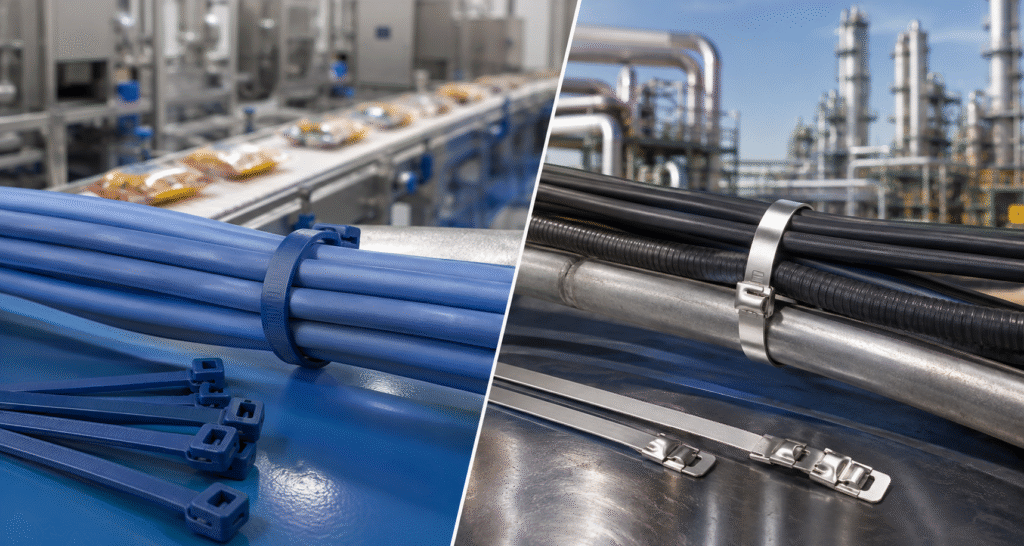
For extreme industrial loads, we recommend using stainless steel zip ties or heavy-duty nylon options to prevent sagging, slipping, or sudden failure under stress.
Understanding Metal Cable Ties vs Metal Detectable Cable Ties Industrial cable management demands specific solutions tailored to environmental threats and safety standards. At WANDU, we engineer specialized fastening hardware to help facility operators maintain strict compliance, operational safety, and wiring integrity across global markets. What Are Metal Cable Ties? Metal cable ties are heavy-duty fasteners […]
cURL Too many subrequests by single Worker invocation. To configure this limit, refer to https://developers.cloudflare.com/workers/wrangler/configuration/#limits
cURL Too many subrequests by single Worker invocation. To configure this limit, refer to https://developers.cloudflare.com/workers/wrangler/configuration/#limits
Utilizziamo i cookie per migliorare la tua esperienza di navigazione, offrire annunci o contenuti personalizzati e analizzare il nostro traffico. Cliccando su "Accetta tutto", acconsenti al nostro utilizzo dei cookie.
Cerchi fascette in nylon di alta qualità a un ottimo prezzo?
Ordina ora per provare prodotti di fascette convenienti che offrono praticità e protezione per il tuo lavoro e la tua vita.



 IT
IT  EN
EN  AR
AR  ES
ES  PT
PT  FR
FR  RU
RU  DE
DE  KO
KO  JA
JA