Blog Prodotti
Difference Between Plastic PG and Metric Cable Gland
cURL Too many subrequests by single Worker invocation. To configure this limit, refer to https://developers.cloudflare.com/workers/wrangler/configuration/#limits
Leggi di più

As a practical fastening tool, cable ties play an important role in households, industries, electronics, and electrical applications. Whether organizing wires, bundling items, or providing secure fastening in complex environments, cable ties demonstrate adaptability and reliability. Depending on the specific use scenarios, cable ties vary in material, design, and function. In this article, we will detail the different types of cable ties to help you choose the most suitable option for your needs.
The most common nylon materials are Nylon 6 and Nylon 66. Nylon 6 is lower in cost, has a higher water absorption rate, and weaker tensile strength and temperature resistance. Nylon 66 is slightly more expensive but offers better overall performance. Nylon cable ties are one of the most commonly used types in daily life, suitable for general environments. They feature good wear resistance and tolerance to high and low temperatures, often used in households, offices, and industrial settings.
Polyethylene material shows excellent resistance to chemical corrosion, making it suitable for environments with acids, alkalis, or other corrosive substances. It has good flexibility, reducing the risk of surface damage during bundling, making it ideal for logistics packaging and daily bundling where strength requirements are lower but convenience is needed.
Polypropylene is known for excellent resistance to chemical corrosion and very low water absorption, maintaining stable performance in humid or chemically exposed environments. This prolongs service life, although toughness is relatively low. It is often used in long-term outdoor or humid conditions.
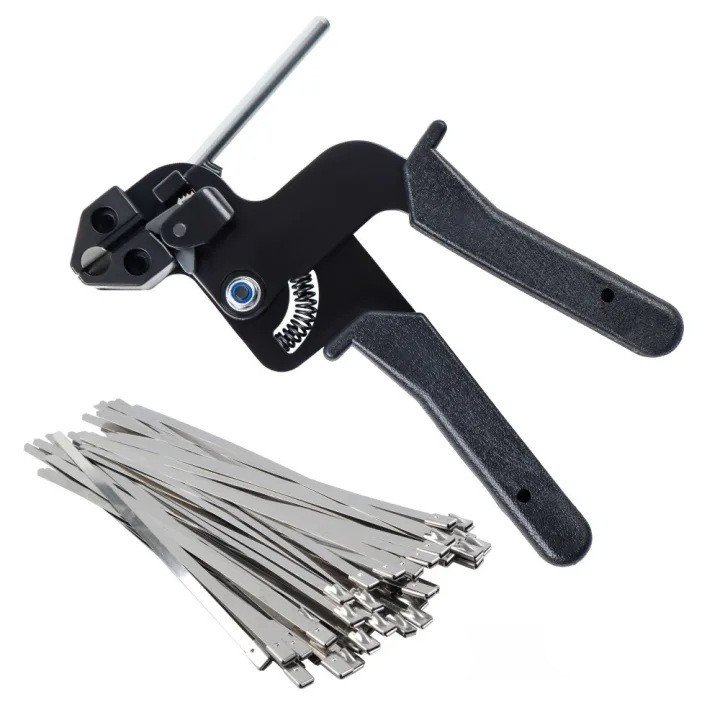
Common stainless steel grades include 201, 304, and 316, with corrosion and temperature resistance improving with cost. Stainless steel cable ties have high mechanical strength, suitable for harsh environments such as chemical, petroleum, and marine industries, providing long-lasting support under high temperature, heavy load, or corrosive conditions.
Releasable cable ties feature a reusable locking mechanism. Unlike disposable ties, they have a release structure at the head. By pressing the release button, the locking tongue disengages, allowing easy removal and reuse. Suitable for frequent adjustments, such as cable management and equipment maintenance. The downside is weaker tensile strength, making them best for temporary or short-term fastening.
Self-locking cable ties use a one-time mechanical locking system. Nylon versions have an elastic tongue inside the head that locks into the serrations, preventing backward movement. Stainless steel ball-lock cable ties achieve quick one-way locking via a ball and spring design, especially useful in vibrating environments. These ensure permanent fastening, widely used in industrial, construction, and electrical projects.
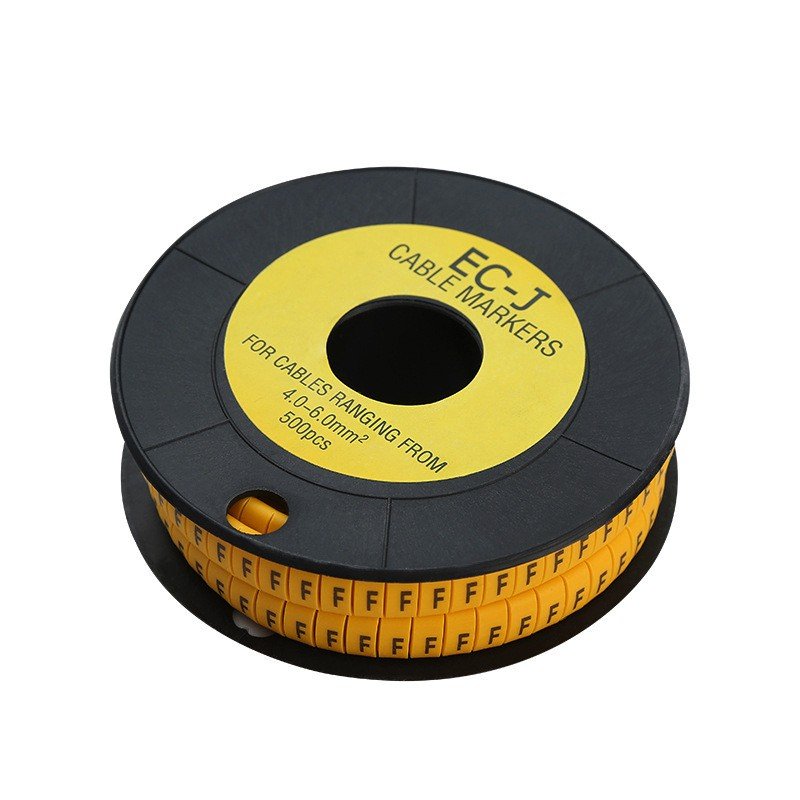
The head is rectangular to allow printing, numbering, or handwriting for easy identification of cables and equipment. Widely used in electrical control and network wiring.
Using a dual-loop interlock structure, usually 12mm or 13mm wide, offering high tensile strength and durability. Besides industrial use, they are also applied in security and emergency restraint situations.
These automotive ties have a snap-in mount integrated into the head, allowing quick “one-click” installation into pre-set holes on vehicle panels. They ensure wire harness stability in vibrating environments and are widely used in automotive manufacturing and repair.
Designed with a screw hole on the head, they allow direct installation onto walls, racks, or equipment using screws. Ideal for vertical routing in pipeline systems and rack setups.
Made from UV-resistant Nylon 66, with additives determining outdoor lifespan. Black weather-resistant ties are recommended for better UV protection, commonly used in outdoor telecom, landscape lighting, and exposed cable installations.
Made with Nylon 66 containing ≥11% magnetic metal powder evenly distributed. Even small fragments can be detected by metal detectors, essential for industries like food processing and pharmaceuticals where contamination control is critical.
Made from high-temperature Nylon 66 or Teflon, these maintain stability in continuous high-heat environments. Common in engine compartments, kilns, and other heat-intensive applications.
Produced with impact-modified Nylon 66, they retain flexibility at low temperatures, typically rated for -20℃ to -40℃. Widely used in cold chain logistics and refrigeration systems.
Made from polypropylene with very low water absorption and chemical resistance, ideal for aquaculture, chemical plants, and humid outdoor applications.
Featuring bead-like bumps, allowing flexible multi-angle locking. Suitable for confined spaces like cabinets and inspection ports, providing secure fastening while enabling position adjustments.
Designed with rib-like reinforcements, enhancing tensile strength. With wide surface area and flexibility, they protect plant tissues, making them ideal for supporting new saplings and organizing garden plants.
Developed for automatic bundling machines, enabling continuous bulk fastening. Widely used in automotive manufacturing and appliance assembly, significantly improving efficiency.
cURL Too many subrequests by single Worker invocation. To configure this limit, refer to https://developers.cloudflare.com/workers/wrangler/configuration/#limits
cURL Too many subrequests by single Worker invocation. To configure this limit, refer to https://developers.cloudflare.com/workers/wrangler/configuration/#limits
cURL Too many subrequests by single Worker invocation. To configure this limit, refer to https://developers.cloudflare.com/workers/wrangler/configuration/#limits
cURL Too many subrequests by single Worker invocation. To configure this limit, refer to https://developers.cloudflare.com/workers/wrangler/configuration/#limits
cURL Too many subrequests by single Worker invocation. To configure this limit, refer to https://developers.cloudflare.com/workers/wrangler/configuration/#limits
Leggi di più
cURL Too many subrequests by single Worker invocation. To configure this limit, refer to https://developers.cloudflare.com/workers/wrangler/configuration/#limits
Leggi di più
In modern industrial production, electronic equipment assembly, home organization, and even aerospace fields, plastic self locking zip ties, as an efficient and convenient fastening tool, have long become indispensable basic consumables. With extremely simple operation, reliable fixing performance, and wide environmental adaptability, they have completely changed the complexity and inefficiency of traditional bundling methods. This […]
Leggi di più
 IT
IT  EN
EN  AR
AR  ES
ES  PT
PT  FR
FR  RU
RU  DE
DE  KO
KO  JA
JA