



1.What are Cold Weather Cable Ties
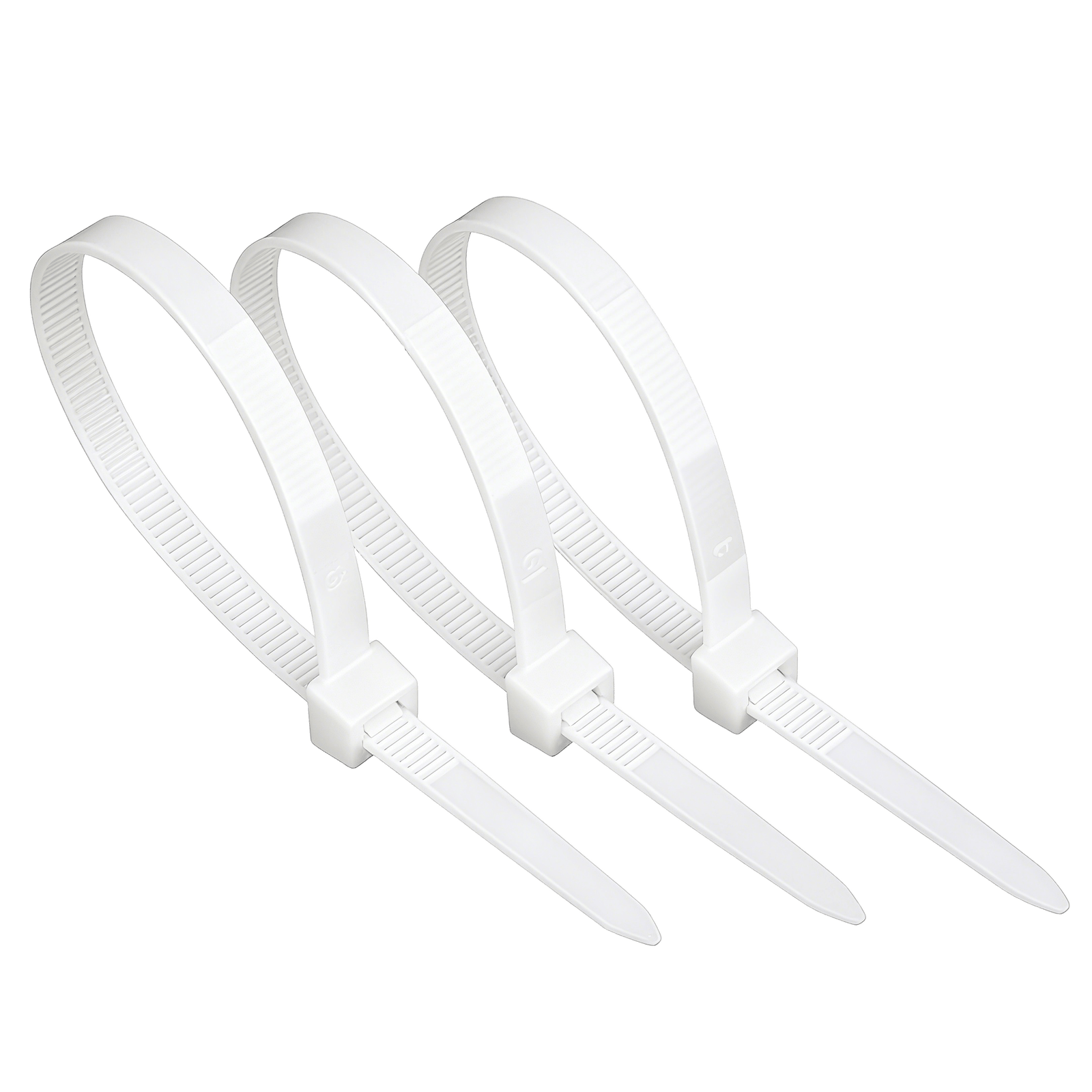
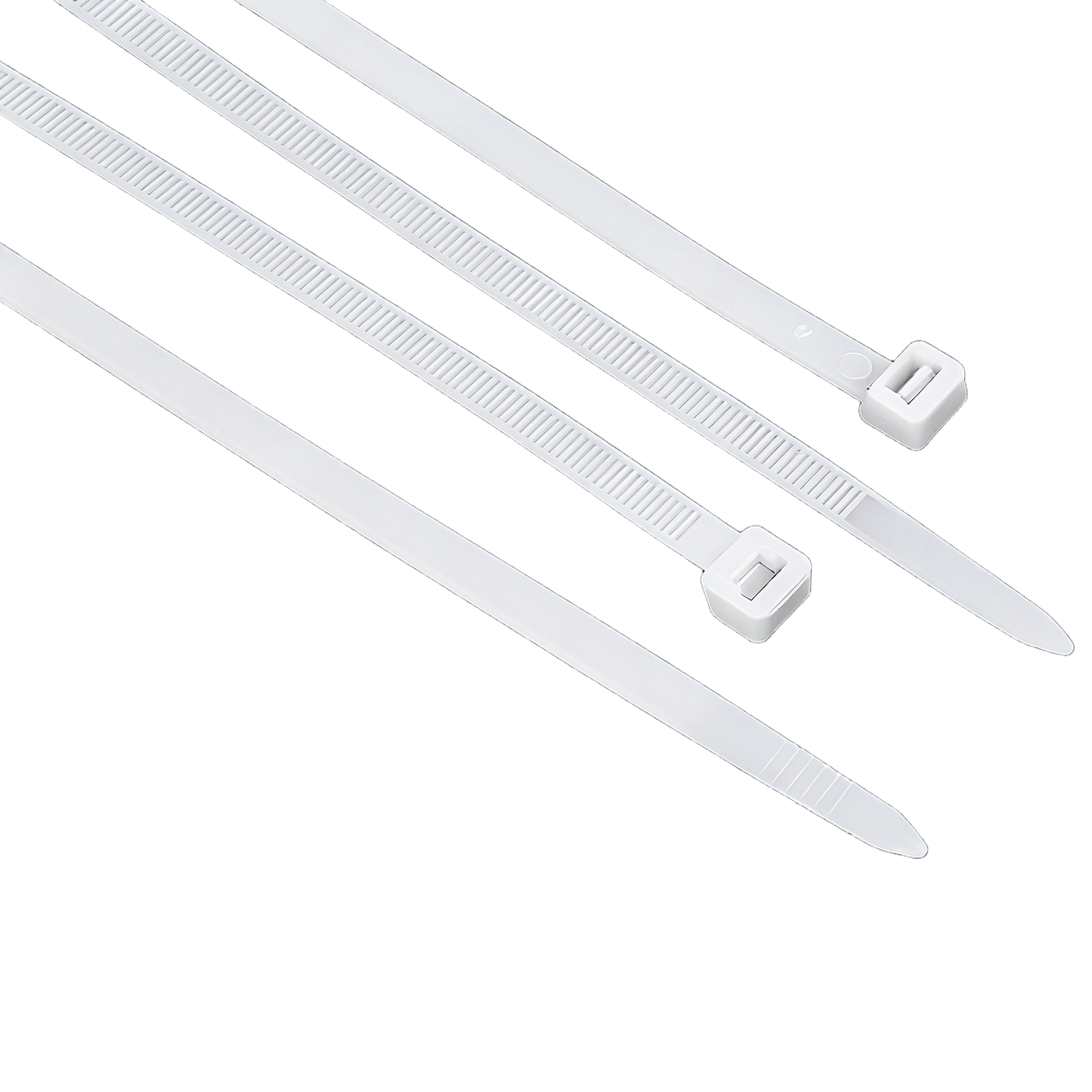
Cold Weather Cable Ties are high-performance cable ties specially designed for low-temperature environments. Made from low-temperature modified nylon 66 material, they can operate at temperatures as low as –40°C. These ties are widely used in applications such as cold chain transportation, outdoor firefighting equipment, cold storage facilities, and offshore platforms, ensuring secure fastening of cables, pipes, and equipment even under severe cold conditions. Whether for polar research or outdoor installations in winter, Cold Weather Cable Ties provide a reliable bundling solution and are the ideal choice for use in low-temperature environments.
2. How Low Temperature Affects Plastic Cable Ties
When ambient temperature falls below 0°C, ordinary nylon approaches its glass transition temperature (Tg), molecular motion is restricted, and the material becomes brittle. Low temperature reduces the mobility of polymer chains inside the plastic cable tie, with segmental motion nearly halted.
The free volume between molecules decreases and inter-chain friction increases. At the same time, secondary interactions such as hydrogen bonding become stronger, collectively causing the material to shift from ductile to rigid and lose toughness rapidly, ultimately manifesting as brittle fracture. These phenomena are especially notable in northern winters, cold storage, snowy fields, and offshore platforms.
3. Material Analysis — Low-Temperature Performance Comparison
Material Types
| Material Type | Vantaggi | Disadvantages | Recommended Minimum Use Temperature |
|---|---|---|---|
| Nylon 6 (PA6) | Low cost, widely available | Becomes seriously brittle below –10°C | –10°C |
| Nylon 66 (PA66) | Tighter molecular structure, better cold resistance | Slightly higher cost | –20°C |
| Low-temperature modified Nylon 66 | Contains special modifiers for cold resistance | Higher cost, more complex production process | –40°C |
| Stainless steel ties | Maintain strength and stability at extremely low temperatures | Lack flexibility and can scratch surfaces | –100°C |
Nylon66 modified cold weather cable ties are the core solution for severe cold environments. By adjusting the molecular structure and adding cold-resistant additives, the ties retain flexibility at temperatures as low as -40°C, effectively preventing brittle failure. The recommended minimum use temperature in the table refers to the dynamic minimum temperature for safe use — in plain terms, the temperature at which the tie can be bent back and forth without breaking.
4. How Manufacturing Process Affects Low-Temperature Performance
1. Injection molding temperature and cooling control
Improper injection temperature settings can affect the crystallization structure of nylon. Proper control of cooling speed helps form a more regular molecular chain arrangement, thereby improving the product’s low-temperature resistance and flexibility.
2. Raw material drying and moisture management
Nylon is hygroscopic; excessive moisture content can cause pores or embrittlement after molding. Strict control of drying process parameters can effectively reduce material defects and enhance impact toughness.
3. Mold structure and gate design
Uniform mold filling helps reduce internal stress and avoid stress cracking at low temperatures. The latch area should be optimized in runner design to improve its structural strength.
High-quality manufacturing processes can make a significant performance difference for cold weather cable ties made from the same base material. Therefore, when selecting products, consider not only material parameters but also the manufacturer’s process capability and quality assurance system.
5. Constant-Temperature Chamber Low-Temperature Test (Quality Verification)
To verify the cold resistance of the product, we conducted a comparative test in a –40°C constant-temperature chamber for 24 hours:
Conditions: Ambient temperature –40°C, duration 24 hours;
cURL Too many subrequests by single Worker invocation. To configure this limit, refer to https://developers.cloudflare.com/workers/wrangler/configuration/#limits cURL Too many subrequests by single Worker invocation. To configure this limit, refer to https://developers.cloudflare.com/workers/wrangler/configuration/#limits
cURL Too many subrequests by single Worker invocation. To configure this limit, refer to https://developers.cloudflare.com/workers/wrangler/configuration/#limits cURL Too many subrequests by single Worker invocation. To configure this limit, refer to https://developers.cloudflare.com/workers/wrangler/configuration/#limits
cURL Too many subrequests by single Worker invocation. To configure this limit, refer to https://developers.cloudflare.com/workers/wrangler/configuration/#limits
cURL Too many subrequests by single Worker invocation. To configure this limit, refer to https://developers.cloudflare.com/workers/wrangler/configuration/#limits
cURL Too many subrequests by single Worker invocation. To configure this limit, refer to https://developers.cloudflare.com/workers/wrangler/configuration/#limits
cURL Too many subrequests by single Worker invocation. To configure this limit, refer to https://developers.cloudflare.com/workers/wrangler/configuration/#limits
cURL Too many subrequests by single Worker invocation. To configure this limit, refer to https://developers.cloudflare.com/workers/wrangler/configuration/#limits
cURL Too many subrequests by single Worker invocation. To configure this limit, refer to https://developers.cloudflare.com/workers/wrangler/configuration/#limits
cURL Too many subrequests by single Worker invocation. To configure this limit, refer to https://developers.cloudflare.com/workers/wrangler/configuration/#limits
cURL Too many subrequests by single Worker invocation. To configure this limit, refer to https://developers.cloudflare.com/workers/wrangler/configuration/#limits
cURL Too many subrequests by single Worker invocation. To configure this limit, refer to https://developers.cloudflare.com/workers/wrangler/configuration/#limits
cURL Too many subrequests by single Worker invocation. To configure this limit, refer to https://developers.cloudflare.com/workers/wrangler/configuration/#limits
cURL Too many subrequests by single Worker invocation. To configure this limit, refer to https://developers.cloudflare.com/workers/wrangler/configuration/#limits
cURL Too many subrequests by single Worker invocation. To configure this limit, refer to https://developers.cloudflare.com/workers/wrangler/configuration/#limits
cURL Too many subrequests by single Worker invocation. To configure this limit, refer to https://developers.cloudflare.com/workers/wrangler/configuration/#limits
cURL Too many subrequests by single Worker invocation. To configure this limit, refer to https://developers.cloudflare.com/workers/wrangler/configuration/#limits
cURL Too many subrequests by single Worker invocation. To configure this limit, refer to https://developers.cloudflare.com/workers/wrangler/configuration/#limits
cURL Too many subrequests by single Worker invocation. To configure this limit, refer to https://developers.cloudflare.com/workers/wrangler/configuration/#limits
cURL Too many subrequests by single Worker invocation. To configure this limit, refer to https://developers.cloudflare.com/workers/wrangler/configuration/#limits
cURL Too many subrequests by single Worker invocation. To configure this limit, refer to https://developers.cloudflare.com/workers/wrangler/configuration/#limits
cURL Too many subrequests by single Worker invocation. To configure this limit, refer to https://developers.cloudflare.com/workers/wrangler/configuration/#limits
cURL Too many subrequests by single Worker invocation. To configure this limit, refer to https://developers.cloudflare.com/workers/wrangler/configuration/#limits
cURL Too many subrequests by single Worker invocation. To configure this limit, refer to https://developers.cloudflare.com/workers/wrangler/configuration/#limits
- cURL Too many subrequests by single Worker invocation. To configure this limit, refer to https://developers.cloudflare.com/workers/wrangler/configuration/#limits
- cURL Too many subrequests by single Worker invocation. To configure this limit, refer to https://developers.cloudflare.com/workers/wrangler/configuration/#limits
cURL Too many subrequests by single Worker invocation. To configure this limit, refer to https://developers.cloudflare.com/workers/wrangler/configuration/#limits
cURL Too many subrequests by single Worker invocation. To configure this limit, refer to https://developers.cloudflare.com/workers/wrangler/configuration/#limits
cURL Too many subrequests by single Worker invocation. To configure this limit, refer to https://developers.cloudflare.com/workers/wrangler/configuration/#limits
cURL Too many subrequests by single Worker invocation. To configure this limit, refer to https://developers.cloudflare.com/workers/wrangler/configuration/#limits
Low-temperature modified nylon66 cable ties can be used at temperatures as low as –40°C while still maintaining flexibility and tensile performance.
cURL Too many subrequests by single Worker invocation. To configure this limit, refer to https://developers.cloudflare.com/workers/wrangler/configuration/#limits
Black uv cable ties mainly focus on UV aging resistance, while arctic cable ties are formulated for low-temperature toughness. For outdoor environments that also experience cold winters, a modified material combining nylon66 + UV stabilizer + low-temperature toughening agent is recommended to combine both functions.
cURL Too many subrequests by single Worker invocation. To configure this limit, refer to https://developers.cloudflare.com/workers/wrangler/configuration/#limits
cURL Too many subrequests by single Worker invocation. To configure this limit, refer to https://developers.cloudflare.com/workers/wrangler/configuration/#limits
 IT
IT  EN
EN  AR
AR  ES
ES  PT
PT  FR
FR  RU
RU  DE
DE  KO
KO  JA
JA