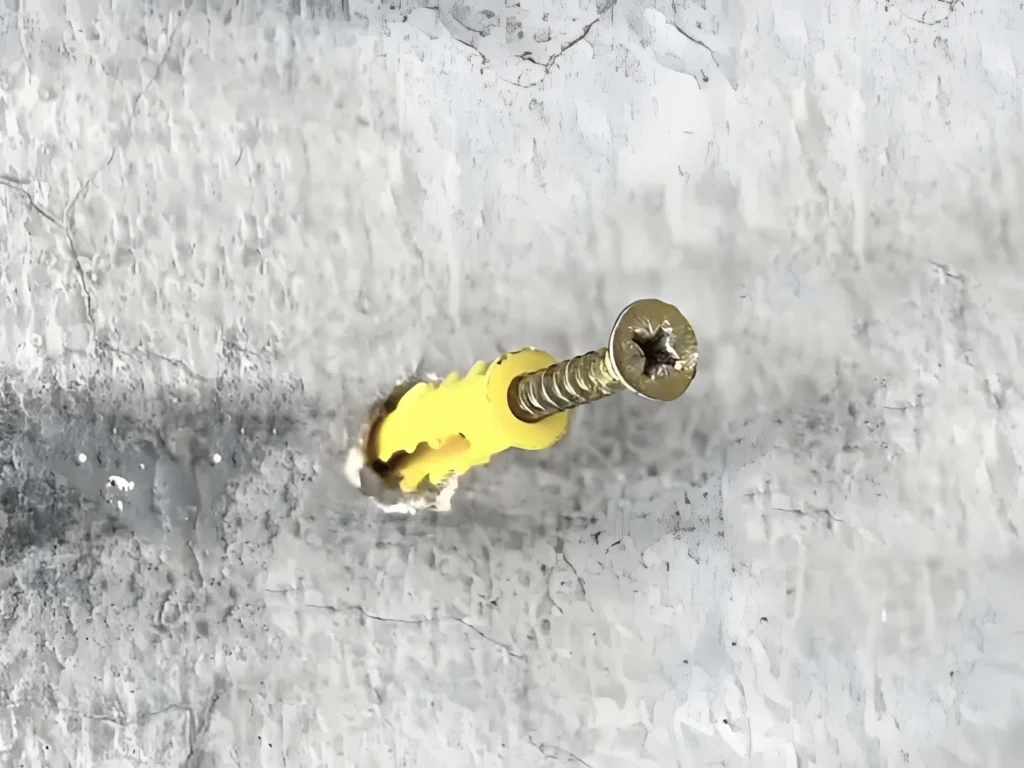
A plastic wall anchor, often referred to as a plastic wall plug, is a specialized inserting sleeve designed to provide a secure fastening point in weak or hollow substrates like drywall, plaster, and masonry. Standard screws cannot grip these materials effectively on their own, as the brittle gypsum or plaster simply crumbles under tension.
When you drive a screw into a plastic wall plug anchor, the anchor expands, wedges, or toggles behind the wall surface. This structural transformation creates a tight, high-friction bond that locks the fastener firmly in place, transforming a fragile wall into a reliable mounting surface.
When and Why You Need to Use Wall Anchors
You must use plastic screw wall anchors whenever you are mounting objects directly to drywall or plaster without hitting a structural wooden stud.
The Problem: Drywall is made of compressed gypsum. Screws driven directly into it will quickly loosen, sag, and eventually tear out under the weight of an object, causing significant wall damage.
The Solution: Knowing plastic wall anchors how to use prevents this failure. The anchor distributes the load across a wider surface area, ensuring the fixture stays safely attached to the wall over time.
Pro Tip: Always check your mounting location with a stud finder first. If a wooden stud is present, drive the screw directly into the wood. If you find only hollow space, a wall screw plastic anchor is absolutely mandatory.
Weight Capacity and Limitations of Plastic Anchors
cURL Too many subrequests by single Worker invocation. To configure this limit, refer to https://developers.cloudflare.com/workers/wrangler/configuration/#limits types of plastic wall anchors are incredibly versatile, they are engineered for light- to medium-duty applications. Understanding their limits prevents costly mounting failures.
Anchor Type
Common Sizes
Safe Weight Capacity (Per Anchor)
cURL Too many subrequests by single Worker invocation. To configure this limit, refer to https://developers.cloudflare.com/workers/wrangler/configuration/#limits
Light-Duty Expansion
3/8 plastic wall anchors, blue plastic wall anchors
5 – 15 lbs (2.2 – 6.8 kg)
Small picture frames, calendars, lightweight smoke detectors
Static vs. Dynamic Loads: cURL Too many subrequests by single Worker invocation. To configure this limit, refer to https://developers.cloudflare.com/workers/wrangler/configuration/#limitscURL Too many subrequests by single Worker invocation. To configure this limit, refer to https://developers.cloudflare.com/workers/wrangler/configuration/#limits cURL Too many subrequests by single Worker invocation. To configure this limit, refer to https://developers.cloudflare.com/workers/wrangler/configuration/#limits
cURL Too many subrequests by single Worker invocation. To configure this limit, refer to https://developers.cloudflare.com/workers/wrangler/configuration/#limits cURL Too many subrequests by single Worker invocation. To configure this limit, refer to https://developers.cloudflare.com/workers/wrangler/configuration/#limits
cURL Too many subrequests by single Worker invocation. To configure this limit, refer to https://developers.cloudflare.com/workers/wrangler/configuration/#limits
cURL Too many subrequests by single Worker invocation. To configure this limit, refer to https://developers.cloudflare.com/workers/wrangler/configuration/#limits
cURL Too many subrequests by single Worker invocation. To configure this limit, refer to https://developers.cloudflare.com/workers/wrangler/configuration/#limits
cURL Too many subrequests by single Worker invocation. To configure this limit, refer to https://developers.cloudflare.com/workers/wrangler/configuration/#limits
Best for: cURL Too many subrequests by single Worker invocation. To configure this limit, refer to https://developers.cloudflare.com/workers/wrangler/configuration/#limits
cURL Too many subrequests by single Worker invocation. To configure this limit, refer to https://developers.cloudflare.com/workers/wrangler/configuration/#limits cURL Too many subrequests by single Worker invocation. To configure this limit, refer to https://developers.cloudflare.com/workers/wrangler/configuration/#limits
Pro Tip: cURL Too many subrequests by single Worker invocation. To configure this limit, refer to https://developers.cloudflare.com/workers/wrangler/configuration/#limits
cURL Too many subrequests by single Worker invocation. To configure this limit, refer to https://developers.cloudflare.com/workers/wrangler/configuration/#limits
cURL Too many subrequests by single Worker invocation. To configure this limit, refer to https://developers.cloudflare.com/workers/wrangler/configuration/#limits
cURL Too many subrequests by single Worker invocation. To configure this limit, refer to https://developers.cloudflare.com/workers/wrangler/configuration/#limits cURL Too many subrequests by single Worker invocation. To configure this limit, refer to https://developers.cloudflare.com/workers/wrangler/configuration/#limits
Strength: cURL Too many subrequests by single Worker invocation. To configure this limit, refer to https://developers.cloudflare.com/workers/wrangler/configuration/#limits
cURL Too many subrequests by single Worker invocation. To configure this limit, refer to https://developers.cloudflare.com/workers/wrangler/configuration/#limits cURL Too many subrequests by single Worker invocation. To configure this limit, refer to https://developers.cloudflare.com/workers/wrangler/configuration/#limits
cURL Too many subrequests by single Worker invocation. To configure this limit, refer to https://developers.cloudflare.com/workers/wrangler/configuration/#limits
cURL Too many subrequests by single Worker invocation. To configure this limit, refer to https://developers.cloudflare.com/workers/wrangler/configuration/#limits
cURL Too many subrequests by single Worker invocation. To configure this limit, refer to https://developers.cloudflare.com/workers/wrangler/configuration/#limits cURL Too many subrequests by single Worker invocation. To configure this limit, refer to https://developers.cloudflare.com/workers/wrangler/configuration/#limits
cURL Too many subrequests by single Worker invocation. To configure this limit, refer to https://developers.cloudflare.com/workers/wrangler/configuration/#limits cURL Too many subrequests by single Worker invocation. To configure this limit, refer to https://developers.cloudflare.com/workers/wrangler/configuration/#limits
Anchor Type
cURL Too many subrequests by single Worker invocation. To configure this limit, refer to https://developers.cloudflare.com/workers/wrangler/configuration/#limits
cURL Too many subrequests by single Worker invocation. To configure this limit, refer to https://developers.cloudflare.com/workers/wrangler/configuration/#limits
cURL Too many subrequests by single Worker invocation. To configure this limit, refer to https://developers.cloudflare.com/workers/wrangler/configuration/#limits
cURL Too many subrequests by single Worker invocation. To configure this limit, refer to https://developers.cloudflare.com/workers/wrangler/configuration/#limits
cURL Too many subrequests by single Worker invocation. To configure this limit, refer to https://developers.cloudflare.com/workers/wrangler/configuration/#limits
cURL Too many subrequests by single Worker invocation. To configure this limit, refer to https://developers.cloudflare.com/workers/wrangler/configuration/#limits
cURL Too many subrequests by single Worker invocation. To configure this limit, refer to https://developers.cloudflare.com/workers/wrangler/configuration/#limits
No
cURL Too many subrequests by single Worker invocation. To configure this limit, refer to https://developers.cloudflare.com/workers/wrangler/configuration/#limits
cURL Too many subrequests by single Worker invocation. To configure this limit, refer to https://developers.cloudflare.com/workers/wrangler/configuration/#limits
cURL Too many subrequests by single Worker invocation. To configure this limit, refer to https://developers.cloudflare.com/workers/wrangler/configuration/#limits
cURL Too many subrequests by single Worker invocation. To configure this limit, refer to https://developers.cloudflare.com/workers/wrangler/configuration/#limits
cURL Too many subrequests by single Worker invocation. To configure this limit, refer to https://developers.cloudflare.com/workers/wrangler/configuration/#limits
cURL Too many subrequests by single Worker invocation. To configure this limit, refer to https://developers.cloudflare.com/workers/wrangler/configuration/#limits
cURL Too many subrequests by single Worker invocation. To configure this limit, refer to https://developers.cloudflare.com/workers/wrangler/configuration/#limits
cURL Too many subrequests by single Worker invocation. To configure this limit, refer to https://developers.cloudflare.com/workers/wrangler/configuration/#limits cURL Too many subrequests by single Worker invocation. To configure this limit, refer to https://developers.cloudflare.com/workers/wrangler/configuration/#limits
cURL Too many subrequests by single Worker invocation. To configure this limit, refer to https://developers.cloudflare.com/workers/wrangler/configuration/#limits cURL Too many subrequests by single Worker invocation. To configure this limit, refer to https://developers.cloudflare.com/workers/wrangler/configuration/#limits combo pack.
Power Drill or Screwdriver: A standard cordless drill works best for boring pilot holes.
Correctly Sized Drill Bit: Critical for creating a snug fit.
Hammer: To gently tap the plastic wall plug flush with the drywall.
Measuring Tape and Pencil: For marking your mounting points accurately.
Safety Gear: Dust mask and safety glasses to protect against drywall dust.
Pro Tip: Keep your workspace organized and secure small mounting hardware or bundled wiring out of the way using reliable products like heavy-duty ties to maintain a clean, professional installation environment.
Matching the Right Drill Bit to Your Anchor
The most common mistake when installing a plastic wall plug anchor is drilling a hole that is too big or too small. If the hole is too wide, the anchor will spin freely; if it is too narrow, the plastic wall screw anchors will bend or break during insertion.
Anchor Size / Type
Recommended Drill Bit Size
cURL Too many subrequests by single Worker invocation. To configure this limit, refer to https://developers.cloudflare.com/workers/wrangler/configuration/#limits
cURL Too many subrequests by single Worker invocation. To configure this limit, refer to https://developers.cloudflare.com/workers/wrangler/configuration/#limits blue plastic wall anchors
3/16 inch
Light picture frames, small calendars
Standard 3/8 plastic wall anchors
3/8 inch
Medium wall shelving, towel bars
Heavy-duty 1 2 plastic plug
1/2 inch
Heavy mirrors, wall-mounted hooks
Always check the packaging for the exact plastic wall anchor sizes to match your drill bit perfectly. When in doubt, choose a drill bit that matches the diameter of the front tip of the wall plug plastic, excluding the wider collar or sleeve.
Step-by-Step Guide to Installing Plastic Wall Anchors
Getting a clean, secure hold starts with precision. Whether you are hanging a heavy mirror or securing a shelf, following a standardized process ensures your plastic wall plug anchor won’t pull out or damage the drywall.
Step 1: Mark and Prep the Installation Site
I always start by pinpointing exactly where the screw needs to go. Use a pencil to mark the spot, then double-check for any hidden obstructions. If you are working on a project that requires multiple mounting points, using a level is non-negotiable to ensure your final result isn’t slanted.
Step 2: Drill the Pilot Hole Correctly
The most common mistake is drilling a hole that is too large. Check the side of your plastic wall screw anchors for the required drill bit size—usually, a 1/4 inch plastic plug requires a 1/4 inch bit. Hold the drill perfectly level and apply steady pressure. For specialized applications where you need a wider grip behind the wall, using a butterfly anchor plastic cURL Too many subrequests by single Worker invocation. To configure this limit, refer to https://developers.cloudflare.com/workers/wrangler/configuration/#limits
cURL Too many subrequests by single Worker invocation. To configure this limit, refer to https://developers.cloudflare.com/workers/wrangler/configuration/#limits
cURL Too many subrequests by single Worker invocation. To configure this limit, refer to https://developers.cloudflare.com/workers/wrangler/configuration/#limits
cURL Too many subrequests by single Worker invocation. To configure this limit, refer to https://developers.cloudflare.com/workers/wrangler/configuration/#limits
cURL Too many subrequests by single Worker invocation. To configure this limit, refer to https://developers.cloudflare.com/workers/wrangler/configuration/#limits
cURL Too many subrequests by single Worker invocation. To configure this limit, refer to https://developers.cloudflare.com/workers/wrangler/configuration/#limits
cURL Too many subrequests by single Worker invocation. To configure this limit, refer to https://developers.cloudflare.com/workers/wrangler/configuration/#limits
cURL Too many subrequests by single Worker invocation. To configure this limit, refer to https://developers.cloudflare.com/workers/wrangler/configuration/#limits
cURL Too many subrequests by single Worker invocation. To configure this limit, refer to https://developers.cloudflare.com/workers/wrangler/configuration/#limits
cURL Too many subrequests by single Worker invocation. To configure this limit, refer to https://developers.cloudflare.com/workers/wrangler/configuration/#limits
cURL Too many subrequests by single Worker invocation. To configure this limit, refer to https://developers.cloudflare.com/workers/wrangler/configuration/#limits
cURL Too many subrequests by single Worker invocation. To configure this limit, refer to https://developers.cloudflare.com/workers/wrangler/configuration/#limits
cURL Too many subrequests by single Worker invocation. To configure this limit, refer to https://developers.cloudflare.com/workers/wrangler/configuration/#limits cURL Too many subrequests by single Worker invocation. To configure this limit, refer to https://developers.cloudflare.com/workers/wrangler/configuration/#limits
cURL Too many subrequests by single Worker invocation. To configure this limit, refer to https://developers.cloudflare.com/workers/wrangler/configuration/#limits cURL Too many subrequests by single Worker invocation. To configure this limit, refer to https://developers.cloudflare.com/workers/wrangler/configuration/#limits
cURL Too many subrequests by single Worker invocation. To configure this limit, refer to https://developers.cloudflare.com/workers/wrangler/configuration/#limits cURL Too many subrequests by single Worker invocation. To configure this limit, refer to https://developers.cloudflare.com/workers/wrangler/configuration/#limits
cURL Too many subrequests by single Worker invocation. To configure this limit, refer to https://developers.cloudflare.com/workers/wrangler/configuration/#limits cURL Too many subrequests by single Worker invocation. To configure this limit, refer to https://developers.cloudflare.com/workers/wrangler/configuration/#limits
cURL Too many subrequests by single Worker invocation. To configure this limit, refer to https://developers.cloudflare.com/workers/wrangler/configuration/#limits
cURL Too many subrequests by single Worker invocation. To configure this limit, refer to https://developers.cloudflare.com/workers/wrangler/configuration/#limits
cURL Too many subrequests by single Worker invocation. To configure this limit, refer to https://developers.cloudflare.com/workers/wrangler/configuration/#limits
cURL Too many subrequests by single Worker invocation. To configure this limit, refer to https://developers.cloudflare.com/workers/wrangler/configuration/#limits
cURL Too many subrequests by single Worker invocation. To configure this limit, refer to https://developers.cloudflare.com/workers/wrangler/configuration/#limits
1
cURL Too many subrequests by single Worker invocation. To configure this limit, refer to https://developers.cloudflare.com/workers/wrangler/configuration/#limits
cURL Too many subrequests by single Worker invocation. To configure this limit, refer to https://developers.cloudflare.com/workers/wrangler/configuration/#limits
2
cURL Too many subrequests by single Worker invocation. To configure this limit, refer to https://developers.cloudflare.com/workers/wrangler/configuration/#limits
cURL Too many subrequests by single Worker invocation. To configure this limit, refer to https://developers.cloudflare.com/workers/wrangler/configuration/#limits
3
cURL Too many subrequests by single Worker invocation. To configure this limit, refer to https://developers.cloudflare.com/workers/wrangler/configuration/#limits
cURL Too many subrequests by single Worker invocation. To configure this limit, refer to https://developers.cloudflare.com/workers/wrangler/configuration/#limits
cURL Too many subrequests by single Worker invocation. To configure this limit, refer to https://developers.cloudflare.com/workers/wrangler/configuration/#limits
cURL Too many subrequests by single Worker invocation. To configure this limit, refer to https://developers.cloudflare.com/workers/wrangler/configuration/#limits
cURL Too many subrequests by single Worker invocation. To configure this limit, refer to https://developers.cloudflare.com/workers/wrangler/configuration/#limits
cURL Too many subrequests by single Worker invocation. To configure this limit, refer to https://developers.cloudflare.com/workers/wrangler/configuration/#limits
cURL Too many subrequests by single Worker invocation. To configure this limit, refer to https://developers.cloudflare.com/workers/wrangler/configuration/#limits
cURL Too many subrequests by single Worker invocation. To configure this limit, refer to https://developers.cloudflare.com/workers/wrangler/configuration/#limits cURL Too many subrequests by single Worker invocation. To configure this limit, refer to https://developers.cloudflare.com/workers/wrangler/configuration/#limits
cURL Too many subrequests by single Worker invocation. To configure this limit, refer to https://developers.cloudflare.com/workers/wrangler/configuration/#limits cURL Too many subrequests by single Worker invocation. To configure this limit, refer to https://developers.cloudflare.com/workers/wrangler/configuration/#limits
cURL Too many subrequests by single Worker invocation. To configure this limit, refer to https://developers.cloudflare.com/workers/wrangler/configuration/#limits cURL Too many subrequests by single Worker invocation. To configure this limit, refer to https://developers.cloudflare.com/workers/wrangler/configuration/#limits
How to Fix a Bent or Broken Plastic Anchor
Standard expansion plastic anchors can bend or collapse if they encounter too much resistance, usually from a hidden stud or poor-quality plastic wall plugs.
Follow these steps to handle a damaged anchor:
Stop screwing: If you notice the anchor twisting, bending, or failing to seat flush, stop immediately. Forcing it will only chew up your drywall.
Extract the damaged anchor: Insert a screw a few turns into the broken plastic wall screw anchors—just enough to grab the plastic—and pull straight out with pliers.
Check for obstructions: Probe the hole with a thin nail or wire to see if you hit a wooden stud or a metal plate protection bracket.
Replace and re-insert: Clean any loose debris out of the hole and tap in a fresh, sturdy wall screw plastic anchor. If you hit a stud, switch to a standard wood screw instead of using a plastic anchor.
How to Correctly Remove or Discard Wall Anchors
When it is time to take down your shelving or decor, you cannot just paint over an old plastic wall anchor. You need to remove or discard it properly to keep your drywall looking flawless. Depending on how stubborn the anchor is, you can either pull it out completely or push it into the wall cavity before patching.
Steps for Pulling Out Plastic Anchors
Removing a plastic wall plug anchor entirely leaves the cleanest surface for a fresh patch. If the anchor is loose or slightly exposed, use this quick method to extract it:
The Screw Method: Insert a matching screw a few turns into the plastic wall plug. Do not drive it all the way in. Grip the screw head firmly with a pair of needle-nose pliers and pull straight out.
The Pliers Method: If the lip of the wall plug plastic is sitting slightly proud of the drywall, grab the edge firmly with needle-nose pliers and gently wiggle it free.
The Utility Knife Snipping Method: For stubborn anchors that refuse to budge, use a sharp utility knife to carefully score and slice off the exposed outer rim. This allows the remaining sleeve to sit below the drywall surface.
How to Push Anchors Into the Wall and Patch the Hole
If trying to pull out plastic screw wall anchors risks tearing a huge chunk of your drywall, pushing them in is the smarter, cleaner alternative. This method keeps the surrounding wall intact and speeds up the repair process.
Push the Anchor: Place a Phillips-head screwdriver or a blunt punch tool directly against the mouth of the plastic wall screw anchors. Tap the end of the tool gently with a hammer until the anchor pops through the drywall and drops inside the wall cavity.
Prep the Hole: Use your utility knife to scrape away any loose paper or crumbling drywall debris around the edges of the hole.
Apply Spackle: Press a high-quality joint compound or spackle into the hole using a putty knife. Pack it tightly, leaving a slight mound on top to account for natural shrinkage as it dries.
Sand and Paint: Once completely dry, sand the area flat with fine-grit sandpaper until it matches the texture of the surrounding wall, then apply a coat of matching paint.
What Are Metal Tie Wraps and How Do They Work? An Overview of Stainless Steel Cable Ties When standard nylon zip ties fall short under extreme conditions, stainless steel cable ties step in as the ultimate heavy-duty bundling solution. Manufactured primarily from high-grade 304 or 316 stainless steel, these metal tie wraps offer unmatched resistance […]
cURL Too many subrequests by single Worker invocation. To configure this limit, refer to https://developers.cloudflare.com/workers/wrangler/configuration/#limits
L'umidità influisce in modo significativo sulle fascette in nylon. Questo articolo esplora la natura del nylon 6.6, le sue proprietà igroscopiche e come l'umidità influisce sulle prestazioni delle fascette in nylon. La natura del nylon 6.6 Il nylon 6.6 è un polimero sintetico ad alte prestazioni ottenuto dalla polimerizzazione di esametilendiammina e acido adipico. Ha eccellente resistenza meccanica, resistenza al calore e stabilità dimensionale […]
Utilizziamo i cookie per migliorare la tua esperienza di navigazione, offrire annunci o contenuti personalizzati e analizzare il nostro traffico. Cliccando su "Accetta tutto", acconsenti al nostro utilizzo dei cookie.
Cerchi fascette in nylon di alta qualità a un ottimo prezzo?
Ordina ora per provare prodotti di fascette convenienti che offrono praticità e protezione per il tuo lavoro e la tua vita.





 IT
IT  EN
EN  AR
AR  ES
ES  PT
PT  FR
FR  RU
RU  DE
DE  KO
KO  JA
JA