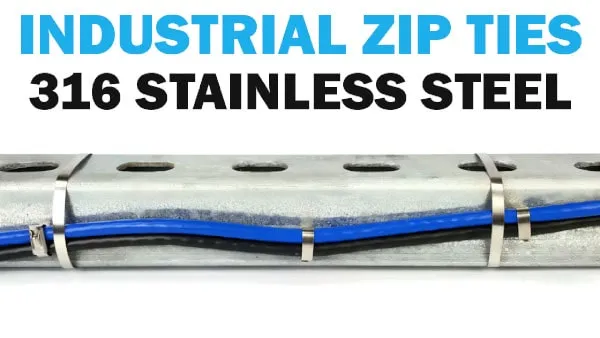
Stainless steel cable ties provide unmatched strength and durability for industrial cable management, solar installations, and harsh environments. However, knowing how to cut metal zip ties correctly is just as critical as selecting the right fastener for the job. Cutting these heavy-duty ties improperly compromises site safety, installation speed, and long-term structural reliability.
Preventing Sharp Burrs and Hand Injuries
When stainless steel zip ties are cut using improper tools like standard pliers, they leave behind razor-sharp metal burrs. These jagged edges create significant workplace hazards:
Personnel Risk: Maintenance technicians can easily suffer severe lacerations during routine inspections or future servicing.
Insulation Damage: Unfinished, sharp metal ends can cut into adjacent wire jackets over time, causing short circuits and equipment downtime.
cURL Too many subrequests by single Worker invocation. To configure this limit, refer to https://developers.cloudflare.com/workers/wrangler/configuration/#limits Clean, flush trimming eliminates hazardous projections, ensuring your installations meet strict industrial safety standards.
As a dedicated wiring accessories manufacturer, WANDU designs high-grade stainless steel ties to withstand extreme loads, but achieving a safe, smooth finish depends entirely on the correct cutting approach.
Ensuring Secure and Long-Lasting Fastening
Proper cutting techniques do more than eliminate hazards—they directly protect the mechanical performance of your cable bundle:
Maintained Tension: Cutting a metal zip tie while applying correct tension ensures the internal locking ball mechanism stays fully engaged, preventing slippage under heavy vibration.
Eliminating Snag Points: Excess metal tail left behind creates unnecessary snag points that catch on clothing, tools, or nearby machinery.
Long-Term Joint Stability: Precision cuts prevent micro-fractures along the cut edge, preserving the corrosion resistance and tensile integrity of the fastener.
Executing clean cuts guarantees your heavy-duty cable management systems remain neat, safe, and permanently secure.
When deciding how to cut metal zip ties, choosing the right tool is the difference between a clean, professional finish and a jagged, dangerous sharp edge. Because stainless steel ties resist severe temperatures and heavy tension, standard household scissors or plastic cutters simply will not work. We recommend matching your tool to your specific job requirements.
Stainless Steel Cable Tie Guns
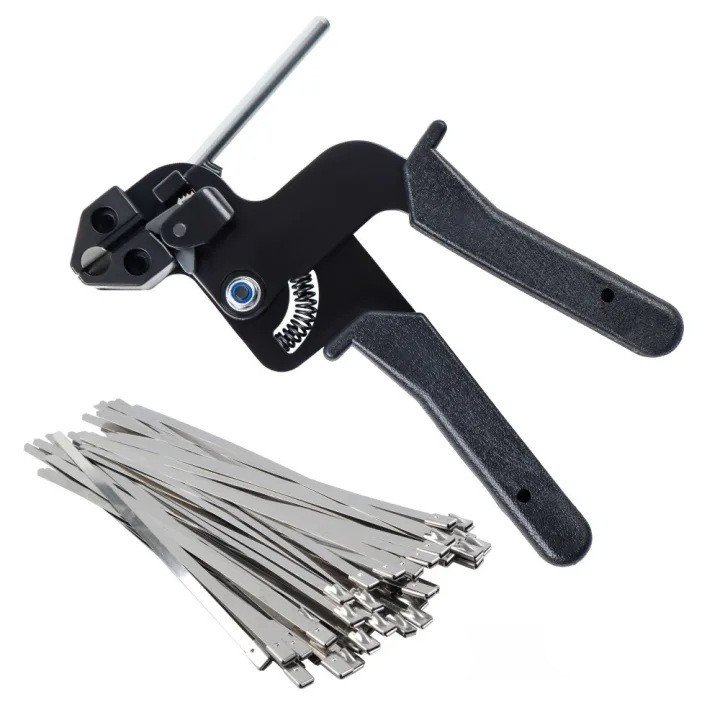
A dedicated cable tie gun is the absolute best solution for professional installations. This tool tightens the tie to your desired tension and automatically snips off the excess tail completely flush against the locking mechanism. When managing large-scale wiring or industrial bundling, using a specialized tool with quality stainless steel cable ties ensures maximum speed, consistency, and safety.
Flush Cutters and Diagonal Cutters
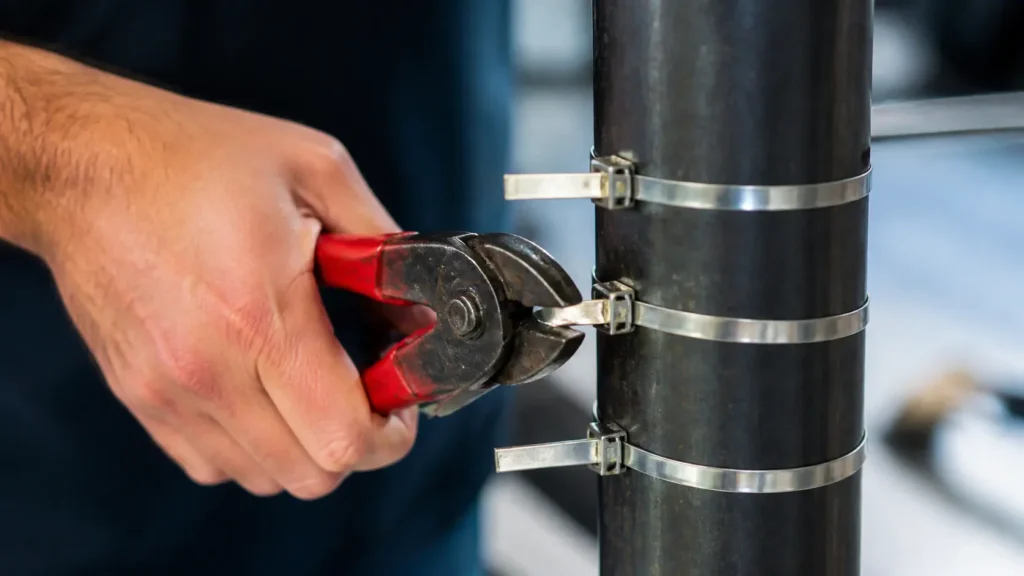
High-leverage handheld cutters offer a quick manual way to slice through metal bands:
cURL Too many subrequests by single Worker invocation. To configure this limit, refer to https://developers.cloudflare.com/workers/wrangler/configuration/#limits Designed with flat cutting jaws to trim the metal tail flush with the locking head, eliminating dangerous burrs.
Diagonal Cutters (Dikes): Excellent for tight spaces and high leverage. Ensure the blades are hardened steel, as standard cutters can nick or dull when cutting stainless steel.
cURL Too many subrequests by single Worker invocation. To configure this limit, refer to https://developers.cloudflare.com/workers/wrangler/configuration/#limits
cURL Too many subrequests by single Worker invocation. To configure this limit, refer to https://developers.cloudflare.com/workers/wrangler/configuration/#limits
cURL Too many subrequests by single Worker invocation. To configure this limit, refer to https://developers.cloudflare.com/workers/wrangler/configuration/#limits cURL Too many subrequests by single Worker invocation. To configure this limit, refer to https://developers.cloudflare.com/workers/wrangler/configuration/#limits
cURL Too many subrequests by single Worker invocation. To configure this limit, refer to https://developers.cloudflare.com/workers/wrangler/configuration/#limits cURL Too many subrequests by single Worker invocation. To configure this limit, refer to https://developers.cloudflare.com/workers/wrangler/configuration/#limits
cURL Too many subrequests by single Worker invocation. To configure this limit, refer to https://developers.cloudflare.com/workers/wrangler/configuration/#limits
cURL Too many subrequests by single Worker invocation. To configure this limit, refer to https://developers.cloudflare.com/workers/wrangler/configuration/#limits
cURL Too many subrequests by single Worker invocation. To configure this limit, refer to https://developers.cloudflare.com/workers/wrangler/configuration/#limits cURL Too many subrequests by single Worker invocation. To configure this limit, refer to https://developers.cloudflare.com/workers/wrangler/configuration/#limits
cURL Too many subrequests by single Worker invocation. To configure this limit, refer to https://developers.cloudflare.com/workers/wrangler/configuration/#limits cURL Too many subrequests by single Worker invocation. To configure this limit, refer to https://developers.cloudflare.com/workers/wrangler/configuration/#limits
cURL Too many subrequests by single Worker invocation. To configure this limit, refer to https://developers.cloudflare.com/workers/wrangler/configuration/#limits
cURL Too many subrequests by single Worker invocation. To configure this limit, refer to https://developers.cloudflare.com/workers/wrangler/configuration/#limits how to cut metal zip ties cURL Too many subrequests by single Worker invocation. To configure this limit, refer to https://developers.cloudflare.com/workers/wrangler/configuration/#limits
cURL Too many subrequests by single Worker invocation. To configure this limit, refer to https://developers.cloudflare.com/workers/wrangler/configuration/#limits
cURL Too many subrequests by single Worker invocation. To configure this limit, refer to https://developers.cloudflare.com/workers/wrangler/configuration/#limits
cURL Too many subrequests by single Worker invocation. To configure this limit, refer to https://developers.cloudflare.com/workers/wrangler/configuration/#limits
cURL Too many subrequests by single Worker invocation. To configure this limit, refer to https://developers.cloudflare.com/workers/wrangler/configuration/#limits
cURL Too many subrequests by single Worker invocation. To configure this limit, refer to https://developers.cloudflare.com/workers/wrangler/configuration/#limits
cURL Too many subrequests by single Worker invocation. To configure this limit, refer to https://developers.cloudflare.com/workers/wrangler/configuration/#limits
cURL Too many subrequests by single Worker invocation. To configure this limit, refer to https://developers.cloudflare.com/workers/wrangler/configuration/#limits
cURL Too many subrequests by single Worker invocation. To configure this limit, refer to https://developers.cloudflare.com/workers/wrangler/configuration/#limits
cURL Too many subrequests by single Worker invocation. To configure this limit, refer to https://developers.cloudflare.com/workers/wrangler/configuration/#limits
cURL Too many subrequests by single Worker invocation. To configure this limit, refer to https://developers.cloudflare.com/workers/wrangler/configuration/#limits
cURL Too many subrequests by single Worker invocation. To configure this limit, refer to https://developers.cloudflare.com/workers/wrangler/configuration/#limits
cURL Too many subrequests by single Worker invocation. To configure this limit, refer to https://developers.cloudflare.com/workers/wrangler/configuration/#limits
cURL Too many subrequests by single Worker invocation. To configure this limit, refer to https://developers.cloudflare.com/workers/wrangler/configuration/#limits
cURL Too many subrequests by single Worker invocation. To configure this limit, refer to https://developers.cloudflare.com/workers/wrangler/configuration/#limits
cURL Too many subrequests by single Worker invocation. To configure this limit, refer to https://developers.cloudflare.com/workers/wrangler/configuration/#limits
cURL Too many subrequests by single Worker invocation. To configure this limit, refer to https://developers.cloudflare.com/workers/wrangler/configuration/#limits
cURL Too many subrequests by single Worker invocation. To configure this limit, refer to https://developers.cloudflare.com/workers/wrangler/configuration/#limits cURL Too many subrequests by single Worker invocation. To configure this limit, refer to https://developers.cloudflare.com/workers/wrangler/configuration/#limits
cURL Too many subrequests by single Worker invocation. To configure this limit, refer to https://developers.cloudflare.com/workers/wrangler/configuration/#limits cURL Too many subrequests by single Worker invocation. To configure this limit, refer to https://developers.cloudflare.com/workers/wrangler/configuration/#limits
cURL Too many subrequests by single Worker invocation. To configure this limit, refer to https://developers.cloudflare.com/workers/wrangler/configuration/#limits cURL Too many subrequests by single Worker invocation. To configure this limit, refer to https://developers.cloudflare.com/workers/wrangler/configuration/#limits
cURL Too many subrequests by single Worker invocation. To configure this limit, refer to https://developers.cloudflare.com/workers/wrangler/configuration/#limits
cURL Too many subrequests by single Worker invocation. To configure this limit, refer to https://developers.cloudflare.com/workers/wrangler/configuration/#limits
cURL Too many subrequests by single Worker invocation. To configure this limit, refer to https://developers.cloudflare.com/workers/wrangler/configuration/#limits
cURL Too many subrequests by single Worker invocation. To configure this limit, refer to https://developers.cloudflare.com/workers/wrangler/configuration/#limits
cURL Too many subrequests by single Worker invocation. To configure this limit, refer to https://developers.cloudflare.com/workers/wrangler/configuration/#limits
cURL Too many subrequests by single Worker invocation. To configure this limit, refer to https://developers.cloudflare.com/workers/wrangler/configuration/#limits durable stainless steel cable ties for industrial use.
Wear Eye Protection and Heavy-Duty Gloves
Impact-Resistant Eye Wear: Tensioned steel tails can whip back unexpectedly or throw off tiny sharp fragments during a cut. Always wear safety glasses.
Cut-Resistant Work Gloves: Trimming creates raw, razor-sharp steel edges. Wear ANSI-rated cut-resistant gloves to shield your hands from deep cuts while handling trimmed ties.
Control Flying Metal Offcuts
Grip the Tail: Secure the loose end with gloved fingers or pliers before making your cut so the excess piece doesn’t snap off like a projectile.
Point Away: Direct the tool jaws down toward the ground and away from your face or nearby coworkers.
Clean Up Scrap: Small steel tails left on the floor pose slipping and tire puncture hazards. Sweep up all offcuts right away.
How to Remove Metal Zip Ties Without Cutting
Sometimes you need to adjust a bundle or re-route wiring without ruining your hardware. While knowing how to cut metal zip ties is essential for permanent installs, learning to release them intact saves time and materials. At WANDU, we design our stainless steel ties for maximum durability, but their locking mechanisms can still be bypassed manually if you know how they work.
Understanding the Locking Ball Mechanism
Unlike standard plastic fasteners, stainless steel ties use a self-locking roller ball system located inside the head.
How it locks: As you pull the tail through, the smooth inner track allows the strap to slide forward easily.
Why it grips: When tension is applied in reverse, the internal metal ball rolls into a sloped ramp, wedging firmly against the strap to lock it in place.
You can unlock and reuse most roller-ball metal zip ties using a simple pocket tool.
Insert the Tool: Slide a thin precision flathead screwdriver, push pin, or sturdy paperclip into the front slot of the locking head, directly against the small metal ball.
Disengage the Ball: Push the internal ball back into the wider part of the chamber to relieve its friction grip on the strap.
Slide the Strap Out: Hold the ball back firmly with your tool while pulling the tail of the tie backward out of the head.
Inspect the Tie: Check the strap for deep score marks or severe bends before reusing it in heavy-duty applications.
cURL Too many subrequests by single Worker invocation. To configure this limit, refer to https://developers.cloudflare.com/workers/wrangler/configuration/#limits
Le fascette stringicavo, chiamate anche fascette per cavi, sono disponibili in una vasta gamma di forme, dimensioni e resistenze per adattarsi a vari compiti. Tuttavia, per lavori che richiedono maggiore durata, le fascette stringicavo per impieghi gravosi sono la soluzione ideale. Con così tante opzioni sul mercato, può essere difficile determinare quale sia la più adatta per il tuo […]
Understanding Plastic Wall Anchors and Their Uses What is a Plastic Wall Anchor? A plastic wall anchor, often referred to as a plastic wall plug, is a specialized inserting sleeve designed to provide a secure fastening point in weak or hollow substrates like drywall, plaster, and masonry. Standard screws cannot grip these materials effectively on […]
Utilizziamo i cookie per migliorare la tua esperienza di navigazione, offrire annunci o contenuti personalizzati e analizzare il nostro traffico. Cliccando su "Accetta tutto", acconsenti al nostro utilizzo dei cookie.
Cerchi fascette in nylon di alta qualità a un ottimo prezzo?
Ordina ora per provare prodotti di fascette convenienti che offrono praticità e protezione per il tuo lavoro e la tua vita.


 IT
IT  EN
EN  AR
AR  ES
ES  PT
PT  FR
FR  RU
RU  DE
DE  KO
KO  JA
JA