cURL Too many subrequests by single Worker invocation. To configure this limit, refer to https://developers.cloudflare.com/workers/wrangler/configuration/#limits
Zip tie strength refers to the maximum load a zip tie can withstand before breaking. This metric is critical to ensure cables, pipes, or equipment are held securely without loosening. The most commonly used self-locking zip tie has its strength mainly determined by material type, strap width, and the design of the locking tooth. This article will guide you on how to choose the right high strength zip ties for your needs.
2. Main Factors Affecting Zip Tie Strength
Material differences The molecular structure, crystallinity, and moisture absorption of different plastics or metals directly affect thezip tie breaking strength.
Lock tooth design Nylon types use a “plastic tooth lock”, while metal types use “steel tooth locks” or a “ball-lock mechanism”; the latter tend to engage more securely.
Strap width and thickness Under the same material and environment, greater width and thickness increase the load-bearing area, and the zip tie tensile strength increases accordingly.
Environmental conditions High temperature, low temperature, and humidity can all weaken the strength of nylon-type ties; metal types are generally not affected.
cURL Too many subrequests by single Worker invocation. To configure this limit, refer to https://developers.cloudflare.com/workers/wrangler/configuration/#limits
Corrosion Resistance
Good
cURL Too many subrequests by single Worker invocation. To configure this limit, refer to https://developers.cloudflare.com/workers/wrangler/configuration/#limits
Fair
Fair
cURL Too many subrequests by single Worker invocation. To configure this limit, refer to https://developers.cloudflare.com/workers/wrangler/configuration/#limits
Relative Cost
Basso
Alto
Medio
Medium-high
Alto
Recyclability
Good
Good
Fair
Fair
cURL Too many subrequests by single Worker invocation. To configure this limit, refer to https://developers.cloudflare.com/workers/wrangler/configuration/#limits
Conclusion: Nylon 66 combines strength and heat resistance and is the most commonly used self-locking material; stainless steel is the material for super strong zip ties, suitable for extreme high-load and harsh environments; PP and PE are suitable for low-strength, corrosion-resistant scenarios.
4. Strength Grades by Zip Tie Type
Using Nylon 66 and 304 stainless steel as examples, different lock tooth designs also produce different cable tie tensile strength results.
cURL Too many subrequests by single Worker invocation. To configure this limit, refer to https://developers.cloudflare.com/workers/wrangler/configuration/#limits
Materiale
cURL Too many subrequests by single Worker invocation. To configure this limit, refer to https://developers.cloudflare.com/workers/wrangler/configuration/#limits
cURL Too many subrequests by single Worker invocation. To configure this limit, refer to https://developers.cloudflare.com/workers/wrangler/configuration/#limits
Typical Applications
cURL Too many subrequests by single Worker invocation. To configure this limit, refer to https://developers.cloudflare.com/workers/wrangler/configuration/#limits
Nylon 66
cURL Too many subrequests by single Worker invocation. To configure this limit, refer to https://developers.cloudflare.com/workers/wrangler/configuration/#limits
Inferiore cURL Too many subrequests by single Worker invocation. To configure this limit, refer to https://developers.cloudflare.com/workers/wrangler/configuration/#limitscURL Too many subrequests by single Worker invocation. To configure this limit, refer to https://developers.cloudflare.com/workers/wrangler/configuration/#limits
cURL Too many subrequests by single Worker invocation. To configure this limit, refer to https://developers.cloudflare.com/workers/wrangler/configuration/#limits
cURL Too many subrequests by single Worker invocation. To configure this limit, refer to https://developers.cloudflare.com/workers/wrangler/configuration/#limits
Nylon 66
cURL Too many subrequests by single Worker invocation. To configure this limit, refer to https://developers.cloudflare.com/workers/wrangler/configuration/#limits
cURL Too many subrequests by single Worker invocation. To configure this limit, refer to https://developers.cloudflare.com/workers/wrangler/configuration/#limits
cURL Too many subrequests by single Worker invocation. To configure this limit, refer to https://developers.cloudflare.com/workers/wrangler/configuration/#limits
cURL Too many subrequests by single Worker invocation. To configure this limit, refer to https://developers.cloudflare.com/workers/wrangler/configuration/#limits
cURL Too many subrequests by single Worker invocation. To configure this limit, refer to https://developers.cloudflare.com/workers/wrangler/configuration/#limits
cURL Too many subrequests by single Worker invocation. To configure this limit, refer to https://developers.cloudflare.com/workers/wrangler/configuration/#limits
cURL Too many subrequests by single Worker invocation. To configure this limit, refer to https://developers.cloudflare.com/workers/wrangler/configuration/#limits cURL Too many subrequests by single Worker invocation. To configure this limit, refer to https://developers.cloudflare.com/workers/wrangler/configuration/#limitscURL Too many subrequests by single Worker invocation. To configure this limit, refer to https://developers.cloudflare.com/workers/wrangler/configuration/#limits
cURL Too many subrequests by single Worker invocation. To configure this limit, refer to https://developers.cloudflare.com/workers/wrangler/configuration/#limits
cURL Too many subrequests by single Worker invocation. To configure this limit, refer to https://developers.cloudflare.com/workers/wrangler/configuration/#limits
cURL Too many subrequests by single Worker invocation. To configure this limit, refer to https://developers.cloudflare.com/workers/wrangler/configuration/#limits
cURL Too many subrequests by single Worker invocation. To configure this limit, refer to https://developers.cloudflare.com/workers/wrangler/configuration/#limits
cURL Too many subrequests by single Worker invocation. To configure this limit, refer to https://developers.cloudflare.com/workers/wrangler/configuration/#limits
cURL Too many subrequests by single Worker invocation. To configure this limit, refer to https://developers.cloudflare.com/workers/wrangler/configuration/#limits
cURL Too many subrequests by single Worker invocation. To configure this limit, refer to https://developers.cloudflare.com/workers/wrangler/configuration/#limits
Tipo
Lunghezza
cURL Too many subrequests by single Worker invocation. To configure this limit, refer to https://developers.cloudflare.com/workers/wrangler/configuration/#limits
Max. Bundle Dia. (mm)
cURL Too many subrequests by single Worker invocation. To configure this limit, refer to https://developers.cloudflare.com/workers/wrangler/configuration/#limits
cURL Too many subrequests by single Worker invocation. To configure this limit, refer to https://developers.cloudflare.com/workers/wrangler/configuration/#limits
4″
2.5
22
cURL Too many subrequests by single Worker invocation. To configure this limit, refer to https://developers.cloudflare.com/workers/wrangler/configuration/#limits
cURL Too many subrequests by single Worker invocation. To configure this limit, refer to https://developers.cloudflare.com/workers/wrangler/configuration/#limits
4″
3.6
22
cURL Too many subrequests by single Worker invocation. To configure this limit, refer to https://developers.cloudflare.com/workers/wrangler/configuration/#limits
cURL Too many subrequests by single Worker invocation. To configure this limit, refer to https://developers.cloudflare.com/workers/wrangler/configuration/#limits
4.7″
4.8
24
cURL Too many subrequests by single Worker invocation. To configure this limit, refer to https://developers.cloudflare.com/workers/wrangler/configuration/#limits
cURL Too many subrequests by single Worker invocation. To configure this limit, refer to https://developers.cloudflare.com/workers/wrangler/configuration/#limits
8″
7.6
50
cURL Too many subrequests by single Worker invocation. To configure this limit, refer to https://developers.cloudflare.com/workers/wrangler/configuration/#limits
cURL Too many subrequests by single Worker invocation. To configure this limit, refer to https://developers.cloudflare.com/workers/wrangler/configuration/#limits
16″
9
105
cURL Too many subrequests by single Worker invocation. To configure this limit, refer to https://developers.cloudflare.com/workers/wrangler/configuration/#limits
cURL Too many subrequests by single Worker invocation. To configure this limit, refer to https://developers.cloudflare.com/workers/wrangler/configuration/#limits
16″
12
105
cURL Too many subrequests by single Worker invocation. To configure this limit, refer to https://developers.cloudflare.com/workers/wrangler/configuration/#limits
cURL Too many subrequests by single Worker invocation. To configure this limit, refer to https://developers.cloudflare.com/workers/wrangler/configuration/#limits
cURL Too many subrequests by single Worker invocation. To configure this limit, refer to https://developers.cloudflare.com/workers/wrangler/configuration/#limits
Nylon 66 can retain basic mechanical properties at -20°C but tends to be brittle; avoid impact
Strength may even improve; suitable down to -60°C
Humidity
Low moisture absorption; little effect on zip tie breaking strength
Absorbs moisture which can reduce tensile strength and stiffness but increase elongation and impact resistance
No effect; also prevents corrosion
Ultraviolet (UV)
Polymer chains break easily; rapid aging and embrittlement, reducing cable tie breaking strength
Long-term sun exposure leads to aging and a gradual decline in cable tie tensile strength; UV additives can improve resistance
Unaffected
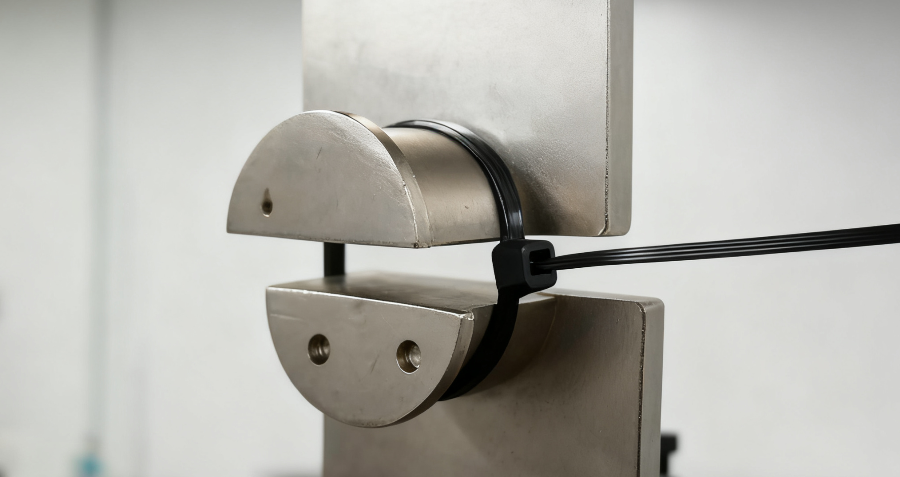
7. Zip Tie Tensile Strength Test Standards and Methods
Common international standards:
UL 62275 (Cable management ties standard)
ASTM D4066 / ISO 527 (Plastics tensile testing)
Test procedure:
Sample preparation Randomly select zip tie samples, ensuring no pre-existing damage or deformation so results are representative.
Fixing and installation Secure one end of the tie in the tensile tester clamp and lock the other end onto a standard test rod to simulate actual bundling.
Uniform tensile load Start the machine and apply axial load at a constant speed until the sample breaks.
Data recording Accurately record the maximum strength of zip ties before breakage and note whether the lock tooth slipped.
Environmental testing Precondition samples in high/low temperature or chemical environments, then repeat tensile tests to evaluate performance retention.
Result analysis Compare test data with product specifications or industry standards to determine whether the strength grade meets requirements.
8. Selection Recommendations
For routine indoor fastening and household cable organization, economical PP ties or standard nylon ties are recommended.
For industrial equipment cabling and medium-load wiring inside cabinets, choose Nylon 66 industrial strength zip ties.
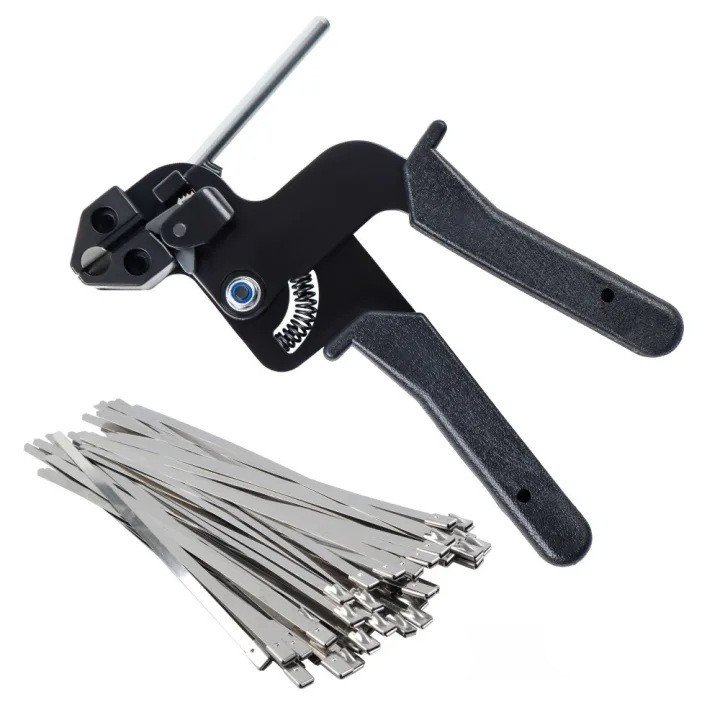
For long-term outdoor use, high mechanical vibration, or continuous high-tension loads, prefer nylon ties with metal lock teeth or stainless steel high strength cable ties.
For chemical plants, coastal, or high-corrosion/hygiene environments, prioritize 316 stainless steel ties.
cURL Too many subrequests by single Worker invocation. To configure this limit, refer to https://developers.cloudflare.com/workers/wrangler/configuration/#limits
cURL Too many subrequests by single Worker invocation. To configure this limit, refer to https://developers.cloudflare.com/workers/wrangler/configuration/#limits
cURL Too many subrequests by single Worker invocation. To configure this limit, refer to https://developers.cloudflare.com/workers/wrangler/configuration/#limits
cURL Too many subrequests by single Worker invocation. To configure this limit, refer to https://developers.cloudflare.com/workers/wrangler/configuration/#limits
cURL Too many subrequests by single Worker invocation. To configure this limit, refer to https://developers.cloudflare.com/workers/wrangler/configuration/#limits
cURL Too many subrequests by single Worker invocation. To configure this limit, refer to https://developers.cloudflare.com/workers/wrangler/configuration/#limits
cURL Too many subrequests by single Worker invocation. To configure this limit, refer to https://developers.cloudflare.com/workers/wrangler/configuration/#limits
cURL Too many subrequests by single Worker invocation. To configure this limit, refer to https://developers.cloudflare.com/workers/wrangler/configuration/#limits
cURL Too many subrequests by single Worker invocation. To configure this limit, refer to https://developers.cloudflare.com/workers/wrangler/configuration/#limits
cURL Too many subrequests by single Worker invocation. To configure this limit, refer to https://developers.cloudflare.com/workers/wrangler/configuration/#limits
cURL Too many subrequests by single Worker invocation. To configure this limit, refer to https://developers.cloudflare.com/workers/wrangler/configuration/#limits
cURL Too many subrequests by single Worker invocation. To configure this limit, refer to https://developers.cloudflare.com/workers/wrangler/configuration/#limits
cURL Too many subrequests by single Worker invocation. To configure this limit, refer to https://developers.cloudflare.com/workers/wrangler/configuration/#limits
cURL Too many subrequests by single Worker invocation. To configure this limit, refer to https://developers.cloudflare.com/workers/wrangler/configuration/#limits
Utilizziamo i cookie per migliorare la tua esperienza di navigazione, offrire annunci o contenuti personalizzati e analizzare il nostro traffico. Cliccando su "Accetta tutto", acconsenti al nostro utilizzo dei cookie.
Cerchi fascette in nylon di alta qualità a un ottimo prezzo?
Ordina ora per provare prodotti di fascette convenienti che offrono praticità e protezione per il tuo lavoro e la tua vita.


 IT
IT  EN
EN  AR
AR  ES
ES  PT
PT  FR
FR  RU
RU  DE
DE  KO
KO  JA
JA