Industry Applications
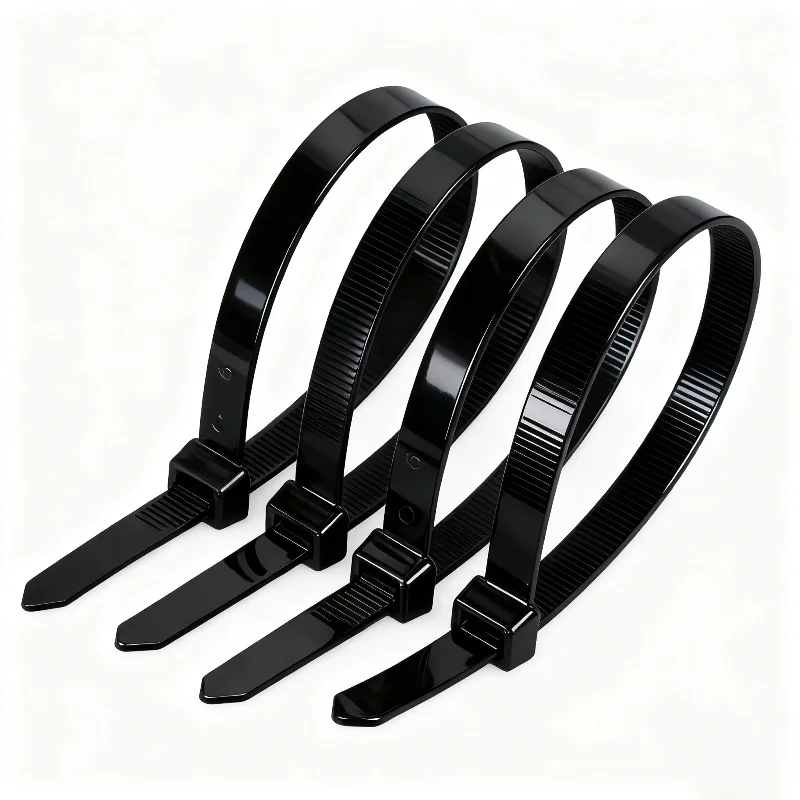
High quality zip ties: durable and versatile lashing solutions
High quality zip ties are a type of tying tool widely u […]
阅读更多
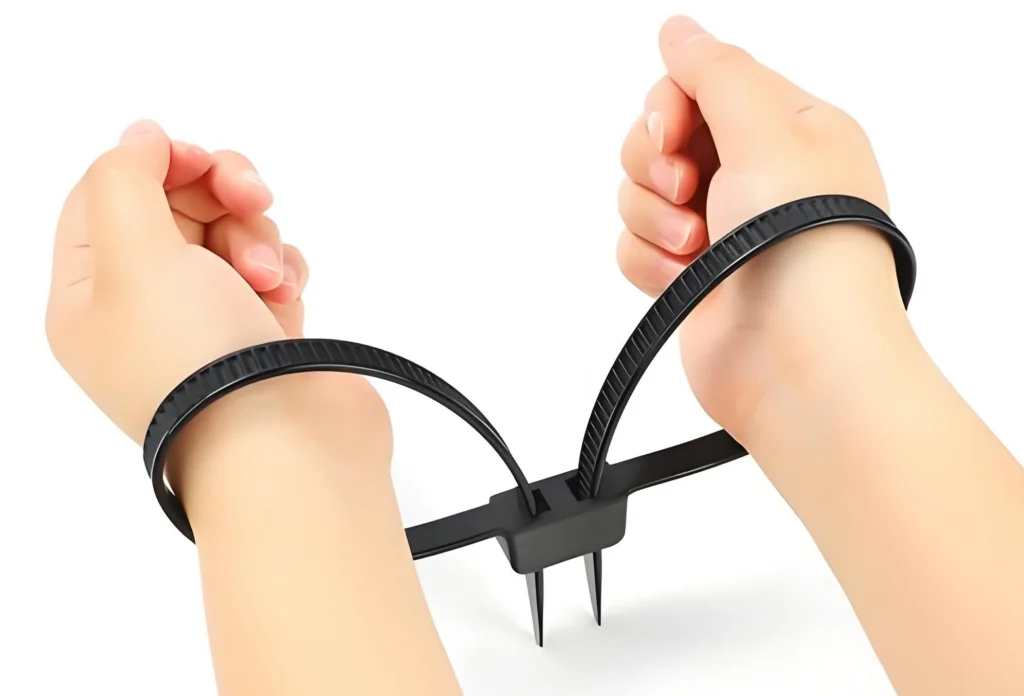
You might already know that industrial cable ties are engineered to be virtually unbreakable…
But what happens when you urgently need to know how to safely remove cable tie handcuffs?
Whether you are dealing with a survival emergency, removing makeshift restraints, or simply trying to avoid a dangerous injury, knowing the proper escape technique is a critical skill.
As the manufacturing experts at WANDU, we engineer heavy-duty nylon cable ties for maximum tensile strength. Because we build them, we know exactly how the internal zip tie locking mechanism works—and exactly how to defeat it.
In this guide, you’re going to learn exactly how to get out of these restraints, step by step.
From the safest way to cut zip ties safely using the right tools, to emergency tactics like the zip tie shim method and the shoelace friction saw, it’s all here.
Let’s dive right in.
Ever wondered why getting out of zip tie handcuffs feels nearly impossible once they are cinched down tight? If you need to know how to safely remove zip tie handcuffs, you first have to understand exactly what you are up against. I always tell people that knowing the hardware is half the battle.
Let’s break down the anatomy of a standard zip tie locking mechanism:
So, why are these restraints so incredibly difficult to break? It comes down to cable tie tensile strength.
To beat a zip tie handcuff, you must outsmart the locking pawl or bypass the tensile strength entirely.
When I need to show someone how to safely remove zip tie handcuffs, I always emphasize using the correct tools first. The absolute safest method is cutting the restraint with gear specifically designed for the job.
To cut zip ties safely, you must avoid tools that can pierce or slice the skin. I strongly recommend relying on specialized hardware that handles tough plastics safely.
| Recommended Tool | Why It Is The Safest Choice |
|---|---|
| Trauma Shears / EMT Scissors | Features a blunt, rounded tip that glides against the skin safely while easily slicing through heavy-duty materials. |
| Flush-Cut Wire Nippers | Offers a perfectly flat cutting edge that snips right at the lock without awkward, dangerous angles. |
Having trauma shears for zip ties is only half the battle; you need to apply them correctly to get out of zip tie handcuffs without a scratch.
I strictly advise against using kitchen knives, pocket knives, or regular household scissors for emergency zip tie release. Understanding what zip ties are made of helps explain why: they are engineered from dense, high-tensile nylon that resists and deflects standard blades. If you try to force a regular knife through this rigid plastic, the blade will inevitably slip, resulting in severe, deep lacerations. Stick exclusively to blunt-nosed shears or flush cutters.
We always advise using proper tools when dealing with how to safely remove zip tie handcuffs. However, if you are caught without shears, you need to know a reliable emergency zip tie release method. Here are three practical ways to escape when standard tools are not available.
This is the safest emergency technique for getting out of zip tie handcuffs. It relies on disengaging the lock rather than breaking it.
If you cannot shim the lock, you can melt right through the plastic using everyday footwear. This shoelace friction saw method is highly effective on standard nylon ties.
When you need to break zip tie handcuffs instantly, you can use your own body mechanics to snap the locking mechanism. Note that while this works well on standard ties, it is significantly harder to execute on heavy-duty cable tie handcuffs.
When discussing removal techniques, it is critical to understand that not all cable ties are created equal. The strategy you use to break a zip tie depends heavily on whether you are dealing with a standard hardware store fastener or professional-grade police restraints.
While they look similar in design, police flex-cuffs (often called PlastiCuffs or FlexiCuffs) are engineered specifically for human restraint, whereas standard ties are meant for bundling wires or securing packaging. The difference in construction is massive.
| Feature | Standard Hardware Zip Tie | Police Flex-Cuffs (Restraints) |
|---|---|---|
| Material | Standard Nylon 6/6 | Heavy-duty, UV-stabilized Nylon or Polymer blends |
| Tensile Strength | 50 lbs – 175 lbs (approx.) | 300 lbs – 500+ lbs |
| Locking Head | Single pawl, plastic mechanism | Reinforced, often double-locking |
| Width | Narrow (usually under 0.3 inches) | Wide (0.5 inches or more) to prevent cutting skin |
| Design | Single loop | Double loop (separate loop for each wrist) |
Standard hardware zip ties are generally brittle. If you apply enough sudden force (like the brute force breakout method), the plastic locking pawl inside the head will often shatter, or the band itself will snap.
Police flex-cuffs are designed to resist exactly that kind of force. They use a much thicker band and a reinforced locking head that is incredibly difficult to shim or break. The material is often softer and more pliable than standard nylon, which makes it harder to snap through impact because it stretches rather than shatters. Attempting to “snap” these heavy-duty restraints can result in serious injury to your wrists before the plastic gives way. For these, cutting tools like trauma shears are usually the only safe option.
At WANDU, while we specialize in industrial solutions like coloured cable ties for organization, we understand the physics behind high-tensile plastics. Knowing the difference between a simple wire organizer and a high-security restraint is the first step in assessing how to remove it safely.
Using standard hardware zip tie handcuffs is incredibly dangerous. Unlike purpose-built police zip tie handcuffs, everyday zip ties lack safety margins and flexibility. When people use regular cable ties as handcuffs, the physical risks escalate immediately.
Here is exactly what happens when standard cable ties are used as makeshift restraints:
We manufacture our high-tensile ties for securing industrial cables and heavy loads, never for restraining people. Understanding their intended mechanical strength—and learning how to reuse cable ties safely for standard bundling tasks—highlights exactly why this rigid plastic should never be wrapped around human wrists. The medical consequences of using improvised cable tie handcuffs are severe and immediate.
While knowing how to safely remove zip tie handcuffs is crucial for emergency preparedness, our primary mission at WANDU is providing secure, industrial-grade fastening solutions. We manufacture products designed to hold structural wiring and industrial components under extreme conditions, not for use as improvised human restraints.
Our manufacturing process focuses on maximizing cable tie tensile strength and environmental durability for our global partners.
We engineer our cable management products to perform reliably when standard ties fail:
Different industries require specialized materials to ensure safety, compliance, and longevity. We deliver unmatched durability through:
When customers ask us about how to safely remove zip tie handcuffs, a few common questions always come up. Here are the direct facts you need to know about escaping these restraints.
High quality zip ties are a type of tying tool widely u […]
阅读更多
Ever wondered how to streamline your vehicle’s wi […]
阅读更多
Moisture significantly impacts nylon wire ties. This ar […]
阅读更多
 Chinese
  Arabic