Selecting the proper twist-on wire connector starts with matching your conductor sizes to an accurate wire nut size chart. Wandu manufactures twist-on connectors and closed-end crimp terminals for residential, commercial and industrial wiring. Using the right connector size ensures firm mechanical retention and prevents loose splices.
The table below lists every model in the current range. Dimensions are the shell as moulded, not the wire bundle inside it.
Standard Wire Nut Sizes by Model
Twist-on wire connectors are grouped by shell volume and internal spring capacity. Each model accepts a defined range of solid or stranded copper conductors, and each maintains contact pressure across that range rather than at a single gauge. The five models below share the same 105 °C (221 °F) temperature rating and the same copper-only construction.
Modelo
Cor
ID × OD × Length (mm)
Faixa de Fio (AWG)
Voltage Max.
Carton Qty
P1
Cinza
6.5 × 8.6 × 15.2
22 – 14
300 V
20,000
P2
Laranja
7.1 × 9.9 × 17.7
22 – 14
300 V
10,000
P3
Laranja Claro
9.7 × 12.7 × 22.0
22 – 14
300 / 600 V
5,000
P4
Laranja
11.0 × 14.0 × 24.6
22 – 8
300 / 600 V
5,000
P6
Vermelha
13.1 × 16.3 × 26.5
22 – 10
300 / 600 V
5,000
Two models share the same shell colour but not the same capacity: P2 and P4 are both orange, yet P2 stops at 14 AWG and P4 reaches 8 AWG. Selecting by colour alone will put a 10 AWG splice into a connector rated only to 14 AWG.
Wire Range and Maximum Conductor Combinations
Cada wire nut size guide defines two limits: the minimum wire combination required for the internal spring to bite securely, and the maximum wire combination the shell can house without overfilling. Both are combination ratings, not single-wire ratings — three 16 AWG conductors and one 16 AWG conductor are different questions.
Modelo
Min. Combination
Max. Combination
P1
2 × 22
1 × 16 + 1 × 18 + 1 × 20
P2
2 × 22
cURL Too many subrequests by single Worker invocation. To configure this limit, refer to https://developers.cloudflare.com/workers/wrangler/configuration/#limits
P3
cURL Too many subrequests by single Worker invocation. To configure this limit, refer to https://developers.cloudflare.com/workers/wrangler/configuration/#limits
cURL Too many subrequests by single Worker invocation. To configure this limit, refer to https://developers.cloudflare.com/workers/wrangler/configuration/#limits
P4
cURL Too many subrequests by single Worker invocation. To configure this limit, refer to https://developers.cloudflare.com/workers/wrangler/configuration/#limits
cURL Too many subrequests by single Worker invocation. To configure this limit, refer to https://developers.cloudflare.com/workers/wrangler/configuration/#limits
P6
cURL Too many subrequests by single Worker invocation. To configure this limit, refer to https://developers.cloudflare.com/workers/wrangler/configuration/#limits
cURL Too many subrequests by single Worker invocation. To configure this limit, refer to https://developers.cloudflare.com/workers/wrangler/configuration/#limits
cURL Too many subrequests by single Worker invocation. To configure this limit, refer to https://developers.cloudflare.com/workers/wrangler/configuration/#limits cURL Too many subrequests by single Worker invocation. To configure this limit, refer to https://developers.cloudflare.com/workers/wrangler/configuration/#limits
cURL Too many subrequests by single Worker invocation. To configure this limit, refer to https://developers.cloudflare.com/workers/wrangler/configuration/#limits cURL Too many subrequests by single Worker invocation. To configure this limit, refer to https://developers.cloudflare.com/workers/wrangler/configuration/#limits
cURL Too many subrequests by single Worker invocation. To configure this limit, refer to https://developers.cloudflare.com/workers/wrangler/configuration/#limits cURL Too many subrequests by single Worker invocation. To configure this limit, refer to https://developers.cloudflare.com/workers/wrangler/configuration/#limits
cURL Too many subrequests by single Worker invocation. To configure this limit, refer to https://developers.cloudflare.com/workers/wrangler/configuration/#limits
cURL Too many subrequests by single Worker invocation. To configure this limit, refer to https://developers.cloudflare.com/workers/wrangler/configuration/#limits cURL Too many subrequests by single Worker invocation. To configure this limit, refer to https://developers.cloudflare.com/workers/wrangler/configuration/#limits cURL Too many subrequests by single Worker invocation. To configure this limit, refer to https://developers.cloudflare.com/workers/wrangler/configuration/#limits
cURL Too many subrequests by single Worker invocation. To configure this limit, refer to https://developers.cloudflare.com/workers/wrangler/configuration/#limits cURL Too many subrequests by single Worker invocation. To configure this limit, refer to https://developers.cloudflare.com/workers/wrangler/configuration/#limits
cURL Too many subrequests by single Worker invocation. To configure this limit, refer to https://developers.cloudflare.com/workers/wrangler/configuration/#limits cURL Too many subrequests by single Worker invocation. To configure this limit, refer to https://developers.cloudflare.com/workers/wrangler/configuration/#limits
cURL Too many subrequests by single Worker invocation. To configure this limit, refer to https://developers.cloudflare.com/workers/wrangler/configuration/#limits cURL Too many subrequests by single Worker invocation. To configure this limit, refer to https://developers.cloudflare.com/workers/wrangler/configuration/#limits
cURL Too many subrequests by single Worker invocation. To configure this limit, refer to https://developers.cloudflare.com/workers/wrangler/configuration/#limits
cURL Too many subrequests by single Worker invocation. To configure this limit, refer to https://developers.cloudflare.com/workers/wrangler/configuration/#limits
cURL Too many subrequests by single Worker invocation. To configure this limit, refer to https://developers.cloudflare.com/workers/wrangler/configuration/#limits
cURL Too many subrequests by single Worker invocation. To configure this limit, refer to https://developers.cloudflare.com/workers/wrangler/configuration/#limits
cURL Too many subrequests by single Worker invocation. To configure this limit, refer to https://developers.cloudflare.com/workers/wrangler/configuration/#limits cURL Too many subrequests by single Worker invocation. To configure this limit, refer to https://developers.cloudflare.com/workers/wrangler/configuration/#limits
cURL Too many subrequests by single Worker invocation. To configure this limit, refer to https://developers.cloudflare.com/workers/wrangler/configuration/#limits cURL Too many subrequests by single Worker invocation. To configure this limit, refer to https://developers.cloudflare.com/workers/wrangler/configuration/#limits
cURL Too many subrequests by single Worker invocation. To configure this limit, refer to https://developers.cloudflare.com/workers/wrangler/configuration/#limits cURL Too many subrequests by single Worker invocation. To configure this limit, refer to https://developers.cloudflare.com/workers/wrangler/configuration/#limits
cURL Too many subrequests by single Worker invocation. To configure this limit, refer to https://developers.cloudflare.com/workers/wrangler/configuration/#limits
cURL Too many subrequests by single Worker invocation. To configure this limit, refer to https://developers.cloudflare.com/workers/wrangler/configuration/#limits
cURL Too many subrequests by single Worker invocation. To configure this limit, refer to https://developers.cloudflare.com/workers/wrangler/configuration/#limits
cURL Too many subrequests by single Worker invocation. To configure this limit, refer to https://developers.cloudflare.com/workers/wrangler/configuration/#limits cURL Too many subrequests by single Worker invocation. To configure this limit, refer to https://developers.cloudflare.com/workers/wrangler/configuration/#limits
cURL Too many subrequests by single Worker invocation. To configure this limit, refer to https://developers.cloudflare.com/workers/wrangler/configuration/#limits cURL Too many subrequests by single Worker invocation. To configure this limit, refer to https://developers.cloudflare.com/workers/wrangler/configuration/#limits
cURL Too many subrequests by single Worker invocation. To configure this limit, refer to https://developers.cloudflare.com/workers/wrangler/configuration/#limits cURL Too many subrequests by single Worker invocation. To configure this limit, refer to https://developers.cloudflare.com/workers/wrangler/configuration/#limits
cURL Too many subrequests by single Worker invocation. To configure this limit, refer to https://developers.cloudflare.com/workers/wrangler/configuration/#limits cURL Too many subrequests by single Worker invocation. To configure this limit, refer to https://developers.cloudflare.com/workers/wrangler/configuration/#limits
cURL Too many subrequests by single Worker invocation. To configure this limit, refer to https://developers.cloudflare.com/workers/wrangler/configuration/#limits
Choosing the right connector goes beyond checking a basic size chart. Different wiring jobs call for distinct housing designs and fastening methods, and the range here is built around two of them.
Standard Twist-On Connectors
A standard twist-on connector relies on a fluted plastic shell that gives you enough grip for routine hand-twisting inside junction boxes and control panels. P1 through P6 all follow this pattern, differing only in shell diameter, spring taper and rated combination.
Small shells (P1, P2): Best for tight enclosures where compact outer dimensions matter most, and for control and signal wiring at the thin end of the range.
Large shells (P3, P4, P6): Built for multi-conductor bundles and heavier gauges where the spring has to reach across thicker copper.
Winged variants: Some manufacturers mould side wings onto the shell for extra leverage during repetitive splicing. That ergonomic form is a market variant, and this range does not include it — for high-volume repetitive work, match the job to the correct combination rating first, since leverage does not extend a connector’s capacity.
Closed-End Crimp Connectors
Unlike twist-on connectors that rely on a threaded internal spring, closed-end crimp connectors use a metal insert encased in an insulated nylon sleeve. You insert the stripped wires into the open end and compress the barrel with a dedicated crimping tool. The translucent shell lets you confirm the conductors are fully seated before crimping.
Series
Faixa de Fio (AWG)
Aplicação Comum
CE1 / CE1X
22 – 18
Low-voltage electronics, lighting
CE2 / CE2X
16 – 14
Eletricidade automotiva geral, fiação doméstica
CE5 / CE5X
12 – 10
Eletrodomésticos pesados, industrial
CE8
8
Linhas de alta corrente
Permanent mechanical hold: Crimping physically deforms the sleeve onto the conductors, preventing loosening under heavy machine vibration.
Compact footprint: Slim cylindrical bodies fit easily into crowded equipment housings and appliance harnesses.
What Our Range Does Not Cover: Waterproof, High-Temperature and Al/Cu
To help you specify the exact hardware your project demands, it helps to know where the catalogue stops. While we produce specialised material formulations in our cable tie lines — including heat-resistant and outdoor-rated options covered in our guide to cable tie temperature limits — the wire connector lineup focuses strictly on standard dry-location copper wiring.
Waterproof gel-filled connectors: Standard connectors are not sealed for direct burial, wet locations or submerged outdoor splices.
High-temperature ceramic connectors: No porcelain or high-heat connectors are supplied for ovens, furnaces or industrial heating elements.
Aluminum-to-copper (Al/Cu) connectors: cURL Too many subrequests by single Worker invocation. To configure this limit, refer to https://developers.cloudflare.com/workers/wrangler/configuration/#limits
cURL Too many subrequests by single Worker invocation. To configure this limit, refer to https://developers.cloudflare.com/workers/wrangler/configuration/#limits
cURL Too many subrequests by single Worker invocation. To configure this limit, refer to https://developers.cloudflare.com/workers/wrangler/configuration/#limits
cURL Too many subrequests by single Worker invocation. To configure this limit, refer to https://developers.cloudflare.com/workers/wrangler/configuration/#limits
cURL Too many subrequests by single Worker invocation. To configure this limit, refer to https://developers.cloudflare.com/workers/wrangler/configuration/#limits cURL Too many subrequests by single Worker invocation. To configure this limit, refer to https://developers.cloudflare.com/workers/wrangler/configuration/#limits
cURL Too many subrequests by single Worker invocation. To configure this limit, refer to https://developers.cloudflare.com/workers/wrangler/configuration/#limits cURL Too many subrequests by single Worker invocation. To configure this limit, refer to https://developers.cloudflare.com/workers/wrangler/configuration/#limits
cURL Too many subrequests by single Worker invocation. To configure this limit, refer to https://developers.cloudflare.com/workers/wrangler/configuration/#limits cURL Too many subrequests by single Worker invocation. To configure this limit, refer to https://developers.cloudflare.com/workers/wrangler/configuration/#limits
cURL Too many subrequests by single Worker invocation. To configure this limit, refer to https://developers.cloudflare.com/workers/wrangler/configuration/#limits
cURL Too many subrequests by single Worker invocation. To configure this limit, refer to https://developers.cloudflare.com/workers/wrangler/configuration/#limits cURL Too many subrequests by single Worker invocation. To configure this limit, refer to https://developers.cloudflare.com/workers/wrangler/configuration/#limitscURL Too many subrequests by single Worker invocation. To configure this limit, refer to https://developers.cloudflare.com/workers/wrangler/configuration/#limits
cURL Too many subrequests by single Worker invocation. To configure this limit, refer to https://developers.cloudflare.com/workers/wrangler/configuration/#limits cURL Too many subrequests by single Worker invocation. To configure this limit, refer to https://developers.cloudflare.com/workers/wrangler/configuration/#limits
cURL Too many subrequests by single Worker invocation. To configure this limit, refer to https://developers.cloudflare.com/workers/wrangler/configuration/#limits cURL Too many subrequests by single Worker invocation. To configure this limit, refer to https://developers.cloudflare.com/workers/wrangler/configuration/#limits
cURL Too many subrequests by single Worker invocation. To configure this limit, refer to https://developers.cloudflare.com/workers/wrangler/configuration/#limits cURL Too many subrequests by single Worker invocation. To configure this limit, refer to https://developers.cloudflare.com/workers/wrangler/configuration/#limits
cURL Too many subrequests by single Worker invocation. To configure this limit, refer to https://developers.cloudflare.com/workers/wrangler/configuration/#limits
cURL Too many subrequests by single Worker invocation. To configure this limit, refer to https://developers.cloudflare.com/workers/wrangler/configuration/#limits
cURL Too many subrequests by single Worker invocation. To configure this limit, refer to https://developers.cloudflare.com/workers/wrangler/configuration/#limits
cURL Too many subrequests by single Worker invocation. To configure this limit, refer to https://developers.cloudflare.com/workers/wrangler/configuration/#limits cURL Too many subrequests by single Worker invocation. To configure this limit, refer to https://developers.cloudflare.com/workers/wrangler/configuration/#limits
cURL Too many subrequests by single Worker invocation. To configure this limit, refer to https://developers.cloudflare.com/workers/wrangler/configuration/#limits cURL Too many subrequests by single Worker invocation. To configure this limit, refer to https://developers.cloudflare.com/workers/wrangler/configuration/#limits
cURL Too many subrequests by single Worker invocation. To configure this limit, refer to https://developers.cloudflare.com/workers/wrangler/configuration/#limits cURL Too many subrequests by single Worker invocation. To configure this limit, refer to https://developers.cloudflare.com/workers/wrangler/configuration/#limits
cURL Too many subrequests by single Worker invocation. To configure this limit, refer to https://developers.cloudflare.com/workers/wrangler/configuration/#limits
cURL Too many subrequests by single Worker invocation. To configure this limit, refer to https://developers.cloudflare.com/workers/wrangler/configuration/#limits cURL Too many subrequests by single Worker invocation. To configure this limit, refer to https://developers.cloudflare.com/workers/wrangler/configuration/#limits cURL Too many subrequests by single Worker invocation. To configure this limit, refer to https://developers.cloudflare.com/workers/wrangler/configuration/#limits
cURL Too many subrequests by single Worker invocation. To configure this limit, refer to https://developers.cloudflare.com/workers/wrangler/configuration/#limits
cURL Too many subrequests by single Worker invocation. To configure this limit, refer to https://developers.cloudflare.com/workers/wrangler/configuration/#limits
cURL Too many subrequests by single Worker invocation. To configure this limit, refer to https://developers.cloudflare.com/workers/wrangler/configuration/#limits cURL Too many subrequests by single Worker invocation. To configure this limit, refer to https://developers.cloudflare.com/workers/wrangler/configuration/#limits cURL Too many subrequests by single Worker invocation. To configure this limit, refer to https://developers.cloudflare.com/workers/wrangler/configuration/#limits cURL Too many subrequests by single Worker invocation. To configure this limit, refer to https://developers.cloudflare.com/workers/wrangler/configuration/#limits
cURL Too many subrequests by single Worker invocation. To configure this limit, refer to https://developers.cloudflare.com/workers/wrangler/configuration/#limits
cURL Too many subrequests by single Worker invocation. To configure this limit, refer to https://developers.cloudflare.com/workers/wrangler/configuration/#limits
cURL Too many subrequests by single Worker invocation. To configure this limit, refer to https://developers.cloudflare.com/workers/wrangler/configuration/#limits amarrações de nylon duráveis cURL Too many subrequests by single Worker invocation. To configure this limit, refer to https://developers.cloudflare.com/workers/wrangler/configuration/#limits
cURL Too many subrequests by single Worker invocation. To configure this limit, refer to https://developers.cloudflare.com/workers/wrangler/configuration/#limits
Standard 15 A and 20 A branch circuits powering wall receptacles, dimmer switches and room lighting use 14 AWG or 12 AWG copper conductors.
cURL Too many subrequests by single Worker invocation. To configure this limit, refer to https://developers.cloudflare.com/workers/wrangler/configuration/#limits P3 for two or three 14 AWG conductors, P4 for multiple 12 AWG conductors — the red wire nut P6 is also rated to 10 AWG solid and suits four-conductor bundles.
cURL Too many subrequests by single Worker invocation. To configure this limit, refer to https://developers.cloudflare.com/workers/wrangler/configuration/#limits
Joining three or four 12 AWG solid wires requires enough internal spring capacity to grip every conductor tightly without splitting the shell.
Check the combination table before pigtailing outlets, so oversized bundles never go into an undersized cap.
Heavy Appliances and High-Load Circuits (12–8 AWG)
High-draw equipment — electric water heaters, HVAC units, dryers and industrial control panels — relies on heavier 10 AWG and 8 AWG wiring to handle sustained current safely.
cURL Too many subrequests by single Worker invocation. To configure this limit, refer to https://developers.cloudflare.com/workers/wrangler/configuration/#limits P4, rated 22–8 AWG and 300/600 V, is the model for 10 and 8 AWG combinations. A wire nut for 10 gauge wire must also be checked against the conductor count, since four 10 AWG conductors exceed the shell even at the right gauge.
cURL Too many subrequests by single Worker invocation. To configure this limit, refer to https://developers.cloudflare.com/workers/wrangler/configuration/#limits
Confirm the voltage and temperature rating matches the equipment load, not only the wire size.
For heavy industrial runs entering junction boxes or panels, pair properly sized connectors with a secure instalação de prensa-cabos to protect the termination from mechanical pull and vibration.
Circuit Category
Common Wire Gauges
Aplicações Típicas
Selection Priority
Low-Load Fixtures
22–14 AWG
Ceiling fans, chandeliers, recessed lights
Gripping mixed solid and stranded leads
General Branch Circuits
14–12 AWG
Wall outlets, light switches, GFCI receptacles
Accommodating 2 to 4 solid conductors
High-Load Equipment
12–8 AWG
Water heaters, HVAC systems, industrial panels
High current capacity and secure spring tension
Wire Nuts vs. Alternative Connectors
Choosing the right splicing method comes down to space, vibration levels and how often a circuit needs servicing. While a twist-on connector handles most everyday junctions, other styles solve specific installation problems.
Wire Nuts vs. Push-In and Lever Connectors
The most common comparison for a twist-on connector is against lever-actuated connectors sold under brand names such as Wago, and against simple push-in blocks. All three do the same job with different mechanics.
Cost and bulk value: Twist-on connectors cost a fraction per splice compared to push-in or lever-style connectors, making them the default choice for large-scale installations and bulk projects.
Connection mechanics: A twist-on connector uses an internal threaded spring to twist conductors together mechanically, while push-in and lever connectors rely on internal spring-loaded clamps that grip each conductor separately.
cURL Too many subrequests by single Worker invocation. To configure this limit, refer to https://developers.cloudflare.com/workers/wrangler/configuration/#limits cURL Too many subrequests by single Worker invocation. To configure this limit, refer to https://developers.cloudflare.com/workers/wrangler/configuration/#limits
cURL Too many subrequests by single Worker invocation. To configure this limit, refer to https://developers.cloudflare.com/workers/wrangler/configuration/#limits cURL Too many subrequests by single Worker invocation. To configure this limit, refer to https://developers.cloudflare.com/workers/wrangler/configuration/#limits
cURL Too many subrequests by single Worker invocation. To configure this limit, refer to https://developers.cloudflare.com/workers/wrangler/configuration/#limits cURL Too many subrequests by single Worker invocation. To configure this limit, refer to https://developers.cloudflare.com/workers/wrangler/configuration/#limits
cURL Too many subrequests by single Worker invocation. To configure this limit, refer to https://developers.cloudflare.com/workers/wrangler/configuration/#limits
Recurso
cURL Too many subrequests by single Worker invocation. To configure this limit, refer to https://developers.cloudflare.com/workers/wrangler/configuration/#limits
cURL Too many subrequests by single Worker invocation. To configure this limit, refer to https://developers.cloudflare.com/workers/wrangler/configuration/#limits
cURL Too many subrequests by single Worker invocation. To configure this limit, refer to https://developers.cloudflare.com/workers/wrangler/configuration/#limits
Melhor Caso de Uso
cURL Too many subrequests by single Worker invocation. To configure this limit, refer to https://developers.cloudflare.com/workers/wrangler/configuration/#limits
cURL Too many subrequests by single Worker invocation. To configure this limit, refer to https://developers.cloudflare.com/workers/wrangler/configuration/#limits
cURL Too many subrequests by single Worker invocation. To configure this limit, refer to https://developers.cloudflare.com/workers/wrangler/configuration/#limits
cURL Too many subrequests by single Worker invocation. To configure this limit, refer to https://developers.cloudflare.com/workers/wrangler/configuration/#limits
cURL Too many subrequests by single Worker invocation. To configure this limit, refer to https://developers.cloudflare.com/workers/wrangler/configuration/#limits
cURL Too many subrequests by single Worker invocation. To configure this limit, refer to https://developers.cloudflare.com/workers/wrangler/configuration/#limits
cURL Too many subrequests by single Worker invocation. To configure this limit, refer to https://developers.cloudflare.com/workers/wrangler/configuration/#limits
cURL Too many subrequests by single Worker invocation. To configure this limit, refer to https://developers.cloudflare.com/workers/wrangler/configuration/#limits
cURL Too many subrequests by single Worker invocation. To configure this limit, refer to https://developers.cloudflare.com/workers/wrangler/configuration/#limits
cURL Too many subrequests by single Worker invocation. To configure this limit, refer to https://developers.cloudflare.com/workers/wrangler/configuration/#limits
cURL Too many subrequests by single Worker invocation. To configure this limit, refer to https://developers.cloudflare.com/workers/wrangler/configuration/#limits
cURL Too many subrequests by single Worker invocation. To configure this limit, refer to https://developers.cloudflare.com/workers/wrangler/configuration/#limits
cURL Too many subrequests by single Worker invocation. To configure this limit, refer to https://developers.cloudflare.com/workers/wrangler/configuration/#limits
cURL Too many subrequests by single Worker invocation. To configure this limit, refer to https://developers.cloudflare.com/workers/wrangler/configuration/#limits
cURL Too many subrequests by single Worker invocation. To configure this limit, refer to https://developers.cloudflare.com/workers/wrangler/configuration/#limits
cURL Too many subrequests by single Worker invocation. To configure this limit, refer to https://developers.cloudflare.com/workers/wrangler/configuration/#limits
cURL Too many subrequests by single Worker invocation. To configure this limit, refer to https://developers.cloudflare.com/workers/wrangler/configuration/#limits
cURL Too many subrequests by single Worker invocation. To configure this limit, refer to https://developers.cloudflare.com/workers/wrangler/configuration/#limits
cURL Too many subrequests by single Worker invocation. To configure this limit, refer to https://developers.cloudflare.com/workers/wrangler/configuration/#limits
cURL Too many subrequests by single Worker invocation. To configure this limit, refer to https://developers.cloudflare.com/workers/wrangler/configuration/#limits cURL Too many subrequests by single Worker invocation. To configure this limit, refer to https://developers.cloudflare.com/workers/wrangler/configuration/#limits
cURL Too many subrequests by single Worker invocation. To configure this limit, refer to https://developers.cloudflare.com/workers/wrangler/configuration/#limits cURL Too many subrequests by single Worker invocation. To configure this limit, refer to https://developers.cloudflare.com/workers/wrangler/configuration/#limits
cURL Too many subrequests by single Worker invocation. To configure this limit, refer to https://developers.cloudflare.com/workers/wrangler/configuration/#limits cURL Too many subrequests by single Worker invocation. To configure this limit, refer to https://developers.cloudflare.com/workers/wrangler/configuration/#limits
cURL Too many subrequests by single Worker invocation. To configure this limit, refer to https://developers.cloudflare.com/workers/wrangler/configuration/#limits cURL Too many subrequests by single Worker invocation. To configure this limit, refer to https://developers.cloudflare.com/workers/wrangler/configuration/#limits
cURL Too many subrequests by single Worker invocation. To configure this limit, refer to https://developers.cloudflare.com/workers/wrangler/configuration/#limits cURL Too many subrequests by single Worker invocation. To configure this limit, refer to https://developers.cloudflare.com/workers/wrangler/configuration/#limits
cURL Too many subrequests by single Worker invocation. To configure this limit, refer to https://developers.cloudflare.com/workers/wrangler/configuration/#limits cURL Too many subrequests by single Worker invocation. To configure this limit, refer to https://developers.cloudflare.com/workers/wrangler/configuration/#limits
cURL Too many subrequests by single Worker invocation. To configure this limit, refer to https://developers.cloudflare.com/workers/wrangler/configuration/#limits
Even experienced installers run into trouble when they rush a splice. Watch for these errors:
Leaving bare copper exposed: Stripping too much insulation leaves live copper hanging below the skirt, creating an immediate short-circuit hazard inside a crowded junction box.
Overfilling or underfilling the cap: Stuffing too many conductors into a small connector prevents the spring from threading properly, while using an oversized connector leaves the wires loose and prone to arcing.
Mixing incompatible metals without rated connectors: Standard twist-on connectors are built for copper-to-copper splices. Never join aluminum and copper conductors with a standard cap.
Reusing worn or damaged connectors: If the outer shell is cracked, heat-discoloured, or the internal spring feels stretched after removal, discard it and install a fresh connector.
Once your splices are tested and tucked safely inside the box, neat cable management keeps strain off the connections. If you are routing wiring in harsh or chemical-heavy environments, our guia de abraçadeiras de polipropileno breaks down how to secure wire bundles without damaging the jacket.
Packaging and Ordering Quantities
How Minimum Pack Sizes Affect Job Cost
When planning an installation or stocking up for commercial maintenance, matching project volume to the right packaging tier keeps the material budget under control. Buying small retail bags for large-scale panel builds or multi-unit wiring runs drives up per-unit spend, while ordering wire nuts bulk quantities lowers cost per splice.
Carton quantities in this range run from 5,000 pieces (P3, P4, P6) through 10,000 (P2) to 20,000 (P1), packed in 500- or 1,000-piece bags. That structure is built for contractors and distributors rather than for retail pegs, which changes how a job should be costed:
Small-batch repairs and service calls: Draw from a single opened bag rather than ordering a retail assortment, so leftover inventory does not sit unused in a toolbox.
Commercial and industrial wiring runs: Bulk cartons reduce unit cost and keep crews supplied with consistent connectors across large installations, with one model number rather than mixed retail packs.
Mixed-model orders: Because panel work usually needs two or three sizes, ask for a carton split across P2, P3 and P4 rather than standardising on one size and forcing it outside its rated combination.
Wandu supplies connectors directly as a B2B manufacturer rather than listing fixed retail pack prices, so quantities can be matched to the job and a quote requested against the actual model mix.
If you are organising complete wiring runs alongside your splices, pairing the connector order with bundled accessories — such as checking standard zip tie sizes and strength ratings for cable management — streamlines procurement into a single shipment.
Perguntas Frequentes
How many wires can one wire nut hold?
The answer depends on the model and on the gauges being joined, because capacity is a combination rating rather than a wire count. Across this range the maximum is five conductors (P3, at 4 × 16 AWG plus 1 × 20 AWG) and the minimum is two conductors on P1 and P2.
Minimum count: Most connectors require at least two conductors so the internal spring can bite and lock them together.
Maximum count: Four 14 AWG wires and four 12 AWG wires occupy very different volume, so check the specific combination rather than counting wires.
Should you pre-twist wires before using a wire nut?
Modern twist-on connectors are engineered so the internal square-wire spring twists the conductors together as you tighten the shell, so pre-twisting is not required by the connector design. Many electricians still pre-twist with linesman pliers when joining three or more solid conductors, or when mixing solid and stranded wire, because it makes the final twist easier to verify.
If you pre-twist: Keep the stripped ends flush and neat before threading the connector on until you see a couple of twists in the insulation outside the skirt.
If you do not pre-twist: Hold the stripped ends evenly together, or let stranded wire sit slightly proud of solid wire, and twist the connector firmly until it passes a gentle tug test on every individual wire.
Should you wrap electrical tape around wire nuts?
For standard indoor junction boxes and control panels, electrical tape is unnecessary if you select the right connector size and strip the wire to the proper length. A properly sized connector fully covers all bare copper inside its insulated shell.
When tape causes problems: Wrapping tape over a loose splice hides a mechanical failure rather than fixing it, and adhesive residue makes future maintenance messy.
When extra securing helps: In high-vibration environments or tight enclosures, securing the bundled leads just behind the splice with accessories such as cable ties used in the construction industry relieves physical strain on the connection without gumming up the connector itself.
What happens if you use the wrong wire nut size?
Picking the wrong size directly compromises connection safety and electrical conductivity:
Too large: The internal spring cannot apply enough compression to grip the copper tightly. Wires can pull loose during installation or vibrate free over time, leading to high resistance, arcing and overheating.
Too small: You risk nicking or shearing off fine strands when forcing the connector on, or leaving bare copper exposed past the bottom of the skirt, creating a short-circuit or shock hazard.
Can wire nuts be used on aluminum wire?
Copper-rated twist-on connectors cannot be used on solid aluminum wiring or for joining aluminum to copper. Mixing aluminum and copper inside a standard steel-spring connector leads to galvanic corrosion, thermal expansion mismatch and severe overheating. All five models in this range are rated for copper conductors only.
What to do instead: If you are working with aluminum conductors, use only connectors specifically tested and listed for Al/Cu (aluminum-to-copper) applications with an appropriate antioxidant compound.
Sobre a Wandu — Zhejiang Wandu Plastic Co., Ltd. has produced nylon cable ties in Yueqing, Zhejiang, China since 2011. Our ISO 9001 certified factory runs 10 high-speed injection moulding machines and 8 professional cable tie test benches, covering nylon cable ties, stainless steel cable ties, cable clips, cable glands and spiral wrap. Products are CE and RoHS compliant and ship to buyers in 50+ countries. Every technical question below is answered by our own engineering team.
De que plástico são feitas as abraçadeiras de cabo? Uma abraçadeira de plástico depende de polímeros termoplásticos específicos projetados para equilibrar resistência à tração, flexibilidade e durabilidade ambiental. Selecionar o material certo para a abraçadeira garante desempenho ideal em ambientes industriais, elétricos e externos severos. Nylon 6/6 como material principal Nylon 6/6 (Poliamida 66 ou PA66) para abraçadeiras […]
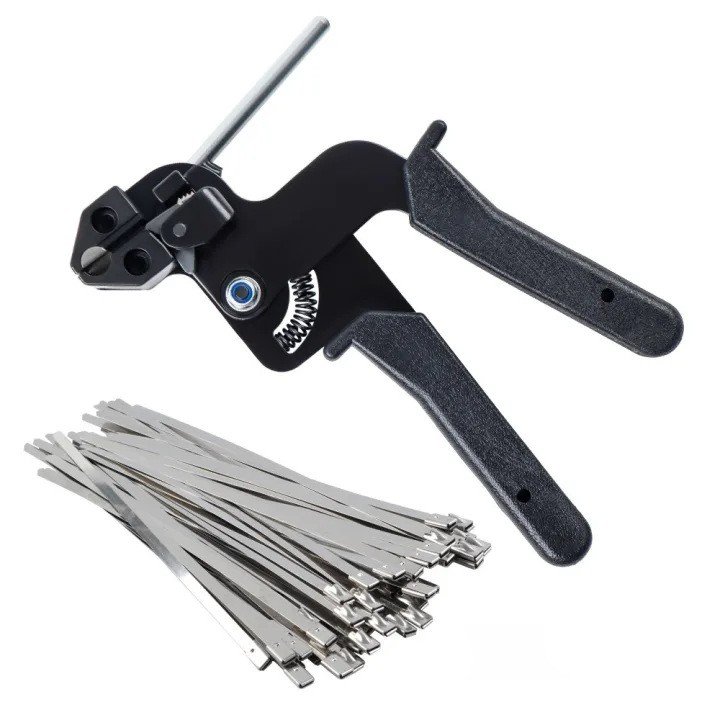
O que são abraçadeiras de aço inoxidável? Visão geral e funções principais As abraçadeiras de aço inoxidável—também conhecidas como abraçadeiras de metal—são fixadores de alta resistência, de uso pesado, projetados para prender cabos, fios, tubos e mangueiras em ambientes operacionais severos. Quando abraçadeiras plásticas padrão derretem, racham ou degradam, esses fixadores metálicos de grau industrial mantêm a integridade estrutural e a tensão constante. Na WANDU, nós […]
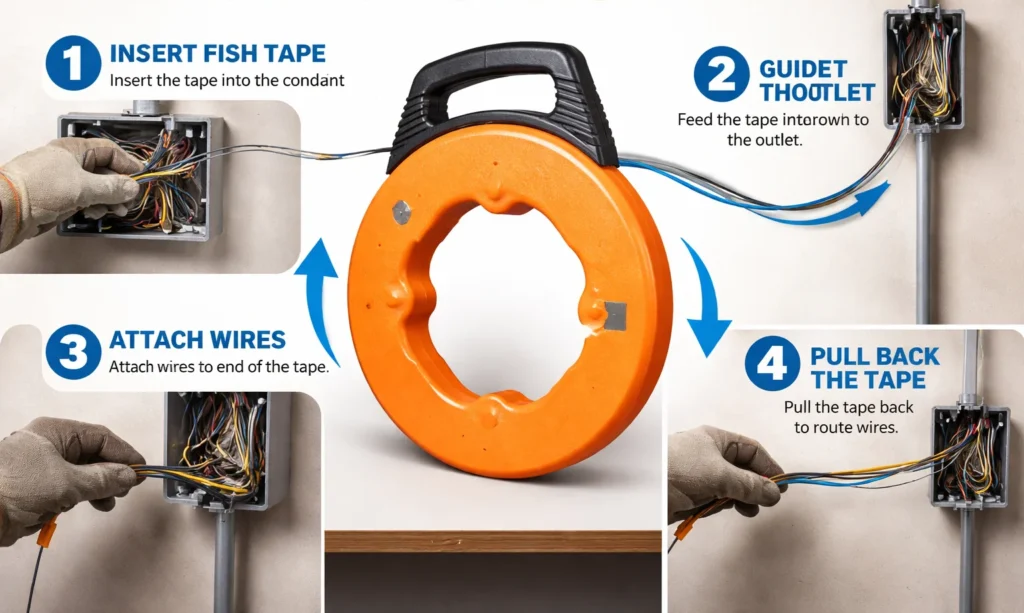
Guia Definitivo: Como Usar Fita de Peixe para Cabeamento Industrial O que é uma Fita de Peixe? Uma fita de peixe é uma ferramenta essencial para eletricistas usada para passar novos cabos por paredes, conduítes elétricos e espaços estreitos. Entender como usar corretamente a fita de peixe garante conexões elétricas seguras e condutividade estável em projetos industriais e comerciais. Como […]
Usamos cookies para melhorar sua experiência de navegação, exibir anúncios ou conteúdos personalizados e analisar nosso tráfego. Ao clicar em "Aceitar Todos", você concorda com o uso de cookies.
Procurando por braçadeiras de nylon de alta qualidade a um ótimo preço?
Faça seu pedido agora para experimentar produtos de braçadeira de custo-benefício que oferecem conveniência e proteção para seu trabalho e vida.




 PT
 EN
 AR
 ES
 FR
 RU
 DE
 KO
 JA
 IT
 NL
 TR