What is the function of cable ties?this seemingly simple gadget, are actually an indispensable part of modern life. Whether in a home, office or industrial environment, nylon cable ties play an important role in binding, securing, organizing and managing a variety of items. The practicality and affordability of nylon cable ties make them ideal for maintaining order and increasing efficiency. With the advancement of technology and the development of the market, the types and functions of nylon cable ties are becoming more and more abundant.
This article will introduce in detail the basic characteristics of nylon cable ties, various application areas and how to select and use appropriate nylon cable ties according to different needs. We’ll also provide some practical installation and maintenance tips to help readers maximize the effectiveness of nylon ties. Whether you are a professional or a regular user in your daily life, knowing this information will help you to ensure you can make informed choices and use nylon cable ties effectively when the need arises.
Nylon cable ties overview
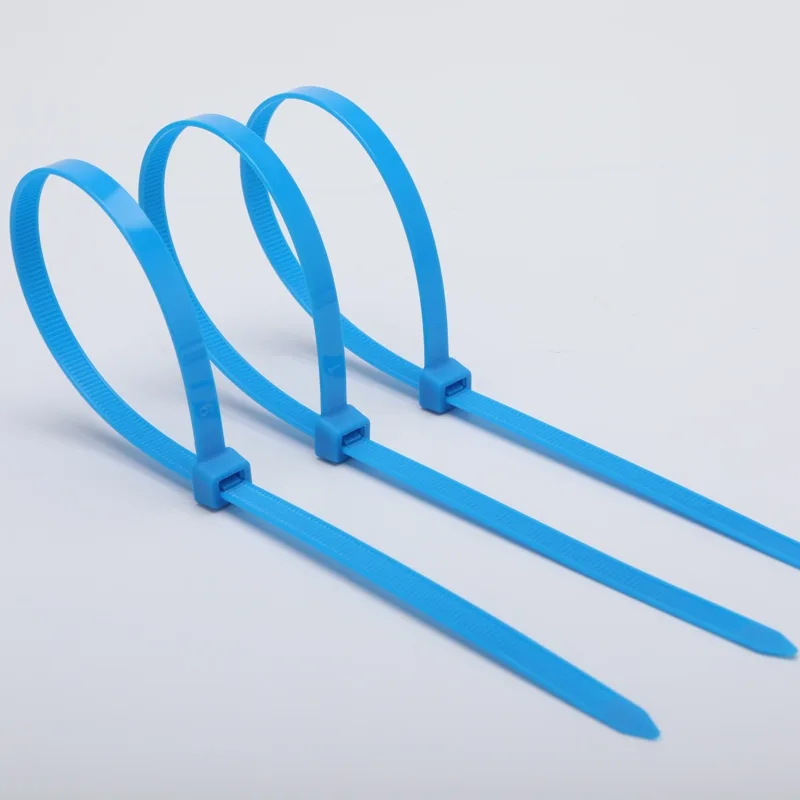
Nylon cable ties, also known as cable ties or zip ties, are a widely used tying tool, mainly made of nylon material, with high strength, wear resistance and chemical corrosion resistance. Their common form is a serrated strap with a buckle on one end, designed for single use, which can be easily adjusted and locked to the desired tightness, but cannot be reversed.
Main features
- Material: Most nylon cable ties are made of nylon 66, a material that is widely used for its superior mechanical properties and high temperature resistance.
- Durability: Nylon cable ties have good aging resistance, chemical corrosion resistance and abrasion resistance, and are suitable for use in a variety of environments.
- Strength: Nylon cable ties can withstand different pulling forces, and their load-bearing capacity depends on the width and thickness of the cable ties.
Common sizes and types
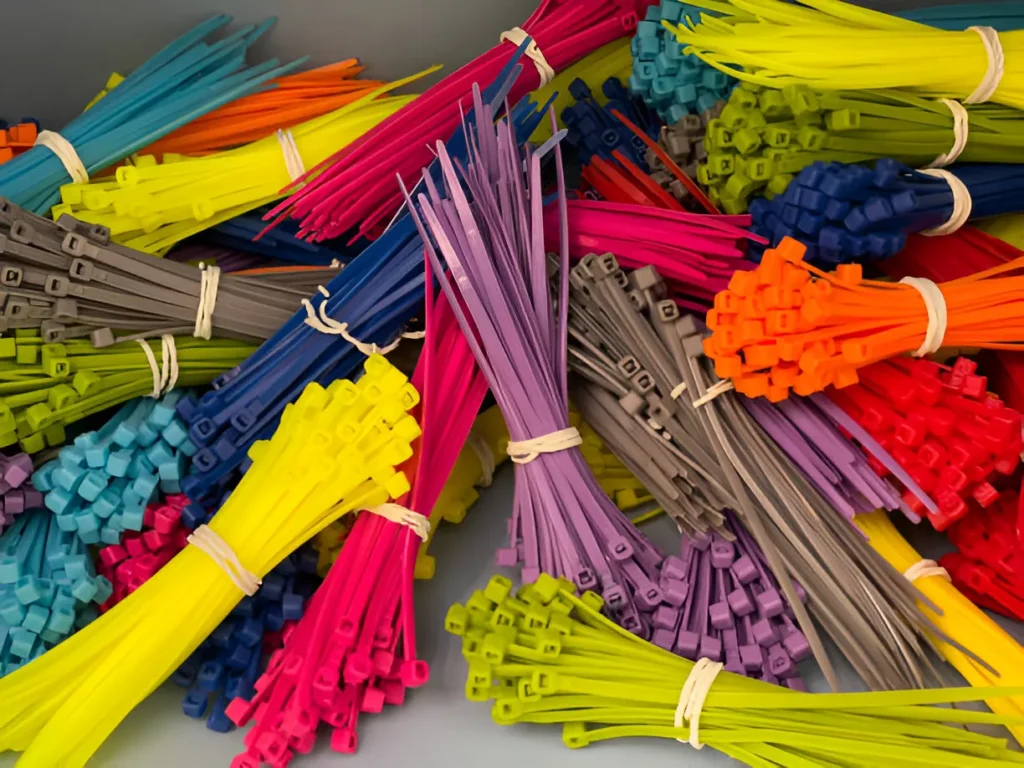
The size of nylon cable ties ranges from a few centimeters to several meters, and the width also ranges from a few millimeters to more than 1 centimeter. Choosing the right size is essential to ensure its functionality and safety. In addition to standard nylon cable ties, there are also the following special types:
- Weather-resistant zip ties type: Added UV stabilizer, suitable for outdoor environments exposed to sunlight for a long time.
- Heat-resistant zip ties type: able to withstand higher temperatures and suitable for use in hot environments, such as computer rooms or car engine compartments.
- fascette riutilizzabili type: Equipped with a releasable lock that can be used multiple times, suitable for temporary binding or frequent binding changes.
Application areas
What is the cable ties uses?It is widely used, covering many fields such as electronics and electrical, automobiles, aviation, marine, agriculture, gardening, home organization and packaging. In homes, they are used to organize electrical cords, hang decorations, or secure plants. In industry, used to secure heavy-duty cables, assembled components or as a temporary fixing solution.
Cable ties uses
Nylon cable ties are widely used in multiple industries and life scenarios due to their durability, convenience and cost-effectiveness. The following are several main application areas of nylon cable ties:
1. Electronics and electrical industry
In the electronics and electrical industry, nylon zip ties are used to maintain and organize wires, cables, and other sensitive electrical components. They help avoid clutter and reduce interference between wires and potential safety risks. In addition, nylon cable ties are also used to secure and support parts that are easily moved during the manufacturing process or during transportation.
2. Computers and network equipment
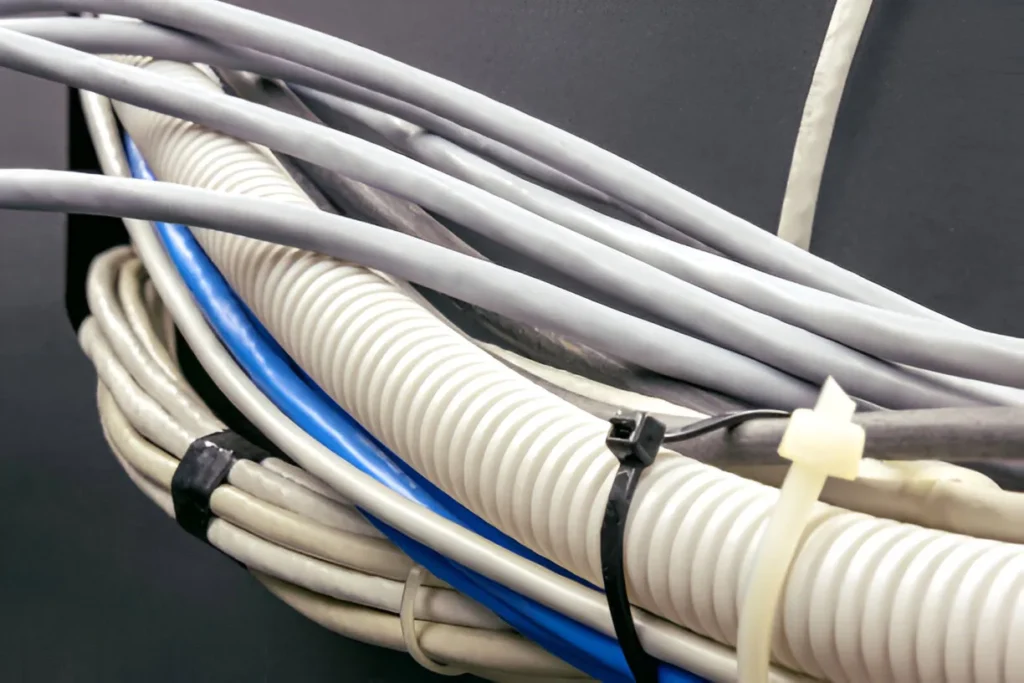
Nylon cable ties are very common in data centers and office environments to manage and organize network cables and other data transmission cables. They ensure that cables are organized for easy maintenance and upgrades, while also reducing network failures caused by clutter.
3. Automobile industry
In automobile manufacturing and maintenance, nylon ties are used to secure wiring harnesses and keep cables organized inside the engine bay and car body. Nylon cable ties’ heat and oil resistance allow them to perform well in high temperatures and harsh environments.
4. Architecture and construction
Nylon ties are used in the construction industry to temporarily or permanently secure materials such as insulation, pipes and ventilation system components. Their quick installation and robustness make them a common tool on construction sites.
cURL Too many subrequests by single Worker invocation. To configure this limit, refer to https://developers.cloudflare.com/workers/wrangler/configuration/#limits
cURL Too many subrequests by single Worker invocation. To configure this limit, refer to https://developers.cloudflare.com/workers/wrangler/configuration/#limits
cURL Too many subrequests by single Worker invocation. To configure this limit, refer to https://developers.cloudflare.com/workers/wrangler/configuration/#limits
cURL Too many subrequests by single Worker invocation. To configure this limit, refer to https://developers.cloudflare.com/workers/wrangler/configuration/#limits
cURL Too many subrequests by single Worker invocation. To configure this limit, refer to https://developers.cloudflare.com/workers/wrangler/configuration/#limits
cURL Too many subrequests by single Worker invocation. To configure this limit, refer to https://developers.cloudflare.com/workers/wrangler/configuration/#limits
cURL Too many subrequests by single Worker invocation. To configure this limit, refer to https://developers.cloudflare.com/workers/wrangler/configuration/#limits
cURL Too many subrequests by single Worker invocation. To configure this limit, refer to https://developers.cloudflare.com/workers/wrangler/configuration/#limits
cURL Too many subrequests by single Worker invocation. To configure this limit, refer to https://developers.cloudflare.com/workers/wrangler/configuration/#limits
- cURL Too many subrequests by single Worker invocation. To configure this limit, refer to https://developers.cloudflare.com/workers/wrangler/configuration/#limits cURL Too many subrequests by single Worker invocation. To configure this limit, refer to https://developers.cloudflare.com/workers/wrangler/configuration/#limits
- cURL Too many subrequests by single Worker invocation. To configure this limit, refer to https://developers.cloudflare.com/workers/wrangler/configuration/#limits cURL Too many subrequests by single Worker invocation. To configure this limit, refer to https://developers.cloudflare.com/workers/wrangler/configuration/#limits
cURL Too many subrequests by single Worker invocation. To configure this limit, refer to https://developers.cloudflare.com/workers/wrangler/configuration/#limits
- Nylon 66: cURL Too many subrequests by single Worker invocation. To configure this limit, refer to https://developers.cloudflare.com/workers/wrangler/configuration/#limits
- cURL Too many subrequests by single Worker invocation. To configure this limit, refer to https://developers.cloudflare.com/workers/wrangler/configuration/#limits cURL Too many subrequests by single Worker invocation. To configure this limit, refer to https://developers.cloudflare.com/workers/wrangler/configuration/#limits
- cURL Too many subrequests by single Worker invocation. To configure this limit, refer to https://developers.cloudflare.com/workers/wrangler/configuration/#limits cURL Too many subrequests by single Worker invocation. To configure this limit, refer to https://developers.cloudflare.com/workers/wrangler/configuration/#limits
cURL Too many subrequests by single Worker invocation. To configure this limit, refer to https://developers.cloudflare.com/workers/wrangler/configuration/#limits
- cURL Too many subrequests by single Worker invocation. To configure this limit, refer to https://developers.cloudflare.com/workers/wrangler/configuration/#limits cURL Too many subrequests by single Worker invocation. To configure this limit, refer to https://developers.cloudflare.com/workers/wrangler/configuration/#limits
- cURL Too many subrequests by single Worker invocation. To configure this limit, refer to https://developers.cloudflare.com/workers/wrangler/configuration/#limits cURL Too many subrequests by single Worker invocation. To configure this limit, refer to https://developers.cloudflare.com/workers/wrangler/configuration/#limits
cURL Too many subrequests by single Worker invocation. To configure this limit, refer to https://developers.cloudflare.com/workers/wrangler/configuration/#limits
- cURL Too many subrequests by single Worker invocation. To configure this limit, refer to https://developers.cloudflare.com/workers/wrangler/configuration/#limits cURL Too many subrequests by single Worker invocation. To configure this limit, refer to https://developers.cloudflare.com/workers/wrangler/configuration/#limits
- cURL Too many subrequests by single Worker invocation. To configure this limit, refer to https://developers.cloudflare.com/workers/wrangler/configuration/#limits cURL Too many subrequests by single Worker invocation. To configure this limit, refer to https://developers.cloudflare.com/workers/wrangler/configuration/#limits
cURL Too many subrequests by single Worker invocation. To configure this limit, refer to https://developers.cloudflare.com/workers/wrangler/configuration/#limits
- cURL Too many subrequests by single Worker invocation. To configure this limit, refer to https://developers.cloudflare.com/workers/wrangler/configuration/#limits cURL Too many subrequests by single Worker invocation. To configure this limit, refer to https://developers.cloudflare.com/workers/wrangler/configuration/#limits
- cURL Too many subrequests by single Worker invocation. To configure this limit, refer to https://developers.cloudflare.com/workers/wrangler/configuration/#limits cURL Too many subrequests by single Worker invocation. To configure this limit, refer to https://developers.cloudflare.com/workers/wrangler/configuration/#limits
cURL Too many subrequests by single Worker invocation. To configure this limit, refer to https://developers.cloudflare.com/workers/wrangler/configuration/#limits
cURL Too many subrequests by single Worker invocation. To configure this limit, refer to https://developers.cloudflare.com/workers/wrangler/configuration/#limits cURL Too many subrequests by single Worker invocation. To configure this limit, refer to https://developers.cloudflare.com/workers/wrangler/configuration/#limits
cURL Too many subrequests by single Worker invocation. To configure this limit, refer to https://developers.cloudflare.com/workers/wrangler/configuration/#limits
cURL Too many subrequests by single Worker invocation. To configure this limit, refer to https://developers.cloudflare.com/workers/wrangler/configuration/#limits
- cURL Too many subrequests by single Worker invocation. To configure this limit, refer to https://developers.cloudflare.com/workers/wrangler/configuration/#limits cURL Too many subrequests by single Worker invocation. To configure this limit, refer to https://developers.cloudflare.com/workers/wrangler/configuration/#limits
- cURL Too many subrequests by single Worker invocation. To configure this limit, refer to https://developers.cloudflare.com/workers/wrangler/configuration/#limits cURL Too many subrequests by single Worker invocation. To configure this limit, refer to https://developers.cloudflare.com/workers/wrangler/configuration/#limits
cURL Too many subrequests by single Worker invocation. To configure this limit, refer to https://developers.cloudflare.com/workers/wrangler/configuration/#limits
- cURL Too many subrequests by single Worker invocation. To configure this limit, refer to https://developers.cloudflare.com/workers/wrangler/configuration/#limits Use a clean cloth or brush to remove dust and dirt from the nylon ties and binding area. Avoid using chemical cleaners as some chemicals can damage nylon materials.
- Proper storage: Store unused nylon cable ties in a dry, cool place away from direct sunlight and high temperatures, which can prevent premature aging of the material.
3. Replace nylon ties
- Timely replacement: Once signs of damage or severe wear are found on the nylon ties, they should be replaced immediately to avoid safety hazards. In critical applications, such as those that perform important support or safety functions, a preventive replacement strategy should be adopted.
- Upgrade nylon cable ties: If the original nylon cable ties no longer meet the current application needs, such as stronger load-bearing capacity or better environmental adaptability, consider using products with higher performance.
4. Safe disposal
- Environmentally Friendly Disposal: Although nylon cable ties are generally not recyclable, they should be avoided being thrown away, especially in the natural environment. Dispose in a suitable facility, complying with local waste management regulations.
In conclusion
When selecting and using nylon cable ties, it is critical to understand its diverse application areas and how to select and maintain nylon cable ties according to specific needs. Through the introduction of this article, we have discussed in detail the basic characteristics of nylon cable ties, a wide range of application scenarios, selection criteria, installation and use tips, and maintenance and replacement guidelines. Not only will this information help you use nylon zip ties effectively, it will also ensure that you remain efficient and safe in a variety of environments.
Nylon cable ties may be small, but they play a huge role. Their economical practicality and functionality make them an indispensable tool in daily life and industrial applications. The correct selection and use of nylon cable ties can not only improve work efficiency, but also avoid potential safety risks. So whether you’re in a home, office or industrial environment, it’s beneficial to know how to harness the full capabilities of this simple tool.
In short, through reasonable selection, correct use and proper maintenance, nylon cable ties can bring great convenience and benefits to our work and life. Hopefully this article will help you better understand and utilize nylon cable ties to their full potential, providing strong support for your many binding and organizing needs.
Call to action
Now that you understand the versatile uses of nylon cable ties and their proper selection and use, now is the time to take action to ensure you utilize this useful tool effectively and safely in any situation. Here are some practical calls to action to encourage you to make better use of nylon ties:
1. Re-evaluate existing nylon cable tie usage
Check whether your current nylon cable ties are suitable for their purpose and whether there is any need to replace them to ensure that they meet standards for safety and performance.
2. Organize and optimize the usage environment
Use nylon zip ties to organize wires and other clutter in your home or workplace to create a more orderly and safer living and working environment.
3. Raise environmental awareness
Consider using nylon ties made from recycled or eco-friendly materials to support sustainable products and reduce environmental impact.
4. Share knowledge and experience
Share your knowledge and usage skills about nylon cable ties with colleagues, friends and family to help them use nylon cable ties more safely and effectively.
5. Continuous learning and improvement
As new technologies and products are introduced, continue to learn and explore new uses and properties of nylon cable ties, keep updated, and constantly improve their usage.


 IT
IT  EN
EN  AR
AR  ES
ES  PT
PT  FR
FR  RU
RU  DE
DE  KO
KO  JA
JA