Introduzione
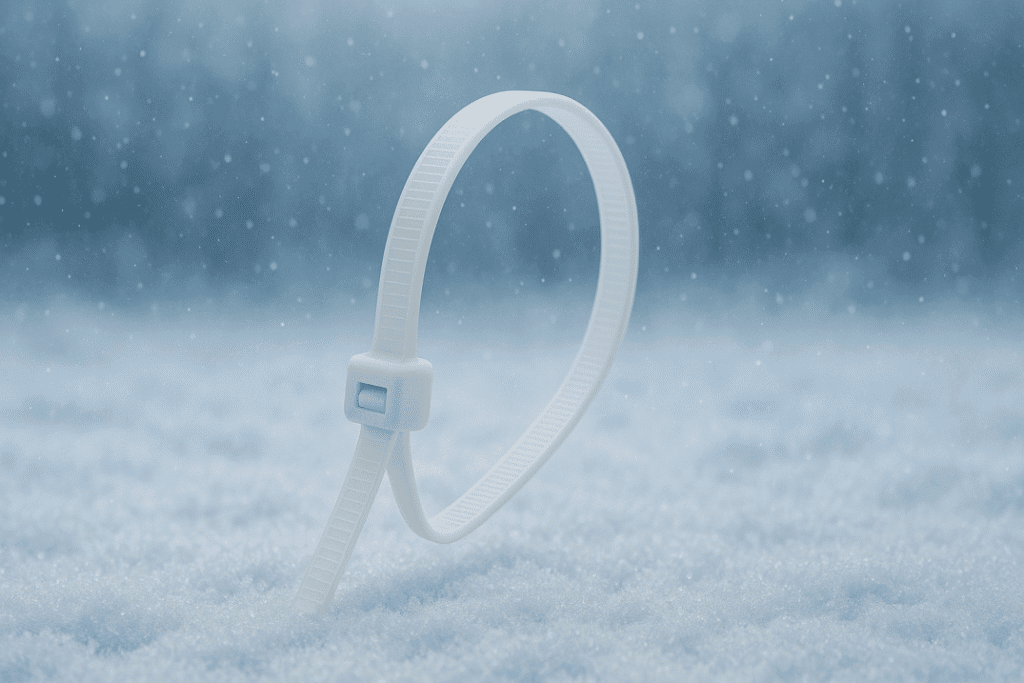
Do zip ties break in cold weather? This is a common question asked by outdoor engineers, installers, and purchasing managers. This ultimate guide will explain everything you need to know: the molecular reasons behind brittleness in plastics, the cold-weather performance of different materials, application scenarios, best installation and storage practices,and low-temperature testing methods. By understanding these, you can minimize the risk of zip ties breaking in freezing conditions.
Nylon 6 (common type)
Features: High moisture absorption, relatively low tensile strength, and low cost.
Cold resistance: Poor, with a minimum dynamic temperature resistance of only -10°C.
Nylon 66 (industrial grade)
Features: Lower moisture absorption than Nylon 6, higher tensile strength, and medium cost.
Cold resistance: Fair, with a minimum dynamic temperature resistance of -20°C.
Low-temperature Nylon 66 (with impact modifiers)
Features: Modified for cold climates, better flexibility at low temperatures, but slightly weaker tensile strength at room temperature and higher cost.
Cold resistance: Good, minimum dynamic temperature resistance down to -40°C.
Features: Excellent toughness in cold environments, great chemical resistance, and very low moisture absorption. Very high cost.
Cold resistance: Excellent, no modification required, minimum dynamic resistance temperature down to -40°C.
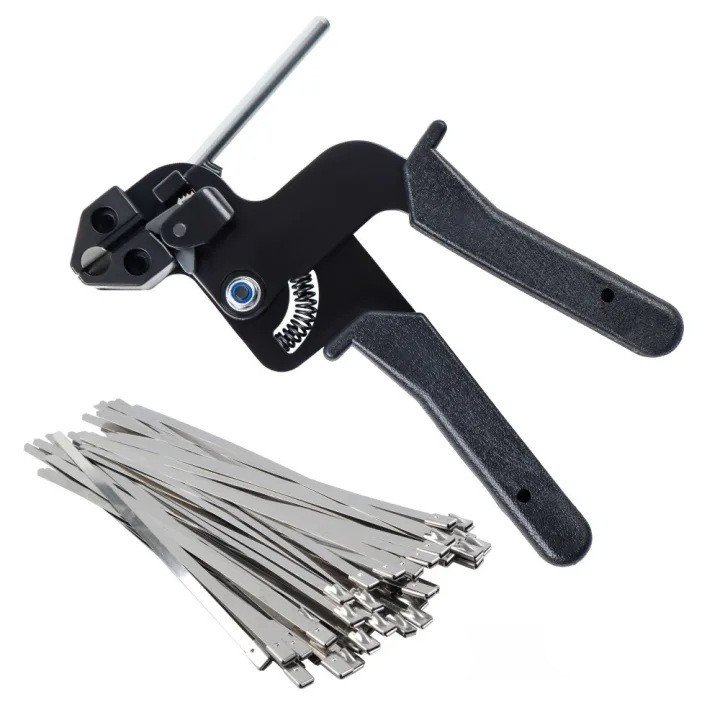
Stainless Steel Cable Ties (316/304)
Features: No water absorption, corrosion-resistant, high tensile strength, and excellent resistance to both high and low temperatures. Higher cost compared to Nylon 66.
Cold resistance: Outstanding, suitable for extreme climates, withstanding as low as -80°C.
2.Why do materials become brittle in cold weather?
Low temperatures restrict molecular chain mobility. Polymers transition from a flexible “rubber state” to a rigid “glassy state,” causing a sudden loss in impact resistance and toughness. Semi-crystalline plastics with higher crystallinity tend to become brittle faster.Fillers, pigments, or plasticizers can affect cold-weather toughness. Nylon, with high moisture absorption, becomes even more brittle in dry and cold conditions. Fast strain rates or impacts accelerate fracture. Common engineering solutions include selecting materials with better low-temperature toughness (such as PA12 or modified Nylon 66), reducing stress concentrations in design, conducting low-temperature tensile/impact tests,or using stainless steel zip ties for critical applications.
3.Misleading “Operating Temperature” Labels
Most nylon zip ties are labeled with an operating temperature range of -40°C to +85°C (-40°F to 185°F). However, this refers to static performance and does not reflect true cold-weather durability.
Dynamic cold-weather resistance is what really matters:
Nylon 6: down to -10°C
Nylon 66: down to -20°C
Low-temperature modified Nylon 66: down to -40°C
4.Application Scenarios
Cold storage equipment
Freezers storing food or fruit often reach below -30°C. Regular Nylon 6 or Nylon 66 ties may snap. Low-temperature modified Nylon 66 cable ties are a better choice.
Outdoor fire safety equipment
In extremely cold winter environments (as low as -40°C), PA12 cable ties or stainless steel zip ties should be used to avoid breakage.
Pharmaceutical industry
Cold-chain storage for raw materials and medicines often requires fascette stringicavo in plastica for bag sealing. Nylon 66 zip ties cold weather provide the best cost-performance balance.
5.How to reduce breakage risks (Installation & Storage)
Installation
Nylon 6 or Nylon 66 ties should be kept slightly moist before use to enhance flexibility. A simple method is soaking them in warm water before installation. Avoid pulling too tightly in one motion; instead, tighten gradually and check for cracks. For vibrating or heavy-load applications, use wider weather resistant zip ties or bundle multiple ties. SS cable ties are the most reliable choice.
Storage
Keep cold weather cable ties indoors in a cool, shaded place. Avoid direct sunlight, heat, UV exposure, or overly dry air. Always use newer stock first and periodically inspect inventory for brittleness.
6.Common FAQs
Q1: Are black zip ties less likely to break in winter?
A1: Not necessarily. Black cable zip ties usually contain carbon black for UV resistance, but this does not improve cold-weather toughness.
cURL Too many subrequests by single Worker invocation. To configure this limit, refer to https://developers.cloudflare.com/workers/wrangler/configuration/#limits
cURL Too many subrequests by single Worker invocation. To configure this limit, refer to https://developers.cloudflare.com/workers/wrangler/configuration/#limits
cURL Too many subrequests by single Worker invocation. To configure this limit, refer to https://developers.cloudflare.com/workers/wrangler/configuration/#limits
cURL Too many subrequests by single Worker invocation. To configure this limit, refer to https://developers.cloudflare.com/workers/wrangler/configuration/#limits
cURL Too many subrequests by single Worker invocation. To configure this limit, refer to https://developers.cloudflare.com/workers/wrangler/configuration/#limits
7. Conclusione
cURL Too many subrequests by single Worker invocation. To configure this limit, refer to https://developers.cloudflare.com/workers/wrangler/configuration/#limits



 IT
IT  EN
EN  AR
AR  ES
ES  PT
PT  FR
FR  RU
RU  DE
DE  KO
KO  JA
JA