Nothing compromises a 25-year solar array faster than a snapped, brittle fastener.
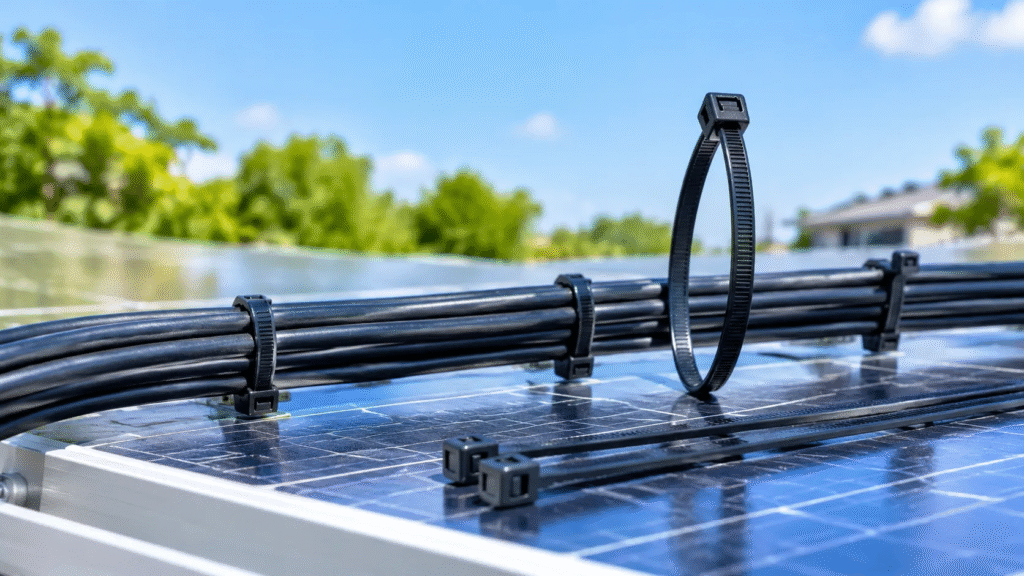
Yet on rooftop after rooftop, standard ties bake in the sun, crack under wind load, and leave high-voltage DC cables rubbing directly against sharp aluminum rails.
Understanding how to choose the right cable ties for solar PV installations: UV, load and support spacing isn’t just about passing inspection—it’s what prevents catastrophic ground faults and costly repowering truck rolls down the line.
In this guide, you’ll learn the real differences between PA66, PA12, and 316 stainless steel, how to read static versus dynamic temperature specs, and the spacing, bend radius and tension values that keep a wire management system intact.
さあ、始めましょう。
Where Cable Ties Fail on a Solar Array
A solar photovoltaic system is only as durable as its weakest mechanical link. While tier-one modules and racking systems are engineered to withstand decades of extreme weather, balance-of-system (BOS) wire management remains the leading source of post-commissioning maintenance calls.
When generic fasteners fail, conductors drop directly onto abrasive roof surfaces or sharp racking edges. The result is rapid insulation wear, ground faults, and unexpected system downtime. Understanding where and why solar cable ties fail under real-world operating conditions is the first step toward building resilient arrays that endure for their full design life.
Three Failure Modes Seen on Rooftop Arrays
Rooftop PV installations subject wire management components to severe mechanical and environmental stresses. Three distinct failure modes account for nearly all fastener breakdowns on site:
UV Photo-oxidation and Embrittlement: Solar radiation breaks down the molecular backbone of standard polymers. When unprotected or improperly stabilized nylon absorbs high ultraviolet doses, it loses tensile elasticity. The tie turns chalky, micro-cracks form across the strap, and the head snaps clean under the slightest mechanical vibration.
Thermal Creep and Ratchet Slippage: Rooftops experience intense thermal cycling, swinging from sub-zero winter nights to midday module temperatures of 65–85 °C (149–185 °F). This continuous thermal expansion and contraction causes plastic deformation (creep). Inferior pawls yield, allowing the strap to loosen, sag, and eventually disengage completely.
Dynamic Wind Fatigue and Edge Shearing: High-velocity wind creates aerodynamic lift and turbulence beneath the modules, setting unfastened wire bundles into continuous harmonic vibration. When ties lack sufficient tensile strength or rub against rough structural rails, the strap shears directly at the locking head or cuts into the conductor jacket.
Why a 25-Year Array Still Uses a Consumable Part
Modern solar modules, racking hardware, and central inverters carry performance warranties extending from 12 to 25 years. Despite this operational horizon, routine procurement often treats solar wire ties as disposable hardware rather than critical structural components.
The lifespan disconnect
コンポーネント
Standard Design Life
PV Modules
25+ yrs
Aluminum Racking
25+ yrs
Generic Nylon 66 Ties
1–3 yrs (high failure risk)
Solar-Rated Fasteners (WANDU)
20+ yrs
Purchasing teams looking to cut upfront capital expenditures often approve low-grade commercial zip ties that cost fractions of a cent less than engineered alternatives. This creates a severe lifecycle mismatch:
OPEX Surges: A single truck roll to locate and isolate an elusive DC ground fault can eliminate the upfront savings of an entire commercial project’s cable management budget.
Safety Liabilities: cURL Too many subrequests by single Worker invocation. To configure this limit, refer to https://developers.cloudflare.com/workers/wrangler/configuration/#limits
cURL Too many subrequests by single Worker invocation. To configure this limit, refer to https://developers.cloudflare.com/workers/wrangler/configuration/#limits
cURL Too many subrequests by single Worker invocation. To configure this limit, refer to https://developers.cloudflare.com/workers/wrangler/configuration/#limits
cURL Too many subrequests by single Worker invocation. To configure this limit, refer to https://developers.cloudflare.com/workers/wrangler/configuration/#limits
cURL Too many subrequests by single Worker invocation. To configure this limit, refer to https://developers.cloudflare.com/workers/wrangler/configuration/#limits cURL Too many subrequests by single Worker invocation. To configure this limit, refer to https://developers.cloudflare.com/workers/wrangler/configuration/#limits
cURL Too many subrequests by single Worker invocation. To configure this limit, refer to https://developers.cloudflare.com/workers/wrangler/configuration/#limits cURL Too many subrequests by single Worker invocation. To configure this limit, refer to https://developers.cloudflare.com/workers/wrangler/configuration/#limits
cURL Too many subrequests by single Worker invocation. To configure this limit, refer to https://developers.cloudflare.com/workers/wrangler/configuration/#limits cURL Too many subrequests by single Worker invocation. To configure this limit, refer to https://developers.cloudflare.com/workers/wrangler/configuration/#limits
cURL Too many subrequests by single Worker invocation. To configure this limit, refer to https://developers.cloudflare.com/workers/wrangler/configuration/#limits
cURL Too many subrequests by single Worker invocation. To configure this limit, refer to https://developers.cloudflare.com/workers/wrangler/configuration/#limits
cURL Too many subrequests by single Worker invocation. To configure this limit, refer to https://developers.cloudflare.com/workers/wrangler/configuration/#limits
cURL Too many subrequests by single Worker invocation. To configure this limit, refer to https://developers.cloudflare.com/workers/wrangler/configuration/#limits
cURL Too many subrequests by single Worker invocation. To configure this limit, refer to https://developers.cloudflare.com/workers/wrangler/configuration/#limits
cURL Too many subrequests by single Worker invocation. To configure this limit, refer to https://developers.cloudflare.com/workers/wrangler/configuration/#limits
cURL Too many subrequests by single Worker invocation. To configure this limit, refer to https://developers.cloudflare.com/workers/wrangler/configuration/#limits
cURL Too many subrequests by single Worker invocation. To configure this limit, refer to https://developers.cloudflare.com/workers/wrangler/configuration/#limits
cURL Too many subrequests by single Worker invocation. To configure this limit, refer to https://developers.cloudflare.com/workers/wrangler/configuration/#limits ナイロンケーブルタイの耐久性とコスト効果を評価する方法を知ることが重要です。 cURL Too many subrequests by single Worker invocation. To configure this limit, refer to https://developers.cloudflare.com/workers/wrangler/configuration/#limits
cURL Too many subrequests by single Worker invocation. To configure this limit, refer to https://developers.cloudflare.com/workers/wrangler/configuration/#limits
cURL Too many subrequests by single Worker invocation. To configure this limit, refer to https://developers.cloudflare.com/workers/wrangler/configuration/#limits
cURL Too many subrequests by single Worker invocation. To configure this limit, refer to https://developers.cloudflare.com/workers/wrangler/configuration/#limits cURL Too many subrequests by single Worker invocation. To configure this limit, refer to https://developers.cloudflare.com/workers/wrangler/configuration/#limits
動的温度範囲: cURL Too many subrequests by single Worker invocation. To configure this limit, refer to https://developers.cloudflare.com/workers/wrangler/configuration/#limits
cURL Too many subrequests by single Worker invocation. To configure this limit, refer to https://developers.cloudflare.com/workers/wrangler/configuration/#limits
cURL Too many subrequests by single Worker invocation. To configure this limit, refer to https://developers.cloudflare.com/workers/wrangler/configuration/#limits
cURL Too many subrequests by single Worker invocation. To configure this limit, refer to https://developers.cloudflare.com/workers/wrangler/configuration/#limits
cURL Too many subrequests by single Worker invocation. To configure this limit, refer to https://developers.cloudflare.com/workers/wrangler/configuration/#limits ナイロンと金属製ジップタイの違いについて cURL Too many subrequests by single Worker invocation. To configure this limit, refer to https://developers.cloudflare.com/workers/wrangler/configuration/#limits
cURL Too many subrequests by single Worker invocation. To configure this limit, refer to https://developers.cloudflare.com/workers/wrangler/configuration/#limits
cURL Too many subrequests by single Worker invocation. To configure this limit, refer to https://developers.cloudflare.com/workers/wrangler/configuration/#limits
cURL Too many subrequests by single Worker invocation. To configure this limit, refer to https://developers.cloudflare.com/workers/wrangler/configuration/#limits
UV安定化ナイロン66 cURL Too many subrequests by single Worker invocation. To configure this limit, refer to https://developers.cloudflare.com/workers/wrangler/configuration/#limits
cURL Too many subrequests by single Worker invocation. To configure this limit, refer to https://developers.cloudflare.com/workers/wrangler/configuration/#limits
cURL Too many subrequests by single Worker invocation. To configure this limit, refer to https://developers.cloudflare.com/workers/wrangler/configuration/#limits
cURL Too many subrequests by single Worker invocation. To configure this limit, refer to https://developers.cloudflare.com/workers/wrangler/configuration/#limits
cURL Too many subrequests by single Worker invocation. To configure this limit, refer to https://developers.cloudflare.com/workers/wrangler/configuration/#limits
cURL Too many subrequests by single Worker invocation. To configure this limit, refer to https://developers.cloudflare.com/workers/wrangler/configuration/#limits
cURL Too many subrequests by single Worker invocation. To configure this limit, refer to https://developers.cloudflare.com/workers/wrangler/configuration/#limits
The following table provides a general guide for material selection based on the installation environment:
Installation Zone
環境
cURL Too many subrequests by single Worker invocation. To configure this limit, refer to https://developers.cloudflare.com/workers/wrangler/configuration/#limits
Module-to-Rail
Standard / Dry
UV安定化PA66
Module-to-Rail
Humid / Coastal
PA12
Inverters / Combiners
High Heat
PA46
Corrosive / Industrial
Harsh Environment
316ステンレス鋼
High Wind Zones
Structural Load
304または316ステンレス鋼
Mounting Hardware: A Tie Alone Does Not Hold an Array
A solar tie wrap wrapped loosely around a frame strut will slide, vibrate under wind loads, and eventually chafe the conductor jacket. In practical PV wire management, the tie is only half of the equation; the mounting hardware that anchors it to the structural steel or extruded aluminum profile dictates the lifespan of the entire run. We engineer and supply cable management systems that treat the tie and the mounting base as a single, unified mechanical assembly. Relying on a bare tie without rigid physical anchoring invites conductor sag, ground faults, and costly rework after the first major storm season.
First loop: Clamps securely to the module frame mounting hole or adjacent structural rib to lock the anchor location.
Second loop: Encapsulates and holds the PV wire bundle firmly away from raw metal surfaces.
Separation: Keeps parallel circuits separated without needing two separate attachment points, preventing inter-cable friction caused by daily thermal movement.
Our WANDU double loop ties, model WD-12×500DT, carry a minimum loop tensile strength of 230 lbs, on a 12 mm strap with a maximum bundle diameter of 60 mm, so heavy DC trunk lines remain immobilized beneath the modules without pinching or flattening the insulation jacket.
Screw-Hole Ties and Saddle Mounts on Rails
Adhesive-backed mounting pads are adequate for light cable drops, but they are not the right choice for long rooftop runs, where sustained UV exposure and ponding water will eventually lift the pad. Long-term mechanical fastening requires a bolted or riveted interface:
Screw-Hole Ties: Feature an integrated mounting eyelet directly molded into the head of the tie, allowing an M5 or M6 self-tapping screw or bolt to secure the tie flush to the racking rail.
Saddle Mounts: 専用の cable tie mounting base for solar rail setups provides a curved, deep cradle that supports heavy multi-string trunk lines. The base is mechanically bolted to the rail channel, and a high-tensile tie threads through to secure the bundle.
Using dedicated saddle hardware ensures that the tension applied by your cable tie fastening methods pulls the wires down against a wide, radius-relieved cradle rather than a sharp metal lip.
Edge Protection and Standoff Against Chafe
cURL Too many subrequests by single Worker invocation. To configure this limit, refer to https://developers.cloudflare.com/workers/wrangler/configuration/#limits
cURL Too many subrequests by single Worker invocation. To configure this limit, refer to https://developers.cloudflare.com/workers/wrangler/configuration/#limits cURL Too many subrequests by single Worker invocation. To configure this limit, refer to https://developers.cloudflare.com/workers/wrangler/configuration/#limits
cURL Too many subrequests by single Worker invocation. To configure this limit, refer to https://developers.cloudflare.com/workers/wrangler/configuration/#limits cURL Too many subrequests by single Worker invocation. To configure this limit, refer to https://developers.cloudflare.com/workers/wrangler/configuration/#limits
cURL Too many subrequests by single Worker invocation. To configure this limit, refer to https://developers.cloudflare.com/workers/wrangler/configuration/#limits cURL Too many subrequests by single Worker invocation. To configure this limit, refer to https://developers.cloudflare.com/workers/wrangler/configuration/#limits
cURL Too many subrequests by single Worker invocation. To configure this limit, refer to https://developers.cloudflare.com/workers/wrangler/configuration/#limits cURL Too many subrequests by single Worker invocation. To configure this limit, refer to https://developers.cloudflare.com/workers/wrangler/configuration/#limits
cURL Too many subrequests by single Worker invocation. To configure this limit, refer to https://developers.cloudflare.com/workers/wrangler/configuration/#limits
cURL Too many subrequests by single Worker invocation. To configure this limit, refer to https://developers.cloudflare.com/workers/wrangler/configuration/#limits
特徴
cURL Too many subrequests by single Worker invocation. To configure this limit, refer to https://developers.cloudflare.com/workers/wrangler/configuration/#limits
cURL Too many subrequests by single Worker invocation. To configure this limit, refer to https://developers.cloudflare.com/workers/wrangler/configuration/#limits
cURL Too many subrequests by single Worker invocation. To configure this limit, refer to https://developers.cloudflare.com/workers/wrangler/configuration/#limits
cURL Too many subrequests by single Worker invocation. To configure this limit, refer to https://developers.cloudflare.com/workers/wrangler/configuration/#limits
cURL Too many subrequests by single Worker invocation. To configure this limit, refer to https://developers.cloudflare.com/workers/wrangler/configuration/#limits
cURL Too many subrequests by single Worker invocation. To configure this limit, refer to https://developers.cloudflare.com/workers/wrangler/configuration/#limits
cURL Too many subrequests by single Worker invocation. To configure this limit, refer to https://developers.cloudflare.com/workers/wrangler/configuration/#limits
cURL Too many subrequests by single Worker invocation. To configure this limit, refer to https://developers.cloudflare.com/workers/wrangler/configuration/#limits
cURL Too many subrequests by single Worker invocation. To configure this limit, refer to https://developers.cloudflare.com/workers/wrangler/configuration/#limits
cURL Too many subrequests by single Worker invocation. To configure this limit, refer to https://developers.cloudflare.com/workers/wrangler/configuration/#limits
cURL Too many subrequests by single Worker invocation. To configure this limit, refer to https://developers.cloudflare.com/workers/wrangler/configuration/#limits
振動耐性
cURL Too many subrequests by single Worker invocation. To configure this limit, refer to https://developers.cloudflare.com/workers/wrangler/configuration/#limits
cURL Too many subrequests by single Worker invocation. To configure this limit, refer to https://developers.cloudflare.com/workers/wrangler/configuration/#limits
最適な用途
cURL Too many subrequests by single Worker invocation. To configure this limit, refer to https://developers.cloudflare.com/workers/wrangler/configuration/#limits
cURL Too many subrequests by single Worker invocation. To configure this limit, refer to https://developers.cloudflare.com/workers/wrangler/configuration/#limits
cURL Too many subrequests by single Worker invocation. To configure this limit, refer to https://developers.cloudflare.com/workers/wrangler/configuration/#limits
cURL Too many subrequests by single Worker invocation. To configure this limit, refer to https://developers.cloudflare.com/workers/wrangler/configuration/#limits
cURL Too many subrequests by single Worker invocation. To configure this limit, refer to https://developers.cloudflare.com/workers/wrangler/configuration/#limits
cURL Too many subrequests by single Worker invocation. To configure this limit, refer to https://developers.cloudflare.com/workers/wrangler/configuration/#limits
cURL Too many subrequests by single Worker invocation. To configure this limit, refer to https://developers.cloudflare.com/workers/wrangler/configuration/#limits
cURL Too many subrequests by single Worker invocation. To configure this limit, refer to https://developers.cloudflare.com/workers/wrangler/configuration/#limits cURL Too many subrequests by single Worker invocation. To configure this limit, refer to https://developers.cloudflare.com/workers/wrangler/configuration/#limits
cURL Too many subrequests by single Worker invocation. To configure this limit, refer to https://developers.cloudflare.com/workers/wrangler/configuration/#limits cURL Too many subrequests by single Worker invocation. To configure this limit, refer to https://developers.cloudflare.com/workers/wrangler/configuration/#limits
cURL Too many subrequests by single Worker invocation. To configure this limit, refer to https://developers.cloudflare.com/workers/wrangler/configuration/#limits cURL Too many subrequests by single Worker invocation. To configure this limit, refer to https://developers.cloudflare.com/workers/wrangler/configuration/#limits
cURL Too many subrequests by single Worker invocation. To configure this limit, refer to https://developers.cloudflare.com/workers/wrangler/configuration/#limits
cURL Too many subrequests by single Worker invocation. To configure this limit, refer to https://developers.cloudflare.com/workers/wrangler/configuration/#limits
cURL Too many subrequests by single Worker invocation. To configure this limit, refer to https://developers.cloudflare.com/workers/wrangler/configuration/#limits
cURL Too many subrequests by single Worker invocation. To configure this limit, refer to https://developers.cloudflare.com/workers/wrangler/configuration/#limits cURL Too many subrequests by single Worker invocation. To configure this limit, refer to https://developers.cloudflare.com/workers/wrangler/configuration/#limits cURL Too many subrequests by single Worker invocation. To configure this limit, refer to https://developers.cloudflare.com/workers/wrangler/configuration/#limits.
cURL Too many subrequests by single Worker invocation. To configure this limit, refer to https://developers.cloudflare.com/workers/wrangler/configuration/#limits cURL Too many subrequests by single Worker invocation. To configure this limit, refer to https://developers.cloudflare.com/workers/wrangler/configuration/#limits 8 times the OD.
Cinching a tie tightly over a sharp 90-degree turn compresses the outer jacket, causes conductor displacement, and creates micro-cracks in the insulation. These micro-fractures degrade dielectric strength, leading directly to DC ground faults and costly inverter trip-outs during morning dew cycles.
Tension Control: Why Hand-Tightening Fails
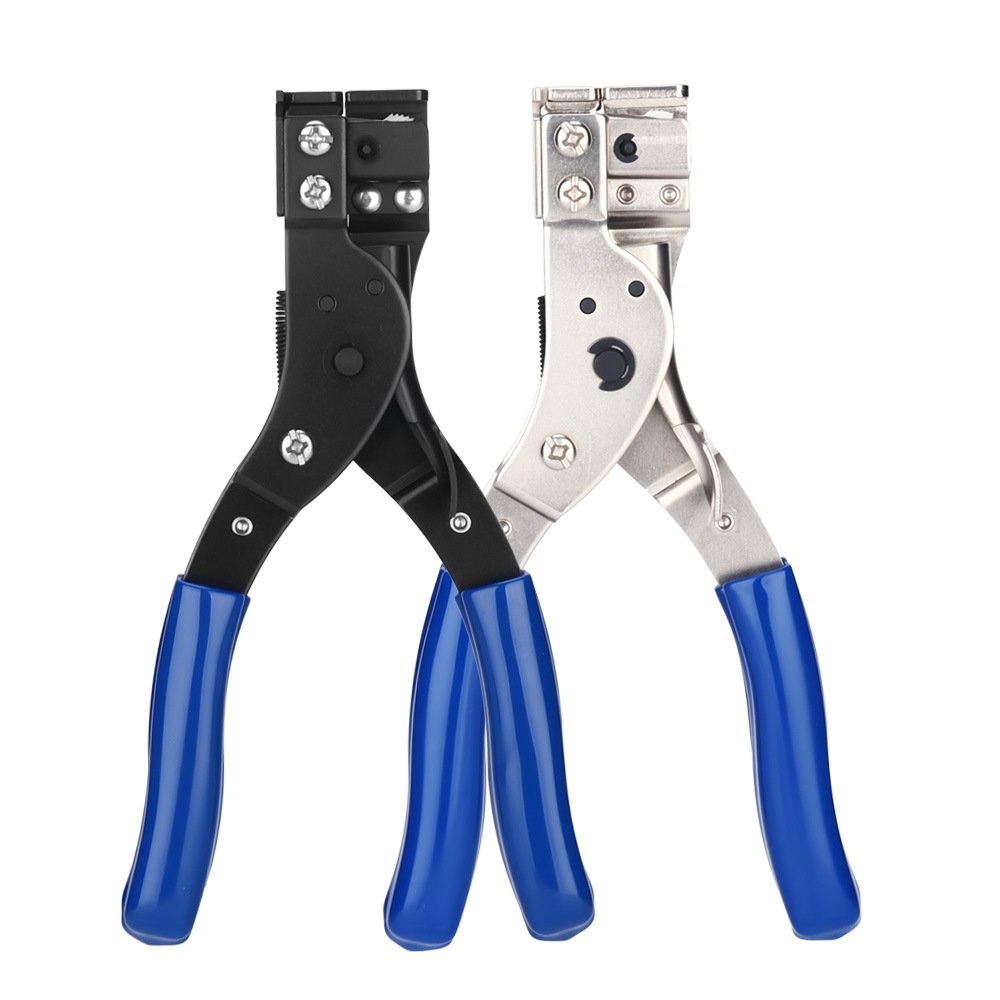
Pulling solar tie wraps by hand with pliers generates inconsistent clamping force. One tie crushes the cable jacket, while the next remains loose enough to slide along the rail.
Method
Result
Manual pulling
Irregular tension + sharp diagonal snip = jacket damage and a hand hazard
Calibrated tool
Preset tension cut-off + zero-burr flush trim = uniform grip and maximum longevity
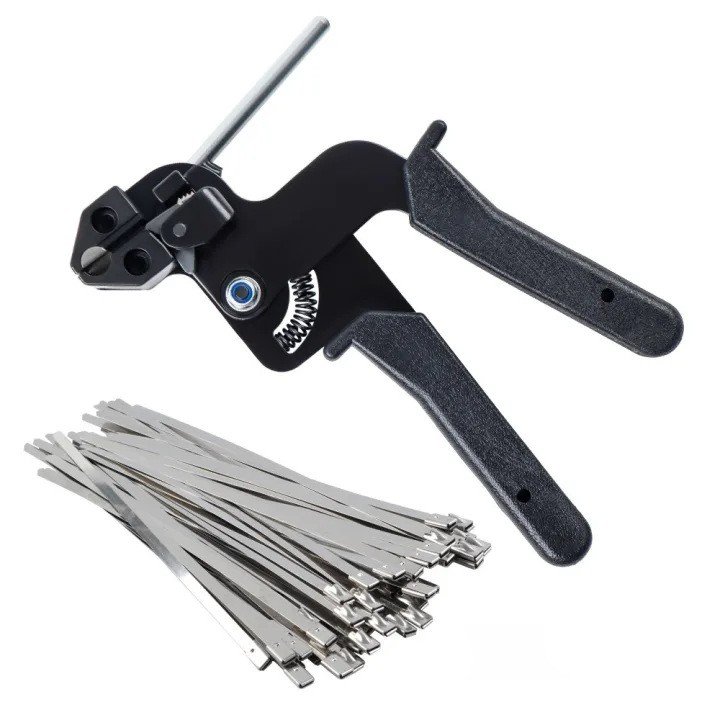
Always use a calibrated ケーブルタイ締付工具. A dedicated tensioning gun applies uniform load before cutting flush against the head. This controlled cutoff eliminates knife-sharp tails and prevents compressive pinching. Applying controlled tension is critical for maximizing the expected ケーブルタイの耐用年数 subjected to continuous thermal cycling and wind loading.
Five Installation Mistakes We See on Site
Over-Cinching the Bundle: Crushing the conductor jacket oval-shaped destroys the insulation’s thermal barrier and creates localized heat concentration under load.
Trimming Tails with Diagonal Cutters: Snapping ties with side-cutters leaves a razor-sharp, angled protrusion that slices hands and insulation during routine inverter maintenance.
Ignoring Thermal Movement: Fastening copper runs dead-tight across long aluminium rails prevents expansion. Seasonal expansion cycles will snap lower-grade ties or pull conductors out of their MC4 crimps.
Direct Fastening Over Raw Punch Holes: Routing ties through pre-punched, un-deburred module frame drainage holes shears polymer fasteners as the array shifts under thermal changes.
Mixing Cable Bundles: Packing high-voltage DC module strings tightly alongside sensor or communication cables introduces signal noise and risks abrasive insulation wear between dissimilar jacket compounds.
Building the Tie BOM for a PV Project
We often see cable ties treated as an afterthought—a line item marked simply as “assorted black zip ties” tucked at the bottom of an electrical schedule. That oversight is an open invitation for field crews to source generic fasteners from local distributors, leading to cracked straps and dropped conductors two seasons later.
To avoid warranty callbacks and rework, your procurement Bill of Materials (BOM) must treat solar cable ties with the same technical rigor as modules, inverters, and DC string wire.
The Five Fields to Put on Your Spec Sheet
When drafting engineering procurement sheets for utility or commercial solar projects, lock down these five parameters to prevent unapproved product substitutions:
Base Material & Compound: Specify the exact polymer or alloy, not a vague trade name. State whether the job calls for UV-stabilized PA66, long-chain PA12 for moisture resistance, or 316 stainless steel. Evaluating ジップタイに最適な素材は何かを理解することが重要です early in the design stage ensures the resin matches your local ground-albedo and humidity profile.
Loop Tensile Strength (MLTS): Standardize on 50 lb (222 N) as the minimum benchmark for module-level wire bundles. Upgrade to 120 lb (534 N) or heavy-duty wide straps for high-fill trunk lines and tracker transition loops.
Continuous Temperature Rating: cURL Too many subrequests by single Worker invocation. To configure this limit, refer to https://developers.cloudflare.com/workers/wrangler/configuration/#limits −40 °C to +85 °C (−40 °F to +185 °F) cURL Too many subrequests by single Worker invocation. To configure this limit, refer to https://developers.cloudflare.com/workers/wrangler/configuration/#limits cURL Too many subrequests by single Worker invocation. To configure this limit, refer to https://developers.cloudflare.com/workers/wrangler/configuration/#limits cURL Too many subrequests by single Worker invocation. To configure this limit, refer to https://developers.cloudflare.com/workers/wrangler/configuration/#limits
cURL Too many subrequests by single Worker invocation. To configure this limit, refer to https://developers.cloudflare.com/workers/wrangler/configuration/#limits cURL Too many subrequests by single Worker invocation. To configure this limit, refer to https://developers.cloudflare.com/workers/wrangler/configuration/#limits
cURL Too many subrequests by single Worker invocation. To configure this limit, refer to https://developers.cloudflare.com/workers/wrangler/configuration/#limits cURL Too many subrequests by single Worker invocation. To configure this limit, refer to https://developers.cloudflare.com/workers/wrangler/configuration/#limits
cURL Too many subrequests by single Worker invocation. To configure this limit, refer to https://developers.cloudflare.com/workers/wrangler/configuration/#limits
cURL Too many subrequests by single Worker invocation. To configure this limit, refer to https://developers.cloudflare.com/workers/wrangler/configuration/#limits
cURL Too many subrequests by single Worker invocation. To configure this limit, refer to https://developers.cloudflare.com/workers/wrangler/configuration/#limits
材料
cURL Too many subrequests by single Worker invocation. To configure this limit, refer to https://developers.cloudflare.com/workers/wrangler/configuration/#limits
cURL Too many subrequests by single Worker invocation. To configure this limit, refer to https://developers.cloudflare.com/workers/wrangler/configuration/#limits
cURL Too many subrequests by single Worker invocation. To configure this limit, refer to https://developers.cloudflare.com/workers/wrangler/configuration/#limits
cURL Too many subrequests by single Worker invocation. To configure this limit, refer to https://developers.cloudflare.com/workers/wrangler/configuration/#limits
cURL Too many subrequests by single Worker invocation. To configure this limit, refer to https://developers.cloudflare.com/workers/wrangler/configuration/#limits
cURL Too many subrequests by single Worker invocation. To configure this limit, refer to https://developers.cloudflare.com/workers/wrangler/configuration/#limits
cURL Too many subrequests by single Worker invocation. To configure this limit, refer to https://developers.cloudflare.com/workers/wrangler/configuration/#limits
cURL Too many subrequests by single Worker invocation. To configure this limit, refer to https://developers.cloudflare.com/workers/wrangler/configuration/#limits
幅
4.8 mm(0.19インチ)
cURL Too many subrequests by single Worker invocation. To configure this limit, refer to https://developers.cloudflare.com/workers/wrangler/configuration/#limits
cURL Too many subrequests by single Worker invocation. To configure this limit, refer to https://developers.cloudflare.com/workers/wrangler/configuration/#limits
cURL Too many subrequests by single Worker invocation. To configure this limit, refer to https://developers.cloudflare.com/workers/wrangler/configuration/#limits
cURL Too many subrequests by single Worker invocation. To configure this limit, refer to https://developers.cloudflare.com/workers/wrangler/configuration/#limits
cURL Too many subrequests by single Worker invocation. To configure this limit, refer to https://developers.cloudflare.com/workers/wrangler/configuration/#limits
cURL Too many subrequests by single Worker invocation. To configure this limit, refer to https://developers.cloudflare.com/workers/wrangler/configuration/#limits
cURL Too many subrequests by single Worker invocation. To configure this limit, refer to https://developers.cloudflare.com/workers/wrangler/configuration/#limits
cURL Too many subrequests by single Worker invocation. To configure this limit, refer to https://developers.cloudflare.com/workers/wrangler/configuration/#limits
cURL Too many subrequests by single Worker invocation. To configure this limit, refer to https://developers.cloudflare.com/workers/wrangler/configuration/#limits
cURL Too many subrequests by single Worker invocation. To configure this limit, refer to https://developers.cloudflare.com/workers/wrangler/configuration/#limits cURL Too many subrequests by single Worker invocation. To configure this limit, refer to https://developers.cloudflare.com/workers/wrangler/configuration/#limits
cURL Too many subrequests by single Worker invocation. To configure this limit, refer to https://developers.cloudflare.com/workers/wrangler/configuration/#limits cURL Too many subrequests by single Worker invocation. To configure this limit, refer to https://developers.cloudflare.com/workers/wrangler/configuration/#limits 適切なナイロンケーブルタイメーカーを選択するcURL Too many subrequests by single Worker invocation. To configure this limit, refer to https://developers.cloudflare.com/workers/wrangler/configuration/#limits
cURL Too many subrequests by single Worker invocation. To configure this limit, refer to https://developers.cloudflare.com/workers/wrangler/configuration/#limits cURL Too many subrequests by single Worker invocation. To configure this limit, refer to https://developers.cloudflare.com/workers/wrangler/configuration/#limits
cURL Too many subrequests by single Worker invocation. To configure this limit, refer to https://developers.cloudflare.com/workers/wrangler/configuration/#limits cURL Too many subrequests by single Worker invocation. To configure this limit, refer to https://developers.cloudflare.com/workers/wrangler/configuration/#limits
cURL Too many subrequests by single Worker invocation. To configure this limit, refer to https://developers.cloudflare.com/workers/wrangler/configuration/#limits
cURL Too many subrequests by single Worker invocation. To configure this limit, refer to https://developers.cloudflare.com/workers/wrangler/configuration/#limits
cURL Too many subrequests by single Worker invocation. To configure this limit, refer to https://developers.cloudflare.com/workers/wrangler/configuration/#limits cURL Too many subrequests by single Worker invocation. To configure this limit, refer to https://developers.cloudflare.com/workers/wrangler/configuration/#limits
cURL Too many subrequests by single Worker invocation. To configure this limit, refer to https://developers.cloudflare.com/workers/wrangler/configuration/#limits cURL Too many subrequests by single Worker invocation. To configure this limit, refer to https://developers.cloudflare.com/workers/wrangler/configuration/#limits
cURL Too many subrequests by single Worker invocation. To configure this limit, refer to https://developers.cloudflare.com/workers/wrangler/configuration/#limits cURL Too many subrequests by single Worker invocation. To configure this limit, refer to https://developers.cloudflare.com/workers/wrangler/configuration/#limits
cURL Too many subrequests by single Worker invocation. To configure this limit, refer to https://developers.cloudflare.com/workers/wrangler/configuration/#limits cURL Too many subrequests by single Worker invocation. To configure this limit, refer to https://developers.cloudflare.com/workers/wrangler/configuration/#limits
よくある質問
cURL Too many subrequests by single Worker invocation. To configure this limit, refer to https://developers.cloudflare.com/workers/wrangler/configuration/#limits
Yes, but you should never wrap a standard tie around the sharp outer edge of an aluminum module frame. Wind vibration causes sharp frame edges to saw through wire jackets and cable ties.
To mount directly to the module safely:
Fasten through the pre-stamped manufacturer mounting or drainage holes.
Use double loop cable ties to separate the harness from the frame lip.
Deburr the hole before the first tie goes in, and route the bundle off the edge rather than across it.
How far apart should cable ties be on a solar array?
No single figure covers every array, and the spans below are the ones we recommend rather than a code-mandated table. For reliable cable ties for pv cable management, follow these spans:
LocationRecommended SpacingModule-to-Module LeadsEvery 12 to 18 in (300–450 mm)Long Rail RunsEvery 24 to 36 in (600–900 mm)Transition Points / DropsEvery 8 to 12 in (200–300 mm)
Maintaining proper pv cable support spacing prevents the wires from touching rough roof surfaces or trapping pooling water.
Do I need stainless steel ties for a coastal solar farm?
Yes. Marine environments combine relentless UV exposure with airborne chlorides that degrade polymer ties prematurely. As a rule of thumb we use, sites within about 8 km (5 miles) of saltwater should be specified with 316 stainless steel cable ties carrying a protective polyester or epoxy coating.
Using coated durable stainless steel cable ties for industrial use prevents galvanic corrosion between the steel tie and the aluminum rail, giving your array a permanent 25-year mechanical bond.
What is the difference between static and dynamic temperature rating?
Reviewing the cable tie temperature range static dynamic values prevents installation cracking:
Dynamic Temperature Rating: The short-term window for handling, installing and start-up excursions, −20 °C to +105 °C on our UV-stabilized ties. Ratchet a cold-soaked tie well below this window and the locking pawl will snap instead of clicking.
Static Temperature Rating: The long-term thermal endurance once locked in place, −40 °C to +85 °C. Rooftop temperatures beneath modules routinely reach 65 °C to 85 °C, which is exactly why the static figure is the one that matters over a 25-year service life.
Is PA12 better than PA66 for solar installations?
For utility-scale ground mounts and hot, arid, or humid environments, PA12 cable ties offer clear advantages in specific conditions.
Moisture Equilibrium: Nylon 66 absorbs 2.7% to 2.8% moisture at equilibrium, more than PA12, so it moves dimensionally more across rapid freeze-thaw cycles or extreme desert dry spells. PA12 absorbs less, keeping its dimensions and toughness steadier in those swings.
UV Longevity: Both grades rely on the stabilizer package rather than the base polymer alone, so compare the UV ageing report rather than assuming the newer grade is automatically the more weather-resistant one.
Understanding the differences between nylon 6 and nylon 66 cable ties helps determine baseline needs, but PA12 remains the stronger polymeric choice for long-term exposure in high-humidity and coastal regions.
How often do UV cable ties need replacing on a roof?
Replacement frequency depends entirely on the material tier selected during construction:
Non-Stabilized Black Cable Ties (Off-the-shelf): Fail within 1 to 2 years outdoors. They crack, turn chalky, and drop cables directly onto the deck.
UV-Stabilized PA66 (Solar Grade): Engineered with 2% carbon black; typically delivers a service life of 7 to 12 years before requiring spot remediation.
PA12 and Marine-Grade 316 Stainless: Engineered for 20 to 25+ years of continuous exposure, matching the operational lifespan of the solar modules without scheduled replacement
ワンドゥについて — Zhejiang Wandu Plastic Co., Ltd. has produced nylon cable ties in Yueqing, Zhejiang, China since 2011. Our ISO 9001 certified factory runs 10 high-speed injection moulding machines and 8 professional cable tie test benches, covering nylon cable ties, stainless steel cable ties, cable clips, cable glands and spiral wrap. Products are CE and RoHS compliant and ship to buyers in 50+ countries. Every technical question below is answered by our own engineering team.




 JA
 EN
 AR
 ES
 PT
 FR
 RU
 DE
 KO
 IT
 NL
 TR