Organized cable management relies heavily on visual identification. While cable ties primarily function as mechanical fasteners to secure bundles, using coloured cable ties transforms passive infrastructure into an instantly readable visual map. Understanding how regulatory standards interact with practical site conventions is essential for designing clean, compliant, and serviceable installations.
パラメータ
Regulatory Standards (NEC, IEC, TIA)
Site Conventions (Internal SOPs)
Primary Scope
Conductor insulation, phase tape, safety labels
Bundling, routing, system demarcation
Enforcement
Legally binding by local electrical code
Facility-specific, contract-driven
Fastener Rules
Rarely specifies cable tie color
Defines specific color-coded zip ties by function
Primary Goal
Shock prevention, fire safety, grounding
Tracing speed, system isolation, maintenance
What the Standards Cover: Conductors, Not Fasteners
Regulatory codes focus almost exclusively on conductor insulation and terminal markings:
National Electrical Code (NEC): Enforces strict color rules for grounded (neutral) conductors and equipment grounding conductors. It leaves fastener selection to mechanical support guidelines.
IEC 60445 (which superseded IEC 60446) / EN 60204-1: Dictates color usage for AC/DC power conductors within industrial machinery, mandating protective earth (PE) and neutral colors without prescribing tie wrap colors.
Telecommunications Standards (TIA-606): Recommends visual color schemes for termination fields, patch cords, and pathway labels, but does not mandate specific colors for the physical ties bundling the cables.
Industry standards dictate how conductors must be identified to prevent electrical hazards. They do not dictate the color of the fastener holding the cable bundle together.
Why Site Conventions Fill the Gap
Because international and national codes stop at the conductor insulation, facility managers and systems integrators develop internal site conventions. These site-level standard operating procedures (SOPs) establish uniform rules for colour-coded zip ties across server rooms, production floors, and junction boxes.
Site conventions bridge the gap between general code compliance and practical facility management:
Eliminating Guesswork: Technicians immediately know what a bundle contains before cutting a tie or disconnecting a line.
Contractor Consistency: External contractors work within defined visual parameters rather than introducing random fasteners.
cURL Too many subrequests by single Worker invocation. To configure this limit, refer to https://developers.cloudflare.com/workers/wrangler/configuration/#limits cURL Too many subrequests by single Worker invocation. To configure this limit, refer to https://developers.cloudflare.com/workers/wrangler/configuration/#limits
cURL Too many subrequests by single Worker invocation. To configure this limit, refer to https://developers.cloudflare.com/workers/wrangler/configuration/#limits
cURL Too many subrequests by single Worker invocation. To configure this limit, refer to https://developers.cloudflare.com/workers/wrangler/configuration/#limits
トラブルシューティングの迅速化: cURL Too many subrequests by single Worker invocation. To configure this limit, refer to https://developers.cloudflare.com/workers/wrangler/configuration/#limits
cURL Too many subrequests by single Worker invocation. To configure this limit, refer to https://developers.cloudflare.com/workers/wrangler/configuration/#limits cURL Too many subrequests by single Worker invocation. To configure this limit, refer to https://developers.cloudflare.com/workers/wrangler/configuration/#limits
cURL Too many subrequests by single Worker invocation. To configure this limit, refer to https://developers.cloudflare.com/workers/wrangler/configuration/#limits cURL Too many subrequests by single Worker invocation. To configure this limit, refer to https://developers.cloudflare.com/workers/wrangler/configuration/#limits
cURL Too many subrequests by single Worker invocation. To configure this limit, refer to https://developers.cloudflare.com/workers/wrangler/configuration/#limits cURL Too many subrequests by single Worker invocation. To configure this limit, refer to https://developers.cloudflare.com/workers/wrangler/configuration/#limits
cURL Too many subrequests by single Worker invocation. To configure this limit, refer to https://developers.cloudflare.com/workers/wrangler/configuration/#limits
cURL Too many subrequests by single Worker invocation. To configure this limit, refer to https://developers.cloudflare.com/workers/wrangler/configuration/#limits
cURL Too many subrequests by single Worker invocation. To configure this limit, refer to https://developers.cloudflare.com/workers/wrangler/configuration/#limits
cURL Too many subrequests by single Worker invocation. To configure this limit, refer to https://developers.cloudflare.com/workers/wrangler/configuration/#limits
cURL Too many subrequests by single Worker invocation. To configure this limit, refer to https://developers.cloudflare.com/workers/wrangler/configuration/#limits
cURL Too many subrequests by single Worker invocation. To configure this limit, refer to https://developers.cloudflare.com/workers/wrangler/configuration/#limits
ブラック
cURL Too many subrequests by single Worker invocation. To configure this limit, refer to https://developers.cloudflare.com/workers/wrangler/configuration/#limits
cURL Too many subrequests by single Worker invocation. To configure this limit, refer to https://developers.cloudflare.com/workers/wrangler/configuration/#limits
cURL Too many subrequests by single Worker invocation. To configure this limit, refer to https://developers.cloudflare.com/workers/wrangler/configuration/#limits
ナチュラル / ホワイト
cURL Too many subrequests by single Worker invocation. To configure this limit, refer to https://developers.cloudflare.com/workers/wrangler/configuration/#limits
標準ポリアミド66
cURL Too many subrequests by single Worker invocation. To configure this limit, refer to https://developers.cloudflare.com/workers/wrangler/configuration/#limits
赤色
cURL Too many subrequests by single Worker invocation. To configure this limit, refer to https://developers.cloudflare.com/workers/wrangler/configuration/#limits
難燃性ナイロン66
cURL Too many subrequests by single Worker invocation. To configure this limit, refer to https://developers.cloudflare.com/workers/wrangler/configuration/#limits
青
cURL Too many subrequests by single Worker invocation. To configure this limit, refer to https://developers.cloudflare.com/workers/wrangler/configuration/#limits
cURL Too many subrequests by single Worker invocation. To configure this limit, refer to https://developers.cloudflare.com/workers/wrangler/configuration/#limits
cURL Too many subrequests by single Worker invocation. To configure this limit, refer to https://developers.cloudflare.com/workers/wrangler/configuration/#limits
cURL Too many subrequests by single Worker invocation. To configure this limit, refer to https://developers.cloudflare.com/workers/wrangler/configuration/#limits
cURL Too many subrequests by single Worker invocation. To configure this limit, refer to https://developers.cloudflare.com/workers/wrangler/configuration/#limits
cURL Too many subrequests by single Worker invocation. To configure this limit, refer to https://developers.cloudflare.com/workers/wrangler/configuration/#limits
cURL Too many subrequests by single Worker invocation. To configure this limit, refer to https://developers.cloudflare.com/workers/wrangler/configuration/#limits
イエロー
cURL Too many subrequests by single Worker invocation. To configure this limit, refer to https://developers.cloudflare.com/workers/wrangler/configuration/#limits
cURL Too many subrequests by single Worker invocation. To configure this limit, refer to https://developers.cloudflare.com/workers/wrangler/configuration/#limits
cURL Too many subrequests by single Worker invocation. To configure this limit, refer to https://developers.cloudflare.com/workers/wrangler/configuration/#limits
グリーン
cURL Too many subrequests by single Worker invocation. To configure this limit, refer to https://developers.cloudflare.com/workers/wrangler/configuration/#limits
cURL Too many subrequests by single Worker invocation. To configure this limit, refer to https://developers.cloudflare.com/workers/wrangler/configuration/#limits
cURL Too many subrequests by single Worker invocation. To configure this limit, refer to https://developers.cloudflare.com/workers/wrangler/configuration/#limits
オレンジ
cURL Too many subrequests by single Worker invocation. To configure this limit, refer to https://developers.cloudflare.com/workers/wrangler/configuration/#limits
cURL Too many subrequests by single Worker invocation. To configure this limit, refer to https://developers.cloudflare.com/workers/wrangler/configuration/#limits
cURL Too many subrequests by single Worker invocation. To configure this limit, refer to https://developers.cloudflare.com/workers/wrangler/configuration/#limits
cURL Too many subrequests by single Worker invocation. To configure this limit, refer to https://developers.cloudflare.com/workers/wrangler/configuration/#limits
cURL Too many subrequests by single Worker invocation. To configure this limit, refer to https://developers.cloudflare.com/workers/wrangler/configuration/#limits
cURL Too many subrequests by single Worker invocation. To configure this limit, refer to https://developers.cloudflare.com/workers/wrangler/configuration/#limits
cURL Too many subrequests by single Worker invocation. To configure this limit, refer to https://developers.cloudflare.com/workers/wrangler/configuration/#limits
cURL Too many subrequests by single Worker invocation. To configure this limit, refer to https://developers.cloudflare.com/workers/wrangler/configuration/#limits
cURL Too many subrequests by single Worker invocation. To configure this limit, refer to https://developers.cloudflare.com/workers/wrangler/configuration/#limits
cURL Too many subrequests by single Worker invocation. To configure this limit, refer to https://developers.cloudflare.com/workers/wrangler/configuration/#limits
cURL Too many subrequests by single Worker invocation. To configure this limit, refer to https://developers.cloudflare.com/workers/wrangler/configuration/#limits
cURL Too many subrequests by single Worker invocation. To configure this limit, refer to https://developers.cloudflare.com/workers/wrangler/configuration/#limits nylon cable ties selection guide.
Black, Natural, and White: UV Protection vs. Indoor Use
The choice between black and clear/white fasteners comes down to physics, not just aesthetics.
Black ties owe their durability to carbon black particles integrated directly into the polymer matrix. We engineer these using uv stabilized nylon to absorb destructive radiation, preventing polymer chains from cracking under heavy sunlight. Whether securing commercial cable bundle sizes on rooftops or along exterior utility trays, black ties are the industry default for outdoor exposure.
Natural and white ties use unmodified polyamide 66. They offer clean aesthetics inside residential distributions, switchgear, and enclosed junction boxes. However, standard natural ties discolour and embrittle when exposed to continuous outdoor sunlight.
For projects requiring consistent mechanical performance indoors and out, our line of 黒と白のナイロンケーブルタイ balances structural retention with dependable minimum loop tensile ratings.
Red, Yellow, Green, and Blue: Hazards, Earthing, and Networks
When a technician opens an industrial cabinet, primary colored cable ties act as instant functional warnings:
赤: Reserved almost universally for critical systems. This includes fire alarm risers, emergency cutoffs, and dedicated life-safety feeds. If a circuit cannot be powered down during standard facility maintenance, technicians bundle it with red ties.
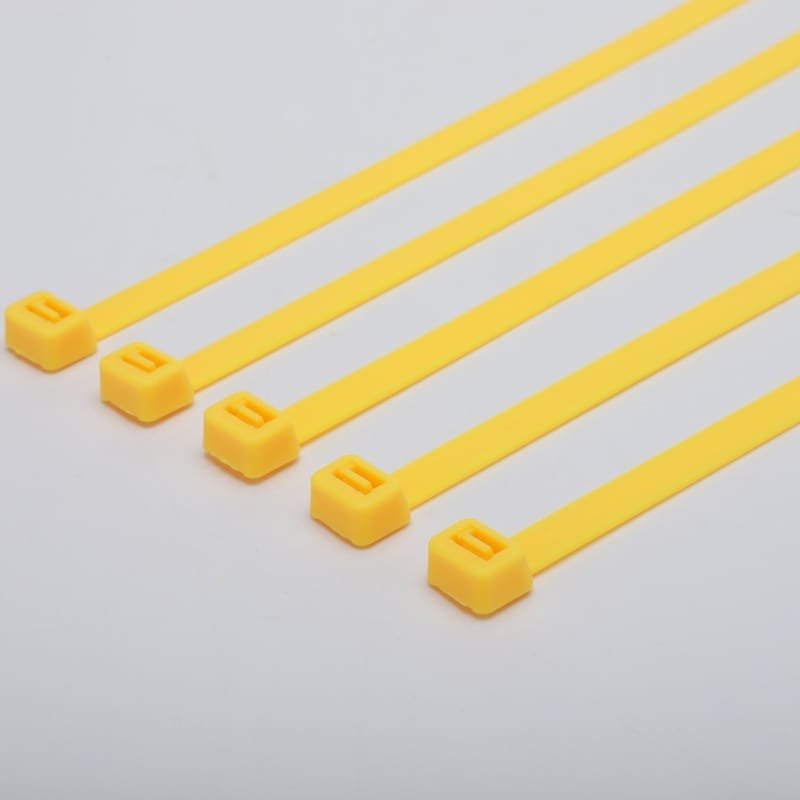
黄: A common site convention for caution lines, single-mode optical drops, or circuits that remain energised even when the main cabinet switch is turned off.
緑: Strictly utilized for earthing, ground leads, and chassis bonding points. Using green for signal lines is avoided in most site SOPs.
青: Widely adopted by network technicians to anchor Cat6/Cat6A data lines. In process automation and chemical plants, light blue ties are designated to flag intrinsically safe circuits in hazardous atmospheres.
Orange, Purple, and Grey: Fibre, High Voltage, and Access Control
Secondary colors serve specialized workflows across complex infrastructure projects:
オレンジ: The standard visual marker for multimode fiber optic lines. In electric vehicle and industrial robotics manufacturing, high-visibility orange designates high-voltage DC runs to keep technicians alert during maintenance.
紫色: Standardized across modern enterprise facilities to isolate physical security cabling, including access control card readers, motorized strikes, and CCTV lines.
グレー: Primarily specified when control engineers require visual uniformity inside standard industrial enclosures, often matched to industrial control cabinets under the standard RAL colour chart.
At WANDU, we supply coloured cable ties manufactured to high-precision pigments, ensuring clean contrast, rapid circuit tracing, and batch-to-batch tensile consistency verified in our own testing.
Industry-Specific Color Coding Conventions
When implementing cable tie color coding: standards and site conventions, different industries rely on their own practical rules. While formal standards often specify wire insulation or patch cord sheathing, site engineers routinely adapt these palettes to their fasteners to streamline maintenance and protect critical pathways.
Telecommunications and Data Centers: TIA-606 Covers Labels, Not Ties
ANSI/TIA-606 sets out a recommended colour scheme for administration labels, patch fields and terminations — not the mechanical ties holding the bundles together. However, network engineers mirror these guidelines using color coded zip ties to identify functional pathways at a glance across dense server racks and cable trays.
青: Horizontal cabling (Cat6/Cat6A).
緑: Network connections.
紫色: PBX and major switching systems.
黄: Auxiliary circuits.
Fibre cable jackets follow a different standard: TIA-598 assigns yellow to single-mode, orange to OM1/OM2, aqua to OM3 and violet to OM4. Installers often mirror those jacket colours on ties, but the jacket standard says nothing about fasteners.
Using color-matched ties alongside standardized labels prevents confusion during routine patch reconfiguration and reduces the risk of cutting the wrong tie during service calls.
Commercial Electrical and Construction: NEC 210.5 Covers Conductors
In commercial construction, NEC 210.5(C) requires ungrounded conductors to be identified by phase and voltage system in buildings with more than one voltage system; grounded conductors fall under 200.6 and equipment grounding conductors under 250.119. None of these rules address fastener colour.
To bridge this gap, field teams use site-level conventions:
Green ties are reserved strictly for grounding and bonding leads to prevent accidental disconnection.
Red ties fasten dedicated emergency stop lines, fire protection circuits, and life-safety wiring.
Black or natural ties manage regular 120/208V and 277/480V distribution runs where conductor jackets already display the phase sequence.
cURL Too many subrequests by single Worker invocation. To configure this limit, refer to https://developers.cloudflare.com/workers/wrangler/configuration/#limits
cURL Too many subrequests by single Worker invocation. To configure this limit, refer to https://developers.cloudflare.com/workers/wrangler/configuration/#limits
cURL Too many subrequests by single Worker invocation. To configure this limit, refer to https://developers.cloudflare.com/workers/wrangler/configuration/#limits
cURL Too many subrequests by single Worker invocation. To configure this limit, refer to https://developers.cloudflare.com/workers/wrangler/configuration/#limits 耐久性のあるナイロンケーブルタイを選択することで、 cURL Too many subrequests by single Worker invocation. To configure this limit, refer to https://developers.cloudflare.com/workers/wrangler/configuration/#limits
cURL Too many subrequests by single Worker invocation. To configure this limit, refer to https://developers.cloudflare.com/workers/wrangler/configuration/#limits cURL Too many subrequests by single Worker invocation. To configure this limit, refer to https://developers.cloudflare.com/workers/wrangler/configuration/#limits
cURL Too many subrequests by single Worker invocation. To configure this limit, refer to https://developers.cloudflare.com/workers/wrangler/configuration/#limits cURL Too many subrequests by single Worker invocation. To configure this limit, refer to https://developers.cloudflare.com/workers/wrangler/configuration/#limits
ブラック: cURL Too many subrequests by single Worker invocation. To configure this limit, refer to https://developers.cloudflare.com/workers/wrangler/configuration/#limits
赤: cURL Too many subrequests by single Worker invocation. To configure this limit, refer to https://developers.cloudflare.com/workers/wrangler/configuration/#limits
cURL Too many subrequests by single Worker invocation. To configure this limit, refer to https://developers.cloudflare.com/workers/wrangler/configuration/#limits
cURL Too many subrequests by single Worker invocation. To configure this limit, refer to https://developers.cloudflare.com/workers/wrangler/configuration/#limits
cURL Too many subrequests by single Worker invocation. To configure this limit, refer to https://developers.cloudflare.com/workers/wrangler/configuration/#limits
cURL Too many subrequests by single Worker invocation. To configure this limit, refer to https://developers.cloudflare.com/workers/wrangler/configuration/#limits 自動車配線ハーネスを最適化するナイロンケーブルタイ cURL Too many subrequests by single Worker invocation. To configure this limit, refer to https://developers.cloudflare.com/workers/wrangler/configuration/#limits
cURL Too many subrequests by single Worker invocation. To configure this limit, refer to https://developers.cloudflare.com/workers/wrangler/configuration/#limits cURL Too many subrequests by single Worker invocation. To configure this limit, refer to https://developers.cloudflare.com/workers/wrangler/configuration/#limits
黄: cURL Too many subrequests by single Worker invocation. To configure this limit, refer to https://developers.cloudflare.com/workers/wrangler/configuration/#limits
cURL Too many subrequests by single Worker invocation. To configure this limit, refer to https://developers.cloudflare.com/workers/wrangler/configuration/#limits cURL Too many subrequests by single Worker invocation. To configure this limit, refer to https://developers.cloudflare.com/workers/wrangler/configuration/#limits
cURL Too many subrequests by single Worker invocation. To configure this limit, refer to https://developers.cloudflare.com/workers/wrangler/configuration/#limits
cURL Too many subrequests by single Worker invocation. To configure this limit, refer to https://developers.cloudflare.com/workers/wrangler/configuration/#limits
cURL Too many subrequests by single Worker invocation. To configure this limit, refer to https://developers.cloudflare.com/workers/wrangler/configuration/#limits
cURL Too many subrequests by single Worker invocation. To configure this limit, refer to https://developers.cloudflare.com/workers/wrangler/configuration/#limits
cURL Too many subrequests by single Worker invocation. To configure this limit, refer to https://developers.cloudflare.com/workers/wrangler/configuration/#limits
cURL Too many subrequests by single Worker invocation. To configure this limit, refer to https://developers.cloudflare.com/workers/wrangler/configuration/#limits cURL Too many subrequests by single Worker invocation. To configure this limit, refer to https://developers.cloudflare.com/workers/wrangler/configuration/#limits
cURL Too many subrequests by single Worker invocation. To configure this limit, refer to https://developers.cloudflare.com/workers/wrangler/configuration/#limits cURL Too many subrequests by single Worker invocation. To configure this limit, refer to https://developers.cloudflare.com/workers/wrangler/configuration/#limits
cURL Too many subrequests by single Worker invocation. To configure this limit, refer to https://developers.cloudflare.com/workers/wrangler/configuration/#limits cURL Too many subrequests by single Worker invocation. To configure this limit, refer to https://developers.cloudflare.com/workers/wrangler/configuration/#limits
cURL Too many subrequests by single Worker invocation. To configure this limit, refer to https://developers.cloudflare.com/workers/wrangler/configuration/#limits
cURL Too many subrequests by single Worker invocation. To configure this limit, refer to https://developers.cloudflare.com/workers/wrangler/configuration/#limits
cURL Too many subrequests by single Worker invocation. To configure this limit, refer to https://developers.cloudflare.com/workers/wrangler/configuration/#limits
最小ループ引張強度: cURL Too many subrequests by single Worker invocation. To configure this limit, refer to https://developers.cloudflare.com/workers/wrangler/configuration/#limits
熱耐久性: cURL Too many subrequests by single Worker invocation. To configure this limit, refer to https://developers.cloudflare.com/workers/wrangler/configuration/#limits
cURL Too many subrequests by single Worker invocation. To configure this limit, refer to https://developers.cloudflare.com/workers/wrangler/configuration/#limits cURL Too many subrequests by single Worker invocation. To configure this limit, refer to https://developers.cloudflare.com/workers/wrangler/configuration/#limits
cURL Too many subrequests by single Worker invocation. To configure this limit, refer to https://developers.cloudflare.com/workers/wrangler/configuration/#limits
cURL Too many subrequests by single Worker invocation. To configure this limit, refer to https://developers.cloudflare.com/workers/wrangler/configuration/#limits
cURL Too many subrequests by single Worker invocation. To configure this limit, refer to https://developers.cloudflare.com/workers/wrangler/configuration/#limits
cURL Too many subrequests by single Worker invocation. To configure this limit, refer to https://developers.cloudflare.com/workers/wrangler/configuration/#limits
cURL Too many subrequests by single Worker invocation. To configure this limit, refer to https://developers.cloudflare.com/workers/wrangler/configuration/#limits cURL Too many subrequests by single Worker invocation. To configure this limit, refer to https://developers.cloudflare.com/workers/wrangler/configuration/#limits
Signal Contamination: Variable frequency drive (VFD) output cables routed alongside sensitive 4–20 mA instrumentation loops cause signal noise. Distinct color tagging enforces physical air gaps in shared raceways.
Accidental Disconnection: Critical server feeds, uninterrupted power supply (UPS) lines, and safety interlocks require immediate visual differentiation from standard branch wiring.
Limit the active site palette to four or five functional colors. Overcomplicating the scheme with ten different shades leads to operator confusion, inventory mix-ups, and eventual non-compliance during routine operations.
Document It: Palette, Legend, and Label Pairing
Color coding serves as an instant visual cue, but an auditor requires verifiable documentation. An effective cable management standard relies on clear site operating procedures:
Specify Exact Color References: Avoid vague terms like “light blue” or “dark green.” We align our procurement specifications with an accepted RAL colour chart or standard Pantone references. This ensures consistent hues whether sourcing standard bundles or an assorted colour pack across multiple maintenance cycles.
Mount Physical Legends: Place engraved, permanent legend plates on the interior doors of all control cabinets, distribution boards, and telecommunications enclosures. Technicians should never have to guess the color convention from memory.
Pair Fasteners with Direct Labels: Never rely on coloured cable ties as the sole method of circuit identification. Use colored fasteners for rapid visual triage, but back them up with printed alphanumeric cable markers containing source and destination data.
Install and Inspect: Tension, Tail Cut, and Re-Check Interval
Audit compliance extends beyond color choice to the physical installation quality. Poorly tensioned fasteners or jagged tail cuts signal substandard craftwork:
Calibrated Tensioning: Over-tightening causes pinching, jacket deformation, and impedance mismatches on high-speed data conductors. Matching fastener width to the target cable bundle size is essential; review our breakdown on how thick a zip tie should be to verify the correct minimum loop tensile rating for your load.
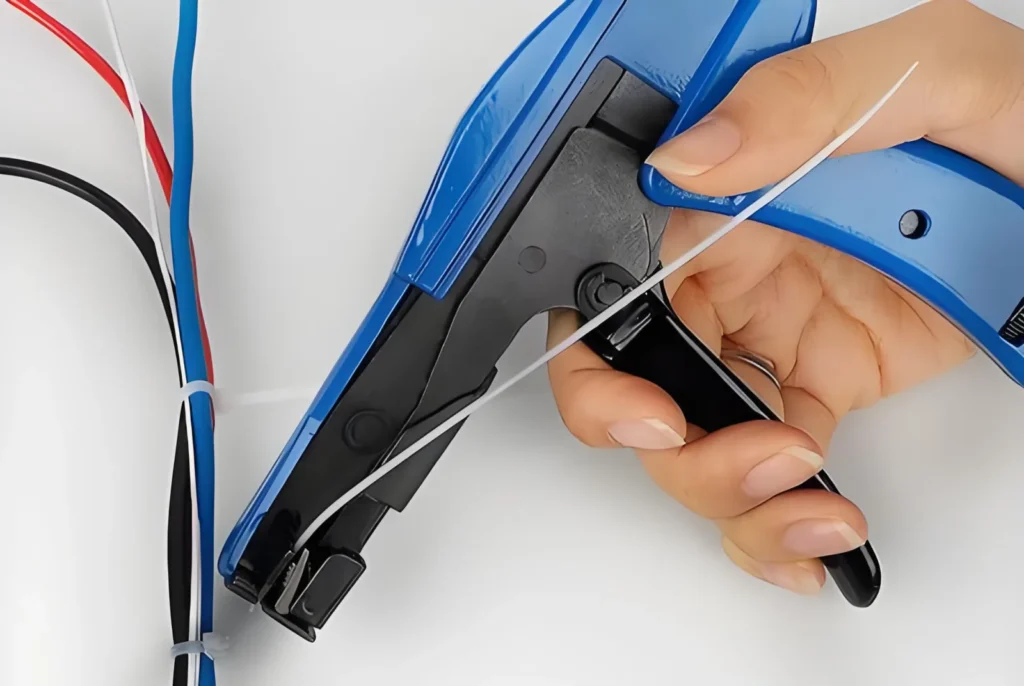
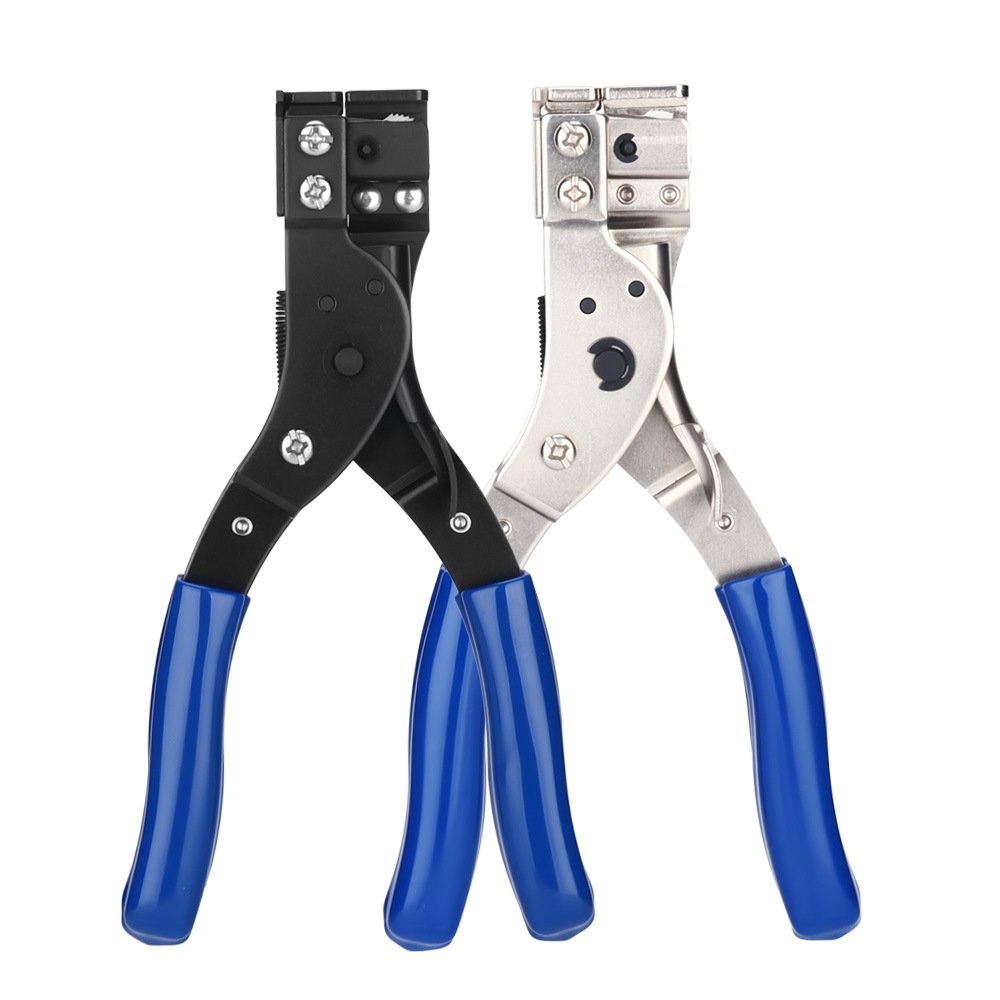
Flush Tail Trimming: Always use dedicated tie-cutting tools to produce flush, burr-free cuts. Exposed, diagonal tail edges inside crowded panels create severe laceration hazards for maintenance staff.
Scheduled Re-Inspection Intervals: Include fastener checks in your preventative maintenance routines. Regularly monitor exterior runs for embrittlement and test fade resistance under sustained UV exposure to replace degraded fasteners before bundled runs drop out of compliance.
よくある質問
Are cable tie colours standardized?
No universal international standard legally mandates cable tie colors across every industry. Most electrical and telecom standards, such as the NEC or TIA-606, govern wire insulation colors and physical labeling requirements rather than the fasteners themselves. Because of this, facility-level site conventions bridge the gap. Black is universally treated as the benchmark for UV-resistant exterior runs, while high-visibility coloured cable ties are deployed to map out data, security, and low-voltage circuits systematically.
What do red cable ties mean?
Red cable ties designate critical, emergency, or high-risk circuits. Common applications include:
Fire alarm systems and smoke detection cabling
Emergency stop (E-stop) interlock circuits
Primary high-voltage containment lines
Backup emergency generator power feeds
In security-focused facilities, red ties also serve as temporary inspection tags to identify bundles requiring engineering review.
Do coloured cable ties fade in sunlight?
Standard colored ties molded from baseline polyamide 66 will experience color shift and polymer degradation when exposed to continuous direct UV radiation. Unlike outdoor-rated black ties formulated with carbon black, typical colorants do not block ultraviolet rays. While they maintain adequate fade resistance in indoor environments, prolonged outdoor exposure will break down the polymer chains, significantly dropping the tie's minimum loop tensile rating. For outdoor installations, always specify UV-stabilized nylon.
Is colour coding enough for lockout/tagout?
No. Color coding provides rapid visual reference, but it does not fulfill regulatory lockout/tagout (LOTO) requirements. Safety compliance frameworks require verified physical energy isolation, padlocks, and standardized warning tags. While color coded zip ties can visually designate disconnected circuits, they must never replace mechanical locks. For secondary asset tracking and visual verification, engineering teams frequently combine color standards with custom printed cable ties displaying serial numbers, dates, or department codes.
Can I order custom colours?
Yes. Beyond standard inventory and assorted colour packs, we manufacture ties tailored to precise site-wide specifications. Custom colour matching can be produced against standard RAL colour chart references or Pantone targets. This ensures your cable management hardware matches corporate branding, original equipment manufacturer (OEM) chassis finishes, or proprietary plant-floor identification schemes, all scaled to your required cable bundle size and tensile specifications.
ワンドゥについて — Zhejiang Wandu Plastic Co., Ltd. has produced nylon cable ties in Yueqing, Zhejiang, China since 2011. Our ISO 9001 certified factory runs 10 high-speed injection moulding machines and 8 professional cable tie test benches, covering nylon cable ties, stainless steel cable ties, cable clips, cable glands and spiral wrap. Products are CE and RoHS compliant and ship to buyers in 50+ countries. Every technical question below is answered by our own engineering team.


 JA
 EN
 AR
 ES
 PT
 FR
 RU
 DE
 KO
 IT
 NL
 TR